Michael Evans

Michael Evans was defence editor of the Times for 12 years. He wrote a memoir called First With the News and is author of Agent Redruth, a new spy thriller which has a strong Russian theme.

The problem with putting US nukes in Poland

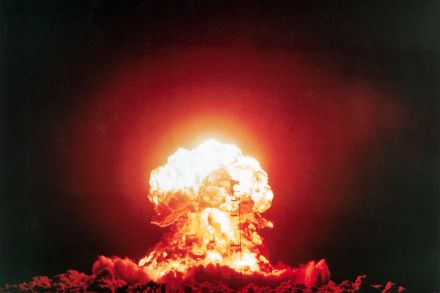
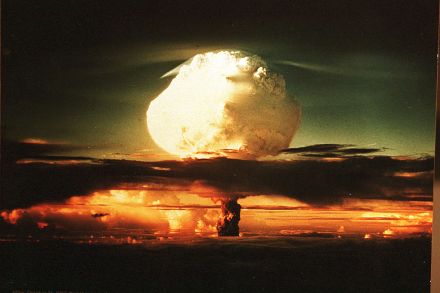
Nuclear weapons are becoming a major issue for Poland. One way or another, both the Polish president and prime minister want their country to host tactical nuclear weapons as a deterrent against President Putin’s Russia. In the latest — but by no means the first — statement on this issue, President Andrzej Duda revealed that he recently discussed stationing American tactical nuclear weapons in Poland with Keith Kellogg, the US special envoy for Ukraine. In an interview with the Financial Times, Duda said: “I think it’s not only that the time has come, but that it would be safer if those weapons were already here.

The problem with putting US nukes in Poland

From our UK edition

Nukes are becoming a big issue for Poland. One way or another, both the Polish president and prime minister want their country to host tactical nuclear weapons as a deterrent against President Putin’s Russia. In the latest, but by no means the first, statement on this question, President Andrzej Duda has revealed he recently discussed locating American tactical nukes in Poland with Keith Kellogg, the US special envoy for Ukraine. In an interview with the Financial Times, Duda said: ‘I think it’s not only that the time has come but that it would be safer if those weapons were already here.

Why Putin could reject a ceasefire

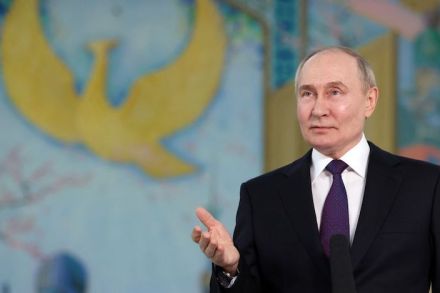
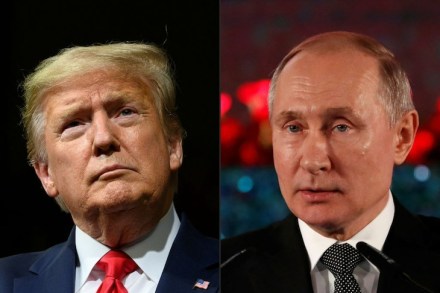
With all the good news coming out of the Jeddah talks about a 30-day ceasefire in Ukraine, there’s only one question that needs to be answered: Will President Putin be interested in any kind of deal right now? President Trump is convinced that Putin wants peace. But if the Russian leader truly wants to end his war, will he do so on America’s terms, or will he wait until he achieves one of his main objectives — the total subjugation of the four provinces in eastern Ukraine that he claimed to have annexed in the first seven months of the invasion? At a ceremony in St. George’s Hall at the Kremlin in September 2022, Putin declared that Russia now had four new regions: Donetsk, Luhansk, Kherson, and Zaporizhzhia.

Putin

Why Putin could reject a ceasefire

From our UK edition

With all the good news coming out of the Jeddah talks about a 30-day ceasefire in Ukraine, there is only one question that needs to be answered: will President Putin be interested in any sort of deal right now? President Trump is convinced that Putin wants peace. But if the Russian leader really wants to bring his war to an end, will he do so on America’s terms, or wait until he has fulfilled one of his main objectives: the total subjugation of the four provinces in eastern Ukraine that he claimed he had annexed in the first seven months of the invasion? At a ceremony in St George’s Hall at the Kremlin in September 2022, Putin declared that Russia now had four new regions – Donetsk, Luhansk, Kherson and Zaporizhzhia.

What Zelensky needs to do in Saudi Arabia

From our UK edition

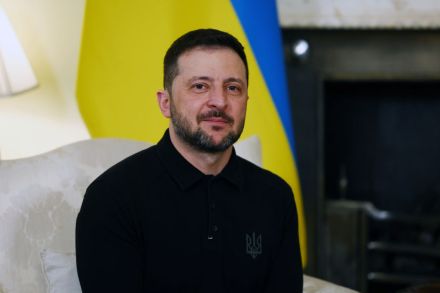
President Volodymyr Zelensky needs all the advice he can get, as he prepares for talks with American negotiators in Saudi Arabia tomorrow. A statement over the weekend from the Ukrainian presidential office disclosed that the latest western visitor to make the long train ride into Kyiv was Jonathan Powell, Sir Keir Starmer’s national security adviser and veteran crisis negotiator. The meeting between Powell and Andriy Yermak, the head of Zelensky’s office, provided further evidence that the UK is currently attempting to play an influential role in moderating what might seem, at present, to be a one-sided effort by the US to bludgeon the Ukrainian president into signing a deal to end the war with Russia.

Why Macron is offering France’s nukes to Europe

From our UK edition

President Emmanuel Macron has raised the nuclear card. He has offered to provide nuclear cover for Europe as fears intensify that President Trump is moving further away from Nato and from America’s historic obligations towards European allies. The idea of France, the fourth largest nuclear weapons power in the world, extending its nuclear deterrence is not new. Macron is just one of many French presidents who have contemplated providing a European dimension to France’s force de frappe. However, today the context is dramatically different. For the first time in Nato’s history, the US sided with Russia and not its European allies when the Trump administration refused to condemn Moscow for the invasion of Ukraine at the UN.

Why Britain is crucial to Ukraine peace talks

From our UK edition

Britain has the opportunity to become a master in tightrope diplomacy between Donald Trump and an increasingly alarmed Europe after the 47th president’s blitz of foreign policy announcements. To say that European leaders have been hyperventilating over the dramatic chess move made by Trump in his 90-minute phone call with Vladimir Putin is to put it mildly. Trump has been accused of appeasement a la Neville Chamberlain and his paper of peace following the US president’s seeming surrender to Putin’s two key demands to end the war in Ukraine: permanent retention of ground seized and no future membership of Nato for his suffering neighbour.

What will happen to Hamas’s tunnels?

From our UK edition

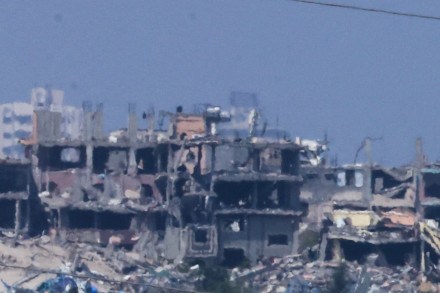
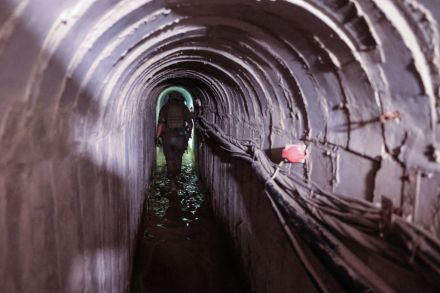
Even if the third phase of the Gaza ceasefire deal is successfully completed and all hostages, alive and dead, are handed over, Hamas will still retain its most treasured and most deadly warfare advantage: hundreds of miles of deep tunnels and bunkers known as the Gaza metro. From day one of the Israel Defence Forces’ retaliatory invasion of Gaza, the search began for the tunnel complex which their opponents were using to hide command bunkers, weapon-making plants, munition stores, fighters and the 250 hostages seized from southern Israel on 7 October, 2023. The IDF may have killed an estimated 17,000 of Hamas’s 30,000 soldiers, but the remnants of the battered fighting force survived because of the Gaza metro.

Should Britain join an EU defence scheme?

From our UK edition

The UK and Europe have had plenty of time to get to grips with the inevitable, that President Donald Trump will demand a substantial rise in defence spending. When he threw this demand at Europe the first time he served as president, the impact was like a fox entering a hen coop. Lots of fluttering wings and squawking. But in the end it worked. More Nato members met the minimum 2 per cent of GDP target for defence expenditure. Now Trump is back and the issue has become an even greater priority. Nearly three years into Russia’s invasion of Ukraine, every member of the western alliance is fully aware that President Putin might turn his attention to what the Kremlin perceives to be vulnerable parts of Eastern Europe to pursue his hegemonic ambitions.

Trump professes peace, threatens fury

From our UK edition

The new president of the United States believes in fairness, and says the running of the Panama Canal has been very unfair. Even though President Trump’s thunderous ‘Golden Age’ inauguration speech was short on foreign policy objectives, he still managed to slip in his ambitions for the canal. He wants it back in American control, partly because US cargo ships, he complains, are paying over the odds for using it. He is also worried about Chinese encroachment at each end. Inauguration addresses are not generally seen as an opportunity to lay out a blueprint for overcoming America’s enemies or to hint at potential territorial ambitions beyond America’s shores.

Trump will find Putin harder to deal with than Hamas

From our UK edition

There is no question that bombast sometimes works. President-elect Donald Trump warned hell would be unleashed if Hamas did not release its hostages and the war in Gaza did not end by 20 January, his inauguration day. He never explained what he had in mind to end the war, but he didn’t need to. The threat was enough. President Joe Biden and his national security team had done all the hard negotiating work for a deal but Trump’s stamp on it was conclusive. Trump’s room for manoeuvre is limited. Bombast won’t do it, not this time Can he now do the same with the war in Ukraine? Trump’s main obstacle is undoubtedly Vladimir Putin. The Russian president will be a far tougher nut to crack, especially since he has shown no real interest in any compromise settlement.

Isis will not die

From our UK edition

The Isis caliphate in Syria and Iraq was defeated at a cost of billions of dollars and the loss of thousands of lives. And yet the ideology of violence and hatred espoused by the Islamic State lives on and has spread into cities in the West like a poison with no antidote. The black flag attached to the pick-up truck which ploughed through crowds of people in New Orleans celebrating the new year was both a symbol of the Islamic State and a message from the terrorist jihadists that they have ‘sleepers’ ready and willing to carry out atrocities. For western governments this poses a never-ending challenge.

Bombing Syria in 2013 would not have toppled Assad

From our UK edition

In hindsight, did the US, UK and France fail to seize the chance to topple President Bashar al-Assad in 2013? This is the question that convinced Wes Streeting, the health secretary, to attack his colleague, Ed Miliband, the energy secretary and former Labour leader. Miliband orchestrated the vote that threw out the proposal by David Cameron’s government to join the US and France in airstrikes against Damascus in retaliation for chemical atrocities on the Syrian people. Streeting concluded that if Labour in opposition had supported the vote for airstrikes, Assad’s regime would have fallen, thus bringing relief and liberation for the Syrian population.

Jolani has learnt from history

From our UK edition

The victorious Syrian rebel leader now in control of Damascus has already learned a key lesson in history. After his forces swept into the capital, Abu Mohammad al-Jolani, head of the Islamic militant group, Hay’at Tahrir al-Sham (HTS), might have been expected to lay waste to all the institutions which had helped to keep the repressive Assad dynasty in power for 53 years, but instead he chose pragmatism. He announced he would do business with the Syrian government and wanted civil service staff to stay in their jobs to keep the country functioning. This doesn’t make al-Jolani or Ahmed al-Sharaa as he now wants to be called (his real name rather than his nom de guerre), a Kissinger-style diplomat whom the world can embrace as a long-awaited saviour.

Here’s what Putin wants from Ukraine

From our UK edition

Donald Trump is still two months away from becoming the 47th president of the United States, and yet his return to the Oval Office in January has already provoked a flurry of policy U-turns by the White House and rising expectation, even in Moscow, of a deal to end the war in Ukraine. Elements of a potential settlement reportedly agreeable to President Putin emerged on Reuters today based on kite-flying suggestions by Russian officials. While there is nothing particularly new in the broad outline of Moscow thinking, the fact that Russian officials are pushing it out in some detail reflects an awareness in the Kremlin that with Trump in power, the potential for a deal that will satisfy Putin after 1,000 days of war might be on the cards.

The sad death of the Eurofighter Typhoon

From our UK edition

Britain’s fighter jets are running missions into Syria, dropping bombs on the Houthis in Yemen, patrolling over Estonia, Lithuania and Romania, close to Ukraine, and guarding our shores from interloping Russian bombers. And yet, the Typhoon final-assembly production line at Warton in Preston has effectively come to a halt. There are no new orders from the Ministry of Defence, and there is a battle going on between Typhoon supporters and those who want Britain’s military to have more American Lockheed Martin F-35 aircraft instead. The government is saying nothing because there is a strategic defence review underway. It’s an old, old story, rehearsed so many times in the past.

Can Zelensky and Putin do a deal?

From our UK edition

Warring parties often strike deals. Exchanges of prisoners, ceasefires to deliver aid, covert talks between intelligence services – and eventually, hopefully, peace. But since Vladimir Putin ordered thousands of troops across the Russian border into Ukraine on 24 February 2022, there have been no peace negotiations and no sign of meaningful compromise from either Moscow or Kyiv. But now, after nearly three years of horrendous casualties and destruction in Ukraine, preliminary talks are underway, according to the Financial Times, for a deal in which both sides would agree to stop or reduce attacks on energy installations. While it might seem a bizarre development, it’s now in Moscow’s interest as much as in Kyiv’s to end the continuous targeting of power plants.

Is Hamas ready for a ceasefire deal?

From our UK edition

The president of Egypt has come up with the most modest of proposals to try and end the war in Gaza. President Abdel Fattah el-Sisi has proposed a 48-hour ceasefire to facilitate the release of just four Israeli hostages in exchange for an unspecified number of Palestinian prisoners detained by Israel. El-Sisi’s objective is for the two-day truce to then lead to a longer-term ceasefire. He has suggested a ten-day negotiating period following the release of the four hostages. His proposal has coincided with the arrival in Doha, of the heads of the CIA and Mossad for renewed talks for a ceasefire-and-hostage-release framework.

Joe Biden wants Bibi to be careful

From our UK edition

On 20 June 2019, President Donald Trump rescinded an order he had given for a military attack on Iran in retaliation for the shooting down of a long-range Global Hawk surveillance drone. He decided that a missile strike on Iranian military bases (which might cause casualties) would have been disproportionate. Global Hawk was unmanned. No American had died. The bombers, already en route, were summoned back to base. No one could suggest that Benjamin Netanyahu is facing the same decision. The circumstances are entirely different. There is no moral equivalence. On 1 October Iran launched nearly 200 ballistic missiles on Israel, and Netanyahu has vowed to respond with a significant retaliatory strike.

Iran, you have been warned

From our UK edition

Bombs send messages. Yesterday it was announced that the United States sent B-2 Spirit stealth bombers to hit underground Houthi weapons stores. The aim was to frighten Iran. Using America’s most potent bomber to hit bunkers controlled by a militia force which has no sophisticated air defence systems might seem over the top – a superpower sledgehammer to crack an irritating nut. However, the early morning raid was far more than a strike on a militia force which has been a persistent threat to Israel and to western commercial shipping in the Red Sea, the Bab Al-Mandeb Strait and the Gulf of Aden. The Pentagon is not confirming what type of munition was dropped by the B-2s.