Michael Bryant

Professor Michael Bryant is the author of A World History of War Crimes: From Antiquity to the Present.

Is Israel’s siege of Gaza illegal?

From our UK edition

In retaliation to over a thousand Israeli dead, the country’s defence minister, Yoav Gallant, has vowed to besiege Gaza. In a statement earlier this week, he said: ‘We are putting a complete siege on Gaza… No electricity, no food, no water, no gas – it’s all closed.’ Israel has been as good as its word, even stopping medicine from entering the Palestinian enclave.   Israel is obliged under international law to minimise injury to Palestinian civilians Shutting off supplies to an area of 2.3 million people, nearly all of them civilians, raises grave questions about the legality of Israel’s action under international law.
Katy Balls, Michael Bryant and Michael Simmons

From our UK edition

20 min listen

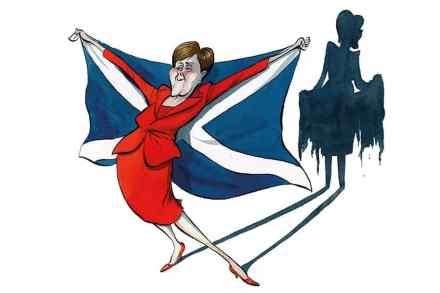
On this week's episode, we'll hear from Katy Balls on the changing face of No.10. (00:49)Next, Michael Bryant on the history of War Crimes. (06:16)And finally, Michael Simmons on Nicola Sturgeon’s secret state. (11:08)Produced and presented by Sam HolmesSubscribe to The Spectator today and get a £20 Amazon gift voucher.

The politics of war crimes

From our UK edition

42 min listen

In this week’s episode: Is Putin guilty of war crimes?For this week’s cover piece, The Spectator’s Editor Fraser Nelson looks at the risks and rewards of labelling Vladimir Putin and Russian soldiers war criminals. He joins the podcast, followed by Michael Bryant, the author of A World History of War Crimes, who writes in the Spectator this week about what the limits put on acts of war in the past can teach us about atrocities committed today. (00:52)Also this week: Is Europe facing a political stand-off between progressives and populists? This week Hungarian Prime Minister Viktor Orban was elected for a fourth term in office with a large majority. While in France, Emmanuel Macron faces a much harder fight from Marine Le Pen than many expected.

The law of war: conflict has always had its limits

From our UK edition

The waging of war has never been a pure free-for-all. Every culture has had a sense of limits: when war could be legitimately declared and how it would be legitimately waged. For ancient civilisations, war was a means of preserving the cosmic order. The ancient Egyptians believed their wars had to be sanctioned by the gods. Under the Zhou dynasty, Chinese armies would wage war only after oracles were consulted. Similar patterns are observable from the ancient Hindus to the North American Indian tribes. The Second Lateran Council in 1139 banned the crossbow and ballista, the weapons of mass destruction of their day, because these armour-piercing instruments were considered too violent.