Michael Arditti

Literary charades: The Writing School, by Miranda France, reviewed

From our UK edition

A recent YouGov survey found that 60 per cent of Britons dream of being writers, compared with 31 per cent who dream of being film stars. Although the chances of success, or even subsistence, are equally remote in both professions, aspirant authors flock to the country’s ever-proliferating creative writing courses. Miranda France’s splendid third book, blending fact and fiction, is set on one such course: a week-long residency in a rural retreat house, which bears more than a passing resemblance to the Arvon Foundation at which France has taught. The unnamed narrator, a Spanish translator and travel writer with two novels to her name, leads an eclectic group of 12 students, in tandem with Tom, a poet, who, having been likened to Ted Hughes, is doing his best to act the part.

Carry on curate: scenes of modern clerical life

From our UK edition

In A Field Guide to the English Clergy (2018), the Revd Fergus Butler-Gallie offered an amusing and informative survey of some of the more eccentric priests and prelates to have served the Church of England over the years. In Touching Cloth, he focuses on a contemporary eccentric: himself. On New Year’s Eve he was taken for a drug dealer, and on Holy Saturday for a blind man The book is an account of a year in his life as a young curate at the Church of Our Lady and St Nicholas in Liverpool. It is loosely structured around the major church festivals, while at the same time making a case for some of the lesser known ones, such as Epiphany. Above all, it is a rich store of anecdotes, both sacred and profane. Butler-Gallie is careful not to reveal too much personal information.

A father’s nightmare: What You Need From the Night, by Laurent Petitmangin, reviewed

From our UK edition

The unnamed narrator of Laurent Petitmangin’s prizewinning first novel, What You Need From the Night, a middle-aged railway engineer and lifelong socialist, is faced with his worst nightmare when his 24-year-old son Frédéric, known as Fus, joins a violent far-right group. The narrator lives with his younger son Gillou and Fus in a village in eastern France, near the Luxembourg border. It’s an insular part of the country, suspicious of the capital and devoid of employment prospects or cultural resources. The sole diversions appear to be football and alcohol. Petitmangin depicts a predominantly male world, accentuated in the narrator’s case by the death of his wife after her three-year battle with cancer.

Artistic achievements that changed the world

From our UK edition

‘Astonish me!’ was the celebrated demand that the impresario Sergei Diaghilev made of Jean Cocteau when he was devising Erik Satie’s ballet Parade. Dominic Dromgoole has taken it as the title for a collection of essays on a series of seismic first nights, ranging across different public art forms. It is a celebration of the artistic achievements that overcame the odds to change the story of culture, and whose effects rippled out to change the world. The author is a distinguished theatre director, and his focus is on performance. He is at pains to reject the notion of the solitary artist and argues that, from the dawn of history, the finest art has been communal.

Reworking Dickens: Demon Copperhead, by Barbara Kingsolver, reviewed

From our UK edition

Putting new wine into old wineskins is an increasingly popular fictional mode. Retellings of 19th-century novels abound. Jane Austen inevitably leads the way, with Val McDermid’s Northanger Abbey, Alexander McCall Smith’s Emma, Joanna Trollope’s Sense and Sensibility, and no fewer than four recent adaptations of Pride and Prejudice. Dickens, too, has been updated, with Michael Rosen’s Bah Humbug and Lorie Langdon’s Olivia Twist. Now Barbara Kingsolver pitches in with a contemporary version of David Copperfield. Her Demon Copperhead is a russet-haired, mixed-race boy from the backwoods of South Virginia.

Sixteen cathedrals to see before you die

From our UK edition

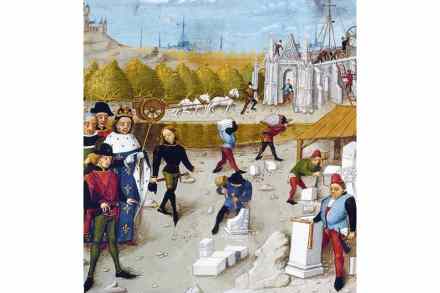
There can be no clearer illustration of the central role that great cathedrals continue to play in a nation’s life than the outpouring of grief that greeted the catastrophic blaze in Notre-Dame in 2019. President Macron described the building as ‘our history, our literature, our imagination, the place where we experienced all our greatest moments’. Indeed, it is impossible to conceive of any major European city without a cathedral at its heart. Emma J. Wells has written an accessible, authoritative and lavishly illustrated account of the building of 16 of ‘the world’s greatest cathedrals’.

Propaganda from the Russian Front: The People Immortal, by Vasily Grossman, reviewed

From our UK edition

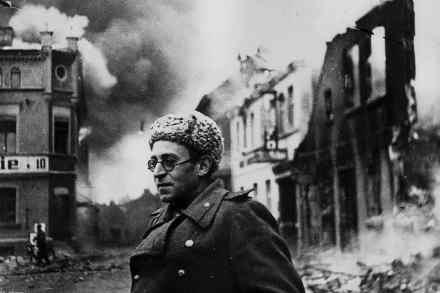
On its posthumous publication in 1980, Vasily Grossman’s Life and Fate was widely compared with War and Peace. For all the novel’s many virtues, the comparison was hyperbolic. In one respect, how-ever, Grossman’s was the more remarkable achievement. Whereas Tolstoy wrote about historical events with the benefit of hindsight, Grossman wrote about ones that he had recently endured. Life and Fate was the third of Grossman’s novels set during the Nazi invasion of the former Soviet Union. The first was The People Immortal, which, like the second, Stalingrad, is now available in an unexpurgated edition, superbly translated by Robert and Elizabeth Chandler.

A gay journey of self-discovery

From our UK edition

Seán Hewitt, born in 1990, realised that he was gay at a very early age. ‘A kind, large woman’ who was babysitting him told him that it was wrong. ‘I was perhaps only six or seven at the time, but she knew. I knew it too. It was as if she had peered into the deep, secret part of my soul and seen what I was hiding.’ Alongside the precocious knowledge came desperate attempts to conceal the truth. Hewitt adopted alien ways of being: ‘I regulated myself; I policed myself.’ As an adolescent, he spread rumours about his exploits with girls. He even watched heterosexual porn on the sitting room television in the hope that his classmates would spot him from the street.

Michael Beloff QC drops names – but they’re not the ones we’re curious about

From our UK edition

‘The law,’ according to W.S. Gilbert’s Lord Chancellor, ‘is the true embodiment of everything that’s excellent’ and, by common consent, Michael Beloff QC has been one of the prime exemplars of that excellence over the past 50 years. While he may not enjoy the profile of contemporaries such as Helena Kennedy, Michael Mansfield and Geoffrey Robertson, the Times, on his retirement, described him as ‘one of the great ornaments of the Bar’, and he himself notes that he has argued more than 475 reported cases (a lawyer’s way of assessing their significance). In a more dubious honour, he has appeared in two novels by his friend Jeffrey Archer.

The making of a poet: Mother’s Boy, by Patrick Gale, reviewed

From our UK edition

Charles Causley was a poet’s poet. Both Ted Hughes and Philip Larkin considered him the finest candidate for the laureateship, which Hughes later won. Now Patrick Gale has made him a novelist’s poet in this richly engaging fictionalised account of his early life. Mother’s Boy is bookended by two world wars: the first, in which Charles is born, and his father Charlie suffers the injuries that would lead to his premature death; the second, in which Charles, who had written schoolboy verse, ‘although poetry was not really his thing’, discovers his poetic voice while serving as a coder in the navy.

Man of mystery: Not Everybody Lives the Same Way, by Jean-Paul Dubois, reviewed

From our UK edition

For Jean-Paul Dubois, as for Emily Dickinson, ‘March is the month of expectation’. A prolific writer, he limits his literary endeavours to that one month each year. Whatever his reasoning, it has produced results. His 2004 novel A French Life won the prestigious Prix Femina and, in 2019, Not Everybody Lives the Same Way was awarded France’s top literary prize, the Prix Goncourt. The premise of the novel is simple. Paul Hansen, a middle-aged building super-intendent, is confined to a Montreal jail for a crime which is not revealed until the end. Life is reduced to its bare essentials when he is forced to ‘share a toilet seat’ with a muscle-bound Hell’s Angel on a murder charge.

A scrapbook of sketches: James Ivory’s memoir is slipshod and inconsequential

From our UK edition

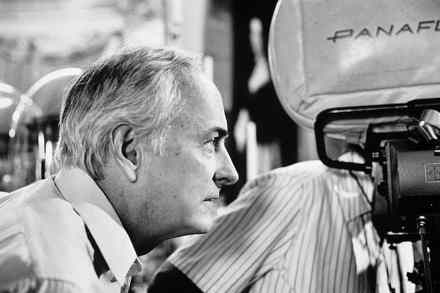
James Ivory and Ismail Merchant formed the most successful cinematic partnership since Michael Powell and Eric Pressburger. Between the founding of Merchant Ivory in 1961 and Merchant’s death 44 years later, the company produced 42 films, more than half of which were directed by Ivory himself. Although its range was wider than is often allowed, the company’s fame rests on its adaptation of late 19th- and early 20th-century novels, among them Henry James’s The Europeans, The Bostonians and The Golden Bowl, E.M. Forster’s Howards End, A Room with a View and Maurice, and Jean Rhys’s Quartet.

From ‘little Cockney’ to playing Queen Mary: the remarkable career of Eileen Atkins

From our UK edition

Eileen Atkins belongs to a singular generation of British actresses, among them Judi Dench, Maggie Smith, Sian Phillips and Vanessa Redgrave, who not only continue to perform on stage and screen in their late eighties but all of whom, apart from Smith, have written their memoirs. Atkins already has a proven literary track record. Having wisely abandoned her first effort, a three-act, 17-minute play, containing ‘murder, incest and sodomy’, written during an early period of unemployment, she went on to co-create the hugely successful TV series Upstairs, Downstairs and The House of Eliott, write the play Vita and Virginia and put together a selection of Ellen Terry’s lectures. Will She Do?

The secret life of Thomas Mann: The Magician, by Colm Tóibín, reviewed

From our UK edition

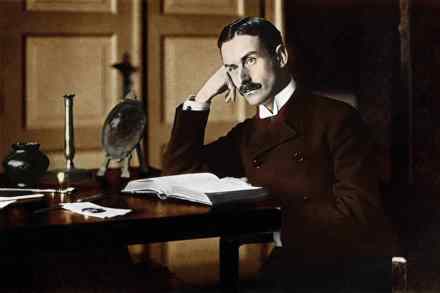
In a letter to Stephen Spender, W.H. Auden, who had married Thomas Mann’s daughter Erika sight unseen in order to provide her with a British passport, wrote: ‘Who’s the most boring German writer? My father-in-law.’ This is clearly not a sentiment shared by Colm Tóibín, who has brought out a fictionalised biography of the Nobel prize-winning novelist. Unlike The Master, Tóibín’s 2004 novel about Henry James, which confined itself to a four-year period when the protagonist was in his mid-fifties, The Magician covers almost the whole of Mann’s life, from his boyhood in Lübeck, which inspired his first and arguably finest novel, Buddenbrooks, to his death in Zurich at the age of 80.

The book as narrator: The Pages, by Hugo Hamilton, reviewed

From our UK edition

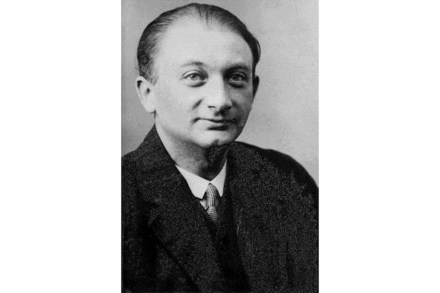
It is a truism that a book needs readers in order to have a meaningful existence. Hugo Hamilton’s The Pages both develops and inverts that relationship. It not only tells a story to its readers; it tells the story of its readers. To paraphrase its own words, it accumulates their inner lives. It becomes the agency that drives them — in one case to his death. The book is Joseph Roth’s 1924 novel Rebellion, which depicts the fate of the disabled soldier Andreas Pum in the chaos of post-war Germany. The copy in question was rescued from Goebbels’s book-burning by a literature student, Dieter Knecht.

How Cecil Beaton offended the Queen Mother

From our UK edition

In December 1979, the 28-year-old Hugo Vickers, dining with a friend, declared: ‘I see little point to life these days.’ The following day, an editor at Weidenfeld & Nicolson rang to tell him that Cecil Beaton, seriously debilitated by a stroke, was looking for a biographer. Vickers visited Beaton three days before his death in January 1980 and, shortly afterwards, was confirmed as his official biographer. This was to give point, along with glamour and excitement, to his life for the next five years. Beaton’s sister, Lady Smiley, exhorted Vickers not to make it ‘one of those gossipy books. There’s so much more.

Celebrating Jesus’s female followers: Names of the Women, by Jeet Thayil, reviewed

From our UK edition

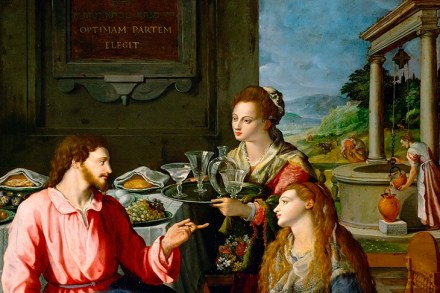
The gnostic Gospel of Mary has long been the subject of controversy, even as to which of the several Marys who feature in Jesus’s life was its author. It is generally assumed to have been Mary Magdalene, not least because it depicts her regular adversary, St Peter, refusing to credit a woman’s testimony. In Names of the Women, Jeet Thayil challenges Peter, along with 2,000 years of church tradition, by placing Mary Magdalene and 14 other women at the very heart of the gospel story. His intention to retell pivotal incidents from a female perspective is evident from the opening words ‘Mary, write,’ which are repeated in various forms throughout the book. The women’s stories are related in short, discrete chapters and clear, almost clinical prose.