Mia Levitin

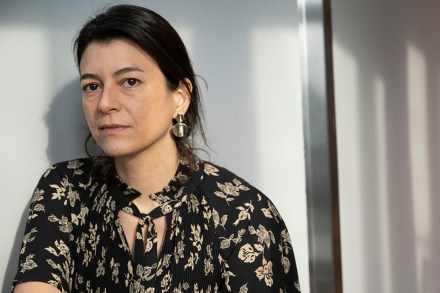
Mia Levitin is a cultural and literary critic. She is the author of The Future of Seduction.

Madcap antics: The Pentecost Papers, by Ferdinand Mount, reviewed

From our UK edition

Ferdinand Mount has had an illustrious career, including posts as head of the No. 10 policy unit under Margaret Thatcher, literary and political editor of The Spectator and editor of the TLS. He is a prolific author to boot, with 29 fiction and non-fiction books under his belt. His latest novel, The Pentecost Papers, is an ‘ill-starred odyssey through an incurably slippery world’, he writes, ‘recorded by several hands – most of them unsteady’. Our first narrator is Dickie Pentecost, a diplomatic correspondent (‘an anachronism,’ he admits, ‘like still keeping a hat-stand in the hall’). Dickie will be familiar to readers of Making Nice (2021), a satire of spin dedicated to Mount’s ‘fellow Wonks and Spads’.

Bad vibrations: Lazarus Man, by Richard Price, reviewed

From our UK edition

Richard Price’s tenth novel follows four characters in the wake of a tenement building collapse in Harlem that kills six people and leaves others missing. Detective Mary Roe is on a mission to find a missing resident whose wife was among the dead. Royal Davis is a funeral home director hoping to drum up much-needed business from the tragedy, going so far as to dispatch his young son to hand out business cards at the site. Felix Pearl is a freelance photographer searching for meaning as he documents the aftermath. The titular resurrected man is Anthony Carter, a 42-year-old former schoolteacher, six months clean of a cocaine addiction that has cost him his job and relationship with his wife and stepdaughter.

More about my mother: Elaine, by Will Self, reviewed

From our UK edition

Inspired by his late mother’s diaries, Will Self’s fictionalised Elaine covers just over a year in the life of its titular character. Elaine Hancock is a trailing wife living in upstate New York, where her husband, John, teaches English at Cornell. It is not for the faint-hearted to write about one’s mother’s sex life. But Will Self is no stranger to outrageousness Zigzagging chronologically, the novel takes place in the mid-1950s – more than a decade before Self lived in Ithaca with his parents, who then separated. He portrays it as a loose time at the faculty: the Hancocks display a ‘masochistic intimacy’ by swapping notes about the people they’ve drunkenly ‘necked’ during evenings out.

Are hallucinogenic drugs losing their stigma?

From our UK edition

We are in the midst of a ‘psychedelic renaissance’. Not since the 1950s and early 1960s has there been so much interest in researching the therapeutic potential of psychedelics. The FDA approved a ketamine derivative for medicinal use in 2019, and has given both MDMA and psilocybin (the psycho-active ingredient in magic mushrooms) ‘breakthrough therapy’ status, putting the drugs on a fast track to approval in the US, with the UK likely to follow suit. Professor David Nutt is a neuropsycho-pharmacologist (say that three times fast) and head of the Centre for Psychedelic Research at Imperial College, London. He was the UK’s ‘drug tsar’ before getting sacked in 2009 for claiming that LSD and Ecstasy are less dangerous than cigarettes, alcohol or horseback riding.

Violence in Silicon Valley: The Wolf Hunt, by Ayelet Gundar-Goshen, reviewed

From our UK edition

‘I believe it’s the writer’s job to force the reader to look where they usually avoid looking,’ Ayelet Gundar-Goshen has said. The Wolf Hunt, her fourth novel translated from the Hebrew by Sondra Silverston, shines a light on racial tensions in America. Israeli-born Lilach and Mikhael Shuster live in Silicon Valley with their 16-year-old son Adam. Like many men in the community, Mikhael works in tech, although rather than developing apps his company makes weapons. Having given up an academic career to follow her husband, Lilach works as a cultural coordinator at a retirement home. ‘Most of the women here coordinated something,’ she observes wryly.

Scenes from domestic life: After the Funeral, by Tessa Hadley, reviewed

From our UK edition

The cover image of Tessa Hadley’s fourth short story collection is Gerhard Richter’s ‘Betty’ (1988), a portrait of the artist’s daughter facing away from the viewer. It’s an apt choice for Hadley’s work, which turns on the fundamental unknowability of human beings. The titular tale, about a widowed mother and her two daughters confronting reduced circumstances, is loosely inspired by Mavis Gallant’s story ‘1933’. Its climax, which pulls off the feat of being both shocking and inevitable, is a testament to Hadley’s skill as a storyteller. Some of the stories’ incidents are entirely internal: in ‘Cecilia Awakened’, a teenaged girl on a family holiday in Florence wakes up ‘inside the wrong skin’, suddenly aware of her parents’ shortcomings.

Femicide in Mexico reaches staggering proportions

From our UK edition

In July 1990, Liliana Rivera Garza, a 20-year-old architecture student, was strangled to death at her home in a borough of Mexico City. Her suspected killer, Ángel González Ramos, an ex-boyfriend, fled and remained at large. Three decades later, buttressed by a movement protesting against violence towards women, her sister returned to Mexico in the hopes of finding justice. An acclaimed author and essayist, Cristina Rivera Garza is a professor of Hispanic Studies at the University of Houston. Liliana’s Invincible Summer begins with her quest to track down the case files. When the paper trail hits a dead end, she turns her detective work to her sister’s personal archive, motivated to memorialise Liliana in the absence of an institutional record.

Are we still prejudiced against professional women?

From our UK edition

In Ladies Can’t Climb Ladders, the social historian Jane Robinson — whose previous books include histories of suffragettes and bluestockings — champions British women who were ‘first-footers’ in the elite fields of academia, architecture, the Church, engineering, law and medicine.One and a half million women joined the workforce during the first world war (at half the pay of their male counterparts). After the war, however, they were expected to cede their jobs to returning servicemen and resume the role of ‘angel in the house’. The 1919 Sex Disqualification (Removal) Act allowed women to qualify for professions, but it was limited in scope.

Svitlana Morenets, Rana Mitter and Mia Levitin

From our UK edition

20 min listen

This week: Svitlana Morenets explains why Ukraine won't accept compromise in any form (00:56), Rana Mitter details Japan's plans for an anti-China coalition (05:43), and Mia Levitin reads her review of Muppets in Moscow by Natasha Lance Rogoff (13:17).  Produced and presented by Oscar Edmondson.

How the Muppets went to Moscow as ambassadors for democracy

From our UK edition

In this engaging memoir, Natasha Lance Rogoff recounts the experience of bringing Sesame Street to Yeltsin’s Russia. A Russo-phile who changed her name from Susan to Natasha as a teenager, Lance Rogoff had been working in Moscow for more than a decade as a reporter and documentary filmmaker when she was approached to be the executive producer of Ulitsa Sezam in 1993. ‘No one can say no to Elmo,’ a Sesame/Children’s Television Workshop executive insisted. Launched in 1969 to bridge the socio-economic gap in education among American pre-schoolers, by the early 1990s Sesame Street had created nearly two dozen foreign co-productions, with programming adapted for cultural differences.

Displacement and disturbance: Seven Empty Houses, by Samanta Schweblin, reviewed

From our UK edition

Thrice nominated for the International Booker prize, the Argentine author Samanta Schweblin is part of a wave of Latin American writers whose work has been dubbed ‘narrative of the unusual’. While Seven Empty Houses is less fantastical than Schweblin’s previous collection, Mouthful of Birds, the unease of the uncanny persists. Written as she was moving from Buenos Aires to Berlin, the seven stories depict displacement (there are a lot of boxes) and disturbance. A woman sneaks around mansions to rearrange them; a man worries about his children staying with his nudist parents; a woman is unmoored after moving back from Spain. One of the most unsettling stories, ‘An Unlucky Man’, is about an encounter between an eight-year-old girl and a stranger in a hospital waiting room.

Isolating with the ex: Lucy by the Sea, by Elizabeth Strout, reviewed

From our UK edition

Elizabeth Strout’s fourth book about Lucy Barton comes on the heels of Oh William!, shortlisted for this year’s Booker Prize. That book tracked Lucy’s growing friendship with her first husband, William, after the death of her second. In Lucy by the Sea, she accompanies William to Maine to ride out the pandemic. Closing the door of her New York apartment, she does not know that she will never see it again; that she will lose a friend and a family member to Covid; and that her relationship with William and her two grown daughters will change. Lucy is at sea at first: she hates the cold, the locals’ distrust of out-of-staters, even the ocean’s ‘bitingly salty smell’.

A post-racial world: The Last White Man, by Mohsin Hamid, reviewed

From our UK edition

Mohsin Hamid’s fifth novel opens with a Kafkaesque twist: Anders, a white man, wakes to find that he has turned ‘a deep and undeniable brown’. Unrecognisable to his entourage, he first confesses his predicament to Oona, an old friend and new lover. Similar metamorphoses begin to be reported throughout the country and violence ensues as pale-skinned militants stalk the streets. In its use of a speculative device, The Last White Man recalls Hamid’s 2017 Booker-shortlisted Exit West, in which migrants teleport through Narnia-like doors.

Life’s great dilemma: Either/Or, by Elif Batuman, reviewed

From our UK edition

In this delightful sequel to her semi-autobiographical novel The Idiot (2017), which was a finalist for the Pulitzer Prize, Elif Batuman returns to Harvard to follow her protagonist Selin during her sophomore year. Selin has spent the summer of 1996 teaching English in Hungary, trailing her friend Ivan. Her crush on him remains unrequited and unconsummated, but she is determined to make up for lost time by having ‘interesting love experiences’ this year. The Idiot was preceded by The Possessed, a New York Times bestseller about Batuman’s fascination with Russian literature.

The sorry state of cinematic sex

From our UK edition

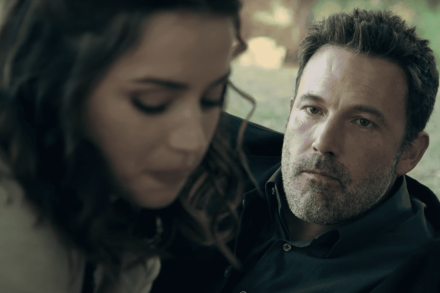
The sexiest scene in Adrian Lyne’s new film, Deep Water, starring Ana de Armas and Ben Affleck, may be de Armas eating an apple—a distant echo of the iconic food scene in Lyne’s 9 ½ Weeks (1986). Based on Patricia Highsmith’s 1957 novel, in which an openly adulterous wife suspects her husband of drowning her latest lover, the plot has more to do with power than pleasure. The 81-year-old Lyne, who hit paydirt with Fatal Attraction (1987) and Indecent Proposal (1993), has re-emerged after a two-decade hiatus since Unfaithful (2002). Sadly, the hotly anticipated return of the erotic thriller is neither erotic nor thrilling, which may explain why it was pulled from theatrical release.

Our strange need for pandemic novels

From our UK edition

Our collective Covid hangover includes facing the inevitable influx of pandemic novels. Following a cameo in Ali Smith’s Orwell Prize–winning Summer and Sally Rooney’s Beautiful World, Where Are You, the pandemic takes centre stage this autumn in titles including Sarah Hall’s Burntcoat and Sarah Moss’s The Fell. Across the Atlantic, authors including Gary Shteyngart and Louise Erdrich are also taking up the gauntlet. 'Practically speaking, the public would say that a novel devoted to influenza lacked plot,' warned Virginia Woolf in her 1926 essay ‘On Illness’. 'They would complain that there was no love in it.' The trick for authors, then, is to add a dash of drama to the monotony inherent to illness and quarantine.

Only time will tell if there’ll be a Great Pandemic Novel

From our UK edition

We had been dreading it like (forgive me) the plague: the inevitable onslaught of corona-lit. Fortunately, the first few titles out of the gate have been in capable hands. Zadie Smith reflected on lockdown in Intimations, a slim volume of personal essays; the virus featured in Ali Smith’s Orwell Prize-winning Summer; and Sarah Moss imagines a lockdown hike gone awry in her forthcoming novel The Fell. The twice Booker-nominated novelist and short story writer Sarah Hall also felt compelled to address the calamity, rising in the dark to write before home schooling her daughter during lockdown. ‘I’m not saying I was particularly equipped,’ Hall explained in a press release. ‘But some part of me — a kind of first responder — wanted to work.

Portrait of a paranoiac: Death in Her Hands, by Ottessa Moshfegh, reviewed

From our UK edition

Like Ottessa Moshfegh’s first novel Eileen (2015), Death in Her Hands plays with the conventions of noir. Vesta Gul, a recently widowed 72-year-old, lives in a secluded lake cabin in rural New England. Walking her dog one day in the woods, she finds a cryptic note under a rock: ‘Her name was Magda,’ it reads. ‘Nobody will ever know who killed her. It wasn’t me. Here is her dead body.’ With no trace of a body or other clues in sight, Vesta pockets the note. Is it a prank, she wonders? Or ‘the beginning of a story tossed out as a false start, a bad opening’? What follows is less of a whodunnit than a portrait of paranoiac unravelling in isolation.

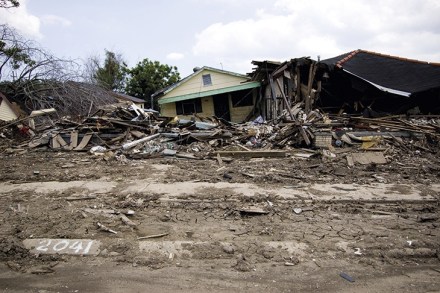
The dark underbelly of New Orleans revealed by Hurricane Katrina

From our UK edition

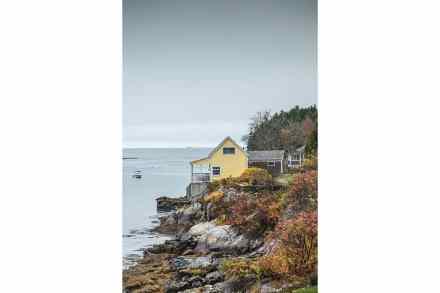
Home, as James Baldwin wrote, is perhaps ‘not a place but simply an irrevocable condition’. Sarah M. Broom’s National Book Award-winning memoir The Yellow House is a sweeping social history and condition report of the New Orleans neighbourhood in which she grew up. The youngest of 12 children in a blended household, Broom was born in 1979 in New Orleans East, seven miles from the iconic street lamps and streetcars of the French Quarter. Her mother, Ivory Mae, bought a house in 1961 with insurance money from the death of her first husband. Widowed at the age of 19 with two children and one on the way, Ivory Mae attended night school to obtain her diploma and worked as a nurse’s aide to support her family.

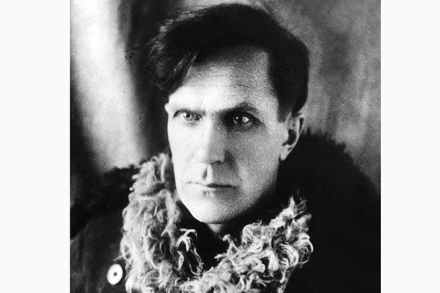
Varlam Shalamov’s Kolyma Tales are among the most harrowing in all literature

From our UK edition

‘I consist of the shards into which the Republic of Kolyma shattered me,’ Varlam Shalamov once told a fellow gulag survivor. Sentenced to hard labour for Trotskyist activities, Shalamov spent 17 years in the gulag, primarily in Kolyma, located at the edge of the Arctic Circle, eight time zones east of Moscow and ‘one of the most uninhabitable places on earth’, according to the geopolitical journalist Tim Marshall.‘Instead of yesterday’s minus 40 it was only minus 25,’ Shalamov writes in one of the stories, ‘and the day seemed like summer.