Matthew Vincent

Is McDonald’s now a safer bet than HMG?

From our UK edition

‘What do you say to a former Treasury economist? Big Mac and fries, please!’ This updated version of the old 1980s joke (the original butts were sociology graduates, and any scouser in uniform) has yet to make it into wider circulation, but it can only be a matter of time. If faced with such a career opportunity, though, a civil servant would arguably be well advised to take it, for the sake of financial security. Because, if global bond markets are to be believed, McDonald’s is now a more reliable institution than Her Majesty’s Government — a fact that has implications for anyone with less appetite for risk than for cholesterol. This unlikely conclusion emerges from the current pricing of corporate and government debt.


The rise and fall of Mr Two-and-Twenty

From our UK edition

‘Mr Ten Per Cent’ has long been a term of contempt. Indeed, finagling Hollywood agents’ decimation of their clients’ earnings resulted in one of the few successful exports of a Spoonerism to California — to explain the difference between a talent agent and a rooster (the latter ‘clucks defiance’). So why has it taken a global credit crisis, the collapse of several major investment banks, and Bernard Madoff’s alleged £50 billion fraud, for anyone to question the remuneration of the agent’s Wall Street equivalent: ‘Mr Twenty Per Cent’? Or, to use the full, double- barrelled monicker more befitting his Mayfair cousin: ‘Mr Two-and-Twenty’?

How to stay sane when computers go crazy

From our UK edition

‘I’m on the beach with my BlackBerry,’ a senior banker told the Financial Times back in early August. ‘Normally, banks run on half or two thirds of normal staff in August, which can make it difficult, so every banker has to remain vigilant, even if you’re on the beach like me.’ But, at precisely the same time, in a small back office at an investment bank on Wall Street, one highly vigilant trader was in a frenzy of activity — constantly checking seemingly unbelievable market data and firing off trade after trade, but still ending the week 30 per cent down, and wiping nearly $1 billion off the value of a major investment fund. The bank was Goldman Sachs. The fund was its flagship Global Equity Opportunities fund. And the trader was a computer.

Smoking ban causes brewers’ droop

From our UK edition

An Englishman, an Irishman and a Scotsman walk into a pub. The Englishman turns to the others and says, ‘What’s that awful smell?’ ‘Och,’ says the Scotsman, ‘it takes a wee while to get used to.’ ‘Ah, so it does,’ says the Irishman, ‘’tis what pubs really smell like when you get rid of the smoke.’ Apologies for the Bernard Manning-style gag, but it illustrates the smoking ban’s unfortunate consequences: as the Scots and Irish will attest, pubs now give off a noxious aroma of stale beer, missed urinals, damp dogs and damp old men and the flatulence of both — plus the industrial-strength air freshener that fails to disguise it all.

Sick of rotten service? See it as a Buy signal

From our UK edition

‘The customer is always right,’ said the 19th-century American retail pioneer Marshall Field — and shoppers at his Chicago store became so enamoured of their omnipotence, and of his assistants’ assistance, that they spent enough to make him the wealthiest businessman in the city. His retail innovations — unconditional refunds and consistent pricing — soon inspired imitators. In Philadelphia, John Wanamaker replicated the model and elevated shoppers at his Grand Depot to the rank of royalty with his derivative decree that ‘The customer is king!’ A new era of customer service was ushered in that, over the ensuing 100 years, saw stock flying off the shelves, and stock prices flying high.

How cyber-vetting catches job liars

From our UK edition

‘Interests: travel, cinema, country walks, volleyball, volunteering at the pet-rescue centre...’ Why do CVs make job applicants sound like contestants in the Miss Cleethorpes beauty pageant, or desperate divorcees on dating websites? It’s possibly because job hunters now believe ‘personality’ is what wins over potential employers, and many applicants are prepared to lie about themselves to make the right impression.

A duvet day’s as good as a pay rise

From our UK edition

Ever wanted to kill your boss? Well, now you can — and, as long as it doesn’t become a regular occurrence, you won’t even have to pay tax on the cost of the exercise. Welcome to the wacky world of employee benefits and workplace incentives. Here, of course, the corporate regicide is imaginary — the scene is played out by characters called Seymour Deals and Lord Fred Bare at a ‘team-building murder mystery event’ for bank and insurance staff, staged by a consultancy firm called Progressive Resources. As its managing director James Coakes explains: ‘The financial industry ... is renowned for its staff development programmes.’ And  these programmes are part of a growing trend.

Think outside the jargon box

From our UK edition

‘Dinosaurs ... think inside the box. Dolphins ... occupy the space outside the box. ‘Dinosaurs ... think inside the box. Dolphins ... occupy the space outside the box. The dinosaurs’ negative headset creates a lose-lose situation, whereas the dolphins’ can-do headset enables them to score a try!’ ‘Set out to leave the first vapour trail in the blue-sky scenario!’ Readers of the Financial Times, and viewers of The Office, will probably recognise these words of wisdom imparted by corporate thought-leader Martin Lukes and branch manager David Brent. But even if you’ve never encountered the fictional creations of, respectively, Lucy Kellaway and Ricky Gervais, you may well recognise their language from your own working life.

Switching channels

From our UK edition

‘Have you had an accident at work that’s led to a loss of income?’ ‘Would you like to consolidate your debt?’ ‘Do you want to release equity from your property?’ If you’ve ever had the misfortune to find yourself watching ITV1 during the daytime (according to the British Market Research Bureau, not a single Spectator reader admits to doing so, so take my word for this), you’ll recognise those questions from the relentlessly downmarket ads that the channel now carries. But — in an irony apparent to industry watchers, if not to daytime couch potatoes — those same questions can just as easily be asked of the company itself.

A compost heap of hot stocks

From our UK edition

‘A piece of sh*t’ was the non-technical term used by Merrill Lynch analyst Henry Blodget to describe a dotcom stock called 24/7 Media, back in October 2000. To him, it was just another ‘new paradigm’ company to foist on an overheating market. To some observers today, the flotation on the Alternative Investment Market (Aim) of another ‘renewables’ company may look just as suspicious. In June 2006, self-styled ‘hot-dung’ stock Geotrupes Energy proved it is actually possible to go public with what is, technically, a big piece of the afore-mentioned. That’s because Geotrupes develops projects using dung, or ‘biomass’, as a source of energy, as well as more conventional sources such as wind and hydrodynamics.

Hot stocks and naughty boys

From our UK edition

What do the following have in common: metatarsally challenged footballing wonderkid Wayne Rooney, two-time-Ashes-winning spin bowler Phil Edmonds, one-time Greek oil explorer Frank Timis, and ‘Brian Cohen’, the eponymous hero of The Life of Brian? Is it that they are not messiahs, but in fact rather naughty boys; or that they are all regarded favourably by Gordon Brown; or that you can invest in them all via the London Stock Exchange? This is, of course, a trick question. The answer is, implausibly enough, all of the above, because they all represent controversial but strangely tax-efficient investment opportunities on London’s junior stock market. Welcome to the colourful world of Aim.

Other people’s debts

From our UK edition

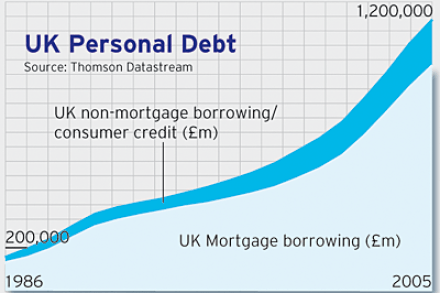
‘A financier is a pawnbroker with imagination,’ claimed Arthur Wing Pinero in his 1893 play The Second Mrs Tanqueray. ‘A financier is a pawnbroker with imagination,’ claimed Arthur Wing Pinero in his 1893 play The Second Mrs Tanqueray. His work may be rarely seen in the West End these days, but his words are enjoying a revival in the City. Earlier this week financiers found the imagination to invest £49 million in the flotation of a modern-day pawnbroker. Where once the Square Mile mantra was to profit from ‘other people’s money’, it is now about profiting from their lack of it. Debt is a growth sector of the UK stock market, in line with the growth in consumer borrowing. Since 1997 personal debt has more than doubled to almost £1.