Matthew Parris

Matthew Parris

Matthew Parris is a columnist for The Spectator and The Times.

The four big questions our politicians need to answer

From our UK edition

Anyone would think (anyone, that is, who has followed our three main annual party conferences this autumn) that Britain’s principal political parties were proposing distinct solutions to Britain’s problems. After all, the heat if not the light emitted by domestic politics in recent years has been unremitting. Sir Keir Starmer spent more than half his conference speech in Liverpool attacking Rishi Sunak and the last 13 years of Conservative government. Mr Sunak, meanwhile, rose to a level of scorn quite untypical of this relatively polite man, when in his Manchester speech he laid into another relatively polite man, Sir Keir, and the Labour party he leads.

The folk wisdom that’s just wrong

From our UK edition

I was only a boy when I first began protesting against the idiocy of so much of the folk wisdom handed down to us. Proverbs, adages and aphorisms (‘a pithy observation that contains a general truth,’ says my dictionary) are recited to children by grown-ups, often in a singsong, holier-than-thou voice; and I couldn’t help noticing that many were quite evidently untrue, contained thoroughly bad advice, and some nuggets of supposedly sage proverbial wisdom are flatly contradicted by other nuggets of sage proverbial wisdom. I started taking a note whenever my attention was caught by yet another glaringly obvious example of a proverb, sanctimonious or trite, that was just plain wrong.

Matthew Parris, Dan Hitchens and Leah McLaren

From our UK edition

23 min listen

Matthew Parris, just back from Australia, shares his thoughts on the upcoming referendum on the Aboriginal and Torres Strait Islander Voice (01:08). Dan Hitchens looks at church congregations and wonders why some are on the up, while others are in a spiral of decline (08:32), and Leah McLaren describes the delights of audio and tells us why young children should be heard, but not seen (17:57).

Italy’s new wave: Europe’s escalating migrant crisis

From our UK edition

45 min listen

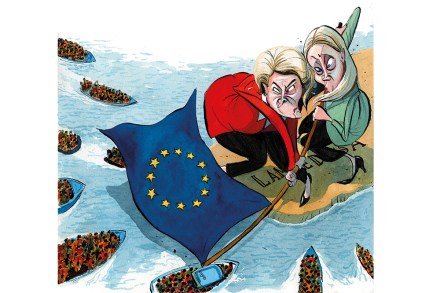
This week: Christopher Caldwell writes The Spectator's cover piece on Italy’s new wave of migrants. This is in light of the situation in Lampedusa which he argues could upend European politics. Chris joins the podcast alongside Amy Kazmin, Rome correspondent at the Financial Times, to debate Europe’s escalating migrant crisis. (01:23) Also this week: In his column, Matthew Parris writes about Australia’s Voice vote, a yes/no referendum being held on whether to establish a new body which will advise parliament on matters relating to Aboriginal and Torres Strait Islander peoples.

Australia’s disastrous indigenous voice referendum

From our UK edition

My partner and I have just returned from the most magical trip. As guests of Western Australia’s tourist board we’ve driven almost 1,500 miles across the top left-hand corner of the Australian continent. This is the north-west: a landscape like nowhere else on the planet. Three times the size of England, they call it the Kimberley. I had expected to find Aboriginal people living in these landscapes. They used to, for 60,000 years Starting from a town called Broome (easy to fly there) we made it overland to Darwin in the Northern Territory. We took about ten days in an all-singing, all-dancing Toyota camper van, sometimes sleeping under the stars, more often staying in comfortable chalets at a string of cattle stations turned campsites dotted along our route.

Britain has an entitlement problem

From our UK edition

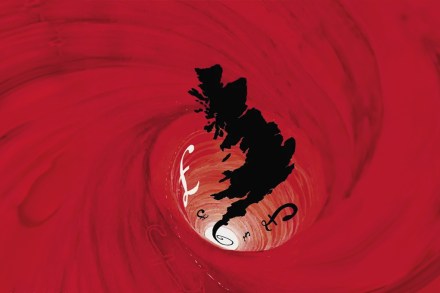
An Institute for Fiscal Studies paper, published at the end of last month, makes grim reading. Through the prism of the media reports it generated (‘One in 11 workers in England could be NHS staff by 2036,’ said the Guardian; ‘NHS staff will make up 49 per cent of the public sector workforce in 2036,’ said the Times), the most sensational finding was that our health service will be eating up an ever-increasing share of public spending. But, as so often, this particular cuckoo in the nest of public provision is only the most newsworthy of so many indications of Britain’s long, slow slide into insolvency. The gap grows between what we consider ourselves entitled to and what our governments can afford The paper is part of the Institute’s series Green Budget 2023.

The hypocrisy of Nigel Farage’s supporters

From our UK edition

Much heartened by the barrage of criticism I’ve been receiving from both Spectator and Times readers, I’m returning to the subject of Coutts’s customer selection. I’ve learned over the years how to spot the emergence of a herd opinion, not just by the volume of shouts but also by how members of the herd begin copying and repeating – often word for word – each others’ phrases; and what we now call ‘memes’ take shape. My experience is that when public sentiment begins to attract these characteristics, it is almost always wrong. I never forget the advice of my late grandfather, Squadron Leader Leonard Littler: ‘Whenever I hear of a great wave of public indignation, I am filled with a massive calm.

In defence of Coutts

From our UK edition

Dame Alison Rose should not have resigned as head of NatWest over the Nigel Farage affair – and ministers who forced this by flinching in the face of a silly media storm should be ashamed of themselves. In the great Coutts debate this columnist finds himself in a minority. I express no opinion on the wisdom or otherwise of the private bank’s decision to drop Farage as a client, believing this to be a private matter between himself and Coutts. I’ll pose a number of questions, but first there’s something we must get out of the way. Whether or not Coutts was wise to exclude Farage, a bank like this has, as the law stands, a right to discriminate in its choice of customers.

Don’t write off Rishi

From our UK edition

Were I sure this was about me alone, I’d hardly bother to mention it: but I may be typical of quite a few others. If so, it’s a touch too early for the Tories to abandon hope. Last Saturday I wrote in the Times about Sir Keir Starmer, suggesting he lacks the voice or personal command of a prime minister who will need to bully the left into division lobbies and knock warring heads together within his party. Some 900 online readers responded beneath that column. A few agreed with me but the overwhelming majority simply raged against the present government, not a few suggesting that anything would be better than this.

Our God complex

From our UK edition

Pantomime is meant to be silly and perhaps superficial, but fun. One does not (for example) join an audience for Cinderella to be driven into deep contemplation of life, morality and the cultural roots of human duty. But that is what happened to me last Saturday afternoon while watching the most marvellous performance at Nevill Holt of Rossini’s La Cenerentola, ossia La bontà in trionfo (‘Cinderella, or Goodness Triumphant’).

Why Conservatives must get behind Rishi

From our UK edition

The hubbub about Boris Johnson is blocking the view. He is, of course, an easy and undemanding topic of conversation. His behaviour is, of course, unedifying. His unsuitability for office is beyond question. And his capacity to horrify, amuse, disgust or worry us appears limitless. So here we all are again, talking about ‘Boris’. And who am I to complain? I’ve been writing all this for at least a decade, the well of my indignation never runs dry, and – frankly – Johnson has put food on my and many a fellow commentator’s table for almost as long as we can remember. We’d miss him.

Red Rishi

From our UK edition

39 min listen

On this week’s episode: Price caps are back in the news as the government is reportedly considering implementing one on basic food items. What happened to the Rishi Sunak who admired Margaret Thatcher and Nigel Lawson? In her cover article this week, our economics editor Kate Andrews argues that the prime minister and his party have lost their ideological bearings. She joins the podcast, together with Spectator columnist Matthew Parris, who remembers the last time price caps were implemented and writes about it in his column. We also take a look at the experience of being addicted to meth. What is it like, and is it possible to turn your life around after that? The translator Eva Gaida has managed it, and writes powerfully about her experience in this week’s issue.

Price caps are a slippery slope

From our UK edition

Sometimes it’s the little things that depress most. I groaned last week to hear the news item. The government is contemplating a ‘price cap’ on ‘basic items’ in ‘supermarkets’. Forgive the quotation marks, but each of these terms is so horribly problematic that one has to start by asking what they even mean. Has Conservatism in the 2020s lost its ideological moorings? Or perhaps one should start with a quick recapitulation of the history of this idiotic idea, because price control has been tried before, first by a Labour government, and then by their Tory successors who went on to consolidate the folly.

Could Derbyshire survive on its own?

From our UK edition

Since at least the beginning of this century there has been a mood abroad – cultural as well as political – to trash the place that contributes most to British culture and the British economy. Without London and its population, we in the rest of the United Kingdom would be unable to continue living in the manner to which we have become accustomed and which we seem to consider our birthright. But suggest as much in the English provinces, the West Country, East Anglia, the Home Counties, Scotland, Wales or Northern Ireland, and people look at you as though you were mad – or, worse, secretly in the pay of the spivs and swindlers of Canary Wharf and the City of London. Have we Derbytanians the least idea of the wealth transferral from the metropolis upon which we depend?

On looking without seeing

From our UK edition

Guadix is a windy, dusty town on the slopes of the dry side of the massive ridge that is the Sierra Nevada in Andalusia, Spain. These slopes are the rain-shadow badlands of the province of Granada: a place few foreign tourists visit. The other side of the mountain, the Mediterranean side, is called the Alpujarra and seems a world away: verdant, flowery slopes with orchards, pastures and little whitewashed villages clinging to them: a landscape and people made famous by the English travel writer Gerald Brenan, who lived there. Our music was not saying anything to these birds, any more than their chirruping said anything to us But our side could not be more different. I say ‘our’ because my partner and I own two cave houses in Guadix, and often stay.

The problem with St Paul

From our UK edition

On Easter Saturday, I wrote for the Times about the victimhood of Christ, describing this as a regrettable foundation for a world religion. In online posts beneath my column came hundreds of comments from Christians protesting that I’d misunderstood the Crucifixion’s meaning, which was (they said) the ultimate victory. Triumphantly, Jesus redeemed our sins. Or ‘atoned’ for them. Along with atonement and redemption, expressions like ‘ransomed’, ‘forgiven’, ‘pardoned’, ‘paid for’, ‘healed’ and ‘washed away’ recurred, as well as ‘sacrifice’ – Jesus’s blood-sacrifice to expiate the world’s sins: a kind of reparation. The notion of release – from slavery, debt or imprisonment – suffuses these responses.

My messiah complex

From our UK edition

In June 1999, I described on this page jameitos, tiny, blind, albino crabs on the sea bottom in a cave in Lanzarote, occasionally caught in a shaft of sunlight they couldn’t see. ‘Might there be searchlights moving across the surface of our world, too,’ I wrote, ‘catching [us] within their purview, and we the objects of this silent inspection, all unknowing?’ It was a long overnight flight from South America last month. Though comfortable, I couldn’t sleep, so I accessed the in-flight entertainment menu, selected ‘Comedy’ and decided to try The Truman Show, a 1998 American movie, not really a comedy, with (I later learnt) something of a cult following.

What I’ve learned from a lifetime of travelling

From our UK edition

In the language of the Mapuche people of Patagonia, futa (I’m told) means ‘river’ and leufú means ‘big’. So Spanish--speaking Chile could have called it the Rio Grande but instead have kept the indigenous name, Futaleufú, for this sinuous, deep, swift-flowing river, hurling its clear turquoise waters at the black basalt that flanks its roaring gorges. That this is one of the finest white-water rafting and kayaking rivers in the world is uncontested. And the river has given its name to the small town nestling beneath snowy Andean peaks and glaciers, past which it flows. Before crossing the border into Argentina on a dirt road, six miles upriver, I spent a day in Futaleufú last week.

Why ‘safe routes’ to asylum can’t work

From our UK edition

I have never met Enver Solomon, the chief executive of the Refugee Council, but I have not the least doubt that his heart is in the right place. And that’s the problem. In the current and coming furore about small boat crossings and what to do about them, too many who comment are concerned to show that their heart is in the right place. Too few appear ready to contemplate the natural rather than the hoped-for consequences of stopping the government’s plan to deport those who come here without permission to a third country like Rwanda.

Death, beauty and the writing of a will

From our UK edition

Perhaps there’s a German word – for there’s no English one – for that alloy of liberation with melancholy that comes with having faced up to something sad. I have made my will. A draft for my English will lies on the desk beside me, and early this week I flew to Catalonia to make the Spanish will that my brisk and capable Bakewell solicitor said I’d need. In decor, lawyers’ offices breathe the same mood across the planet. Gravity, money, a certain self-regard I’m in excellent health for a man of 73 and, God willing, may have many years left; but there’s no gainsaying it – these things need to be sorted out in an atmosphere of calm when there’s time to get it right. It’s what my father did, without a fuss, and Dad is my inspiration in these matters.