Matthew Parris

Matthew Parris

Matthew Parris is a columnist for The Spectator and The Times.

The book that made me a Tory (maybe I’ll give it to Osborne)

His father’s dental cast, writes Graham Greene near the beginning of The Power and the Glory ‘had been [Trench’s] favourite toy: they tried to tempt him with Meccano, but fate had struck’. Trench is a dentist, trapped by his chosen profession in a godforsaken Central American hellhole. Greene ponders the way, when we are very young, that chance events, objects or people may become father to the man. ‘We should be thankful we cannot see the horrors and degradations lying around our childhood, in cupboards and bookshelves, everywhere.’ Too true. Pookie made me a Tory. My new copy of Pookie Puts the World Right has arrived. I’d lost the old one, but tracked down another on the internet.

The winged rabbit who made me a Tory

His father’s dental cast, writes Graham Greene near the beginning of The Power and the Glory ‘had been [Trench’s] favourite toy: they tried to tempt him with Meccano, but fate had struck’. Trench is a dentist, trapped by his chosen profession in a godforsaken Central American hellhole. Greene ponders the way, when we are very young, that chance events, objects or people may become father to the man. ‘We should be thankful we cannot see the horrors and degradations lying around our childhood, in cupboards and bookshelves, everywhere.’ Too true. Pookie made me a Tory. My new copy of Pookie Puts the World Right has arrived. I’d lost the old one, but tracked down another on the internet.

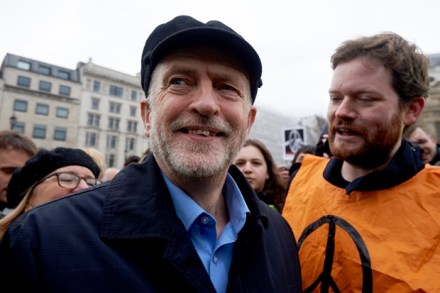
How Jeremy Corbyn may split – and, thereby, destroy – the Conservative Party

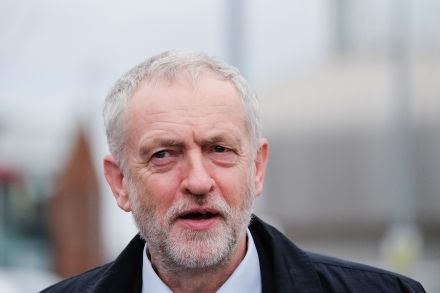
‘Why this sudden restlessness, this confusion?’ asked C.P. Cavafy in his poem ‘Waiting for the Barbarians’: Because night has fallen and the barbarians have not come. And some who have just returned from the border say there are no barbarians any longer. And now, what’s going to happen to us without barbarians? They were, those people, a kind of solution. All through your and my life the Labour party have been at the gates of Downing Street, and often enough stormed them, only to be beaten back at a subsequent election. What might happen to the Conservative party if those barbarians disappear? At first, Tories rejoiced at the Labour leadership election. The barbarians are fighting among themselves and no longer threaten us! Hurrah!

It’s the Labour moderates who need to get real

It has become commonplace to remark that there exists in Britain a mainstream political grouping that seems to be dwelling on another planet. Lost in fantasy, harking back to days long-gone, it lives on illusion. Time and the modern world have passed it by. Fleet Street and fashionable opinion rage against these mulish daydreamers for turning their backs on the voters and depriving Britain of an effective opposition. And all this is true. In only one detail are Fleet Street and fashionable opinion mistaken. They’ve got the wrong grouping in their sights. It is not Jeremy Corbyn, John McDonnell and their crew who fit this picture: it is the Labour moderates. Neo-Blairites and neo-Brownites are in cloud cuckoo land — and in control of the parliamentary Labour party.

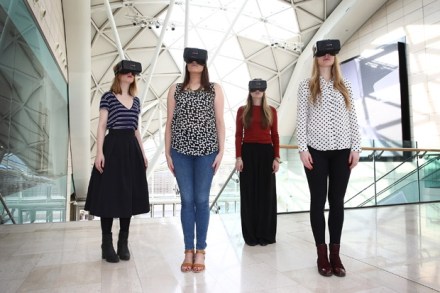
Are we ready for virtual-reality news?

John Humphrys staggering around in a piece of ‘virtual reality’ headgear that looked like binoculars and made him feel sick was as attention-grabbing as radio can be. So I listened in last week as the intrepid Today presenter tried out infotech’s latest gimmick. The Oculus Rift began life on a crowdfunding website, heralded as an exciting new tool in virtual reality: a tool that computer-games boffins had long been trying to crack. Facebook bought it, and Rift should hit the market this month. I experienced a forerunner years ago when sampling for my newspaper a day in the life of a bus driver.

From Rhexit to Brexit

We are all of us to some degree prisoners of our own experience. Experience may teach, of course — may counsel or illuminate. But it is also capable of trapping us. We make connections in our imagination between what we saw then and what we see now, and when these memories are of a personal kind and unavailable to others, we’re inclined to treat them as something special: our private mentors. Sometimes that mentoring will be inspired, sometimes mistaken. I once (in the months before last year’s general election) decided to block my ears to opinion pollsters warning that the Tories were hopelessly bogged down, and instead followed my own hunch.

Why I now believe in positive discrimination

The Prime Minister no doubt knew he would be fanning the flames when he waded into the argument about the admission of black undergraduates to universities like Oxford and Cambridge. We should do him the courtesy of trusting he means it when he says he feels strongly about discrimination in the awarding of university places – and I think he does. In this week’s issue Toby Young marks David Cameron’s essay with tutorial authority, and finds his case wanting. Particularly valuable among Toby’s marginal notes is his point that you can’t accept applicants if they haven’t applied – and black and working-class students disproportionately don’t. But we enter a vicious circle here.

Terry Wogan: the greatest light broadcaster who ever lived

Terry Wogan has died, age 77. This is an extract from a 2007 Matthew Parris article in the Spectator, who looked at an under-examined aspect of his genius: his voice. Terry Wogan is simply the greatest light broadcaster who ever lived. Millions of words have been written on his genius, and I shall not add to them. There can never quite be another. But many years ago, when Radio Two chiefs were looking for a presenter to occupy the remaining hours of the weekday morning, they do seem to have been looking for another Wogan. What, they must have asked, are the essentials of Woganism?

It’s good news that Rhodes’ statue is here to stay

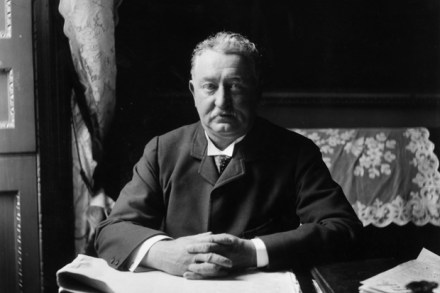
Oxford University's controversial statue of Cecil Rhodes will stay in place after Oriel College ruled out its removal. The decision came following the 'Rhodes must fall' campaign - which called for the statue to be taken down. Here, in a piece published in last week's Spectator, Matthew Parris offers his solution to the situation: Lobengula was the second king of the Matabele people in what is now Zimbabwe. He was also the last. Cecil John Rhodes smashed his authority, and broke his tribe. The Matabele (a breakaway people from the Zulu kingdom to the south) had been making their way north, and by the time Rhodes arrived on the scene were in effective control of a vast area of southern Africa, stretching from the Limpopo river to the Zambezi.

Rhodes’s statue should remain, on one condition

Lobengula was the second king of the Matabele people in what is now Zimbabwe. He was also the last. Cecil John Rhodes smashed his authority, and broke his tribe. The Matabele (a breakaway people from the Zulu kingdom to the south) had been making their way north, and by the time Rhodes arrived on the scene were in effective control of a vast area of southern Africa, stretching from the Limpopo river to the Zambezi. Matabeleland was rich in -minerals and the tribe were being pestered by white prospectors. Rhodes saw his opportunity. He made an ally of Lobengula, who had been king since 1869, and in 1888 persuaded him to grant Rhodes’s emissaries an exclusive deal known as the Rudd Concession.

Here’s my solution to the problem of the Cecil Rhodes statue at Oriel College

Lobengula was the second king of the Matabele people in what is now Zimbabwe. He was also the last. Cecil John Rhodes smashed his authority, and broke his tribe. The Matabele (a breakaway people from the Zulu kingdom to the south) had been making their way north, and by the time Rhodes arrived on the scene were in effective control of a vast area of southern Africa, stretching from the Limpopo river to the Zambezi. Matabeleland was rich in minerals and the tribe were being pestered by white prospectors. Rhodes saw his opportunity. He made an ally of Lobengula, who had been king since 1869, and in 1888 persuaded him to grant Rhodes’s emissaries an exclusive deal known as the Rudd Concession.

Our leaders’ suicidal urge to sex it up

It has been over a month since Parliament voted to bomb Isis in Syria, yet in that time there have been fewer raids than there are Lib Dem MPs. A flurry of three attacks took place immediately following the vote on 1 December, but since then there has been only one — by an unmanned Reaper drone on Christmas Day. And even that only ‘probably’ killed some Isis guards at a checkpoint. The three earlier manned missions had focused on an oil field that a US military spokesman later described as having previously suffered ‘long-term incapacitation’ at the hands of the US air force.

Spectator books of the year: Matthew Parris on a rattling great history of the railways

Simon Bradley’s compendious yet rattling The Railways: Nation, Network and People (Profile Books, £25) achieves magnificently a difficult double. Learned and deeply researched, it will not only impress railway buffs but tell even them a great deal they didn’t know; yet this is also popular history, which will engage and entertain any lay reader remotely curious about train travel in Britain.

The question Christianity fails to answer: ‘Who is my neighbour?’

‘Fine old Christmas,’ wrote George Eliot, ‘with the snowy hair and ruddy face, had done his duty that year in the noblest fashion, and had set off his rich gifts of warmth and colour with all the heightening contrast of frost and snow.’ Thus opens the second chapter of Book II of The Mill on the Floss. I had found the passage when searching for a secular reading for my newspaper column’s readers at a carol service at St Bride’s church in Fleet Street a couple of nights ago. I knew at once I’d found what I wanted. Eliot had been my first port of call. You can be confident she will avoid religiosity yet never take refuge in mere jollity. She is never pat.

Is the Archbishop of Canterbury forsaking God?

The Archbishop of Canterbury, we heard during the BBC’s Songs of Praise broadcast last Sunday, ‘doubted God’ after the Paris attacks. On a walk on Saturday (he told listeners) he said to God, ‘Where are you in all this?’ As we are in confessional mood, here’s an anxiety of my own. The Paris atrocity has not occasioned me any new doubts, but Justin Welby’s remarks have caused me to doubt Archbishop Welby. Speaking on behalf of God, I have to ask the Archbishop: ‘Justin, where are you in all this?’ I’m not a believer, but I try to understand what believers believe.

Here’s what’s wrong with the ‘public sector ethos’

An infuriating benefit of readers’ online comments beneath the efforts of a columnist like me is that as you read the responses an understanding dawns of the column you ought to have written. Some readers are stupid, unpleasant or obsessive; but most are not. As you learn their reactions you see where your argument was not clear, where you were short of information, and where you were simply wrong. But more than that, you sometimes tumble for the first time to where the nub of a problem that perhaps you danced around may lie. Last Saturday I wrote for the Times about the self-righteousness of spokesmen for public services threatened by government cuts; about veiled threats by the police to stop policing, and by barristers enraged by cuts to legal aid.

Without a word of advice, Paul Methuen set me free

At the time he will barely have noticed me. In his mid-forties and (to me at 18) middle-aged, he was our host at a dinner in his beautiful old house in Kingston, Jamaica: a wooden mansion that in its time had seen the town spread up from the harbour and push back the sugar plantations. But as you’d expect from a man for whom garden design was a passion, Paul’s house had kept its generous grounds from the age of sugar. Everything about Paul Methuen was generous: from his hospitality, to the sheer variety of his guests, to his warm and wicked sense of mischief and the measures of the whisky he dispensed (and consumed).

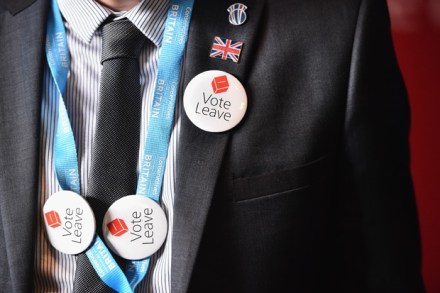
OK: I’m convinced: one EU referendum might not be enough

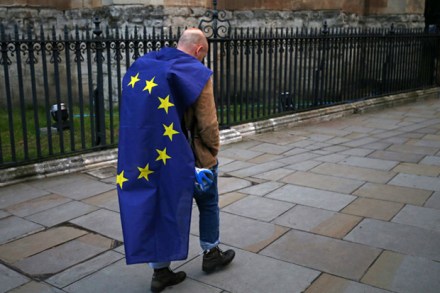
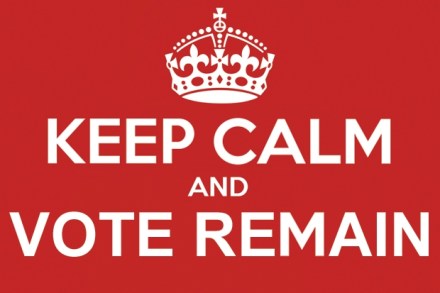
We now have to take seriously the possibility that in the EU referendum Britain will vote to leave. I had hardly contemplated that. At the time (in January 2013) I saw the Prime Minister’s pledge to consult the electorate as a tactical move, designed to conciliate his party. It may well have helped David Cameron hold off the Ukip at the last general election, and secure the winning edge his party achieved. But those of us who supposed (as did I) that the electorate would never vote to leave, so a referendum was a pretty low-risk gamble with our membership of the EU, may wonder now if we were right.

These days, compassion is for hacks and Lib Dems

There’s a hard, hard mood out there among the public and I don’t think our newspapers get it at all. Could it be that the general populace are now more cynical than their journalists? At Tim Farron’s closing speech to his Liberal Democrat conference in Bournemouth last week, I sat through nearly an hour of one of the biggest cartloads of sanctimonious tosh it’s been my fate to endure in decades. And who do you suppose was lapping this up as avidly as any misty-eyed Lib Dem conference-goer? The hardened hacks, the sketchwriters, analysts and reporters. The press are old-fashioned: they love this emotional stuff. But the 21st-century public have been immunised against it.

What Corbyn – like Cameron – understands about the cold, dark heart of the British electorate

There’s a hard, hard mood out there among the public and I don’t think our newspapers get it at all. Could it be that the general populace are now more cynical than their journalists? At Tim Farron’s closing speech to his Liberal Democrat conference in Bournemouth last week, I sat through nearly an hour of one of the biggest cartloads of sanctimonious tosh it’s been my fate to endure in decades. And who do you suppose was lapping this up as avidly as any misty-eyed Lib Dem conference-goer? The hardened hacks, the sketchwriters, analysts and reporters. The press are old-fashioned: they love this emotional stuff. But the 21st-century public have been immunised against it.