Matthew Lynn

Matthew Lynn is a financial columnist and author of ‘Bust: Greece, The Euro and The Sovereign Debt Crisis’ and ‘The Long Depression: The Slump of 2008 to 2031’

Europe can’t win a trade war against the US

From our UK edition

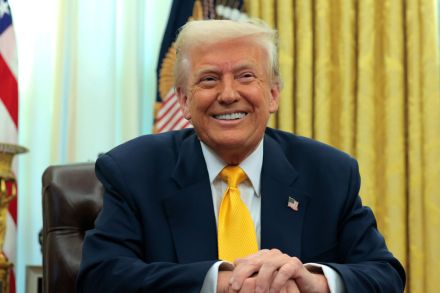
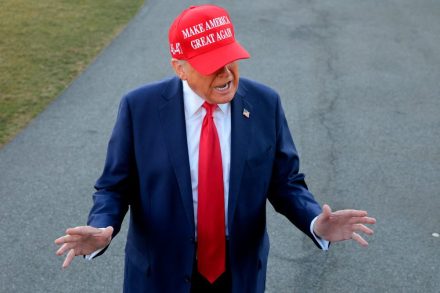
It will hit back immediately. It will target the industries that will hurt the most. And it won’t be bullied or pushed around. We can expect to hear lots of tough rhetoric from European leaders today as the bloc prepares to retaliate against Donald Trump’s threat of tariffs of 10 per cent or more on European exports to the United States. There is just one problem, however. It can talk as tough as it wants to – but it is still going to lose.  With 25 per cent levies already in place on Canada and Mexico, and 10 per cent on China, steep tariffs on Europe now look inevitable.

Why Rachel Reeves’ growth plan is doomed

From our UK edition

The wait is over. After six months in government, Chancellor Rachel Reeves has decided that today is the day to step forward and pull the big lever marked ‘growth’. In a widely-trailed speech, she has outlined all the different ways her government is going to get the economy moving again. There is just one snag. The lever isn’t attached to anything. In reality, Reeves doesn’t have a clue where growth comes from – and that means her big speech this morning won’t change anything.  Reeves has, at least, finally got round to detailing how she plans to make the UK the fastest-growing economy in the G7. Cynics might wonder why she has been keeping it all to herself for so long, and why she didn’t include any of the new measures in her Budget. Still, never mind.

Britain is on track for a ‘Reeves recession’

From our UK edition

Business confidence is falling. Companies are warning that profits will be lower than expected, and they are already planning to cut their output. The Chancellor Rachel Reeves might have hoped that this week would open with better news on the economy, especially as she is planning a major speech to relaunch her plan for growth on Wednesday. Instead, it has started with yet more bad news. In reality, a ‘Reeves recession’ is now a certainty – and the Chancellor won’t be able to escape the blame for that. The CBI reported today that British businesses are braced for a ‘significant fall’ in trading over the next few months.

Two big problems with the Sainsbury’s job cuts

From our UK edition

You won’t be able to get a cup of coffee. Nor will you be able to pick up something from the patisserie or the pizza oven. A trip to Sainsbury’s was hardly the most exciting thing in the world, but it is about to get a little bit duller, with the grocery chain set to get rid of its last remaining cafes, as well as speciality counters. And the Labour government is to blame for that. Sainsbury’s had already closed its fresh meat, fish and deli counters, and announced this week that it was closing down the cafes and counters that used to be a regular feature of its stores as well, with the loss of 3,000 jobs. You can still trudge around and pick up some frozen pizza and washing powder, so long as you are happy to scan them yourself at the till, but that is about it.

Industry tragedy, Trump vs the Pope & the depressing reality of sex parties

From our UK edition

42 min listen

This week: the death of British industryIn the cover piece for the magazine, Matthew Lynn argues that Britain is in danger of entering a ‘zero-industrial society’. The country that gave the world the Industrial Revolution has presided over a steep decline in British manufacturing. He argues there are serious consequences: foreign ownership, poorer societies, a lack of innovation, and even national security concerns. Why has this happened? Who is to blame? And could Labour turn it around? Matthew joined the podcast, alongside the head of the Trades Union Congress (TUC), Paul Nowak. (1:05) Next: the Pope takes on President TrumpThe Pope has nominated Cardinal Robert McElroy to be the new Archbishop of Washington.

Rachel Reeves is getting an expensive lesson in economics

From our UK edition

It may prove to be just the first of many screeching U-turns. Whilst hobnobbing among the plutocrats in Davos this week, the Chancellor Rachel Reeves has admitted that she may have to tweak her clamp-down on non doms, to make it less punitive for anyone who isn’t British, and happens to have a bit of money, to live in the UK. Sure, it is good that Reeves is learning from her mistakes. The only trouble is it is going to prove a very expensive education for the rest of us.  It is only a couple of months since Reeves’s Budget introduced tough new rules for non doms, but it already seems the plans might need to be changed.

Unmade in Britain: we’re becoming a zero-industrial society

From our UK edition

The French sociologist Alain Touraine coined the term ‘post-industrial society’ in 1969. By the 1980s it had become shorthand for the kind of services-based, individualistic economies most major developed nations had created. Today, the UK is moving its economy beyond that. We are creating what might be called a ‘zero-industrial society’. Climate change targets, soaring energy prices and rising taxes on employment are killing off Britain’s small and vibrant industrial base. Last week, Ineos closed its ethanol plant in Grangemouth, Scotland, with its chairman Sir Jim Ratcliffe warning of ‘the extinction of our major industries’. The previous month, Airbus announced it was cutting 500 jobs.

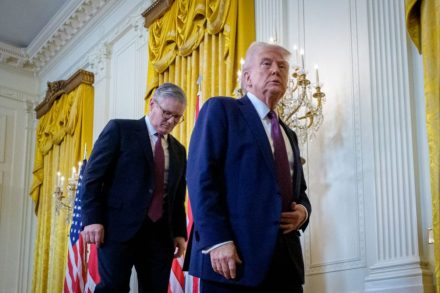
Why would Trump give Starmer a trade deal?

From our UK edition

As President Trump takes office later today, Keir Starmer has assembled his top team, tasking them with landing a trade deal with the United States. It’s a nice idea, sure, but he is not going to get a deal – and he will simply embarrass himself by very publicly failing.  The Prime Minister has put together a ‘mini-Cabinet’, made up of the Chancellor Rachel Reeves, the Foreign Secretary David Lammy, the Business Secretary Jonathan Reynolds and Jonathan Powell, with help from the UK’s incoming ambassador to Washington, Peter Mandelson. It would be hard to describe any committee that includes David Lammy as the ‘A-Team’, but still, Starmer is at least putting his most senior people on the case.  The need for a deal is clear.

Rachel Reeves tries deregulation, but she’s bad at that too

From our UK edition

If it was a Netflix mystery series, it would be the moment for the ‘big reveal’. After months of boasting about how she would make the UK the most competitive, dynamic, and indeed fastest growing economy in the G7 we finally have some idea of what Rachel Reeves is going to do to deregulate the UK. There is just one problem. She has opted for the worst possible way of loosening the rules – and Reeves will end up sparking an asset bubble.  After summoning regulators to Downing Street yesterday to tell her how to boost growth, some details have started to emerge of what Reeves is planning.

Regulators don’t create growth 

From our UK edition

Perhaps you could gather a group of traffic wardens and ask them how to build a racetrack. Or get the leaders of the Salvation Army over to suggest some cool ideas for a cocktail bar. Think up any improbable brainstorming sessions, and it will still be hard to imagine anything more awkward than the gathering of regulators Chancellor Rachel Reeves summoned to Downing Street today to give her some ideas on growth. After all, that is her job, not theirs.  Just the concept of frog-marching regulators into the Chancellor’s office and demanding ‘growth ideas’ is ridiculous It hardly sounds like fun.

Spain will regret its 100 per cent expat property tax

From our UK edition

They drive up prices. Rents go through the roof. And the locals can no longer afford a home. The Spanish Prime Minister Pedro Sanchez is so fed up with wealthy expats inflating the property market he is planning a 100 per cent tax on anyone from outside the EU buying a home in Spain. Of course, that might prove popular in the short term – but Spain will pay a high price for slamming the door shut on well-off foreigners.  To pretend driving expats out will make any difference to the average Spaniard is just ridiculous Any who dreamt of buying a small place on the Costa del Sol or in the hills of Catalonia can probably forget about it. Very soon they will face a 100 per cent additional tax, a rate of effective stamp duty that even Rachel Reeves might consider a bit steep.

Where is Rachel Reeves?

From our UK edition

Bond yields are soaring to their highest levels in almost 30 years and sterling is sliding. The government’s economic strategy is facing its first real test, and where is the chancellor? So far Rachel Reeves has been silent, preparing for a jaunt to China. At some point she will have to address the markets – or risk turning a round of jitters into a full-blown crisis. Over the last few days, the markets have turned decisively on the UK. Yesterday, the yield on 10-year gilts hit its highest level since the financial crisis of 2008, while the yield on the 30-year gilt hit the highest level for 30 years. The UK is now paying more to service its debt than Greece, and very soon that will mean rising mortgage rates, and more companies going bankrupt.

Mark Carney is not fit to be Canadian PM

From our UK edition

He has global experience. He has proven his leadership. And he has the management skills needed to turn around a sinking ship. As Mark Carney makes a bid to succeed Justin Trudeau as Canadian prime minister, he will no doubt make much of his credentials as a ‘rock star’ central banker. There is just one snag. As it turns out, it takes only a cursory glance at his record as Governor of the Bank of England to work out that Carney’s reputation is completely overblown – and in reality he is not fit to be Canada’s next prime minister.

Mark Zuckerberg could regret Nick Clegg’s Meta departure

From our UK edition

When Donald Trump won the US election, the writing was on the wall for Nick Clegg at Meta. Now, just a few weeks before Trump's inauguration, Clegg has stepped down from his role as president of global affairs at the social media giant. He will be replaced by his deputy and Republican Joel Kaplan, as the firm shifts to the right to fit in with the new regime. No one ever had much idea what Clegg did all day Clegg has tried to put a positive spin on his departure, tweeting that: 'As a new year begins, I have come to the view that this is the right time for me to move on'.

Will taxpayers get their satellite bailout money back?

From our UK edition

When the British government spent £400 million on the satellite internet start-up OneWeb back in 2020, it was seen as precisely the kind of active, tech-led industrial strategy that could re-boot the British economy. There were hopes the deal would help secure a place for the UK at the heart of the emerging space economy. Then prime minister Boris Johnson saw it as a key part of launching ‘Galactic Britain’. But four years on, the taxpayer is on the hook for a £300 million paper loss after shares in OneWeb's parent company sank to a record low. The money poured into OneWeb has proved to be remarkably poor value Even by the standards of government investment, the money poured into OneWeb has proved to be remarkably poor value.

Rachel Reeves has shattered economic confidence in Britain

From our UK edition

A few journalists have pointed it out. So have some Conservative and Reform MPs, think tanks and one or two of the City banks. Now, it is official: the Bank of England (BofE) has warned that Chancellor Rachel Reeves's October Budget has caused Britain's economy to stagnate. The real question now is when will the pressure on Reeves to reverse some of the measures in her catastrophically misjudged Budget become so intense that she has to give in? For a central Bank, the language was about as harsh as it gets. In its latest assessment of the economy, while keeping interest rates on hold, the BoE argued that businesses were reacting to the Budget with 'lower headcount, hours, and pay and higher prices than otherwise'. It downgraded its forecast for the current quarter from a 0.

Labour is staring down the barrel of an inflation crisis

From our UK edition

With job vacancies falling, and with GDP contracting, the Chancellor Rachel Reeves might have assumed that her final week before Christmas could not get any worse. Unfortunately, she will have been disappointed. We learned today that inflation is now rising sharply again, with the Office For National Statistics reporting that the rate has risen to 2.6 per cent – the highest level for eight months. The real problem, however, is this. It is going to get a lot worse over the next few months – and the Chancellor will only have herself to blame.

Labour will regret selling Royal Mail

From our UK edition

It will maintain the single price 'universal service obligation'. The government will keep its ‘golden share’. And there are ‘legally binding obligations’ to protect the company. The Labour government may feel it has negotiated enough concessions out of the Czech billionaire Daniel Kretinsky to allow his £3.6 billion takeover of Royal Mail to go ahead. Here’s the problem, though. If the company declines even further, as it almost certainly will, it will be Keir Starmer's government which gets the blame. With approval from the government, Kretinsky’s acquisition of the Royal Mail now looks certain to go ahead. The Czech tycoon has made so many promises, it is hard to see how it could have been stopped.

Allow Shein to list in London

From our UK edition

There are, in fairness, plenty of reasons why the City might be reluctant to embrace the Chinese fast-fashion giant Shein. Its disposable fashion ravages the environment; it encourages rampant consumerism; it has admitted to finding child labour in its supply chain. Here’s the problem, however. The London stock market is in such a dire state that it can no longer afford to be picky - and if it turns this one down it will condemn itself to irrelevance.  According to reports today, the Financial Conduct Authority is taking longer than usual to approve Shein’s IPO in London, and it is looking into its supply chain after an advocacy group for China's Uyghur population questioned whether it met the standards the City is meant to apply to companies floating their shares.

Javier Milei’s medicine is working

From our UK edition

The economy would crash, the markets would be in open revolt, and he would swiftly be evicted from office by the IMF, and replaced by some ‘grown-ups’. When Argentina elected its chainsaw-wielding, libertarian President Javier Milei a year ago, the economic and political establishment confidently predicted he would only last a few weeks. And yet, not only has Milei managed to stay in power, all the evidence suggests that he is turning Argentina around. The real question now is this? Will a stagnant and moribund Europe pay attention? With inflation running at 25 per cent a month, with the largest IMF loan in history to pay back, and with the currency in freefall, the Argentina that Milei took over had become synonymous with mismanagement and decline.