Matthew Lynn

Matthew Lynn is a financial columnist and author of ‘Bust: Greece, The Euro and The Sovereign Debt Crisis’ and ‘The Long Depression: The Slump of 2008 to 2031’

Jaguar is heading for oblivion

From our UK edition

The headlines wrote themselves. ‘Go woke, go broke!’ said the Daily Mail, and ‘Sales Plummet’, said the Sun. Only a few months after its controversial rebrand, with the launch of a bright pink ‘Barbie-mobile’, we learned today that Jaguar’s sales are down by 97.5 per cent across Europe. In reality, the story is a little more complex, but even so, what was once one of the greatest car companies in the world is giving a masterclass in brand destruction. It would be better to sell it off to the Chinese than to continue under its current management. It makes Telsa’s collapse after Elon Musk joined the Trump administration look mild by comparison.

If AstraZeneca quits the London Stock Exchange, it will be a disaster

From our UK edition

It was already a bad enough week for the Prime Minister Sir Keir Starmer and the Chancellor Rachel Reeves, what with the collapse of their welfare reforms. But now news has leaked that AstraZeneca’s CEO Sir Pascal Soriot has reportedly discussed moving its listing from London to New York. There is nothing official yet, and no decision has been made. But for the boss of Britain’s most valuable listed company to even contemplate upping sticks spells trouble for the UK economy. It is not hard to blame him. Over-regulation has turned the London market into a relative backwater. Meanwhile, Wall Street has been booming. The business would be more highly valued on the other side of the Atlantic.

Cutting the cash Isa allowance screams of desperation

From our UK edition

The economy has stagnated, foreign investment has collapsed, the non-doms have fled and the entrepreneurs are following them. Meanwhile, Labour backbenchers are clamouring for more spending. Not much has been going right for the Chancellor Rachel Reeves. But she has a grand new plan: increase taxes on saving. Reeves has been reduced to scrabbling around for money wherever she can find it Reeves is expected to announce later this month that the amount that can be put into a tax-free cash Isa every year will be slashed from the current £20,000 to as little as £4,000, and perhaps even less. The decision will be dressed up as encouraging saving in stocks and shares instead, which will help to boost growth. It is hard to imagine anyone will really believe that.

Politicians, not ChatGPT, caused the recruitment slump

From our UK edition

The machines are already smarter and better organised than humans. They never ask for a pay rise, and they don’t ask any awkward questions about the company’s environmental record. An artificial employee is, in many ways, the model employee. But is artificial intelligence really responsible for a recent fall in entry-level jobs, as new figures from Adzuna, the online jobs board, would have you believe? Or is the Chancellor Rachel Reeves as much to blame as the ChatGPT founder Sam Altman? It may be fashionable to blame AI, but it is wrong It is certainly looking like a tough year to graduate from university. According to figures from Adzuna, the number of entry-level and new graduate vacancies on offer has fallen by 32 per cent from three years ago.

The welfare state has become absurdly dysfunctional

From our UK edition

Britain’s 12.9 million pensioners are better off financially than they have ever been, and certainly compared with the rest of the country. Their winter fuel allowance has been restored. The triple lock looks completely secure. And with the stock market close to record highs, any savings they have will be in a healthy state as well. There is just one snag. More of them are paying tax than ever before – and that is emblematic of a bloated welfare system that has become completely dysfunctional.  Another 420,000 people over the state pension age will have to pay some income tax in 2025-26, bringing the total to 8.7 million, according to the latest data from HMRC. It is not hard to work out why.

Is the Bank of England turning on Rachel Reeves?

From our UK edition

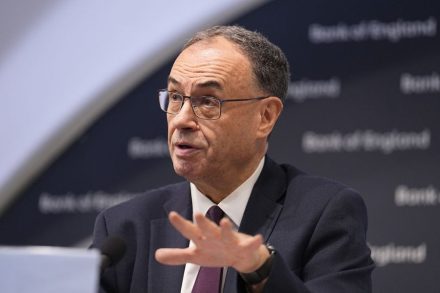
Rachel Reeves does not have many supporters left. The bond markets don’t think much of the Chancellor. Business groups have rubbished her policies, and so have many of the UK’s largest companies. Meanwhile, Labour backbenchers are furious about both the chaos over the winter fuel allowance and the cuts to the welfare budget. Now, it looks as if the Bank of England may have turned on her as well, if comments from the Bank's governor are anything to go on. We might expect Andrew Bailey to avoid any direct criticism of the Chancellor. After all, she is his boss. What's more, a public split between the UK’s two most important financial officials would be deeply damaging, especially given the vast amounts of money the UK has to borrow on the global markets every year.

Without non-doms, who will pay for Labour’s bloated state?

From our UK edition

We are not the fastest growing economy in the G7, even though the Labour party promised that we would be. We are not topping any tables for inward investment, and we have fallen to the bottom of the league for new companies listed on the stock market. Still, it is good to know that there is still one measure where the UK economy comfortably beats the rest of the world. We are now losing more millionaires than any rival nation. The exodus of wealth out of the UK, it appears, is accelerating – and very soon this is going to turn into a big problem for the Chancellor Rachel Reeves.  The UK was already one of the countries that the wealthy were fleeing. But according to a report out today by the advisers Henley & Partners, a record 16,500 millionaires will leave the UK in 2025.

Reform can go further in its plan to woo back non-doms

From our UK edition

We will hear plenty of familiar criticisms of the plan unveiled by Reform yesterday to bring non-doms, as wealthy foreigners who enjoy a special tax regime in the UK are known, back. It will make Britain a magnate for tax dodgers and money launderers. It will increase inequality. And the only jobs it creates will be as servants of the super-rich. In fact, however, the only problem with the Reform plan is that it doesn’t go far enough. The party should be a lot more ambitious as it prepares for a potential government.  It will certainly be a major change. After a decade over which all the political debate has been about how to impose higher taxes on the rich, Nigel Farage, the leader of Reform, will this week set out plans to bring them back.

Your pension fund is right to flee Labour’s Britain

From our UK edition

One of Chancellor Rachel Reeves’s few big ideas for boosting growth was to persuade pension funds to invest more of their assets in Britain. But hold on. Today, we learned that Scottish Widows, one of the biggest funds, is dramatically reducing its exposure to this country – and it is quite right to do so. Over the last decade, the S&P 500 has delivered a total return of 235 per cent, compared with just 92 per cent for the FTSE 100 The fund managers at the Lloyds-owned Scottish Widows, which controls £72 billion of workplace pensions assets, clearly didn’t get the memo about how this was the moment to put more of their money in the UK.

The markets don’t care much about Israel and Iran

From our UK edition

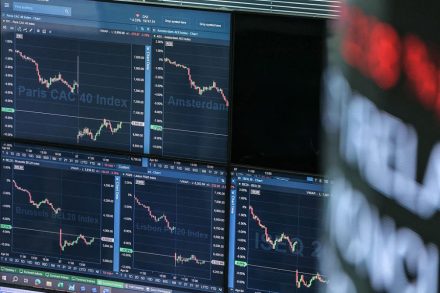
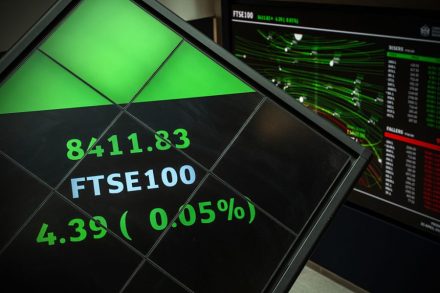
As missiles fly across the Middle East as Israel and Iran embark on what could well become a wider regional conflict, you might expect turmoil in the financial markets. After all, if the beginning of a third world war doesn’t knock a few dollars off the Apple share price it is hard to know what would. But it turns out that investors, at least for now, appear indifferent. Investors, at least for now, appear indifferent Looking at a trading screen this morning you would probably think not much was going on in the world. The FTSE100 was up 30 points. Overnight, the Nikkei was up by 1.2 per cent; and when Wall Street opens it is expected to be up by a few points as well. Gold was down by 0.4 per cent, and oil by slightly under 1 per cent. It is all very meh.

Britain doesn’t need more affordable housing

From our UK edition

This afternoon's spending review mostly consisted of rehashed announcements, and in fact Tory plans that had been quickly rebadged. But there was one commitment that stuck out. The Chancellor Rachel Reeves is planning to spend £39 billion – serious money even by the standards of an organisation as extravagant as the British state – on ‘affordable’ and ‘social’ housing. Following her announcement, the scaffolding will almost certainly be going up in Blackpool, the spades will be turning over the ground in Preston, and the cement mixers will be churning in Swindon. But there's just one problem: the UK doesn’t need more ‘affordable homes’ – it just needs more places for people to live.

Will America and China call a truce in their trade war?

From our UK edition

High-level talks have started in London today between American and Chinese officials aimed at dialling down the trade tensions between the two largest economies in the world. If they result in a breakthrough, perhaps it will be known as the ‘London accord’. But can President Trump strike a ‘grand bargain’ with China? There is every chance that he might – which would give a huge boost to the global economy. The talks in London follow on from a friendly chat on the phone between President Trump and his counterpart in Beijing, President Xi.

Is the London Stock Exchange under threat?

From our UK edition

When the fintech giant Wise floated its shares on the London Stock Exchange in 2021 it was widely seen as proof that the City still had a future as a centre for equity trading. This was London’s largest-ever tech listing: it was one of only a handful of new British companies with a global presence and it was hailed as the perfect example of how the London stock market could still be an effective home for growing businesses. Against that backdrop, its decision today to move its primary list to the United States is a crushing blow. Has Wise just killed the London stock market?

Starmer doesn’t have long to save his US trade deal

From our UK edition

It has only been a few weeks since the UK agreed to a trade deal with the United States that exempted us from the worst of President Trump's tariffs. There was a grand, if slightly awkward, ceremony in the White House. The deal was sold as a triumph of negotiation and diplomacy for the Prime Minister Sir Keir Starmer, and even more for our ambassador in Washington, Lord Mandelson. But it seems Starmer may have got ahead of himself, for this deal appears to only have been a temporary truce. Right now there is a real risk that the government may blow the deal – and that would be hugely embarrassing for the Prime Minister indeed.

Government hasn’t been unprofitable for Elon Musk

From our UK edition

Nobody wants to buy his cars anymore. He has been too distracted to pay any attention to his companies, and his fortune has been shredded. As Elon Musk brings his short spell in government to an official close today, and gets back to the day job, his many political opponents will take a malicious pleasure in noting that getting mixed up with President Trump has been a financial disaster for the billionaire. But hold on. As so often, their maths is more than a little wonky. In fact, public service has been very lucrative for Musk.

What’s the point of fining Thames Water?

From our UK edition

That should teach it a lesson. The utility giant Thames Water has today been hit with a massive £122.7 million fine for failing to deal with sewage properly, and for paying out excessive dividends. No doubt the regulator Ofwat thinks that will focus the minds of the company's management and force it to sharpen up its act. There is just one snag. Thames Water is already close to going bust. In reality, it needs new management and a restructuring of its massive debts – and a fine won’t help that.  After what it described as the sector’s 'biggest and most complex investigation', Ofwat imposed a fine of £104.5 million for Thames Water’s treatment of wastewater and £18.2 million in what it described as 'undeserved' dividend payments to its main shareholders in 2023 and 2024.

Britain’s America deal is paying off

From our UK edition

Exports would be impossible. The supply chains would be snarled up. And trade restrictions would destroy the economics of the industry. We have been lectured endlessly on how our departure from the EU would destroy the British car industry. But hold on. It is now finding a new niche as an offshore manufacturing hub for the American market – and that is only possible because of Brexit. The Japanese auto giant Toyota has today announced a major new investment in the UK. It’s a plant in Derbyshire will start making GR Corolla’s, a popular high performance model in America. The reason is simple. Right now, Japanese cars shipped across the Pacific face a 25 per cent tariff if they are sold in the United States.

The EU could pay a high price for not settling with Trump

From our UK edition

The deals have been settled. The exceptions have been made. And supply chains have started to return to normal, while the stock market has recovered its losses. We may have thought the ‘tariff wars’ were over. But President Trump has today resumed hostilities, threatening a fresh round of levies on the European Union. It seems the bloc is about to pay a very high price for not settling with Trump earlier.  The EU is paying the price for failing to get a deal across the line while it still could The President was typically blunt. On his social media channel, he laid into the EU’s obstinacy over trade. ‘The European Union, which was formed for the primary purpose of taking advantage of the United States on TRADE, has been very difficult to deal with,’ he thundered.

Labour’s spending is out of control

From our UK edition

To borrow a phrase that was once famously used about the Pentagon, 'a billion here, a billion there and pretty soon you are talking real money’. The Labour government has certainly been spending some ‘real money’ this week. If you tot up the total amount it has added to spending over the last five days, it comes to an extraordinary £50 billion. The British state is rapidly losing control of its finances, and it is no surprise the bond markets that will have to finance it all are getting worried.  If the Chancellor Rachel Reeves decides, like many of us, to check her bank balance as the week ends, she will get a nasty shock. Let’s take a look at some of the debits she has chalked up since Monday.

Will Wall Street jitters stop Trump’s budget bill?

From our UK edition

Donald Trump has already caved in on tariffs, pausing the ‘retaliatory levies’ he announced on 'Liberation Day' at the beginning of April. Now the President is under pressure from the markets on spending. As his 'Big, Beautiful Bill' on the budget goes through Congress, investors are panicking over the mix of spending and tax cuts, with bond yields spiking sharply upwards and equities falling. President Trump will now have to decide whether to yield to Wall Street again – or tough out a potential crash.  The US remains the biggest economy in the world, so investors cannot abandon it completely The post-tariff recovery on Wall Street came to a juddering halt yesterday.