Matthew Lynn

Matthew Lynn is a financial columnist and author of ‘Bust: Greece, The Euro and The Sovereign Debt Crisis’ and ‘The Long Depression: The Slump of 2008 to 2031’

Will London tempt the New Yorkers fleeing Mamdani?

From our UK edition

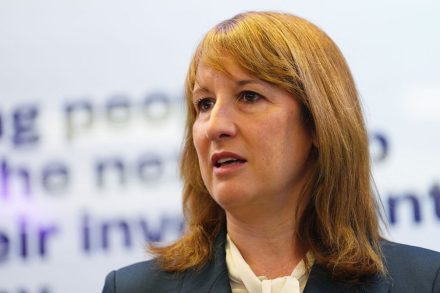
As New York’s wealthy elite weigh up the options under their new ‘democratic socialist’ Mayor Zohran Mamdani, many of them are now reported to be considering fleeing to London instead. But will it really offer them the safe harbour they are searching for? The truth is that under the Labour Chancellor Rachel Reeves and Mayor Sadiq Khan, Britain's capital has become an even worse place to be rich than the city they are looking to get out of.  There are plenty of reasons for American billionaires to feel nervous about the Mamdani regime. The new mayor has promised an extra 2 per cent tax on incomes above $1 million (£758,000) as well as higher corporate taxes to fund his plans for free buses and childcare. Of course, it remains to be seen whether he can make that happen.

The Bank of England won’t risk bailing Rachel Reeves out

From our UK edition

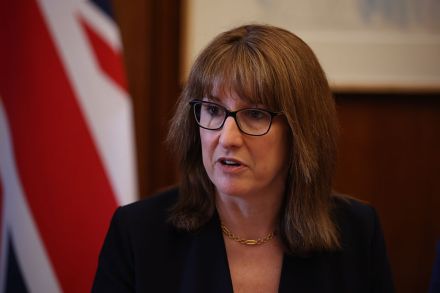
After yet another dreadful week, the Chancellor Rachel Reeves must be praying the Bank of England helps her out by cutting interest rates tomorrow. It would reduce the huge amount of interest the government has to pay, it would put more money in people’s pockets, and it might even stimulate growth. The trouble is, the Bank’s governor, Andrew Bailey, can’t afford to bail Reeves out of the hole she has dug for herself. If the Bank does, it will be risking its independence. Even the City’s experts have no clear idea what the Bank will decide on interest rates this week. The markets have priced in a one in three chance of a cut, rising to a two in three chance of a cut by the end of the year.

Nigel Farage is right to abandon tax cuts

From our UK edition

Nigel Farage has shelved massive tax cuts in favour of slashing public spending in a bid to balance the books. The Reform leader said in a speech this morning that 'substantial tax cuts given the dire state of debt and our finances are not realistic at this current moment'. The ‘back-of-a-fag packet’ economics that characterised Reform’s election manifesto last year have been disposed of No doubt a fair few Reform supporters will be disappointed: it means that, if Farage wins power at the next election, the tax burden will remain at a post-war high for at least a couple of years. We won’t be hearing very much about the Laffer Curve during the election campaign. But make no mistake: Farage is right. Bold tax cutting would have turned a Reform administration into Liz Truss 2.

A tariff alliance won’t stop Britain’s steel industry collapsing

From our UK edition

The British steel industry has been staggering from one crisis to another for the whole of this year. Half of the industry has fallen into effective state control, and what’s left is teetering on the edge of collapse. The government has finally come up with a plan to rescue it. In collaboration with the US and EU, it wants to create a ‘ring of steel’ protecting all the major Western industries from cheap Asian imports. It sounds simple enough, but there is just one catch. This plan won’t do anything to fix soaring domestic costs – and that is the real problem.  The government certainly needs to do something to help the steel industry.

Reform is right to give up on ‘fag packet economics’

From our UK edition

As Nigel Farage prepares to abandon pledges of up to £90 billion in tax cuts, there will be plenty of people arguing that his Reform party is giving up on its free market, small state roots. Other critics may say this is proof that Reform is shifting further to the left and pandering to its new voters in the old Labour heartlands. A few critics may well even accuse it of joining the ‘uniparty’. Perhaps so. And yet, with its dominant lead in the polls, Reform also had to get rid of a set of policies that often gave the impression they had been scribbled on the back of a fag packet close to closing time. The crucial question will be whether it can come up with a credible plan for the economy instead.

Don’t blame Trump for the crypto crash

From our UK edition

Hundreds of billions have been wiped off the value of the crypto currencies. A prominent Ukrainian blogger and influencer on digital coins has been found dead. And traders are bracing themselves for a rocky start to trading on Monday as markets start to tumble. We will have to see whether it develops into a full-blown crash or not. And yet, all the major equity indices were already wildly overvalued, and a correction was always inevitable – it was just a question of when it would start.  There may well be a rough few days ahead for investors. An estimated $400 billion was wiped off the value of the main crypto currencies on Friday evening, while the Nasdaq dropped by more than 800 points, or 3.

Why gold is at an all-time high

Gold is in the middle of what looks like an unstoppable bull run. It has already punched through $4,000 an ounce. At the rate the price is rising, it may well go to $5,000 within a few weeks, and perhaps even $6,000 as the next year unfolds. There have been lots of different explanations for this, from the looming collapse of the dollar, to secret Chinese buying, to the conspiracy theories circulating on the wilder fringes of the internet, such a secret plot to re-establish the gold standard, or attempts to replace all the metal that is meant to be stored at Fort Knox, America’s official gold reserve, which apparently went missing decades ago. But the real explanation is very simple: it is the only way to hedge against soaring government debt.

gold

Britain’s steel industry must die

From our UK edition

It already faced tariffs in the United States, and it has been struggling to cope with some of the highest industrial energy prices in the world. Now what remains of the British steel industry faces what could well be a terminal blow. The European Union is about to impose tariffs of 50 per cent on steel imported from the UK. Labour ministers will no doubt start cobbling together rescue packages, and trying to devise a new strategy to rescue the industry. But perhaps it would be best just to be honest – and let the industry die.  The EU has set out plans to cut the amount of steel imported into the bloc by half, and impose 50 per cent tariffs on anything over the quota. The reason is simple.

Britain can’t afford to lose AstraZeneca

From our UK edition

It has already cancelled investments in Liverpool and Cambridge, while muttering darkly about moving its listing to New York and its headquarters to the United States. Now AstraZeneca, the UK’s largest pharmaceutical company, is threatening to stop investing in Britain completely if the country does not spend more on medicine. There may be an element of arm-twisting in that, and the NHS is so stretched for cash it can’t easily spend much more on drugs. And yet, the UK also can’t afford to lose a company as significant as AZ. And if that means the NHS spending more on pills, and less on salaries, that is a choice worth making.  If that means the NHS spending more on pills, and less on salaries, that is a choice worth making.

Ed Miliband can’t ban fracking forever

From our UK edition

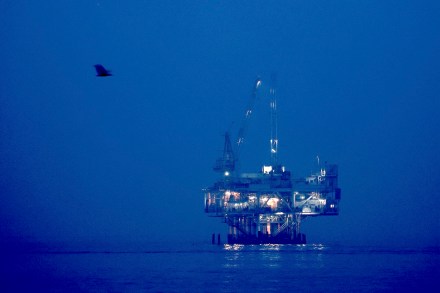
He wasn’t able to announce the £300 off household energy bills that was promised during the election campaign. Nor could he unveil any massive new solar farms or wind turbines. Still, the Energy and Climate Change Secretary Ed Miliband did have one message to cheer the party faithful in his conference speech today: he is going to ban shale oil and gas for all time. 'Let's ban fracking and send the frackers packing,' he thundered. But can Miliband really do that and outlaw fracking forever? Only a fool would pretend that he can. Right now, there is a moratorium on extracting shale oil and gas in the UK, which could, in theory anyway, be lifted at any time by a new minister. With Reform pledging to lift it, and way ahead in the polls, that is no longer a far-flung prospect.

Will Trump turn Gaza into the ‘Riviera of the Middle East’?

From our UK edition

There are plenty of legitimate questions to be asked about the Trump-Blair peace plan for ending the conflict with Israel. Will Hamas ever agree to it? Will any peace deal hold? Will the wider Middle East get behind it? And will Sir Tony Blair ever be able to overcome the legacy of his earlier military adventures in the region to establish any kind of authority? But there is also another question that we must ask. If this peace does hold, can Trump and Blair turn Gaza into a cross between Dubai and Singapore – or is that completely deluded? All the immediate attention will, of course, be on whether this new deal actually ends the fighting. We will find out over the next few weeks.

Reeves needs to save the London Stock Exchange

From our UK edition

Flutter, the gambling giant that owns Paddy Power, has already London, and the British chip designer ARM decided to float in New York. There have been reports that AstraZeneca may move its listing too. Now we learn that even Goldman Sachs may be giving up on the City, as it delists Petershill, the majority-owned investment vehicle it launched almost 20 years ago, from the London Stock Exchange. The City is facing extinction, but there is still no sign that the Chancellor Rachel Reeves will do anything to rescue it. It is a slow-moving car crash Petershill was launched in 2007, and listed on the stock market in 2021, to offer retail inventors a slice of private equity and hedge funds.

Why Trump shouldn’t bail out Milei

From our UK edition

At the OECD, the IMF, and at Davos, there will probably be a few wry smiles, and a sense of Schadenfreude. Javier Milei, the chainsaw-wielding libertarian President of Argentina who promised to destroy the economic establishment by cutting taxes and dramatically reducing the size of the state, is now facing a financial crisis of his own. The United States is offering to step in with a bailout, but why? Milei should sink or swim in the markets he champions. A rescue package from the Trump administration will prove a mistake.  It is turning into the toughest week yet for the Milei experiment. After setbacks in local elections, the currency markets have lost faith, the peso has plunged, and that will make it very hard to finance the country’s huge debts.

Rachel Reeves’s ‘taxi tax’ plans show how desperate she is

From our UK edition

It will at least give the cabbies something to genuinely complain about. Amid all the wheezes that Chancellor Rachel Reeves is plotting to fix the ‘black hole’ in the public finances, she is now considering a ‘taxi tax’. Ahead of November's Budget, it has been floated that VAT may well be applied on all cab rides. But this plan is likely to end up backfiring badly on Reeves – and the government more broadly.  According to reports this week, the Chancellor is likely to impose a blanket 20 per cent rate of VAT on all taxi rides. Right now, taxi firms outside of London do not have to charge VAT because drivers are classed as self-employed, and most don’t hit the £90,000 annual threshold at which the tax has to be levied.

Trump’s steel tariffs will hurt Britain

From our UK edition

Over the course of President Trump’s state visit, we can expect lots of investments by the giants of American industry to be unveiled. Microsoft will announce $30 billion (£22 billion) of investment in new artificial intelligence hubs and tech infrastructure. Google will pump £5 billion into AI in Britain, which presumably means getting some robots to sit in the British Library reading room for a few months until all the content has been scraped. Perhaps by the end of the week, even McDonald's will have announced plans for a new food court on the A30. But for all the celebration, there will be no progress on the only deal that matters – and that will prove very expensive for the taxpayer indeed.

Elon Musk’s Tesla investment is a big gamble

From our UK edition

Tesla does not look like a great investment right now. The competition from better and cheaper Chinese electric vehicles is savage and Elon Musk's outspoken political views have tarnished the brand, at least among the eco-conscious liberals who first adopted it. And yet, Musk has just spent $1 billion (£733 million) of his own money on its shares. His investment only makes sense as a bet on its robotics unit – but that is still very high risk for the company's pugnacious CEO.  No one could ever accuse Musk of not putting his money where his mouth is. While Tesla may be under more pressure than ever, yesterday he sank his own money into buying more shares to add to his existing 15 per cent stake in the company.

Can Trump force Nato to get tough on Russian sanctions?

From our UK edition

The pipelines would be sealed off. The supertankers would be left in the ports, and the wells would have to be capped. When Russia invaded Ukraine three years ago, it was confidently assumed that sanctions on Moscow's oil and gas industry would be so punishing for its fragile economy that it would quickly force Vladimir Putin to plead for a settlement. Unfortunately, it has not worked out like that. Instead, the sanctions against Russia have been widely flouted. In response, President Trump has demaned that Nato makes them stick. But would sanctions really work and cripple Putin's war machine?  President Trump was in typically robust form. Over the weekend, he demanded that the rest of Nato enforce the sanctions that have been imposed on Russia.

Even John Lewis is struggling in this Labour economy

From our UK edition

It is a worker’s cooperative. It promotes sustainability, emphasises its social responsibility, invests in its people, and, of course, has an attractive range of home accessories in every shade of beige you could possibly imagine. If the government is looking for a company that symbolises the kind of economy that Labour is trying to champion it would surely be John Lewis. But hold on. It turns out that even Labour’s favourite chain has been hammered by the tax raid in the last budget. And if even John Lewis can’t survive all the extra costs the party has imposed on business then who can. The losses perfectly illustrate the shambolic incompetence of Labour’s economic ‘plan’.

Brits are fed up with overpriced coffee

From our UK edition

We don't lead the world in Artificial Intelligence. We can't keep up with the Chinese in making electric vehicles, and as for building high speed trains it is best not to ask. Still, there was one sector of the global economy where the British were world beaters. When it came to making ridiculously expensive milky caffeine-based drinks our entrepreneurs could match anyone. But hold on. There are now signs that Britain has turned its back on overpriced coffee – and the chains are running into trouble. The real problem is that the chains are charging way too much for a product that is not actually very good Pret a Manger is no longer the booming business it once was. It has emerged that its owner JAB, which bought it from the private equity firm Bridgepoint for £1.

The markets don’t trust Keir Starmer

From our UK edition

The pound is starting to slide. Gold is punching through record highs, and long-term gilt yields are hitting levels that have not been seen in thirty years. It is not a Liz Truss style crisis, at least not yet, although it is worth noting that the price the government has to pay to borrow money is way above the levels it reached when the former prime minister ‘crashed’ the economy. But it is starting to become painfully apparent that the Labour government is rapidly losing the confidence of the financial markets. It is yet another nervous week for the economy. The yield on 30-year gilts, the best long-term measure of the solvency of the British state, rose yet again on Tuesday morning, hitting 5.68 per cent, its highest level in 27 years.