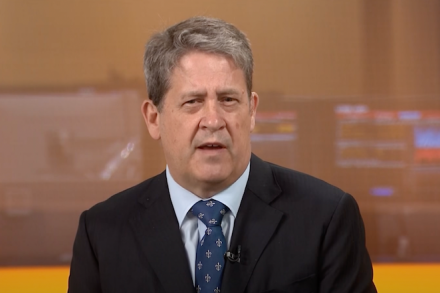
Matthew Lynn

Matthew Lynn is a financial columnist and author of ‘Bust: Greece, The Euro and The Sovereign Debt Crisis’ and ‘The Long Depression: The Slump of 2008 to 2031’

Will Threads tame Elon Musk’s Twitter?

From our UK edition

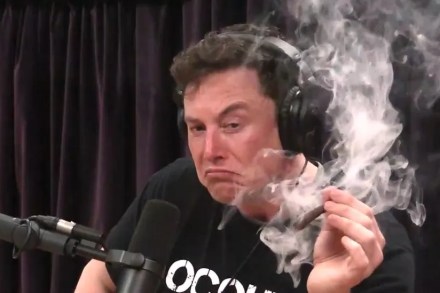
We will need tighter regulation. We will need new laws and controls. And we will have to organise boycotts of advertisers to bring it into line. Ever since Elon Musk took over Twitter, and started to try and make the liberal-left’s favourite mouthpiece slightly more balanced, not to mention slightly more profitable, there have been endless demands to stop the libertarian billionaire from changing anything about it. Politicians such as the American democratic senator Amy Klobuchar have called for more content moderation and harsher punishment for spreading hate speech. Last October, the EU internal market commissioner Thierry Breton taunted Twitter, saying 'In Europe, the bird will fly by our European rules'.

Labour must resist jumping on the mortgage bail-out bandwagon

From our UK edition

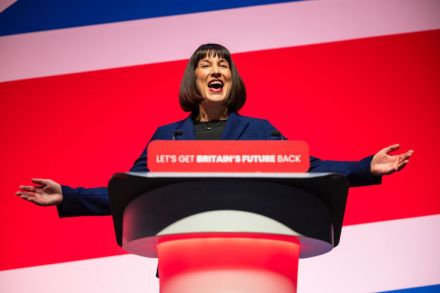
Millions of potential voters in marginal constituencies face punishing rises in their mortgage repayments over the coming months and years. The government is in disarray on the issue and is largely to blame for the mess. Labour has spied an opportunity to hammer the Conservatives: it is talking about a 'Tory mortgage penalty' and shadow chancellor Rachel Reeves is jumping on the bandwagon clamouring for mortgage payers to get help. But, if Labour goes too far in its demands, it could pay a heavy price. With inflation stubbornly high, and the Bank of England rapidly losing credibility, mortgage rates are soaring.

Rishinomics isn’t working

From our UK edition

Tax rises would bring debts under control. The Bank of England would bring inflation back down again. The government would steadily win back the confidence of the financial markets, repair relations with the EU, remove some of the obstacles to growth and, once all that was in place, try and cut a minor tax or two. When he became Prime Minister, Rishi Sunak promised a very orthodox, centrist economic programme, and one that would have the full backing of the IMF, the financial markets and just about every respectable commentator. There is just one problem, however, and it is not exactly a minor one. It is failing, and failing badly. In truth, Rishinomics is in tatters.  Today’s inflation data was genuinely shocking.

Keir Starmer is clueless about energy security

From our UK edition

It will create lots of well-paid jobs, especially in Scotland. It will reduce our electricity bills. And it will make sure the lights can still be switched on regardless of what is happening in the rest of the world. Labour leader Sir Keir Starmer has made a big pitch today for ‘energy security’, promising to rip up planning rules for onshore wind power and create a state-owned green energy giant that will provide all the power the UK needs, as well as hitting all our targets on climate change. But hold on. On closer inspection, it seems that Sir Keir knows barely anything about energy security.

Is France finally changing its tune on Brexit?

From our UK edition

The waiters can sometimes be a little surly. That holiday villa you booked in the Loire may not always be as desirable as it looked in the pictures. And you can never be entirely sure which side they will be on in a major war. Still, despite occasional inconsistencies, there is one thing you could always rely on the French for. They will insist forever that leaving the EU has been a catastrophe for the British economy, and by far the stupidest decision any major country has ever made. But hold on. What’s this? In a note this morning BNP Paribas, a bank right at the heart of the French establishment, finally admitted Brexit had not made much difference. At this rate, perhaps even the EU’s chief Brexit negotiator Michel Barnier will be arguing it was all fairly irrelevant all along.

The Vodafone-Three merger could be a Brexit win

From our UK edition

There are plenty of reasons for viewing today’s huge merger deal between the UK mobile networks of Vodafone and Three with suspicion. It could reduce choice for consumers. It may lead to job losses. And it is possible that they will downgrade their service even more than they already have, cut back on investment, and squeeze more money out of a captive market. Yet that is not quite the whole story. In fact, done right, the merger could even turn out to be a rare Brexit win.  Today’s tie-up between Vodafone and Three was widely expected. The two companies will combine their British networks, and will have 27 million users between them, taking them ahead of Virgin Media O2, with 24 million and BT Group with 20 million. It will become the leading provider in the industry.

Sunak has hitched a ride on Biden’s climate gravy train

From our UK edition

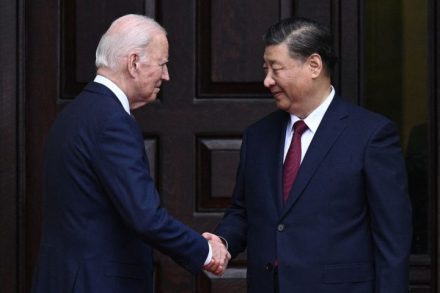
Sometimes it helps to have a banker as Prime Minister. They have plenty of faults. They can be dry, calculating, and they are typically far too rich to connect with ordinary people. But if they have one thing going for them it is this: they can spot free money when they see it. And Rishi Sunk has seized a chance for the UK to take a percentage of the unlimited cash that President Biden is spraying at American industry.  Hundreds of billions in corporate bungs are available, and because it is all in tax credits there is hardly any oversight Most people will dismiss the Atlantic Declaration that Sunak negotiated with President Biden on his visit to Washington this week as meaningless guff. And, in fairness, most of it would struggle even to hit that low benchmark.

Britain should get out of the electric vehicle business

From our UK edition

A frantic round of last-minute lobbying is already underway. Officials are trying to stitch together a deal. And the Prime Minister Rishi Sunak is pushing hard to find a compromise that works for both sides. There are lots of negotiations over ‘rules of origin’ for electric vehicles that will allow Vauxhall to keep its plants open. But hold on. Although we should expect a deal to be done, as it usually is between the UK and the European Union, that should not obscure the bigger point. We are not going to be big players in EVs, and there is no point in trying to become one now.  We are not going to be big players in EVs, and there is no point in trying to become one now ‘Rules of origin’ is the kind of subject that keeps trade nerds up at night.

Why Liz Truss fans might come round to Keir Starmer

From our UK edition

We might have thought Trussonomics was dead and buried for a generation after its author’s short-lived premiership last autumn. But all of a sudden it has a high-profile, if slightly unexpected, convert: Sir Keir Starmer. In an interview with BBC Radio 4's Today programme this morning, Starmer was sounding a lot like Kwasi Kwarteng last September: We’ve got the highest tax burden since the second world war. What we’ve had from the government is tax rise upon tax rise on tax rise. If they’ve proved one thing, it’s that their high-tax, low-growth economy doesn’t work. The Labour leader is absolutely correct, even if he is a little late to the party.

Will the Fed torpedo Joe Biden’s re-election? 

From our UK edition

Hollywood will be backing him en masse. The major newspapers will be rooting to put him back in the White House. And most of corporate America, in between filling in the forms for the next round of ‘green subsidies’, will be quietly hoping for another four years of lavish spending and protectionism to keep out all those irritating foreign competitors. As he launched his re-election campaign this week, President Joe Biden could count on plenty of mainstream support. There is just one problem: the Federal Reserve is about to torpedo his campaign – by tipping the American economy into recession.  GDP figures for the US released today showed an economy slowing down sharply. Over the first quarter of the year, output rose by 1.1 per cent , a sharp deceleration from the 2.

The UK’s treatment of Activision shows it is closed for business

From our UK edition

It was, admittedly, not quite as thrilling as an action sequence from Call of Duty. Even so, the statement put out by Bobby Kotick, chief executive of US video game publisher Activision, following the UK’s bizarre decision to block the company’s acquisition by Microsoft was about as bloodthirsty as any ever put out by a major corporation. The ruling ‘contradicts the ambitions of the UK to become an attractive country to build a technology business,’ he argued. Even worse, ‘it does a disservice to UK citizens, who face increasingly dire economic prospects’, and, to cap it all off, it shows that Britain is ‘closed for business’. Of course, it would be easy to dismiss that as sour grapes from a man who has just seen $70 billion of Microsoft’s money slip through his fingers.

London’s stock market risks sinking into irrelevance

From our UK edition

The chip maker ARM decided against listing its shares in London, despite plenty of arm twisting from the government. The building materials group CRH decided last month that New York was a better place for its equity to be traded, leaving the FTSE for good. The mining giant BHP has moved its listing from London to Sydney, while another materials group, Ferguson, switched from London to New York last year. And now hotel group IHG may make the same journey.  At these rates, no one will need the Prime Minister’s new plan to boost numeracy to count the number of companies still listed on the London market. The fingers of one hand will be more than enough to tot up the total. The direction of travel is a disaster.

The CBI has outlived any useful purpose

From our UK edition

The director-general has been forced to stand down amid allegations of misconduct. There are allegations against others inside the organisation of harassment and even rape. And a culture of bullying and misogyny has been revealed. It is just possible that the CBI could be in worse shape. It could have been engaged in satanic rituals, perhaps, or turned out to be funded directly by Vladimir Putin, or short-listed Nigel Farage as its new boss. But it could not be a lot worse.  For an organisation that is meant to represent British business, the last few weeks, culminating in today’s dismissal of Tony Danker, are about as bad as it gets.

Deutsche Bank’s collapse would be a threat to the whole eurozone

From our UK edition

It could be next month. It might be next week. Or it might well happen over the weekend. But today’s collapse in the share price of Deutsche Bank, and the huge rise in the cost of insuring its debt against default, means it is probably only a matter of time before there's an intervention. It looks increasingly inevitable that Deutsche will require some form of rescue, led by the German government and the European Central Bank. The trouble is: that will be a threat to the entire eurozone. If you have any money in Germany’s largest bank, the only rational move right now is to get it out To market insiders, the real surprise of today’s collapse in confidence in Deutsche Bank is that it took so long.

Rishi Sunak was wrong to publish his tax returns

From our UK edition

He has plenty of money. He earns a substantial amount from his investments. And he gets a City firm to prepare his returns rather than doing them himself at close to midnight after a couple of fines from HMRC like the rest of us. In truth, there were not a lot of surprises when the Prime Minister Rishi Sunak published his tax returns on Wednesday. We didn’t learn anything we didn’t already know. And yet, even if they didn’t provide any ammunition for his opponents to attack him with, it was still a mistake to publish them – because it puts us on a dangerously slippery slope.  There weren’t any hidden Russian gold mines, or Cayman Islands trusts linked to arms dealers It was perhaps always inevitable that Sunak would give in to pressure to publish his tax returns.

What can save Credit Suisse now?

From our UK edition

It would be enough to buy Tesco twice over. Or Barclays, with almost enough change left over to buy Lloyds as well. Even by the standards of the financial markets 50 billion Swiss francs (£45 billion) is a lot of money. And yet, as it turns out, it is not enough to save Credit Suisse. The Swiss government is searching around increasingly desperately for a way to fix the embattled bank, including this weekend a merger with its traditional rival UBS. But in the end it now looks inevitable that it will have no choice but to take it over and wind it down in the most orderly way possible. Credit Suisse is beyond rescuing.

Jeremy Hunt will have to step in after Silicon Valley Bank’s collapse

From our UK edition

It will be yet another bailout for failed bankers. It will simply encourage yet more risk-taking in the City. It only impacts a tiny number of tech companies and venture capital funds, and anyway we can’t afford it. As the London arm of Silicon Valley Bank – which has gone spectacularly bust over the weekend – is closed down by the Bank of England, there will be plenty of pressure on the Chancellor Jeremy Hunt not to offer any extra money to its depositors beyond what they are entitled to under the existing compensation scheme. The trouble is, that would be a big mistake. If necessary it will have to be rescued.  A full-blown banking crisis was probably not what Hunt was hoping for as the backdrop to his first Budget this week. And yet that is what he will have to confront.

Will the last company to leave the City please turn out the lights?

From our UK edition

It would have been bad enough if just one major British company had decided to list its shares in New York rather than London in the space of a single week. But two? First it was the chip-maker Arm, one of the UK’s very few major technology companies. Then came the building materials giant CRH. Shell also said they came very close to shifting their base to the US. The moment has surely arrived for the UK to radically deregulate its listing regime – or else watch the City slowly wither away. At this rate, within a few years there might only be a couple of retailers and a bus company on the London Stock Exchange Fewer and fewer companies have been bothering to list their shares in London for many years.

Why does Starmer think Britain should be richer than Poland? 

From our UK edition

Our growth rate has been miserable. We have not invested enough. And over thirteen years the Conservatives have cut spending too much, damaged our trading relationships with our major neighbours, and made a mess of the tax system. These were Labour leader Sir Keir Starmer's major criticism of Tory economics today in a speech in which he unveiled his latest plans for the economy.  He summed it all up with one damning statistic. We will, he argued, soon be poorer than Poland. Poland! But hold on. Why does Sir Keir imagine the British have some God-given right to be richer than the Poles? And why doesn’t he take a moment to reflect on the policies that have made Poland so successful – because if he were in Warsaw he would oppose all of them.

How bitcoin bounced back after FTX

From our UK edition

One of the major exchanges has gone spectacularly bust. Billions of investor’s money has been lost. There have been allegations of widespread fraud, and one of the biggest corporate trials in modern history is set to dominate the business pages over the rest of the year. The collapse of the FTX, and the arrest of its high-profile founder Sam Bankman-Fried, was meant to finish off bitcoin and the rest of the cryptocurrencies. And yet, this year digital money is staging a dramatic revival – and making fools of its critics all over again.  When FTX went down, there was no shortage of people telling us, with ill-disguised glee, that bitcoin was finished.