Matthew Dancona

Irish notes

From our UK edition

In County Wexford on the South East coast of Ireland for the wedding of Number Ten strategist and Beatles fanatic, Steve Morris, to his beautiful bride, Tara Hopkins - complete with video congratulations beamed to the reception from Tony Blair, perhaps the last such message he will send while Prime Minister. I was also impressed that Steve, one of the best and brightest Downing Street officials, had even persuaded the parish priest to include a prayer for our "political and civil leaders" in the service. That's joined-up government for you.
Gordon’s court

From our UK edition

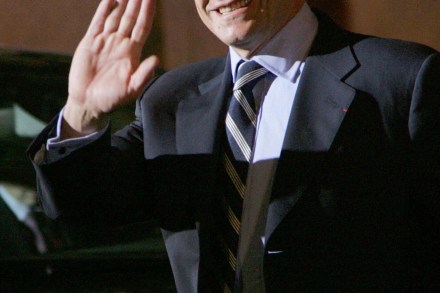
There is plenty of baffled commentary in this morning's newspapers about the strange US-style transition arrangements between the Blair and Brown regimes - see for instance this leader in the Guardian. There is also still more on who will do what in Gordon's court, who's in, who's out. But the definitive piece remains Fraser's one on the Brownite "Octet" in the Spectator last September.

Brown’s ideal opponent

From our UK edition

Further to what James posted on John McDonnell, I have always thought that Gordon wanted a leftwing candidate to run. It provides him with the illusion of a contest and enables him to posture as the New Labour continuity contender. This line-up will give comfort to the Blairites who have rushed on to the Brown-wagon, and declared implausibly that they have aways believed that Gordon was a reformer. Beyond that, the contest will establish nothing and do nothing to avert Labour's coming civil war.

Prescott’s choice

From our UK edition

What did the affable and able Alan Johnson ever do to deserve the support of John Prescott in the Labour Deputy Leadership race? It's the evolutionary equivalent of homo sapiens getting a posthumous thumbs up from the dinosaurs. Maybe it'll endear Mr Johnson to Labour activists, but in the electorate's eyes it is the black spot. Poor old Alan.

Don’t wait 28 weeks to see this

From our UK edition

Since Coffee House is always keen to recommend guilty pleasures, it is only right to say that 28 Weeks Later is a splendid multiplex movie. More than just another zombie flick - although it is certainly that - it follows the honourable tradition of Aliens in trying a completely new riff on the original film to which it is a sequel, Danny Boyle's terrific 28 Days Later (virus escapes, whole of Britain wiped out in weeks etc). 28 Weeks Later picks up the story when American troops have moved in to rebuild the depopulated wasteland, and Canary Wharf is the ultra-secure "District One" which forms the Nato HQ.

Brown’s constitutional

From our UK edition

Stand by for a huge constitutional debate: that was one of many messages to be drawn from Gordon Brown’s launch this morning. Asked whether his plans included a written constitution, he would only say that he favoured a “better constitution”. But there was an explicit promise to curb the Crown prerogative, make Parliament more powerful, submit certain government appointments to parliamentary oversight, and (less overtly) entrench citizens’ rights and responsibilities in some way. Gordon left us is no doubt that he is thinking big. To make sense of it all, check out this excellent section of the openDemocracy website.

The Coffee House debate

From our UK edition

Matthew d'Ancona and Tim Montgomerie of Conservative Home debate what the Tories can--and should--learn from Blair.    Dear Tim,Here is my starter for ten.Tony Blair is already transforming Tory politics. Here are few of the lessons that are being learned (or should be):1. Economics is no longer enough. The 1997 election result showed that growth no longer guarantees electoral victory – indeed, now that the Bank of England is independent, voters have every reason to think that they are prosperous in spite of rather than because of politicians. Cameron and Osborne are right to emphasise “economic stability”: code for “We won’t ruin it.” 2. Quality of life:  making ends meet is still a struggle for millions of people.

Bye, Bye Blair

From our UK edition

It's going to be a very interesting day, and we will be keeping you up to date with commentary and review of Blair's performance. Don't forget our unmissable special supplement on the Blair years, free with the new issue of The Spectator. To kick things off, here's a piece by me in today's Wall Street Journal.

What Tony would like to say

From our UK edition

Nobody knows what Blair will say tomorrow in his constituency. But this is what he will mean: “People of Sedgefield: in 1983 you were fortunate enough to elect me your MP – no, stop crying at the back, the weepy bit doesn’t come till later. Anyway, I have been in the Commons for 24 years when I could have been coining it at the bar. Makes you think, doesn’t it? Still, I stuck with it, all those ghastly branch meetings and terrible activists, and became Labour leader in 1994. Again – well chosen! And, just to remind you ungrateful lot – since then, I’ve won you three elections, loads of wars and seen off four Tory leaders. And what thanks have I got? A coup last September to get rid of me, that’s what.

Peace is not about to break out

From our UK edition

I am amused by much of the coverage of John Reid’s resignation which focuses on the upside for Gordon Brown of securing a senior vacancy in the Cabinet. The exit en masse of veteran Blairites may well be handy for a new Prime Minister looking to surround himself with new talent (old Pope, young cardinals and all that). But the notion that the mass surrender of Mr Blair’s allies is the prelude to a new era of unity in the Labour Party is utterly hilarious. For details, see today’s Evening Standard in which Peter Mandelson warns Mr Brown that “the temptation will always be there to go back to the old ways of putting the party first and the public second, of talking to ourselves when we should be listening to others, with the result that the party will end up losing.

Brown’s media management

From our UK edition

When John Major was at his most paranoid, he used to have every edition of the Evening Standard brought to him by a flunky in his study - whereupon he would jab at the page and blame specific colleagues for specific leaks. In his final months, Iain Duncan Smith acquired a similar habit, saying to Tory frontbenchers: "I see you got a good write up on page 23, paragraph four" - or words to that effect. So this interesting piece on Gordon and the press does not inspire confidence.

The worst possible start for Brown

From our UK edition

I started the day unsure that the political landscape had changed but 12 hours is a long time in politics. Few moments deserve to be called historic, but the fall of Scotland to the SNP is amongst them. In theory this brings Scottish independence closer than at any time since the Home Rule Bill of 1913. But its greater significance is personal. However he wriggles and squirms, Gordon Brown cannot escape the tartan brush with which he has just been rudely tarred. Scotland was meant to be his fiefdom and it has fallen out of Labour hands – just as Dunfermline and West Fife, which Labour lost in a by-election in February 2006, was meant to be Mr Brown’s back-yard. Could there be a worse way to begin a premiership?

How good a night was it for the Tories?

From our UK edition

The general view so far which I myself posted earlier is that this has been a respectable rather than seriously impressive night for the Tories. However, see Iain Dale’s analysis for a different perspective which should give all Tories cause for cheer.

The result: No overall control

From our UK edition

'A new dawn has broken,' said Eric Pickles, the Tories' local government spokesman, just after 5:20. Oh no it hasn't, Eric. Hovering around 41 per cent, with patchy gains in the North West, the Tories had a respectable night in the English local elections. But, at this point, Labour seems to have improved slightly upon its 2006 showing of 26 per cent: nothing to be proud of, naturally, but not the meltdown for the governing party that would have triggered a serious leadership challenge to Gordon Brown if there had been a serious leadership challenger left to mount it. David Cameron had a perfectly satisfying night.

What a Sarko win’ll mean for British politics

From our UK edition

The funny thing is that Labour is wholly relaxed about Sarkozy winning – he and Gordon get on very well. But imagine the identity crisis into which a muscular, right-wing but emphatically modern French President might plunge the Cameroons. Sarko is perhaps the least likely person on Earth to “hug a hoodie”, and his “love France or leave it” is about far from cuddly Cameronism as it is possible to be. Watch the British Conservative Right looking enviously across the Channel if he wins – and keep a close eye on what they do next.

Britain, my Britain

From our UK edition

Why do the Scottish elections make me uneasy? Because the performance of the SNP, which is certain to be strong, is bound to stir up a reciprocal nationalism south of the border. England’s moment is undoubtedly drawing closer. And I am not sure that is such a good thing. In his masterly book, England: An Elegy, Roger Scruton describes a country that is, above all else, a home, defined by what he calls “enchantment”, expressed in ritual, culture and the laws which are a gift of the land rather than a mere compilation of decrees. Scruton’s England is restrained, eccentric, civilised: it is an appealing and dignified place. But it is also – and this is the philosopher’s whole point – a thing of the past.

A world bursting at the seams

From our UK edition

New York As I ascend the solemn steps of Columbia University’s Low Memorial Library, a Parthenon transplanted to Broadway, the early spring snow crunches underfoot and the woes of Africa and the developing world seem very distant. Yet that is what I am here to discuss with Professor Jeffrey Sachs, director of the university’s Earth Institute and this year’s Reith Lecturer. For his five Radio 4 programmes, the first of which was broadcast this week, Sachs has chosen the title ‘Bursting at the Seams’, which is how he sees the 21st-century world and its afflictions: extreme poverty, environmental crisis, terrorism, disease, bad governance.

The magus of Fitzrovia

From our UK edition

I meet Ian McEwan for lunch at Elena’s L’Etoile near his Fitzrovia home. He is greeted like a member of the family, and he tells me with relish that the restaurant features in The Dean’s December by one of his literary heroes, Saul Bellow. McEwan’s last book, Saturday, was explicitly influenced by Bellow, and in many ways a homage to the American master. But his new and eleventh novel, On Chesil Beach (a short masterwork), explores different terrain. Set in 1962, it takes as its narrative focus the wedding night of a virginal couple, Edward and Florence, at a hotel on the Dorset coast, and, more specifically, their first, disastrous sexual encounter.

How to build the peace: the King of the Nation Builders reveals all

From our UK edition

Paddy Ashdown spent more than three years trying to reconstruct Bosnia. He was asked by Donald Rumsfeld to do the same in Iraq. Here, he tells Matthew d’Ancona that such reconstruction must be at the heart of 21st-century geopolitics You send an ex-Lib Dem leader to the Balkans for three and a half years, and he comes back the King of Nation Builders. Not that ‘nation-building’ is a term much liked by Paddy Ashdown, former High Representative of the International Community in Bosnia and Herzegovina. ‘That’s something you do to start a nation. This is reconstruction: how do you reconstruct? And let’s not talk about a “nation”, either. Foreigners are not given to creating nations.

A chill Cabinet

From our UK edition

In a taped diary entry for April 2003, David Blunkett describes a terrible dream: ‘a dream that had all the undertones of being on the outside, of being alienated, of being given the cold shoulder, of being friendless and leaning on a stick, having fallen out with Tony Blair and then having challenged him in the middle of a speech in the Commons and humiliating him by raising something that left him floundering.’ Well, you don’t have to be Freud to analyse that particular nightmare. This is an important book, though not for the reasons many anticipated.