Matt Ridley

Matt Ridley is the author of How Innovation Works: And Why It Flourishes in Freedom (2020), and co-author of Viral: The Search for the Origin of Covid-19 (2021)

Melissa Kite, Nigel Biggar and Matt Ridley

From our UK edition

24 min listen

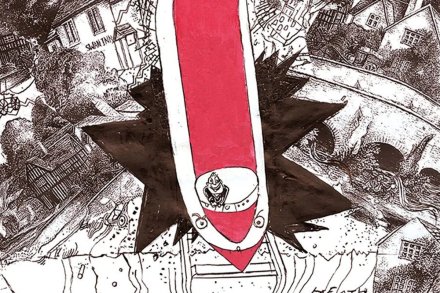
This week Melissa Kite mourns the Warwickshire countryside of her childhood, ripped up and torn apart for HS2, and describes how people like her parents have been treated by the doomed project (01:15), Nigel Biggar attempts to explain the thinking behind those who insist on calling Britain a racist country, even though the evidence says otherwise (06:38) and Matt Ridley enters a fool’s paradise where he warns against being so open-minded, that you risk your brain falling out (13:01). Produced and presented by Linden Kemkaran.

Battle begins

From our UK edition

40 min listen

This week: Katy Balls writes in her cover piece that after Tory conference the battle lines have now been drawn between the two main parties. She says we should prepare for a 'presidential campaign' ahead of the 2024 election and joins the podcast alongside The Spectator’s editor Fraser Nelson to discuss the dividing lines between Labour and the Conservatives. (01:17).  Also this week: In her column Lionel Shriver says that she is leaving the UK for the sunnier climes of Portugal. She argues that Britain has lost its way both economically and culturally and is joined by another American expatriate Kate Andrews, The Spectator’s economics editor. (15:37).  And finally: Matt Ridley writes that we are entering a new age of gullibility.

The new age of gullibility

From our UK edition

Is the Loch Ness Monster real? Many thousands of people think so. ‘Existence “plausible” after plesiosaur discovery,’ the BBC reported. ‘Hundreds join huge search for Loch Ness Monster.’ Not only that. The Beeb had live coverage of congressional hearings about possible UFO sightings in July. It ran a series on the yeti the previous month asking: ‘Is something out there in the Himalayas?’ Last year, an Autumnwatch presenter took seriously the possibility that large cats are roaming the countryside. What’s coming back next? Poltergeists, Ouija boards, the Bermuda Triangle, crop circles? Have we been time-ported back to the 1970s?

Why won’t Greenpeace admit that wind turbines may be killing whales?

From our UK edition

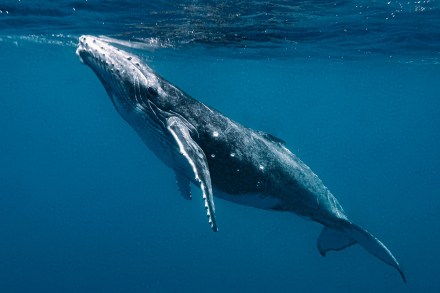
Who cares about whales? Whales might be dying because of sonar surveying, but Greenpeace simply ignores the science that doesn’t suit it. So far last year, 71 whales have washed up dead on the shores of New England and neighbouring states. The rate seems to have risen in recent years along with a growth in the number of offshore wind turbines. A small group of concerned citizens have started to campaign against the turbines on behalf of the whales, and the journalist Michael Shellenberger has made a short film about their efforts called Thrown to the Wind. The evidence gathered by the scientists in the film is far from conclusive: it’s a correlation that could be a coincidence. But it’s not a mad idea that wind farms threaten whales.

Science fiction: the crisis in research

From our UK edition

The president of Stanford University, the neuroscientist Marc Tessier-Lavigne, has announced his resignation following an investigation into allegations of fraud and fabrication in three of his lab’s scientific papers, including one cited as the most important result on Alzheimer’s disease in 20 years. The report exonerated him of committing the fraud but found he had failed to correct the errors once they were brought to his attention.  The pandemic provided a glimpse of how far scientists will go to bend conclusions to a preferred narrative The vast majority of scientists are honest, but recent years have seen many cases of scientific misconduct come to the surface, implying there is a systemic problem.

Why I’m sceptical about a superconductor breakthrough

From our UK edition

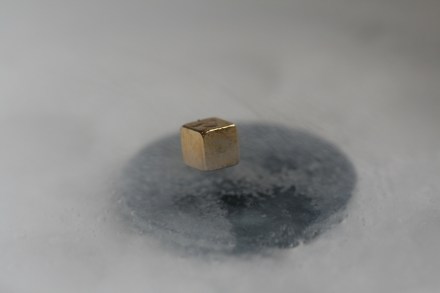
A team of South Korean scientists has pre-printed a paper asserting that they have achieved superconductivity at room temperature and atmospheric pressure. The paper has led to widespread speculation that this is the most significant physics discovery in decades, with huge implications for energy, medical technology and computing. Even Jordan Peterson is asking if room-temperature superconductivity has become a reality.  If the paper is true, it is indeed big news.   The authors of this latest paper are not hiding the light of their excitement under any bushels of modesty But there are widespread doubts as to whether it will prove true.

Latvia is alive with song again

From our UK edition

Every five years Latvia stages a week-long song and dance festival and this year my wife’s Latvian cousins got us tickets to two of the biggest events. I had no idea what to expect. The first evening, in a vast open-air arena in the Mezaparks forest outside Riga, while the light faded behind the tall pines, we watched a 10,000-strong choir dressed in varied costumes – the men in cream or grey flared frock coats and black boots, the women in flower crowns, tartan shawls and striped skirts – as they sang traditional songs. The next day in the Daugava stadium we thrilled to an astonishing 17,000 amateur dancers swirling in intricate and flawless formations to bagpipes, folk and jazz.

Matt Ridley, Martin Newland & Mary Wakefield

From our UK edition

22 min listen

This week: Matt Ridley reveals the identity of the Chinese scientists in the lab linked to Covid, Martin Newland makes the moral case for becoming a foster carer, and Mary Wakefield has a plan for her old age to rid the world of drones.

Wuhan clan: we finally know the identity of the scientists in the lab linked to Covid

From our UK edition

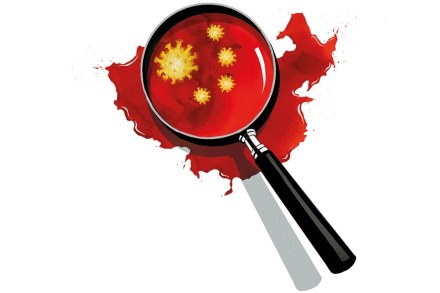
That a pandemic caused by a bat coronavirus started in the city with the world’s largest programme of research into bat coronaviruses was always intriguing. That among the first people to get ill with allegedly Covid-like symptoms in the month the pandemic began were three scientists working in that lab was highly suspicious. Now that we know their names, we find one of them was collecting what turned out to be the closest cousins of Sars-CoV-2 at the time, and another was doing the very experiments that could have created the virus. These revelations make it almost a slam dunk for the coronavirus lab-leak hypothesis.

We are losing the war to save red squirrels

From our UK edition

Two years ago I watched a red squirrel climbing a pine tree at my home in Northumberland. I fear it may be the last time I have that thrill. Twenty years ago they were everywhere in our woods and regular visitors to my bird table. Then in 2003 we saw the first grey squirrel. Almost at once the reds became scarcer and today there are few left. Volunteers work hard to cull the greys, killing around 600 a year, and occasionally this works well enough for a brief revival of the reds. But we are losing the war.  It’s a strange fact of biogeography that Europe has only one species of true tree-climbing squirrel. There are others in the Caucasus and Siberia, and there are several ground squirrels, but the exquisite Nutkin is our continent’s unique tree squirrel.

My unexpected lunch with Nigel Lawson – and Prince Philip

From our UK edition

When I joined the House of Lords in 2013 I soon realised that, despite its poor reputation, the place contained plenty of wise, quick-witted and courageous minds. None more so than Nigel Lawson who died this week. An intellectual titan who had once almost become a philosophy professor, he was not content to rest on his considerable laurels as a politician and seemed unafraid to challenge any conventional wisdom to check if it deserved that status. But it was a lunch in 2017 with Lord Lawson and two ninety-somethings who are also now dead that remains probably the most sparkling memory of my nine years as a member of the Lords. It came about thus.

Did Covid really originate in Wuhan’s seafood market?

From our UK edition

There is new evidence pointing to the origin of Covid being in the seafood market in Wuhan. That, at least, is the substance of a breathless piece published in the Atlantic. Specifically, Katherine Wu, the journalist who wrote the piece, had evidence suggesting that 'raccoon dogs being illegally sold at the venue could have been carrying and possibly shedding the virus at the end of 2019'. Notice: 'could have', that old fallback of hype and spin. Wu went on to claim that 'it’s some of the strongest support yet, experts told me, that the pandemic began when SARS-CoV-2 hopped from animals into humans, rather than in an accident among scientists experimenting with viruses'.

Who really discovered DNA’s structure?

From our UK edition

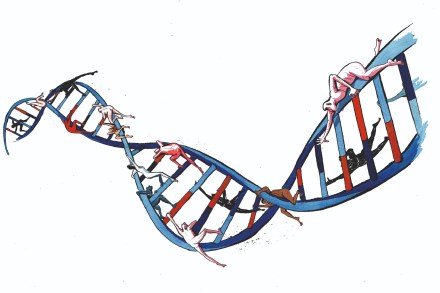
Tuesday 28 February marks the 70th anniversary of – in my view – the most important day in the history of science. On a fine Saturday morning with crocuses in flower along the Backs in Cambridge, two men saw something surprising and beautiful. The double helix structure of DNA instantly revealed why living things were different: a molecule carries self-copying messages from the past to the future, bearing instructions written in a four-letter alphabet about how to synthesise living bodies from food. In the Eagle pub that lunchtime, Francis Crick and James Watson announced to startled fellow drinkers that they had discovered the secret of life.

The Tories’ wind power delusion

From our UK edition

A very strange parliamentary rebellion has been taking place with Boris Johnson, Liz Truss and dozens of other Tory MPs demanding an end to the ban on onshore wind farms. Wind power is cheap and getting cheaper, they argue. And surely, if we’re engaged in an energy war with Russia, we need all the power we can get? It’s an argument that is wrong several times over. There is no ban on wind farms – it is actually a bog-standard planning requirement that they be confined to areas designated for that purpose and with community support. Nor do they offer a cheap solution: the costs are high and rising.

What’s killing our birds?

From our UK edition

If you are a bird, any kind of bird, the current pandemic of avian influenza rampaging through your kind is far more terrifying than anything the hairless apes on the ground below experienced in 2020 and 2021. Britain’s seabirds – guillemots, gannets, gulls, kittiwakes and skuas – have been hardest hit because they breed in dense colonies, facilitating infection. The death toll this summer among 2,600 sandwich tern chicks on Coquet island, off the Northumberland coast, approached 100 per cent. The worst may be only just beginning for the many thousands of geese, ducks and waders. They scatter across the Arctic tundra in summer and gather in dense flocks on estuaries and salt marshes around our shores in winter.

How to be PM: ten rules for the next Tory leader to live by

From our UK edition

You’ve just become prime minister. The public finances are in a mess, the Bank of England has stoked inflation, cutting taxes may make it worse, energy prices are through the roof, people are hurting so you can’t cut social spending, the Health Service is lengthening its waiting lists despite record budgets. What can you do? Given that you will be hearing a lot from people who do governing all day, here are ten things to remember on behalf of the rest of us – the governed: Assume all public bodies have the same goal – and it isn’t what it says on the tin. You might think the Committee for the Promotion of Postage Stamp Collections is obsessed with postage stamps, or the Sewage Treatment Works Agency is fascinated by sewage.

Has the lab leak theory really been disproved?

From our UK edition

The BBC carried a story this week with the headline ‘Covid origin studies say evidence points to Wuhan market’. Bizarrely the paper in Science they are referring to, by Michael Worobey and colleagues, says no such thing. It says: ‘the observation that the preponderance of early cases were linked to the Huanan market does not establish that the pandemic originated there’. All three of the scientists quoted in the BBC story have been highly dismissive about even discussing the possibility that the pandemic began as an accident in a Wuhan laboratory. Their vested interest is clear: they worry that the reputation of their field of virology would be threatened by such a discussion.

Could a vaccine for cancer be within reach?

From our UK edition

It’s probably now the longest running conflict since the Hundred Years’ War: Richard Nixon declared the ‘war on cancer’ 51 years ago. The enemy is still in the field, killing more people than ever as other causes of mortality shrink. But cancer is at last giving ground. Fresh from its triumph in the race to make a vaccine for Covid-19, the German biotech company BioNTech has announced promising results using a similar vaccine against pancreatic cancer. Of 16 people given the vaccine shortly after they had their tumour surgically removed, eight were cancer-free 18 months later. That may not sound like much and these are small numbers, but they are being greeted with enthusiasm.

As Shanghai locks down, China is facing its greatest Covid crisis yet

From our UK edition

The coronavirus is spreading through Hong Kong, Shenzhen and other cities in China like a bush fire; tens of millions of Chinese have been ordered to stay at home yet again. Shanghai, a city of 26 million souls, has been split in two. Those on the eastern side of the Huangpu River will be locked down until Friday, their west bank neighbours from the start of April.   It won’t work. Like a new Mercedes, the BA.2 model of the omicron variant of the Sars-CoV-2 virus is faster, quieter and 30 per cent more prolific. There is no chance of stopping it with lockdowns, mass testing or social distancing – even in Xi Jinping’s China.

Breathe easy: how respiratory viruses evolve to become milder

From our UK edition

The Queen has suffered ‘mild, cold-like symptoms’ from her Covid-19 infection, according to Buckingham Palace. The wording reminds us that, except in the very vulnerable, the common cold is always and everywhere a mild disease. There are 200 kinds of virus that cause colds and they hardly ever debilitate healthy people, let alone kill them. Yet we were recently told by the New and Emerging Respiratory Virus Threats Advisory Group (Nervtag) that ‘it is a common misconception that “viruses mutate to cause less severe disease”’. If that is the case, how did all common colds become mild — and why would Covid not do the same?