Matt Ridley

Matt Ridley is the author of How Innovation Works: And Why It Flourishes in Freedom (2020), and co-author of Viral: The Search for the Origin of Covid-19 (2021)

Don’t Panic! How to talk about climate change

From our UK edition

23 min listen

Can the conversation around climate change all too often get heated, hysterical, and panicked? Should we be appealing for more calm in the climate debate? In the first of this mini podcast series featuring Bjorn Lomborg and Matt Ridley, host Kate Andrews challenges Bjorn and Matt on their views over the best way to conduct what some say is the most important debate of our lifetimes.

Could the key to Covid be found in the Russian pandemic?

From our UK edition

The killer came from the east in winter: fever, cough, sore throat, aching muscles, headache and sometimes death. It spread quickly to all parts of the globe, from city to city, using new transport networks. In many cities, the streets were empty and shops and schools deserted. A million died. The Russian influenza pandemic of 1889-90 may hold clues to what happens next — not least because the latest thinking is that it, too, may have been caused by a new coronavirus. In addition to the new diseases of Sars, Mers and Covid-19, there are four other coronaviruses that infect people. They all cause common colds and are responsible for about one in five such sniffles, the rest being rhinoviruses and adenoviruses.

The growing evidence on vitamin D and Covid

From our UK edition

The argument that vitamin D deficiency may contribute to more severe cases of Covid is gaining ground. It is now reaching the point where it is surprising that we are not hearing from leading medical officials and politicians that people should consider taking supplements to ensure they have sufficient vitamin D. This is not the same as arguing that vitamin D is a magic bullet that will cure the disease. Vitamins are not medication, the taking of which will have positive effects on everybody. They are top-ups: things that hurt you when you don’t have enough of them in your system but do no extra good when you have enough. Indeed, with many vitamins, including D, taking too much can be toxic.

Who can tame the virus?

From our UK edition

32 min listen

The government is looking at easing the lockdown, but how much remains unknown about the coronavirus (00:40)? In the meantime, Joe Biden is batting off sexual assault allegations (10:15), and we take a look at the upside of lockdown for new parents (21:30).With science writer Matt Ridley, virologist Elisabetta Groppelli, Spectator USA editor Freddy Gray, host of the 'Democratically: 2020' podcast Karin Robinson, the Spectator's Assistant Editor Lara Prendergast, and Editor of the Times Literary Supplement Stig Abell.

We know everything – and nothing – about Covid

From our UK edition

We know everything about Sars-CoV-2 and nothing about it. We can read every one of the (on average) 29,903 letters in its genome and know exactly how its 15 genes are transcribed into instructions to make which proteins. But we cannot figure out how it is spreading in enough detail to tell which parts of the lockdown of society are necessary and which are futile. Several months into the crisis we are still groping through a fog of ignorance and making mistakes. There is no such thing as ‘the science’. This is not surprising or shameful; ignorance is the natural state of things. Every new disease is different and its epidemiology becomes clear only gradually and in retrospect. Is Covid-19 transmitted mainly by breath or by touching? Do children pass it on without getting sick?

A cure for Covid may arrive faster than a vaccine

From our UK edition

A striking feature of Covid-19 is how medieval our response has had to be. Quarantine was the way people fought plagues in the distant past. We know by now that it will take many months to get a vaccine, whose job is to prevent you getting the disease. But what about a cure once you have caught it: why is there no pill to take? The truth is that, advanced as medical science is, we are mostly defenceless against viruses. There is no antiviral therapy to compare with antibiotics for treating bacteria. Arguably, virology in 2020 is where bacteriology was in the 1920s.

Britain’s coronavirus testing is bogged down in bureaucracy

From our UK edition

Despite what Corbynites like to claim, Britain’s National Health Service has always relied heavily on the private sector for lots of things. The food it serves to patients is not grown on state-owned farms, nor are the pills it prescribes manufactured in state-owned factories. Yet when it comes to diagnostic tests there seems to be a reluctance to buy them in, even from other public bodies let alone from private firms. This ideological prejudice is proving costly. A new report by Matthew Lesh for the Adam Smith Institute, published today may explain the British failure compared with other countries when it comes to tackling the current pandemic by testing. On 14 March, Britain was the fifth best country for quantity of Covid-19 viral tests performed per capita.

The curious age discrimination of coronavirus

From our UK edition

The generational effect of the corona-virus is cunning and baffling. By often being so mild in the young and healthy it turns people into heedless carriers. By often being so lethal in the old and sick, it makes carriers into potential executioners of friends and neighbours. The virus is very dangerous for people who have certain underlying illnesses, which is probably the main reason it is so serious for the elderly. It is almost as if it does not kill people by itself, just worsens other disorders. This is unlike flu, where children are as much at risk as old people. By contrast, in this case, young people in good health, even very young children, generally get such a mild coronavirus infection that they rarely have to seek treatment. An analysis of Chinese cases found that just 0.

We are about to find out how robust civilisation is

From our UK edition

On Sunday, lonely as a cloud, I wandered across a windswept moor in County Durham and passed a solitary sandstone rock with a small, round hollow in the top, an old penny glued to the base of the hollow. It is called the Butter Stone and it’s where, during the plague in 1665, coins were left in a pool of vinegar by the inhabitants of nearby towns and villages, to be exchanged with farmers for food. The idea was that the farmer or his customer approached the rock only when the other was at a safe distance. Four modern coins were on the rock, anonymous offerings to the spirits of the moor. Never once in my six decades did I expect to be back in a 17th-century world of social and physical distancing as a matter of life and death. There are no good outcomes from here.

Why have so many of our recent diseases come from bats?

From our UK edition

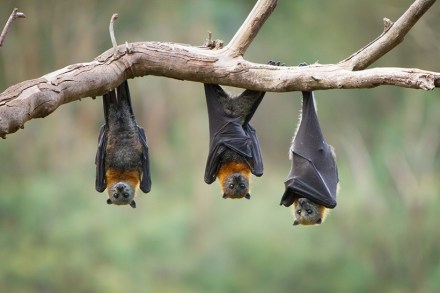
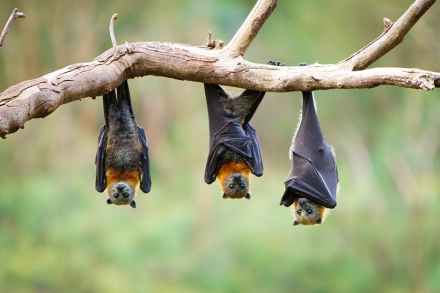
I’m no Nostradamus, but 20 years ago when I was commissioned to write a short book about disease in the new millennium, I predicted that if a new pandemic did happen it would be a virus, not a bacterium or animal parasite, and that we would catch it from a wild animal. ‘My money is on bats,’ I wrote. We now know that the natural host and reservoir of the new coronavirus, Covid-19, is a bat, and that the virus probably got into people via a live-animal market in Wuhan. This is not the first disease bats have given us. Rabies possibly originated in bats. So did, and does, Ebola, outbreaks of which usually trace back to people coming into contact with bat roosts in caves, trees or buildings.

Why have so many of our recent viruses come from bats?

From our UK edition

I’m no Nostradamus, but 20 years ago when I was commissioned to write a short book about disease in the new millennium, I predicted that if a new pandemic did happen it would be a virus, not a bacterium or animal parasite, and that we would catch it from a wild animal. ‘My money is on bats,’ I wrote. We now know that the natural host and reservoir of the new coronavirus, Covid-19, is a bat, and that the virus probably got into people via a live-animal market in Wuhan. This is not the first disease bats have given us. Rabies possibly originated in bats. So did, and does, Ebola, outbreaks of which usually trace back to people coming into contact with bat roosts in caves, trees or buildings.

Britain needs to rediscover failure if it wants to prosper

From our UK edition

What was Brexit for? After finally taking Britain out of the European Union, the Prime Minister can now start to give us his answer — and the opportunity in front of him is pretty clear. He could speed up, perhaps double, the rate of economic growth by unleashing innovation. After leaving the slow steaming European convoy, Britain must not chug along but go full speed ahead. That means rediscovering trial and error, serendipity and swiftness — the mechanisms by which the market finds out what the consumer wants next. The stifling of innovation by vested interests in the corridors of Brussels has held Britain back for too long — but it is not the only reason for our sluggish innovation capacity.

We’ve just had the best decade in human history. Seriously | 29 December 2019

From our UK edition

Let nobody tell you that the second decade of the 21st century has been a bad time. We are living through the greatest improvement in human living standards in history. Extreme poverty has fallen below 10 per cent of the world’s population for the first time. It was 60 per cent when I was born. Global inequality has been plunging as Africa and Asia experience faster economic growth than Europe and North America; child mortality has fallen to record low levels; famine virtually went extinct; malaria, polio and heart disease are all in decline. Little of this made the news, because good news is no news. But I’ve been watching it all closely.

We’ve just had the best decade in human history. Seriously

From our UK edition

Let nobody tell you that the second decade of the 21st century has been a bad time. We are living through the greatest improvement in human living standards in history. Extreme poverty has fallen below 10 per cent of the world’s population for the first time. It was 60 per cent when I was born. Global inequality has been plunging as Africa and Asia experience faster economic growth than Europe and North America; child mortality has fallen to record low levels; famine virtually went extinct; malaria, polio and heart disease are all in decline. Little of this made the news, because good news is no news. But I’ve been watching it all closely.

The most dangerous thing about the Amazon fires is the apocalyptic rhetoric

From our UK edition

Cristiano Ronaldo is a Portuguese expert on forests who also plays football, so when he shared a picture online of a recent forest fire in the Amazon, it went viral. Perhaps he was in a rush that day to get out of the laboratory to football training, because it later transpired that the photograph was actually taken in 2013, not this year, and in southern Brazil, nowhere near the Amazon. But at least his picture was only six years old. Emmanuel Macron, another forest ecologist who moonlights as president of France, claimed that ‘the Amazon rainforest — the lungs which produce 20 per cent of our planet’s oxygen — is on fire!’ alongside a picture that was 20 years old.

Beware pseudoscience

From our UK edition

‘The whole aim of practical politics,’ wrote H.L. Mencken, ‘is to keep the populace alarmed (and hence clamorous to be led to safety) by menacing it with an endless series of hobgoblins, all of them imaginary.’ Newspapers, politicians and pressure groups have been moving smoothly for decades from one forecast apocalypse to another (nuclear power, acid rain, the ozone layer, mad cow disease, nanotechnology, genetically modified crops, the millennium bug…) without waiting to be proved right or wrong. Increasingly, in a crowded market for alarm, it becomes necessary to make the scares up.

Britain is ripe for agriculture innovation after Brexit

From our UK edition

Agriculture is being transformed by innovation at a rapid pace. Genetically modified crops are being grown on 190 million hectares worldwide, with on average 20 per cent higher yields and 40 per cent fewer chemicals than their non-GM counterparts. Genome editing (which involves no cross-species DNA transfer) has produced fungus-resistant wheat and disease-resistant pigs. Farmers in Ukraine and Brazil are using satellite and drone data to target fertiliser and pesticide where and when it is needed, reducing the costs and environmental impact of farming. Robots are starting to drive tractors, identify weeds and pick strawberries. New nitrogen-fixing bacteria derived from sugar cane by Nottingham University promises higher yields in maize and rice.

What Donald Trump gets wrong about climate change

From our UK edition

Donald Trump now says of climate change: ‘I don’t think it’s a hoax, I think there’s probably a difference. But I don’t know that it’s man-made.’ The climate activist Eric Holthaus said: ‘The world’s top scientists just gave rigorous backing to systematically dismantle capitalism.’ Both are wrong. The truth is that climate change is happening, but more slowly than expected. It’s now 30 years since James Hansen of Nasa raised the alarm and, as climate scientist Pat Michaels and hurricane expert Ryan Maue have pointed out, ‘it’s time to acknowledge that the rapid warming he predicted isn’t happening’. Our own government’s climate-change committee, and the hysterical BBC, should take note.

Diary – 18 October 2018

From our UK edition

When I land on the east coast of America, people tell me they’ve never met a Trump voter. When I land in the middle, as I did last week in Kentucky, I meet lots. I chatted with my driver, who did not like Trump at first, but would vote twice for his re-election if he could, because of the jobs boom and the Brett Kavanaugh hearings. He’s a retired salesman who tutors kids from poor backgrounds in reading and maths. ‘I guess that makes me a conservative,’ he says. I had to lecture in semi-darkness in Louisville, after a power cut plunged most of the university into darkness.

The art of the impossible

From our UK edition

The extermination of every single one of South Georgia’s rats, for the sake of its birds, was confirmed at a press conference in London last week. A summer of searching with dogs and bait two years after the last poison was deployed turned up no sign of a rodent. This achievement is remarkable, not least because it was deemed impossible right up until it was achieved. It was a barmy idea, way out there, crazy, bound to fail. Like lots of other ideas. Maybe there’s a lesson here. The island got infested with rats from whaling ships centuries ago, and they soon exterminated endemic pintails and pipits from the main island, driving the remnant populations of prions and petrels into the rat-free mountains. Only the penguins were rat proof.