Matt Cavanagh

The Tories may have left it too late for that realistic debate about border security

From our UK edition

Another day of bad headlines about border security is, in the end, a bad day for the Home Secretary, whoever ends up getting the blame. Yesterday morning brought further revelations in the newspapers; and then at lunchtime, Brodie Clark, the senior official who was first suspended and then resigned over the affair, made his much anticipated appearance before the Home Affairs Select Committee. Meanwhile, over in the House of Commons, the immigration minister Damian Green had been summoned to answer an urgent question about further alleged border lapses. By the evening, the story was once again leading the national news. Nevertheless, as the dust settles, Theresa May is still there — and, if anything, slightly less vulnerable than before.

‘Guest worker’ plan would hurt the economy

From our UK edition

The economists who advise the Home Office on immigration policy have come out against a plan to turn economic migrants into 'guest workers'. Last week, the Migration Advisory Committee (MAC) published their response to the government's proposals on restricting settlement rights for skilled workers from outside the EU. With all the debate around David Cameron's pledge to cut net immigration to the 'tens of thousands', many of the detailed policies for achieving that overall aim have been somewhat neglected. It should be clear, however, that these particular proposals would represent a very significant change, with serious implications for employers.

Britannia waives the rules

From our UK edition

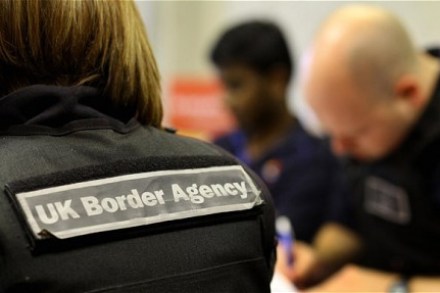
Today’s immigration headlines have a familiar feel. Twenty four hours after embarrassing revelations about a hundred thousand asylum case files being quietly written off, we now learn that at certain times over the summer, UK Border Agency staff were told not to bother checking people’s passports, or checking them against watch lists for crime and terrorism. The media are understandably dusting off old headlines about our borders being "out of control", and the Home Office being "not fit for purpose". The strategy of Conservative ministers in the Home Office is already clear: on the first story, blame the previous government, and on the second, blame the officials, with a number of senior executives being named and suspended.

Voters support lower immigration, but not the government’s policies

From our UK edition

A major new survey of public opinion on immigration, published today by the recently-established Migration Observatory, should prove troubling reading for realists inside the Conservative party. As yet, the opposition are not threatening them on the issue – Labour still find it easiest to get noticed when they are apologising for their own record – and the general thrust of the Conservative approach, that immigration has been too high and must be reduced, is clearly very popular. But they have two problems. First, hardly anyone believes the government will actually deliver on their promises. A recent YouGov poll found 78 per cent believe it unlikely they would succeed in reducing annual net migration "from the hundreds of thousands to the tens of thousands".

Right to reply: Why do so many “new jobs” go to foreigners?

From our UK edition

On Monday, we published a post on George Osborne's "jobless recovery" — the point being that 90 per cent of the recent rise in employment can be accounted for by foreign nationals. Here's a counterpunch to it from the IPPR's Matt Cavanagh, who should already be familiar to CoffeeHousers from his previous posts and articles for us on matters military. We're hoping that this will be the first of a new series of "Right to reply" posts, giving outside writers the opportunity to take on your loyal baristas in mortal combat. Here goes: One of the most frequently recycled statistics of recent years is the percentage of "new jobs going to foreigners". The first thing to say is that this is a bad way to phrase it.

Decisions that may come to determine the Coalition’s stewardship of defence

From our UK edition

The House of Commons Defence Committee moves at a stately pace. Two weeks back, it gave us its considered view on the British military campaign in southern Afghanistan – a report which might have been quite useful a couple of years ago. Today it has published its verdict on October’s National Security Strategy and Strategic Defence and Security Review – nine months after their launch, with many of the decisions now irreversible, and with MPs and much of the media on holiday. The headline findings are not surprising, but make for bracing reading nonetheless.

Missing the target

From our UK edition

It has been a mixed week for Parliamentary Select Committees: they have regained some of their bite, but recent events have also served to remind us of their supine performances in the past. Yesterday it was the turn of the Defence Committee to seek our attention, briefing their latest report on the British military campaign in Helmand to the Sunday Telegraph. Under the headline ‘British Force Was Too Weak to Defeat Taliban’, we read of ‘a devastating report’ which is ‘deeply critical of senior commanders and government ministers’. But, the Committee have got some fairly crucial things wrong. They conclude that the task force was ‘capped at 3,150 for financial reasons’.

Where we are in Afghanistan

From our UK edition

I wrote back in November that as we approached the July deadline when President Obama promised to start drawing down troops from Afghanistan, the tensions between politicians and military would re-emerge, as “the military ask for more time to get it right, and Obama tries to hold them to the deal he thought he made in late 2009”. This is now coming to pass, in London as well as Washington. I also argued that having some sort of public timetable for the troop drawdown was a reasonable solution, perhaps the only solution, to the politicians’ problem of balancing conflicting messages to different audiences in Afghanistan and at home.

How to fix the National Security Council

From our UK edition

The National Security Council was a sound idea. But it has disappointed, both inside and outside Whitehall. The Ministry of Defence has complained that it "failed to give strategic direction". Among previous supporters in the media, Con Coughlin has commented sourly that “all it has achieved so far is the replacement of Blair’s much-derided ‘sofa government’ with a new, back-of-the-envelope approach”. James Kirkup was even driven to ask “What exactly is the point of it?” Where did things go wrong?

Operation amnesia

From our UK edition

Britain’s failings in Afghanistan have as much to do with short memories as shortages of troops When Liam Fox visited Afghanistan in January, he was, like the defence secretaries before him, keen to tell the story of a country moving towards peace and stability. So he stopped by the northern city of Mazar-i-Sharif, seen as one of the most orderly and peaceful in the country. At least, that is how it was seen until last Friday, when a mob stormed a United Nations compound and murdered seven unarmed staff — apparently to avenge a Koran-burning in Florida. A year after America’s troop surge in Afghanistan, there are dispiritingly few signs of progress.