Mary Wakefield

Mary Wakefield

Mary Wakefield is commissioning editor of The Spectator.

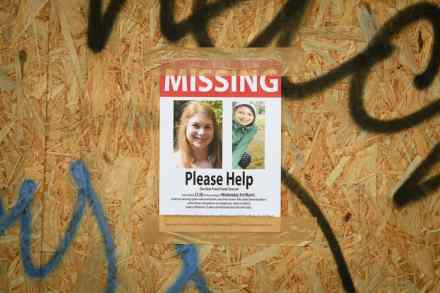
How would making misogyny a hate crime have saved Sarah Everard?

I’m not sure very many of our politicians, the London Mayor or even the Met can really be said to care about the death of Sabina Nessa, the poor young school-teacher murdered in London nearly a fortnight ago. If you claim to care about the victim of a terrible crime, if you’re going to grandstand and say ‘something must be done’, you have to care about what actually happened to her. The circumstances matter — else how can you try to prevent it happening again? ‘Say her name’, they all intone, before using that same name as a sort of springboard from which they can leap on to their own favourite hobby-horses and canter off, quite forgetting this very particular, very sad affair.

Is it cruel to crush your child’s dreams?

I think it’s for the best if we ban all children’s books containing the word ‘dream’. Dream big, little dreamer, dare to dream… that sort of thing. And especially an unbelievably popular series of books for primary school children, name of Little People, Big Dreams. There are hundreds of titles in this series and nearly four million copies sold worldwide. It’s a rare school that doesn’t stock them. Bin them all, I say. Perhaps it sounds cruel to actively want to crush a child’s dreams, but it’s for their own good. The books sound cosy, aspirational, unobjectionable, but in fact, deep in children’s young and spongy minds, they’re sowing the poisonous seeds of false ideas that might later do them real harm.

What’s the harm in opening the church doors?

The end of summer 2021, the end of the great British staycation. I sat on the grass outside the post office on Holy Island, Northumberland and watched as the tourists milled about. After a visit to the Priory, and the Pilgrims Fudge Kitchen, a fair few of them would wander up to the Catholic church, St Aidan’s. Even if you’re not the sort to ever go to church, you might pop in for a quick look on Holy Island, aka Lindisfarne. This is where the gospels were translated, and where St Aidan, in 635, founded the monastery from which he converted the pagan north. Aidan came here from Iona, at the request of nice King Oswald, and went about on foot evangelising. Not horseback, says Bede, he didn’t want to set himself above the locals. On Holy Island the tourists are polite.

Andy Owen, Mary Wakefield and Toby Young

20 min listen

On this week's episode, former intelligence officer Andy Owen gives his reflections on where we went wrong in Afghanistan - based on what he saw on the ground; Spectator columnist Mary Wakefield talks about the rise in neighbourhood crime; and Toby Young asks - why have my suits shrunk in lockdown?

How Nextdoor became the new Neighbourhood Watch

Long before the official numbers began to rise, back in 2014, it was clear that knife crime was on the up. You could tell by the way small boys chased each other through the park with machetes, and by the zombie blades left in flower beds. Now, seven years later, I feel the same way about what goes by the cosy-sounding name of ‘neighbourhood crime’. There’s the fashion for car theft (as poor Sam Leith found out), and the constant predatory circling of iPhone thieves on e-scooters. But worse than that, I think burglary is back, and I think it’s thanks to crack. We know drug use is creeping up: on Tuesday it was announced that drug-related deaths in England are at the highest level they’ve ever been. As for burglary stats, for those I rely on Nextdoor.

The bogus business of stigma-busting

Our society is bristling with social stigmas, we’re told, even in the progressive West, even in London. Life is so horribly stigmatised that celebrities are increasingly keen to raise awareness not of diseases or disabilities, but of the stigma that’s said to surround them. So: less campaigning for cancer research, more for breaking the stigma around talking about cancer. Less feeding the world, more brave standing up to the stigma attached to food poverty. Once you’re alert for stigma, it’s astonishing how much mention of it there is.

The word ‘mother’ isn’t offensive. The Catholic church should say so

I’m used to waiting for the Catholic church to make sense. I’m a convert to Catholicism, and Catholic ideas sometimes take a while to become clear. I start from a position of suspicious distaste, but if I sit tight, I’ve found, the strangest things come right. It’s in this spirit of patient confusion that, since the beginning of the year, I’ve been waiting for the Catholic bishops of England and Wales to speak out in defence of the word ‘mother’, and to state the simple, unremarkable fact that only biological women give birth. Out of America, out of universities, from the HR department of every big business has come this push against ‘gendered language’.

Apple’s cowardly surrender to the mob

A few weeks ago, more than 2,000 employees of Apple Inc. signed a petition that led to the sacking of a clever and capable tech engineer, Antonio García Martínez. García Martínez was fired for sexism — not because he behaved badly towards any women, but because of a passage in a book he wrote five years ago. The book was Chaos Monkeys, an exposé of the Silicon Valley scene, and here’s the offending sentence: ‘Most women in the Bay Area are soft and weak, cosseted and naive despite their claims of worldliness, and generally full of shit… but the reality is, come the epidemic plague or a foreign invasion, they’d become precisely the sort of useless baggage you’d trade for a box of shotgun shells or a jerry can of diesel.

The Proustian power of handwriting

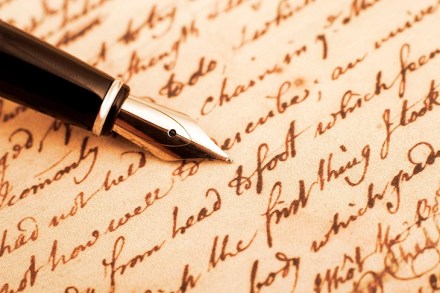
Towards the end of April, my mum sent me a letter. She doesn’t write as a rule — we speak on the phone — but this time she sent something. It’s hard to explain the effect her handwriting had on me after so many months of being apart. It was as if she was there, in envelope form, on the doormat. And because her handwriting’s been so familiar for so long, it wasn’t simply my mum as she is now, but Mum through three decades. I stood there in the gloom of the hall, vertiginous with memory, and I realised how unlikely it is that any future generation will have this same experience. I’m Generation X, the last of the analogue gang, brought up on handwriting. Our things weren’t encoded, they were imprinted: records and tapes.

‘This was a horrible pandemic – but it wasn’t the big one’: Michael Lewis interviewed

Michael Lewis’s new book, The Premonition, is a superhero story — though one in which the superheroes don’t, in the end, win. It’s the true story of a group of far-sighted, tough-minded scientists who, in January last year, saw the coronavirus pandemic coming in the USA, and the politicians who wouldn’t listen to them. And at the heart of the book is the terrible discovery, as true here as it is in the States: we imagine that, come disaster, the people we elect will look after us. We’re told they’re well prepared. But when it comes down to it, they protect not us but themselves. The villain of Lewis’s book is the United States Centers for Disease Control, which equivocated until it was far too late and ignored the pandemic plan it had.

The islanders who met their god – Prince Philip

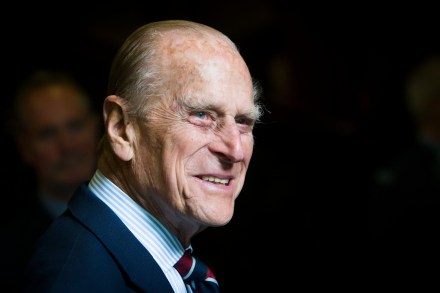
Some time around 2006 my then flatmate, a filmmaker, had a good idea: why not make a programme of reverse anthropology? Instead of going to the jungle with some square-jawed presenter to marvel at the natives, he decided to bring the natives here, to England, to see what they made of us. The islanders who arrived one drizzly day were from Tanna, in the South Pacific, and their particular interest in coming here was to meet god, aka HRH Prince Philip. Before they arrived, I felt a certain amount of patronising anxiety. They believed that Prince Philip had emerged from a volcano on Tanna. Would I be able to keep a straight face? My fears were unfounded. Everyone who met them agreed: Chief Yapa, Joel, Posen, Albi and J.J. were significantly more enlightened than us: joyful and direct.

Our mental health is going up in smoke

As we creep back into the open, as the Covid wards empty and the mental health clinics fill up, how are we going to tell what’s driven people crazy: lockdown, or what seems to have been a favourite lockdown hobby — smoking weed? Last week Sadiq Khan, London’s goblin mayor, announced that if re-elected he’ll set up a commission to look into the case for decriminalising cannabis. It’s not in Khan’s gift to decriminalise anything — Downing Street has already issued a response which amounted to: ‘Decriminalise dope? You must be high.’ But Khan doesn’t care. This isn’t about the policy, it’s about the posturing.

The fightback: can the West take on China?

38 min listen

Can the West take on China? We may need some kind of economic Nato (00:50). Are Mormons misunderstood, by Netflix and everyone else? (14:15) And what does it really mean to be Spiritual But Not Religious? (27:45).With James Forsyth, The Spectator's political editor; Iain Duncan Smith, former leader of the Conservative Party; Damian Thompson, host of the Spectator's Holy Smoke podcast; James Holt, a Mormon theologian; author James Mumford; and Mary Wakefield, The Spectator's Commissioning Editor.Presented by Lara Prendergast.Produced by Cindy Yu, Max Jeffery and Sam Russell.

In defence of Flannery O’Connor

I have a thought for the students of Loyola University in Baltimore, Maryland: this Easter, why not resurrect Flannery O’Connor? Why not show that you appreciate America’s greatest Catholic writer even if the poor, frightened duds in charge of you do not? Last summer, the university’s president, the Revd Brian F. Linnane SJ, removed O’Connor’s name from its halls of residence. The New Yorker had published a pompous piece about racism in O’Connor’s private correspondence, the George Floyd protests had begun and so… best not make the students uncomfortable, said Father Linnane. The cosmic joke of this has stayed with me ever since.

The ‘long Covid’ time bomb: an interview with Tim Spector

It sometimes seems as if Professor Tim Spector, of King’s College London, was conjured up especially to be a walking, talking rebuke to Public Health England. Where PHE has been lumbering, slow to respond to the fast-moving virus, Spector has been nimble, quick to see opportunity and adapt. This time last year, as Boris was preoccupied with the defining question of his premiership — who could possibly have leaked a disobliging story about his girlfriend’s dog — Tim Spector was concocting a plan for how to collect data about Covid from around the country. His Covid Symptom Study app (CSS), a year old this week, has been a triumph. There are now 4.5 million users, logging their symptoms daily.

Battle royal: Harry and Meghan’s brand of revenge

36 min listen

Is it fair to blame Meghan for the Royal Family's problems? (00:55) Why is China censoring a book of Dante's poetry? (12:40) Would you go to moon? (24:50)With The Spectator's US editor Freddy Gray; The Spectator's restaurant critic Tanya Gold; author Ian Thomson; Kerry Brown, professor of Chinese Studies at King's College London; The Spectator's commissioning editor Mary Wakefield; and Spectator columnist Matthew Parris.Presented by Cindy Yu.Produced by Max Jeffery, Natasha Feroze and Matthew Sawyer.

The war on cars is backfiring

For most London-based politicians, there’s a threat that’s worse than Covid. You’ll begin to notice it as we ease out of lockdown. It’s not the Brazilian variant that keeps them awake at night, or collapsing hospitals. Nope. What really worries them is the thought of cars. Watch them pale as they mutter the words ‘car-led recovery’ and marvel at the variety of tortuous schemes cooked up to thwart motorists. You’d have thought, given the teetering economy, that any recovery, car-led or otherwise, would be welcome — especially as pollution plummeted between 2017 and early 2020, and diesel’s the problem, not your average commuter ride. Volvo said on Tuesday that all its cars will be fully electric by 2030.

The case for immunity passports

For more than 20 years, I’ve been raging away at pointless rules. When my blood’s up, there’s not a foam-flecked Tory backbencher that can hold a candle to me. My friends blanch when I start on again about risk aversion in the C of E, dogs banned from beaches, the pond-weed creep of health and safety. I can ruin dinner parties, easily. And yet the idea of vaccination passports, which has my freedom-loving friends fit to be tied, leaves me quite calm. Bring them on, I say, and quickly. I don’t for a moment believe that Covid immunity cards are the first step on the dismal path to a Chinese-style social credit system. I don’t even think they’re the first step to ID cards. And — what’s the alternative?

The importance of daydreams

I miss daydreaming. It’s a small problem to have in a pandemic, but it nags at me. Laptop, cooker, home-school, broom. ‘Mum, Mum, Mumma, Mum… You’re not looking, Mum. You have to look!’ The gap between things seems to have disappeared. There’s no time to drift and wander. I look at my phone too much, and sometimes I have the strange feeling my brain is suffocating. And I might not have thought this worth mentioning were it not for a new book, When Brains Dream, by a pair of American sleep scientists, Antonio Zadra and Robert Stickgold. Bob and Tony, they call themselves throughout the book, and if they’re right, Bob and Tony have an answer to a problem that’s been puzzling people for 200 years: why do we dream?