Mary Wakefield

Mary Wakefield

Mary Wakefield is commissioning editor of The Spectator.

The greatest threat to Holy Island since the Vikings

It’s hard to explain how sad it will be if, after Christmas, Defra officials ban fishing on Holy Island, also known as Lindisfarne, in the North Sea, where the Lindisfarne gospels were written and where men and women have fished for hundreds if not thousands of years. For some reason no one can quite work out, Holy Island has been placed on the shortlist to become a Highly Protected Marine Area – HPMA – in which no fishing of any sort is allowed. But banning all fishing will destroy the village; Lindisfarne, which has been inhabited since long before its most famous residents, St Aidan and St Cuthbert, set up there, will fade away. There’ll be tourists, but no actual community, no life. Even the Vikings didn’t manage that.

There’s nothing magic about magic mushrooms

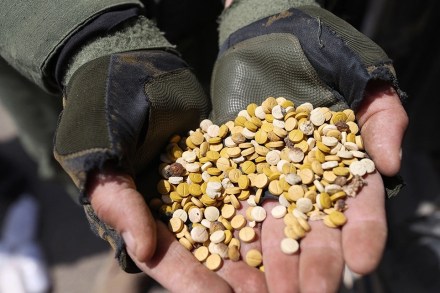
For about six straight hours after taking magic mushrooms – psilocybin – I had visions of a vast, skeletal shark coming at me out of the watery gloom, mouth open, teeth inches from my face. It wasn’t a hallucination – I only saw the shark when my eyes were shut – but even with my eyes stretched wide I felt dread, the same blank terror I had felt the year before when in the spirit of happy enquiry I’d taken acid. I deserved the shark, I suppose. What sort of a dolt has at the psychedelics again when LSD has already given them the abdabs? The trouble was, I’d bought the psilocybin PR: mushrooms are different because they’re organic; all you need is the right dose in the right environment; just surround yourself with friends.

At sea: can Sunak navigate the migrant crisis?

36 min listen

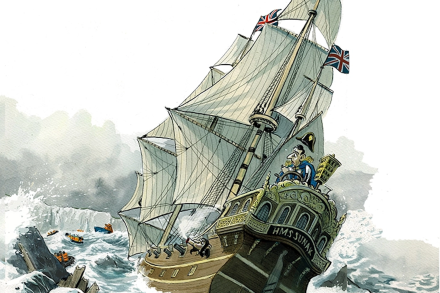
On this week's podcast: Can Rishi Sunak steady the ship? Patrick O'Flynn argues in his cover piece for The Spectator that the asylum system is broken. He is joined by Sunder Katwala, director of the think tank British Future, to consider what potential solutions are open to the Prime Minister to solve the small boats crisis (00:52). Also this week: Should we give Elon Musk a break? In the aftermath of his sensational purchase of Twitter, Mary Wakefield writes in defence of the tech billionaire. She is joined by James Ball, global editor of The Bureau of Investigative Journalism, to ask what his plans are for the social media platform (14:27). And finally: Ysenda Maxtone Graham writes in the magazine this week about the joy of hating the Qatar World Cup.

Don’t sneer at Elon Musk

I know a man who plans to burn an effigy of Elon Musk on his bonfire on 5 November. Musk will be on a cardboard rocket and it will be hilarious, apparently,to watch him being engulfed by flames, because he’s ridiculous, he and his weird ideas about Mars. The idea that Musk is laughable is one of the few topics on which the progressive left and the old hawkish left agree. Musk isn’t a serious person, they say, and because he’s not serious, he’s dangerous. He shouldn’t be allowed to own Twitter, let alone space rockets.   There was cautious, grudging approval when Musk donated terminals for his Starlink satellites to Ukraine, followed by great alarm when he speculated about the possibility of a peace deal with Vladimir Putin.

With Mary Wakefield, James Ball and Christopher Howse

22 min listen

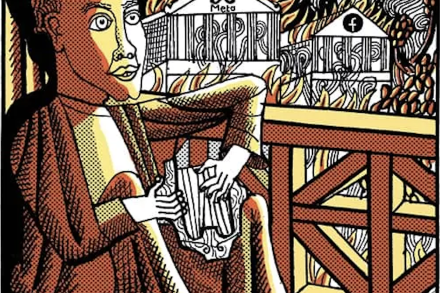
This week on Spectator Out Loud: Mary Wakefield tells us about her frustrating experience trying to give blood (00:49), James Ball says that it may be the beginning of the end for Mark Zuckerberg (07:04), and Christopher Howse reads his Notes on... signatures (16:44).Produced and presented by Oscar Edmondson.

Why can’t I give blood?

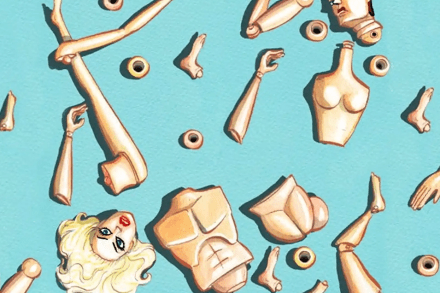
I read about the national shortage of blood last week with a feeling of gloomy inevitability. The brains of the nation are scrambled, Westminster’s insane, of course the country’s bleeding out. But at least, I thought, I can help a bit. I’ve given blood in the past and I enjoy it. There’s the feeling of warmth and purpose, and biscuits. I’d never fork out for a packet of custard creams, but like most English women and men I’m a sucker for one or two free on a saucer in a medical setting. Our blood donor scheme is actually all-round cheery. Each country has its own circulatory system, a flow out from the veins of donors, off to hospitals and into patients.

Oliver Basciano, Mary Wakefield and Fiona Mountford

20 min listen

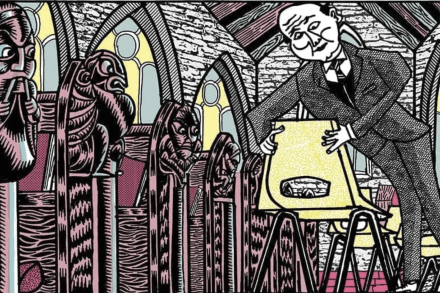
This week on Spectator Out Loud, Oliver Basciano warns that we should brace ourselves for a coup in Brazil (00:53). Then, is three – or more – a crowd? Mary Wakefield discuses this in her Spectator column (08:41), before Fiona Mountford tells us about the sad demise of church pews (14:55).Produced and presented by Oscar Edmondson.

Cornered: what will Putin do now?

41 min listen

In this week’s episode:For the cover of the magazine, Paul Wood asks whether Putin could actually push the nuclear button in order to save himself?He is joined by The Spectator’s assistant online editor Lisa Haseldine, to discuss (01:03).Also this week:Why is there violence on the streets of Leicester?Douglas Murray writes about this in his column this week and we speak to journalist Sunny Hundal and research analyst Dr Rakib Ehsan about what’s caused the disorder (13:44).And finally:Is three – or more – a crowd?Mary Wakefield discusses the poly-problems or polyamory in her column in The Spectator and is joined by comedian Elf Lyons, who has written about her experience of polyamory before (26:46).

Why are so many young women buying into polyamory?

The saddest thing I saw this week was a dating advert written by a woman – let’s call her Jane – looking for a man to start a family with. There was nothing sad about Jane per se: she’s attractive and accomplished in the usual alarming millennial way. Not only does she have a well-paid job in a tech firm, but she climbs, plays the cello, writes plays and is a near-professional baker. Because young people these days don’t drink until they pass out, they have time for hobbies. Jane is also polyamorous, she mentioned in the ad, just in passing. She is in a committed romantic relationship with three other people and they live in a shared house – and this, I’ve discovered, is par for the course now in parts of London and across the US.

Kill badgers to save hedgehogs

Until last month I hadn’t seen a hedgehog for close to 30 years, though they were part of everyday life when I was a child. In the school holidays, we’d rush first thing to the nearby cattle grids to check for animals who’d fallen in overnight. It’s what passed for fun back then: picking damp critters out of concrete prisons. Sometimes there were lambs, wedged in up to their woolly armpits; sometimes there were angry, pulsing toads. But it was hedgehog rescue that was our sacred duty. We’d pick them up in towels and take them to the hedgehog spa in the boiler room, where they’d spend the day lounging about eating chopped egg. Never feed a hedgehog milk. It gives them horrible diarrhoea.

How ‘kindness’ became big business

In those moments when I most fear that the West is on the skids, I find it helps to make a list of end-time signs, phenomena that indicate decay, like sparks along a piece of faulty wiring. So far my list goes like this: NFTs; babyccinos; liver-flavoured ice-cream for dogs; the fashion for encouraging children to cut off their genitals; the fact that Rowan Williams, former Archbishop of Canterbury, thinks it deeply wrong to talk them out of it; freak shakes; Heinz ‘pink’ sauce; gannets dead all down the North Sea coast; swearing six-year-olds still in nappies (says my teacher friend in the North-East); risking nuclear war over Ukraine; the TV show Is It Cake?

Remembering Gore Vidal

Fourteen years ago, my then boss, Matt d’Ancona sent me off to interview Gore Vidal. I’ll always be grateful to him for the opportunity. D’Ancona could have gone to meet the great man himself, but he knew I was a fan so he let me go. Is there anything hopeful in American politics then? I asked Vidal towards the end of our enjoyable but pretty dispiriting evening in Claridge's. I recorded his response as follows: ‘No,’ says Vidal.Anything good about the American people? ‘Not really.’How do you see the future of America panning out? ‘It panned out already, it’s sinking.’ Can anything be done to save it? ‘I don’t give a f***,’ says Vidal and orders another whisky and soda.

The joy of volcano-chasing

Katia and Maurice Krafft were both born in the 1940s in the Rhine valley, close to the Miocene Kaiser volcano, though they didn’t know each other as children. They met on a park bench when they were students at the University of Strasbourg, and from that moment on, according to their joint obituary in the Bulletin of Volcanology, ‘volcanic eruptions became the common passion to which everything else in their life seemed subordinate’. They married in 1970, formed a crack team of volcano-chasers, équipe volcanique, and set off to get as close as they possibly could to the very edge of every fiery crater, to collect samples and data and just to be there, ecstatic with the enormity of it all, like a pair of mad moths drawn into a candle flame.

Blue Murder

47 min listen

In this week’s episode:The knives are out in the Tory leadership fight, who looks likely to make the final two?Fraser Nelson writes this week’s cover piece about the Tory leadership race. He’s joined by the Telegraph’s Allison Pearson (0.49).Also this week:Mary Wakefield challenges Stonewall's guidelines for parents with trans children. One of these parents is Tammy Plunkett, a former nurse, life coach and author of Beyond Pronouns (21.43).And finally: James Ball reviews Matthew Ball’s The Metaverse: And How It Will Revolutionise Everything for the magazine this week. He is joined by Sid Venkataramakrishnan from the Financial Times to discuss the future of the Metaverse (36.

Parents must resist Stonewall’s gospel

I think by now it’s becoming horribly apparent to parents of every political persuasion that we can’t sit out the culture wars. You might call yourself progressive, loathe the Tories, but still… the ideological tide is rising, and when it laps at your own child’s feet, everything changes. It becomes impossible to ignore the fact that gender activism these days isn’t about gay rights or even trans rights, it’s not about being inclusive, it’s about presenting utter nonsense as plain fact. A generation of children are being fed a distorted version of reality.

Mary Wakefield, John R. MacArthur and Daisy Dunn

24 min listen

On this week's episode: Mary Wakefield asks why no one's mentioning the cult Tom Cruise belongs to (00:54), John R. MacArthur asks if Macron should be scared by an ascendant Jean-Luc Mélenchon (06:58), and Daisy Dunn orients herself after listening to the Gucci Podcast (17:57).

The death of political authority

37 min listen

In this week’s episode:Why is there a lack of faith in western leaders? Spectator deputy editor Freddy Gray, Callum Williams from the Economist & Harvard professor Barbara Kellerman discuss why the world feel so leaderless. (00:44)Also this week:How do you escape the Church of Scientology? Spectator Columnist Mary Wakefield talks with former scientologist Claire Headley about her life inside the organisation and how hard it was to leave. (15:07)And finally:Should we all give boxing a go?Anil Bhoyrul & James Amos organiser of Boodles Boxing Ball on the strange world of White Collar Boxing. (27:40)Hosted by Lara Prendergast & William Moore Produced by Sam HolmesSubscribe to The Spectator today and get a £20 Amazon gift voucher: spectator.

If only Tom Cruise would ditch his cult

I keep reading that Tom Cruise is the Last Great Movie Star, as if he’s some noble but endangered animal. I think his people must be putting it about as part of the PR for Top Gun 2, though Lord knows what his peers make of it. Think of Tom Hanks, Jodie Foster, Meryl Streep, De Niro… all of them Oscar winners (unlike Cruise) and all with a better claim to being the Last Great Star. Tom Cruise himself seems comfortable with the idea. He walks and talks like the L.G.M.S. – controlled, confident, impeccably dressed with just a hint of a helpful Cuban heel. But the higher his star rises, the odder it seems that no one mentions the cult he belongs to, or how it behaves.