Mary Wakefield

Mary Wakefield

Mary Wakefield is commissioning editor of The Spectator.

How cults crumble

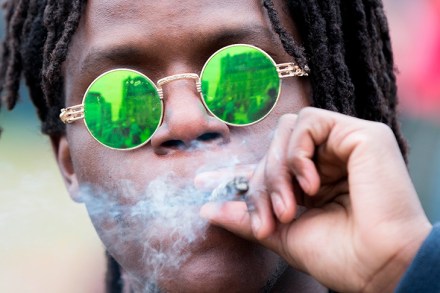
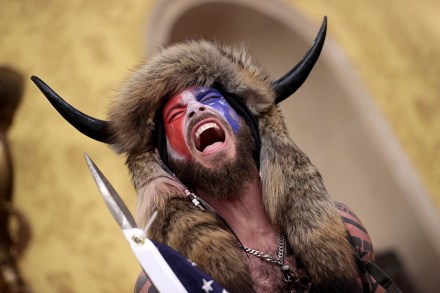
There’s something creepy about the way we call Donald Trump fans a cult, then watch them hungrily, hoping they’ll do something colourful, though not actually threatening — like self-immolate, perhaps. Lockdown is boring and we’ve watched everything on Netflix. So, MSNBC and chill. But not all MAGA fans are cultish, and not all political cults are on the right. 2020 acted like a cult accelerator, and now there are half-brainwashed people everywhere, on every part of the political spectrum, in your family, among your friends. How can you tell? It’s all in the eyes. It’s famously hard to define a cult.

Why Merlina, the Tower of London raven, was so remarkable

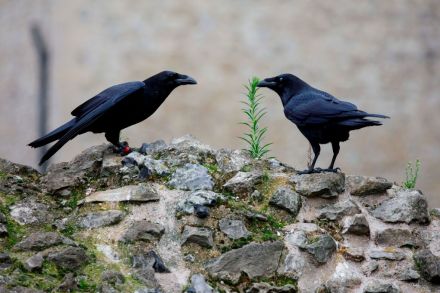
Merlin (or Merlina), the cleverest and most sociable of the Tower of London ravens is missing. It’s a bad omen — if the ravens leave the Tower, the city is said to be doomed. But it’s saddest for London’s Ravenmaster Chris Skaife who Merlina had pretty much chosen as her mate. I met Chris and Merlina four years ago in the Tower and the way Merlina called to Chris as he passed on his rounds, and crooned and clicked as he stroked her beak was astonishing. It changed the way I thought about ravens, and all their corvid cousins. RIP Merlina. Here’s how you were back then. On Tower Hill, by the east wall of Beauchamp Tower where Robert Dudley was imprisoned for a year, a raven called Merlin hides behind a yucca plant.

Why can’t Justin Welby praise a Tory?

Justin Welby is having a holiday and people are unhappy about it. He plans, in May, to take a three-month break and the general consensus is that this is not what Jesus would have done in a time of plague. Yes, Christ did frequently retreat to pray, but he only once spent more than a few days away from his flock — and it’s not much of a sabbatical if Satan’s trying to lure you over a cliff edge. It’s such a strange decision to take time off now that I’ve been Welby-watching this winter. I’ve listened to his Christmas and new year messages, followed in his online footsteps — and the conclusion I’ve come to is that he has no choice but to clock off.

Bring back Westminster Abbey’s bells

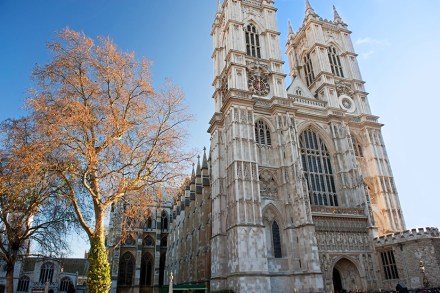
It took me several weeks, after returning to the Spectator office, to work out what was missing. It wasn’t the people — though Westminster is a zombie town these days, and even Pret A Manger, once hectic as a trading floor, is calm. I like the calm. What’s missing, I realised as I walked past Westminster Abbey, is the bells. If you’re anywhere near the Abbey when the bells start up, it’s like being caught out in a monsoon. It’s overwhelming and joyful. You can’t speak. You can’t think. There’s nothing for it but to stop and gawp up like a guppy at feeding time. The bells have been silent since March, since the Church of England abandoned its churches, and it’s strange how claustrophobic it feels without them.

The dark side of ‘cute’ culture

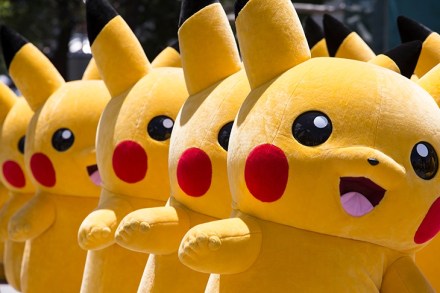
I have become allergic to ‘cute’, bad-tempered biddy that I am. Cuteness and the requirement to be cute have spread like pondweed across children’s TV and out into the adult internet. Cute culture is a way of worshipping youth — cute characters by definition have babyish features: big heads and eyes, fat cheeks and clumsy bodies — and one of the many reasons I’m hostile is that I’m pretty sure youth-worship is exactly the opposite of what youth needs. ‘These Paw Patrol pups,’ I asked my son one day, as we watched his favourite superhero cartoon dogs save a grateful baby whale, ‘do they ever rescue ugly old animals?’ ‘No, not really,’ he said. ‘Old things aren’t cute.

The dismal rise of the modern elopement

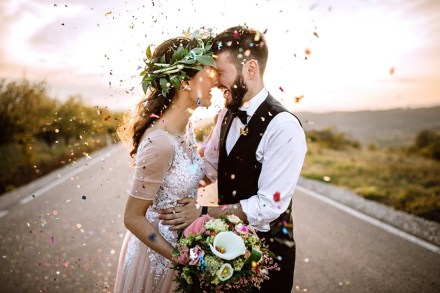
I didn’t realise how attached I was to the traditional British wedding — the whole messy, pricey, drunken business — until I discovered it was under threat. The new fashion is for elopement, just the happy couple, one or two friends and a photographer, all perched on the edge of some picturesque cliff or on a mountain top. It makes sense while we’re all social distancing, but I suspect the elopement trend is set to continue — and I think it’s dismal. I first saw the signs when I asked a friend what he was up to this Saturday. ‘Oh, I’m just off to an elopement,’ he said. My immediate instinct was that he should call the police.

How the Catholic church betrayed the dying

Of all the sad and surreal things to happen in the past few months, the Catholic church’s decision to abandon the dying was, for me, the worst. The Church of England abandoned its churches, forbidding first congregants then priests from setting foot in them, making it clear that in fact it actively dislikes church buildings. But the Catholic church in England betrayed the people who needed it most: the men and women who found themselves in the awful eye of the storm, dying of Covid-19 without family and, as it turned out, without even the possibility of a priest.

The pandemic’s invisible victims

I sometimes pick up some food at Tesco for an 86-year-old pensioner who lives a few streets over. At the weekend, I brought him milk and cornflakes. He opened his front door; I put the bags down, retreated the required two metres, but when I looked up he was in tears. ‘I’m sorry,’ he said, quietly. ‘I’m just so lonely at the moment.’ Should I have moved closer, put my arm around him? At the moment the risk of passing on the virus is low in London. I’ve had the bug (I think) and I used hand gel after leaving the supermarket. It’s been said of the recent protests that distancing is irrelevant because racism is a deadlier epidemic than Covid. If that’s true of racism, isn’t it also true of loneliness in the old?

Are you a lockdown eel or a pygmy goat?

I identify strongly with the garden eels in the Tokyo aquarium. Pre-corona, they were perfectly sociable. Come opening hour, when visitors’ faces began to squash against their glass, they’d happily stare back. Every week that goes by without visitors, the eels become more fearful and these days, the aquarium reports, when the keeper arrives to check on them, the eels vanish into the sand. Me too. Much as I long to get out and about, at the same time I can feel myself losing the knack of sociability. I jump when the man from Amazon knocks; slither quickly back into my basement kitchen after the daily outing. There are psychologists looking intently at us in lockdown. There will never be another chance to see how humans behave under these weird conditions.

Getting coronavirus does not bring clarity

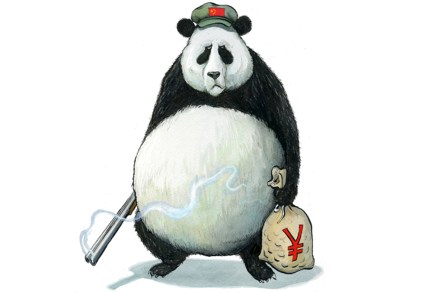
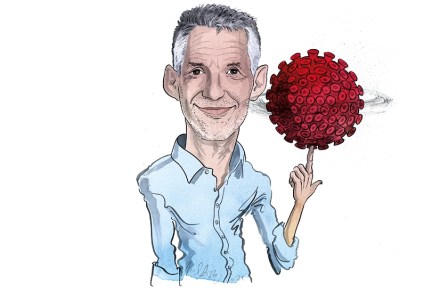
I had thought that actually getting the coronavirus would bring clarity — that there would be some satisfaction in meeting the enemy, feeling its spectral hands around my lungs. No such luck. Uncertainty is the hallmark of Covid-19. Even its origins are murky: wet markets or the Wuhan Centre for Disease Control? Who knows, and who would ever believe the Chinese government anyway? When you’ve got it, the sense of medieval unknowing only deepens. Is this definitely it? Will it get worse? Will it come back? My version of the virus began with a nasty headache and a grubby feeling of unease, after which I threw up on the bathroom floor. ‘That’s disgusting, Mum,’ said my four-year-old son, handing me a towel with a look of patronising distaste.

The power of children’s imaginations

Last summer, in the bc era, I took my then three-year-old to a new group play session: ‘Lottie’s Magic Box.’ Off we trooped in the usual north London fashion: child on scooter, imperious and unmoving, hauled along by mother in the role of husky. Micro, purveyor of scooters to the middle-classes, sell colour-coordinated leads especially for this purpose. It sometimes crosses my mind that they should also sell whips for the pre-schoolers to brandish. The map on the event website directed us to what looked like an office block in a park and as we opened the door, any wisps of hope that this might be an uplifting hour of bonding and fun evaporated.

The front line: how the NHS is preparing for battle

39 min listen

How prepared is the NHS for the coming battle with coronavirus (1:20)? Plus, what will Britain look like after the epidemic (12:20)? And last, just how are children so good at make-believe (29:25)?With Dr Max Pemberton, Dr Kieran Mullan, James Forsyth, William Hague, Mary Wakefield and Piers Torday.Presented by Cindy Yu and Katy Balls.Produced by Cindy Yu and Gus Carter.

Why did no one believe Johnny Depp?

When it was first reported that Johnny Depp had been hit and pelted with crockery by his slight, blonde then wife, Amber Heard, I’m afraid my first reaction was disdain. Johnny and Amber recorded their rows on their mobile phones (as you do) and a ‘reliable source’ leaked the recording: ‘I was hitting you, it was not punching you,’ Amber says to Johnny. ‘Babe, you’re not punched.’ Then, exasperated: ‘You are such a baby. Grow the fuck up Johnny… I did not hurt you, I did not punch you, I was hitting you.’ At first my sympathies were with Amber. C’mon Johnny, c’mon Captain Jack Sparrow, can’t a lady throw a plate or two? Surely a slap, under provocative circumstances, is OK?

Vampire squids are killing Britain’s B&Bs

More and more of us are staying home for our holidays — but even so, our small hotels and B&Bs are folding at a scary rate. UK hotel insolvencies are up 60 per cent, it was reported last week. Why? Competition bites, said the papers, blaming Airbnb. But there’s another biter, too — more sinister for seeming more helpful. The majority of hotel bookings are now made on the internet, and most of those via one of the two enormous internet travel companies: Booking Holdings and Expedia. It might seem to you and me, as we click away the January blues, that there’s a swarm of jostling online travel agencies (or OTAs) — Trivago, Kayak, Agoda, Hotels.

Coffee House Top 10: Benedict Cumberbatch on playing my husband, Dominic Cummings

We’re closing 2019 by republishing our ten most-read articles of the year. Here’s No. 9: Mary Wakefield's article on Benedict Cumberbatch playing her husband: Imagine looking at a photo of a stranger and feeling in response, quite naturally, the sort of happy affection you might feel towards a spouse. Well, it’s weird. In July this year, when Benedict Cumberbatch was filming Channel 4’s upcoming Brexit film (Brexit: The Uncivil War) a friend sent me some photos by text message, tabloid snaps from the set. Benedict plays my husband Dominic Cummings, director of the Leave campaign, and the shots were long-lens and hazy: Ben/Dom pushing his son on a swing; Ben/Dom kissing his wife.

Why I changed my mind about Catholicism

I grew up in a traditional English family, surrounded by cousins, chivvied by aunts, presided over by my grandmother, who insisted on Sunday church. We weren’t religious but Anglicanism (of a 19th-century sort) was in the air. We read the Revd Charles Kingsley’s Water Babies, C.S. Lewis’s Narnia books and if I thought about Jesus it was in an English setting. I imagined him barefoot walking through fields, rescuing the lambs that had fallen into cattle grids. Our family viewed Catholicism with suspicion. For us it was voodoo: foreign and crowded with unnecessary intercessors.

We must defend freedom of reaction

Debbie Harry, Blondie’s lead singer, has written a memoir in which she relates, in her usual deadpan, punk-rock way, the strange, horrific things that have happened to her. She had a narrow escape from Ted Bundy, the serial killer; David Bowie showed her his penis (‘adorable’, apparently) and early in her pop career she was raped by an opportunist burglar. ‘He poked around, searching for anything worth anything. He piled up the guitars and Chris’s camera. Then he untied my hands and told me to take off my pants… I can’t say I felt a lot of fear,’ writes Debbie. ‘In the end, the stolen guitars hurt me more than the rape. I mean, we had no equipment.

Does this make your brain tingle? The rapid rise of ASMR

I once had a flatmate called Tom, who behaved very oddly when our cleaner came round. On mornings when she was due he’d become strangely excited, like a man waiting for a date, though Madge (70) seemed an unlikely target. I would leave the flat so that Madge could get on with it, but Tom would insist on staying. He’d settle himself into an armchair, close his eyes and sit there, still as a toad, as she hoovered and dusted around him. Eventually I asked him about it, and he confessed. Listening to Madge, he said, ‘makes my brain feel nice’. As he explained it, the sounds of cleaning, sweeping and busying about sent delicious shivers running across his scalp. ‘It’s blissful — like a tingling feeling.

The cult of youth damages everyone | 10 October 2019

We’ve begun to behave as if young people are special; more virtuous and wiser than adults. It’s wrong and it’s creepy and we’ve got to stop it — not for our sake so much as for theirs. It looks as if, come Friday, 16-year-old Greta Thunberg will win the Nobel peace prize, and if she does the whole Nobel show will double up as a sort of topping-out ceremony for the cult of youth. It’ll be the final proof that even the most sophisticated adults in the world have signed up to the bonkers idea that children can somehow intuit the answers to humanity’s existential problems, though Lord knows what the grown-ups expect the kids to do — build a better world on Minecraft?