Mary Wakefield

Mary Wakefield

Mary Wakefield is commissioning editor of The Spectator.

The nonsense world of emotional support animals

From our UK edition

Sometimes an event or a phenomenon is so perplexing and so terrible that it’s best not to deal with it too directly and for too long. Best to look at something tangentially related, which is why I’ve spent so much time recently worrying about Kirrin Medcalf’s dog. Kirrin is head of ‘trans inclusion’ at Stonewall, the charity which once fought for the rights of gay men and women but now devotes itself to trying to overturn the heteronormative patriarchy, using the notion of transsexual kids as a Trojan horse. Don’t worry. You don’t need to understand that. It’s best not to, if you want to stay sane. All you need to know is that for Kirrin and for Stonewall, it’s violent heresy to say that men and women are biologically different.

Melissa Kite, Mary Wakefield and James Heale

From our UK edition

24 min listen

On this week's episode, we’ll hear from Melissa Kite on the ambitions of Ben Wallace. (00:48) After, Mary Wakefield on our misplaced faith in forensics. (09:35) And, to finish, and James Heale on Eton’s great ‘awokening’. (16:33)Produced and Presented by Sam HolmesEntries for this year's Innovator Awards, sponsored by Investec, are now open. To apply, go to: spectator.

How did we fall for the junk science of forensics?

From our UK edition

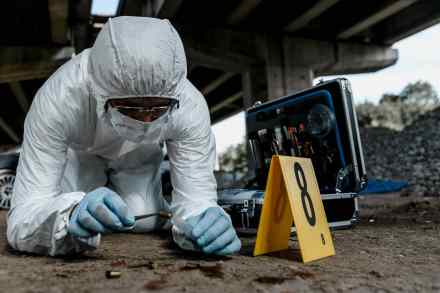
I grew up in the golden age of forensic science, at a time when expert witnesses were becoming celebs, each with their special little area of crimebusting know-how. The papers were full of excited talk about hair microscopy, ballistics and fibre analysis. Crime scene investigators were hot as pop stars. My brother and I had a nanny with a passion for gore. She wasn’t interested in me as a rule, but I could always hold her attention with a nice chat about blood spatter patterns. We discussed what you could tell from the trajectory of arterial spray or the shape of a drip. Over in America, Herbert MacDonell was the undisputed Blood Spatter King – I think he might have even invented it as a discipline.

Our children are at breaking point – and it’s our fault

From our UK edition

I think it’s time we stopped scaring the children. I think they’ve had enough. They’re at breaking point now, every generation more anxious than the last – and anxious younger, too. There’s a record number of British children diagnosed with anxiety, and a record wait – two years – for therapy, though I’m not at all sure the therapy as it is helps much. The usual idea is that if the kids are troubled, it’s the world that’s to blame: smartphones, Instagram, the constant comparing; Trump, Putin, the existence of Tories; Covid, global warming. No wonder they have the heebie-jeebies. But I think in fact that we’re doing it to them. It’s us, the parents, carers, teachers in charge.

Douglas Murray, Mary Wakefield and Nicola Shulman

From our UK edition

29 min listen

On this episode of Spectator Out Loud, Douglas Murray starts by explaining why C. S. Lewis was right about war. (00:56) Mary Wakefield is up next, looking at the founding myth that Russia and Ukraine are fighting over. (10:18) Nicola Shulman finishes the podcast, reading her piece about Philip Larkin's big problem.

The myth that Russia and Ukraine are fighting over

From our UK edition

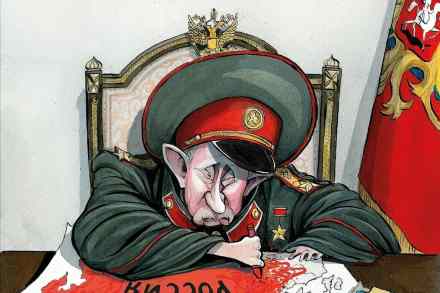
It seems strange now that any of us ever imagined that Putin might not invade. He thinks of Ukraine as rightfully Russia’s, heart, mind and soul. It’s there in that essay he wrote last year: Russians and Ukrainians are ‘one people’, he said, meaning not that they’re brothers so much as that Ukrainians have no right to a separate identity. And I wonder whether, in attempting to take Kiev, he isn’t also trying to lay final claim to the founding myth that Russia and Ukraine fight over and both think of as their own. Kiev is the setting for the epic tale of Kievan Rus, the first great Slavic state founded in the 900s by enterprising Viking Swedes. Putin clearly identifies with its warlord saint, Vladimir the Great.

John Keiger, Mary Wakefield and Sean Thomas

From our UK edition

21 min listen

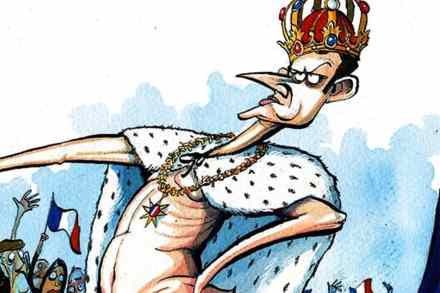
On this week's episode, we’ll hear from John Keiger on Emmanuel Macron’s brand of performative diplomacy. (00:53)Next, Mary Wakefield on the few pros and many cons of the lady carriage. (10:30)And finally, Sean Thomas on how learning to work from home opens the door to working in paradise. (16:17)Produced and presented by Sam HolmesSubscribe to The Spectator today and get a £20 Amazon gift voucher.

Vlad the Invader

From our UK edition

35 min listen

In this week’s episode: What does Putin really want for Russia?For this week’s cover story, Niall Ferguson writes about how Putin seems to be trying to recreate the Russia of the Past, while this week's diary by Timothy Garton Ash says the West has misunderstood his intentions, Niall and Timothy join the podcast along with Mary Dejevsky a columnist for the Independent. (00:48)Also this week: Should there be women-only spaces on trains? Jeremy Corbyn suggested it when he was Labour party leader and now Scotland seems to be flirting with the idea. Mary Wakefield says in this week’s Spectator that although she enjoys the idea of lady carriage, it doesn’t make much sense.

Women-only train carriages insult us all

From our UK edition

Sooner or later, somewhere in the UK, we’ll have trains with women-only coaches. It’s an idea which keeps rolling around, and though the train people complain — it’s unworkable, unenforceable — it makes no odds. It’s too seductive an idea for a progressive politician. Jeremy Corbyn was tempted by it back in 2015, and now the Scottish transport secretary, one Jenny Gilruth, is considering it. She often feels unsafe on trains, she says, because they’re ‘full of drunk men’, especially the train to Fife, which is her constituency. ‘I just want our railways to be safe places for women to travel.’ I’ve nothing against ladies’ coaches in principle. In my mind’s eye they look appealing.

Is Britain heading for an opioid crisis?

From our UK edition

Almost everyone here that I’ve spoken to about it assumes that the opioid crisis in the United States won’t ever come to the UK. Yes, the problem there is accelerating. Drug overdose deaths in America are now at more than 100,000 a year. A few days ago the Lancet predicted 1.2 million dead by 2029 but… it couldn’t happen here. We hold up those three sacred letters — NHS — like a talisman to ward off the evil. We tut about Big Pharma and its undue influence in Washington, we remove the Sackler name from galleries and museums, and then we get back to watching America overdose on TV. The opioid crisis in the US is almost its own entertainment genre these days, with any number of documentaries and dramas available to stream.

Is it over?

From our UK edition

34 min listen

In this week’s episode: Is Boris Johnson done for? In this week’s Spectator cover story, our political editor James Forsyth and our deputy political editor Katy Balls write about Boris Johnson’s perilous position in the aftermath of the Partygate scandal. They join the podcast to predict the Prime Minister’s fate. (00:40)Also this week: Is there a dangerous side to self-improvement?The hashtag manifesting has had billions of impressions on social media in the last year. Younger generations love it and Mary Wakefield explores this viral phenomenon in her column this week. She joins the podcast along with Ally Head, the health and sustainability editor for Marie Claire UK who has interviewed a number of manifestation experts.

Why must younger generations constantly ‘work on themselves’?

From our UK edition

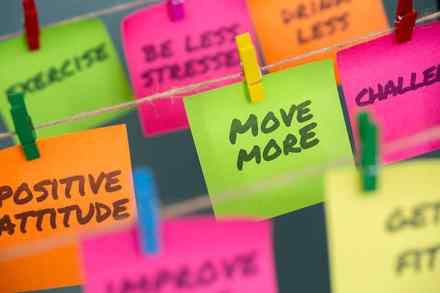
If I could lift one thing from younger generations, unpeel one idea from their anxious minds, it would be the notion they have to ‘work on themselves’, and that the point of life is to do this ‘work’ until they feel able to have a relationship, at which point they must grimly set about working on that. I’m not suggesting that it’s not useful to have treatment or therapy for a particular problem, but it’s as if everyone born after 1990 thinks of themselves the way 1950s man thought of his car — as something to be worked on in every spare moment, tinkered with and polished, but rarely taken out for a spin, for fear of dents. You can tell an era by its aphorisms.

Why do social workers keep failing children like Arthur Labinjo-Hughes?

From our UK edition

Why does the number of children dead from abuse — like poor Arthur Labinjo-Hughes and Star Hobson — stay roughly the same year in, year out? More children are taken into care every year in this country. So why doesn’t this reduce the number of desperate, abused children who are dying at the hands of the people who should be caring for them? The cases of both Arthur and Star reveal a disturbingly casual approach My suspicion is that it’s become normal for over-worked, badly-managed social workers simply to focus on the easier cases, and leave the violent addicts and the psychopathic step-parents alone.

Arthur Labinjo-Hughes’s death and the problem of evil

From our UK edition

Since I first read about the torture and murder of six-year-old Arthur Labinjo-Hughes, I’ve had what feels like an A-level philosophy class running in my head. There are still those of us who believe in God, and are preparing to celebrate the birth of His son in a week or so. But how is it possible to square the existence of a good and omni-potent God with what happened to Arthur, and to the other children who suffer in the same way? Every year in this country, there are 50 or so children dead from abuse. Year in, year out, lockdown or not, that figure stays roughly the same. Is this original sin at work? Is it just the price we pay for free choice? If so, the price is too high. And anyway, what sort of freedom do violent addicts of the sort who surrounded Arthur actually have?

Douglas Murray, Mary Wakefield, Peter Hitchens

From our UK edition

22 min listen

On this week's episode, we’ll hear from Douglas Murray on the political fate of US vice president Kamala Harris. (00:58)Next, Mary Wakefield on her experience during storm Arwen and subsequent media coverage. (09:39)And finally, Peter Hitchens on his fears regarding the future of the city of Oxford. (15:58)Produced and presented by Sam HolmesSubscribe to The Spectator today and get a £20 Amazon gift voucher: spectator.

How to spin a storm

From our UK edition

If, in the days after Storm Arwen, the north of England began to suspect that the south didn’t much care about it, that suspicion has by now hardened into a cert. Many thousands of homes in the north and in Scotland still have no power and, as I write this, Storm Barra has just arrived, with a forecast of 80mph gales and eight inches of snow. In the south, there’s excitement about the weather — ‘Man the BARRA-cades!’ — and the possibility of a white Christmas. In the north, there are elderly men and women, exhausted, hanging on, day after dismal day in the bitter dark. The village in Northumberland where I grew up has now been without electricity for 12 days. No heat, no light, no access to the news.

Has Covid turned us into a nation of hermits?

From our UK edition

If there’s one thing I misjudged completely, it’s how creepy and long-lasting the effects of lockdown on all of us would be. I’m not in this case talking about the catastrophic medical cost: the heart attacks and strokes, the missed diagnoses. If we’d let Covid rip, if we hadn’t locked down, I’m not sure there’d have been a functioning hospital to go to anyway. What’s troubling me is the effect on our national psyche. Some of us are out and about — anti-vaxxers for instance — enjoying sprightly get-togethers, but others of us have retreated, withdrawn from outside life. Successive lockdowns have knocked us into hibernation mode and it’s not clear that we’re ever coming out.

Mary Wakefield, Lloyd Evans, Tanya Gold

From our UK edition

17 min listen

On this week's episode, we’ll hear from Mary Wakefield about the pattern of misandry in modern media. (00:48)Then Lloyd Evans on the British tradition of the pub theatre. (07:19)And finally, Tanya Gold on getting drunk on tiramisu. (13:55)Produced and presented by Sam HolmesSubscribe to The Spectator today and get a £20 Amazon gift voucher:spectator.

The dangerous pleasure of hating men

From our UK edition

I have Netflix, and in particular the series Maid, to thank for the startling discovery of how easy it is to slide into a form of man-hating — not a righteous feminist rage, but a sort of dopey, palliative, unthinking misandry. Maid was released last month, and it’s already one of the stand-out Netflix successes of 2021. (It was announced last week that it’s set to take over Queen’s Gambit as the most-watched Netflix miniseries.) The show is catnip for women, and after several late nights, letting one episode tip into another, I can see why. It’s based on the real-life memoir of a woman in the US who fled an abusive boyfriend and supported herself and her small daughter by working as a cleaner.

Why I left the Church of England: an interview with Michael Nazir-Ali

From our UK edition

By now, almost everyone who’s remotely interested will know that Michael Nazir-Ali, former Bishop of Rochester, a man once tipped to become Archbishop of Canterbury, has converted to Catholicism. Dr Nazir-Ali is the second senior Anglican cleric to jump ship this year, which makes church gossip sound pleasingly Shakespearean: ‘Ebbsfleet has fallen… what and Rochester too?’ But it’s also sad. It’s as if the Church of England is exploding in slow motion, all its constituent pieces — bishops, buildings, parishioners — drifting off for want of a centre to hold them. When I went to meet Dr Nazir-Ali this week, I expected to find him full of vim.