Mary Wakefield

Mary Wakefield

Mary Wakefield is commissioning editor of The Spectator.

‘Drone warfare is coming’

Quite soon, it will be impossible to ignore the fact that a revolution is taking place. You’ll look up one day and the skies will be full of flying robots: pilotless drones or UAVS (Unmanned Autonomous Vehicles) — all programmed to carry out different tasks. There’ll be security drones circling shops, streaming video back to base, Royal Mail drones flying parcels to and fro. Even the birds and bees may not be what they seem. The tiniest drones on the market right now are called MAVs (Micro Air Vehicles) and their designs are inspired by nature. There are robot flies with camera eyes — perfect for corporate espionage; mosquito drones that can inject a payload of poison; hummingbird drones that perch and listen on windowsills.

In this week’s Spectator | 4 August 2011

The Spectator this week contains a brilliant piece on the crisis in Somalia by our Kenyan columnist Aidan Hartley. The Daily Telegraph today reports that voters are extremely sceptical about Cameron’s aid policy, wary of shovelling cash overseas when we’re hard-up at home. Aidan’s piece proves the voters absolutely right (no surprise). Not only would the cash be better spent in Britain, but according to Aidan, aid money in Somalia actually makes the situation there much, much worse. He says:  'I am haunted by the people I have seen die in Somalia, and by news pictures of the latest famine, but aid agencies are presenting this crisis misleadingly — as if it were an act of God in the Old Testament.

Is Dan the man?

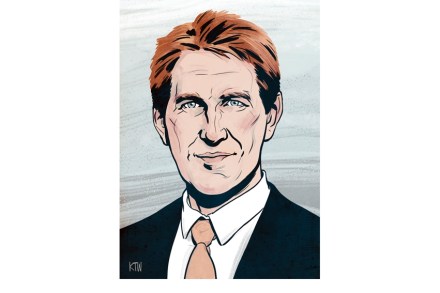
I first heard the name ‘Dan Jarvis’ on a dance floor at a wedding in Bath. ‘Move like Jagger’ was thumping through the speakers, and most people had given up trying to chat, but I’d been collared by a cavalry officer who was damned if he was going to let disco get in the way of his politics. ‘Not enough soldiers in the Commons,’ he yelled at me, ‘and the ones who are there are a bit flawed. There is one chap though,’ he paused for effect: ‘Jarvis, he’s called Dan Jarvis. A Labour MP, but who cares? He’s a proper soldier. Just what the country needs. Should be prime minister. I’m telling you.’ The glitterball threw a veil of little lights over his military chin.

Diary – 18 February 2012

We are not made incrementally aware of things that happen incrementally. Though something may have been changing for a while, the realisation comes all at once in a swoop, usually when it’s far too late. I realised that I had become a ‘madam’ last weekend, in the butcher’s. We had a bit of a joke, the butcher and I, over the severed limbs, then as he handed me my bag, he said: ‘There you go, madam.’ Madam? Madam? Madam? What happened to babe? I’m sure I was babe last week. Since the butcher opened my ears, life has become a terrible cacophony of madams: ‘£3.50 please, madam,’ ‘sorry, madam,’ ‘thank you, madam.’ Whilst I was buying mince, my girlhood slipped away.

Should most orphanages be shut down?

The Spectator's deputy editor, Mary Wakefield, recently visited Rwanda to investigate the work a charity called Hope and Homes for Children. Her article on the subject appeared in last week's issue of the magazine, but we thought we'd publish it here on Coffee House too, along with the short film that she recorded during her visit. It contains one or two lessons for DfID and our government: Kigali, Rwanda Madame B has dressed up for our visit. She’s sitting on a bench with her back to the orphanage wall, talking about just how much she loves each child, but it’s her get-up that’s most impressive: black silk dress, hair done, make-up just so; finger and toenails painted hot pink, each with an elegant white scalloped edge.

How to fix orphanages

Kigali, Rwanda Madame B has dressed up for our visit. She’s sitting on a bench with her back to the orphanage wall, talking about just how much she loves each child, but it’s her get-up that’s most impressive: black silk dress, hair done, make-up just so; finger and toenails painted hot pink, each with an elegant white scalloped edge. Everything else here, at the Mpore Pefa home for children, is muted: grey walls, grey kids, blurred by dirt. Those toes are an anomaly. ‘My husband and I started this home after the war,’ Madame B is saying. ‘Since he died, it is so difficult.’ Her eyes slide from left to right, checking our reaction.

Private passions | 24 September 2011

Do you paint yourself? Or...sing in a choir maybe? John Studzinski looks at me anxiously from the other side of a conference table, in a sleek little office belonging to his firm, Blackstone, the American private equity giant. He’s normally a confident man; outspoken on the subject of leadership, networking and England’s art scene (which he generously props up). But getting him to answer a personal question is like trying to flip a cat on to its back. Every time I think he’s about to reveal the underbelly of a personal life, a hobby or habit, he swivels in the air and lands on safe ground again, discussing the nature of philanthropy or the importance of art. So come on then, John, what do you do for fun? Watercolours? The flute? ‘Well...

Let’s bring the abortion debate to life

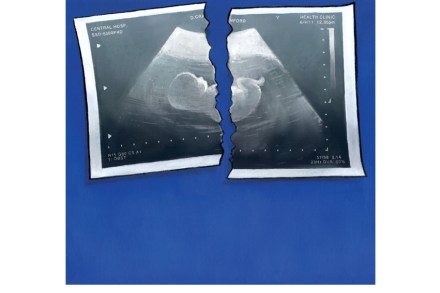
No one ever really expected Nadine Dorries’s ill-fated abortion bill to succeed — not after the Lib Dems had made a fuss, and the PM had withdrawn his support with his usual principled grace. But what’s more surprising has been the strange and unpleasant consensus which has risen up from the debate about the bill, and has been twisting into the minds and out of the mouths of journalists all week — not just on the left, but across the centre too, and throughout Westminster. The consensus that’s taken shape seems to be this: that abortion is not just a necessary evil, but a jolly good thing. That being pro-choice no longer means just accepting that a woman has a right to decide, but that abortion must be celebrated and all doubters deemed religious nut jobs.

Girl power | 3 September 2011

In single-sex schools girls don’t see themselves through boys’ eyes, says Mary Wakefield I remember quite clearly the moment I first realised how very lucky I was to have been sent to a single-sex boarding school. It was the summer of 1989 and my friends, Becca, Ilona and I were all 13 and arm in arm, collapsing into shrieks of laughter at the drop of a hat. We were at the Newbury agricultural show, as I remember, and still young enough to be thrilled by the corporate goody bags from the Massey Ferguson stand and to think stickers, any stickers, even ones that said ‘Invest with Natwest’, were cool. Down at the far end of the field there were a few shonky fairground rides, and it was there that this revelation took place.

‘Anti-semitism is on the rise’

Exactly halfway through my conversation with the Chief Rabbi, Jonathan Sacks, I had an attack of conscience, a small one, but there it was. Sacks had explained the thesis of his book, The Great Partnership — that religion and science don’t have to fight but can co-exist, as separate strands of inquiry. We’d discussed our respective religions (I’m Christian) and agreed that man will always wonder: what am I doing here? And that science has no answer to this. Then Sacks began to speak about the need for the three great Abrahamic, monotheistic faiths to stand together.

A (slightly belated) Birthday message for Prince Philip

The Spectator is very proud to be the purveyor of a long-distance birthday message to Prince Philip, who turned 90 yesterday, from some of his most devoted admirers: the tribe that actually worship him as a god. The cult of Philip began in the 50s when islanders on Tanna in the South Pacific noticed how devoted colonial officials were to the Queen. If she's so great, then her husband must be awesome they (understandably) concluded. Four years ago, six Philip worshippers from Tanna — Chief Yappa, JJ, Joel, Albi and Posen — were brought over here to make make a TV documentary. For various reasons they stayed with me for a while and they were some of the most charming and joyous people I've ever met.

Harlem renaissance

A massive project to change the lives of America’s poorest children It’s raining in Harlem this morning — big fat American rain tipping out of the big gray sky, sluicing down the crumbling brownstones, over the awning of the Manna soul food and salad bar (‘we serve oxtail, collard green, candy yam, fried fish, chips and tea’) and on to the corner of 125th street and Madison in an oily pool of such enormity that the word puddle is no good as a description — you’d have to call it a pond. Each Harlem citizen manages the pond in his own peculiar way. Two gangster-looking guys with hats askew take a traffic-stopping stroll around the outer rim; a man with no legs drives his electric scooter through the middle like a jet-ski.

The power of words | 2 April 2011

Tom Conti tells Mary Wakefield how to get inside a woman’s mind I watched Shirley Valentine again last night. It’s different when you’re older. At 14 it’s impossible to imagine that any sane woman would talk to a wall — or put up with that dour, demanding husband for so many years. When you’re 35, well, it doesn’t seem so far-fetched, does it? Tom Conti (as Costas, the love interest) looks better, too, this time round — more attractive. When you’re a teen, you’ve no idea how rare it is to find a middle-aged man who looks good in jeans. As the credits scrolled up over sundown in Mykonos, I was full of an unsettled longing for retsina, self-actualisation and holiday romance.

Egyptian Notebook

The adventures of a wrecked ship can be pieced together from entries in its log book. The last moments of some doomed flight can be reconstructed by consulting its black box. If Dominic and I come a cropper here on the hard shoulder of the Cairo–Alexandria desert road, our iPhones will tell our story in Google searches: 23:30: ‘how do you get out of Cairo airport?’ 00:07: ‘why don’t Egypt drivers use headlights?’ 03:00: ‘Toyota Corolla won’t start’ 03:30: ‘How to deactivate Toyota Corolla immobiliser?’ 04:00: ‘Hertz Cairo number’ 05:00: ‘Hertz worldwide emergency number’ 05:14: ‘What time sun rise in Egypt?

Dear Mary…

Q. An old friend has been complaining to mutual other friends that I have dropped her because I have become ‘so grand’. The truth is that we are members of the same profession and currently I have to work incredibly long hours and travel a lot while she does not. But, to reassure her, I invited her to dinner on the first night I have free, which happens to be in early December. We arranged to meet at eight. Now, as luck would have it, I have been asked to something vital on the same night which I would not be able to leave till 9.15 at the earliest.

Director’s cut

In the spring of 2008 I went on a press trip with the director of the British Museum, Neil MacGregor, to Hadrian’s wall. It was one of a series of jaunts planned by the BM in the run-up to its great Hadrian exhibition, a little Roman holiday. But though the wall was fascinating, I spent most of my time inspecting the director. He’s charming and universally admired — but also enigmatic. What are his politics? What does he do for fun? Nobody seems to know. So I watched him at Segedunum in Newcastle, talking to local grandees, charming, mercurial, alert. I watched him out by Housesteads fort, chatting to the curators.

Gut reaction

Hookworms are parasites. But could they also be a revolutionary medical treatment? In a bright modern office in the University of Nottingham's complex of bright and modern buildings, Dr David Pritchard has fallen silent and is sitting staring at his hands. It's been a few minutes since he stopped talking. In the first 30 seconds I sent off a string of little vacuous questions that hung in the air like soap bubbles, then popped for want of response. Now I'm sitting silent too, also looking at his hands, considering - as perhaps is he - how much may be within their reach.

Silencing the voices

The ‘seriously handsome’ Toby Stephens talks to Mary Wakefield about the magic of acting With some people, their prep school selves seem barely submerged beneath the adult surface. They talk away like grown-ups but one shrug, a grin, and you can see their inner schoolchild. Toby Stephens, sitting opposite me in a boxy room high up on the top deck of the National Theatre, is a good example. He’s 41, seriously handsome with dark red hair and a fine-boned 1940s face; he’s a dab hand at playing cads and attempted world domination as the evil Gustav Graves in Die Another Day (quite outshining that drip Pierce Brosnan). But there’s something about him that still seems to be 12. It makes me want to hug him, though I’m quite sure that wouldn’t help.

Obama’s catch 22

As we wait for Obama to announce the fate of General Stanley McChrystal, it's worth casting your mind back to John C. Hulsman's article in this magazine last week. Hulsman called the situation absolutely right -- whilst other commentators (on both sides of the Atlantic) were excitable about the 'mineral strike' in Afghanistan, Hulsman spotted that it was in fact just spin -- the opening move in a power struggle between Obama and the generals. Now that power stuggle is in full swing and McChrystal has handed Obama a vicious catch 22: if the President sacks him, it looks as if he is pursuing a personal vendetta at the expense of the suffering soldiers in Afghanistan. If he doesn't sack him, he has effectively ceded control to the generals.

Contrasting characters

Mary Wakefield talks to Roger Allam and discovers that he thinks acting is only a game As I meet Roger Allam’s eye, in the bar area of Shakespeare’s Globe, I feel a lurch of dread. I love Roger Allam. I’ve held a torch for him since the mid-Eighties, when he starred in Les Mis as the original and best Inspector Javert — but the look in his eye today is one of profound boredom. It bodes badly. You must be in the middle of rehearsals [for Henry IV Part 1] I say, brightly. ‘Yes.’ He looks out of the window at the glittering Thames. It must be difficult to do interviews then — do you still feel in character as Falstaff? ‘No. Not really.’ Roger Allam is, everyone says, a nice man.