Mary Wakefield

Mary Wakefield

Mary Wakefield is commissioning editor of The Spectator.

Would you let parents destroy ‘gay’ embryos?

Because I’d like to have a child, and I’m getting on a bit, my husband and I have spent time recently with consultants. They’re an odd breed with distinct and shared characteristics. Invariably, after we’ve all sat down, their first move is to tilt their chair back, or give it a little twirl (design permitting), just to signal how free and easy it is at the top of the medical tree. When they speak it’s with a sort of hurried condescension, as if giving career advice to a hopeless niece. And they scribble as they go, on some scrap of paper. Ovary, ovary, arrow, hieroglyph, arrow, ‘Got that? Hmmm?’ Follicle, scribble, circle, square.

Would you screen for the ‘gay’ gene?

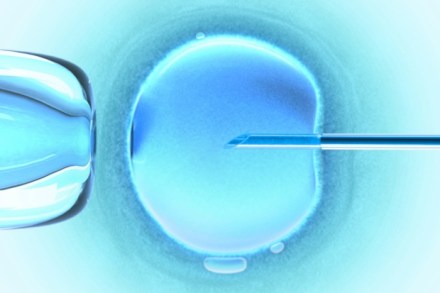
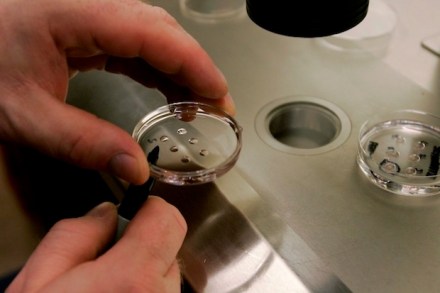
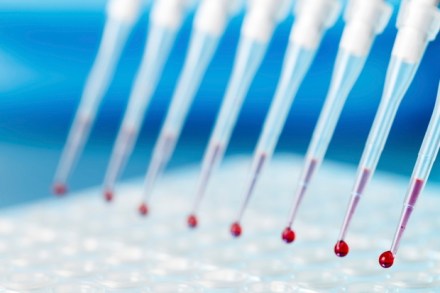
How would you feel about a couple doing IVF just in order to find the embryos most likely to to be gay… and chuck them out? Does that sound like eugenics to you? What about the other way round: what if a gay couple wanted to maximise their chance of a having gay baby — would you let them screen for and select embryos with the genes that made it more likely they were gay? Then bin the rest? It's time to make your mind up because after decades of panic about 'designer babies' (remember Gattaca?) the future is finally here. On the one hand, as I write in the Spec this week the genes that contribute to different human traits are rapidly being identified. For instance, a recent study of gay men concluded that that male sexual orientation is influenced by genes.

Why did Theresa May deport my homeless friend?

I’ve heard some excellent things about our Home Secretary, Theresa May. People who work in her department say she’s bright and hard-working, and that she runs around on her hamster wheel of ministerial duties as nimbly as any political hamster could be expected to. If she has a fault, it’s said, it’s that she doesn’t have a grand plan — the Home Office wheel spins round, but to no particular end. Well, that’s all to the good, say my sensible friends — who wants a reforming secretary of state? No good can come of a politician with ideas. It’s the one approving thing also said about Cameron: at least he doesn’t have an agenda. Well, I’m not so sure that isn’t a stupid thing to say.

Hearts – the next stage of the 3D printing revolution

I have seen the future — your future if you’re rich enough or brave enough to embrace it — and I have to tell you, it’s weird. Imagine this: it’s 2025 and you’re getting on, feeling your knees a bit. You’re bending over one day to pick up junk mail when you feel a terrible pain in your chest. You call 999 and within the hour (in this ideal world) you’re in hospital under the knife. But this isn’t heart surgery you’re having, it’s bottom surgery: the doctor’s taking a chunk of fat from your bum. Have they made a terrible mistake? No they have not.

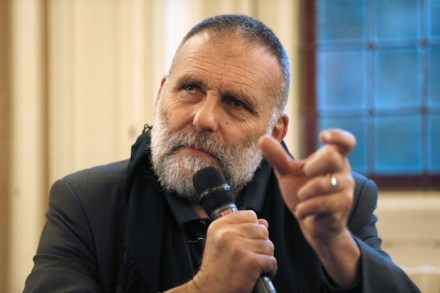
The one man who makes me hope for peace in Syria

As Syria’s second peace conference looms, and we prepare ourselves for a lot of hot air drifting over from Geneva, I’ve been making a list of those players in the civil war who actually want peace and those who don’t fancy it one bit. The anti-peace side is easy. There’s Bashar al-Assad, of course. Hillary saw to that during the first conference. Perhaps she’s right that he shouldn’t be part of any transitional government, but if he loses all power, Assad and his Alawite clan are toast. So what use is peace to him?

The drones are coming!

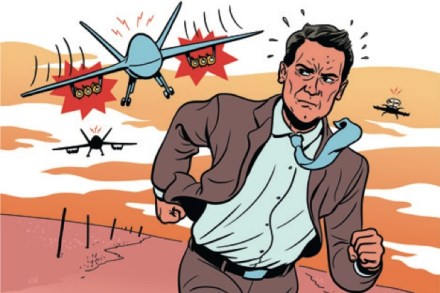
Amazon is testing unmanned drones to deliver goods to customers — whatever next? Well, the Spec can tell you exactly what. Last year we ran a cover story on drones, predicting that: 'Quite soon, it will be impossible to ignore the fact that a revolution is taking place. You’ll look up one day and the skies will be full of flying robots: pilotless drones or UAVS (Unmanned Autonomous Vehicles) — all programmed to carry out different tasks. There’ll be security drones circling shops, streaming video back to base, Royal Mail drones flying parcels to and fro. Even the birds and bees may not be what they seem. The tiniest drones on the market right now are called MAVs (Micro Air Vehicles) and their designs are inspired by nature.

The Lady lives on

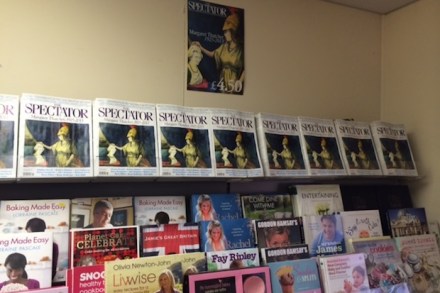
Margaret Thatcher's memory may be fading a little in England, but at least it still burns bright in Stanley. Here's a photo taken in a newsagent in the Falklands capital just this afternoon, where, six months after her death, copies of The Spectator's commemorative issue are still selling well. It does her — and us — proud.

Notes on…Sicily

It could be, in Sicily, there comes a time when you’ve had your fill of seaside calamari and cheap white wine. The sheer thrill of lying on a beach without goose-bumps never really fades, but by day four you may need a break from all the nakedness: Italians blackening in rows like sausages, or Brits, more lumpen, clumped in ones and twos, turning pink. If you can bring yourself to turn your back on the Med, it’s well worth it. From Palermo, take the coastal road, then turn right, inland on the A19 towards Catania. Or drive south on the world’s most surprising motorway, which leaps right over Monreale and lands on the cliffs above. Head south-east and soon the countryside will flatten into hills and plains of durum wheat baked yellow, waiting for harvest.

An improvement on Lord Finkelstein’s Syria analogy

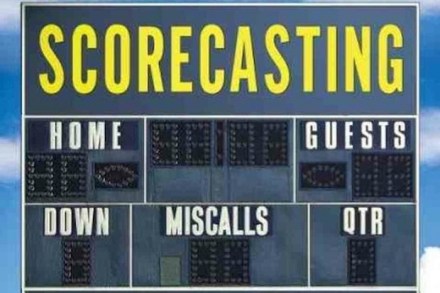
As Freddy Gray points out, Danny Finkelstein has wheeled out a very odd argument in the Times today (£), in favour of intervention in Syria. We are all subject to 'omission bias' says Finkelstein, and uses an example from Scorecasting, a sports psychology book — of the sort most bought by men who can't catch. Here's the example: 'Lets say there's a disease that kills ten in every 10,000 kids, and a vaccine that protects agains the disease, but kills five in every 10,000. Would you let the doctor inoculate your kid?' asks Finkelstein. The fact that most people say no, is an example of how prone to 'Omission Bias' we are. We'd rather not act if there's a risk, even if it would be rational.

Entertaining Dr Murdock – Shiva Naipaul Prize, 2000

The Spectator/ Shiva Naipaul Memorial Prize for the year 2000 was won by Mary Wakefield. The judges included Antony Beevor; Patrick Marhnam; Boris Johnson, then editor of the magazine; and Mark Amory, who was and still is the Spectator's literary editor. Mary is now Deputy Editor of the Spectator. The Shiva Naipaul prize is awarded for travel writing, and other past winners include Hilary Mantel, Miranda France and John Gimlette. To learn more about the prize and how you can enter, click here. Entertaining Dr Murdock Mary Wakefield There's a narrow road heading east out of Denton, Texas, across the hot dust and prickly yellow grass.

Do Tiger Mothers have any effect at all?

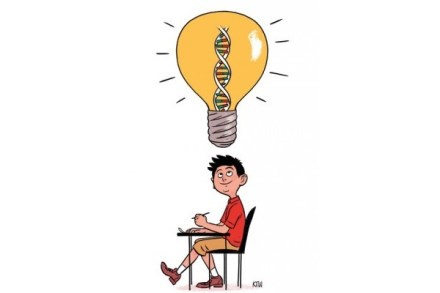
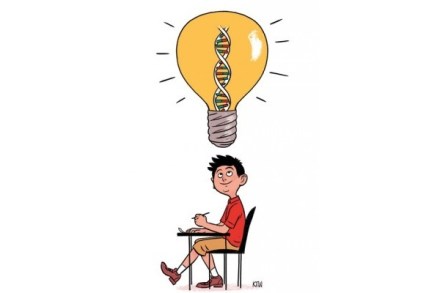
Remember all the fuss about ‘tiger-mothering’ sparked by Amy Chua’s book: Battle-Hymn of the Tiger Mother?  Mothers around the world began agonising about whether they were pushing their children hard enough. Well here’s a thought, sparked by our interview with the brilliant Professor Robert Plomin in the magazine this week. Maybe Amy’s children, the tiger cubs, would have got all those A+ results anyway, even without her cracking the whip so hard. Professor Plomin has studied over ten thousand pairs of twins and found that IQ is strikingly heritable – and that it becomes more heritable as kids grow up.

Revealed: how exam results owe more to genes than teaching

How pleasant it is to live in the 21st century, enlightened, no longer scared of science. We can marvel at the diversity of life with David Attenborough; face the vastness of the cosmos with Brian Cox. These days we talk of colliders and particles as casually as we shop for milk. Science is our oyster. Except of course when it comes to genetics. Just try starting an excited conversation about gene therapy, or about the young Chinese genius Zhao Bowen, who is, right now, hunting down the genes for intelligence. Faces will fall, there’ll be talk of eugenics, perhaps a sudden burst of inexplicable fury. This I know because I’ve felt it myself.

To infinity and beyond! George Osborne invests in space plane

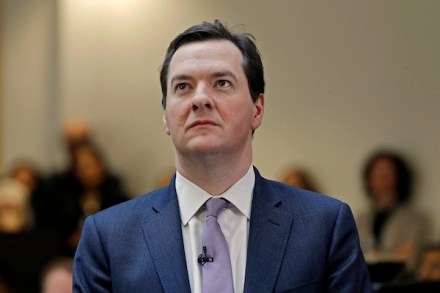
Hooray for George Osborne! I never imagined I’d ever write those words, but George has done his country a great service. He’s put £60 million behind one of the most inspiring British inventions of our age: Skylon, a space plane with a revolutionary new engine. When Skylon’s up and running, it'll be able to transport satellites – well, anything -- into orbit for a 20th of the current price, and go at a scorching 3,500 mph. It’ll be the envy of the world – which sounds like hyperbole, but isn’t. The Spectator championed Skylon four years ago, pointing out that the world is on the brink of a new space race, and that the UK could lead the way, if only our government only had the balls to back British invention.

The tragedy of Taksim square

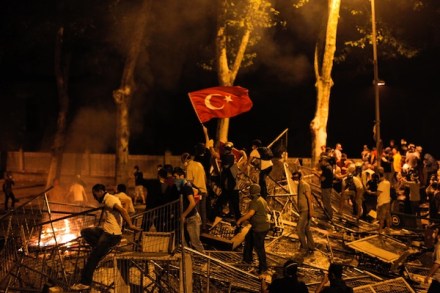
First he set the police on his own people, now 'democratic' Prime Minister Erdogan is refusing even to meet them. The peace talks he promised are being held not with protestors themselves but with a group of official mediators the protestors have never met. In the days to come, Erdogan will try to persuade the world that he is battling extremists, but as Claire Berlinski points out in her heart-breaking piece in this week's magazine — written from the centre of the riots in Istanbul last night — the demonstrators were until recently very ordinary citizens from all walks of life, brought together in peaceful protest.

Cold comfort | 31 January 2013

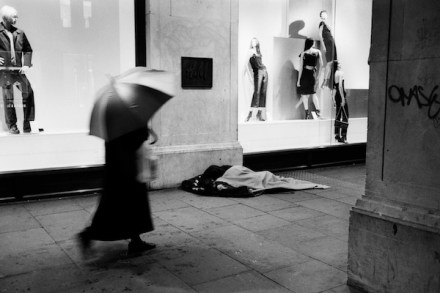
  An emergency shelter funded by the Mayor of London, Boris Johnson, has been opened to offer a lifeline to rough sleepers in the capital whenever three consecutive nights of freezing temperature are predicted. Mr Johnson said: ‘This shelter will offer a vital lifeline when temperatures tumble to sub-zero levels and rough sleepers risk losing their lives in the cold.’ Just how and why Dave and his mother, Nancy, came to be sleeping outside, in the corner of a car park, is too complicated and surreal a story to explain. But what you need to know is that there’s no easy solution to their problem, and sleeping rough in itself isn’t alarming or even unusual for them.

Mexico must legalise drugs

For the last six months or so, officials on both sides of the US/Mexico border have had their fingers crossed that the appalling violence perpetrated by Mexico’s warring drug gangs might be dying down. The new president, Peña Nieto, has a new, more conciliatory approach so, you know, maybe everyone will start playing nice… No such luck. Intelligence from US officials suggests that the psychotic Los Zeta cartel and the well-established Sinaloas are in fact causing even more mayhem than ever. More than 1,000 people have been killed since Pena Nieto took over it turns out, and Los Zetas planning a bloody take-over of some crucial border towns.

Can you help Andrew Mitchell?

Andrew Mitchell, formerly of DFID, urgently needs Coffee Housers' help. It seems he won't believe DFID wastes money, unless he sees actual, concrete examples. Last week, in the magazine, we ran a foreign aid special in which Jonathan Foreman and Justin Shaw  showed us how and why we waste so much on ineffectual aid. In principle of course aid is a wonderful idea, but it can also be a blight: propping up dictators and entrenching corruption in the countries that are struggling most. We identified two major concerns: A lack of DFID due diligence The daft ring-fence around aid ­ 0.7% of GDP ­ which means the DFID has its work cut out trying to get rid of all the cash quick enough, and has an incentive to turn a blind eye to what happens to it on the ground.

Stop the drugs war

‘They’re all bad, our politicians, all corrupt,’ said Maria, her cheery face dissolving into distaste. What about the new president, Peña Nieto? I ask. ‘That pretty boy? Ugh!’ It was late afternoon in Oaxaca’s central square, the Zocolo. Clouds were cruising in from the Sierra Madre and the dogs had begun to squabble and hump outside the cathedral. The news kiosk looked like a missing persons bureau, each front page full of mugshots: the latest victims of the drug wars. What about Calderon, the one before Peña Nieto, I asked Maria, who’s seen ten presidents come and go. Wasn’t he OK? At least he tried to fight the drug cartels. ‘He’s loco! Mad,’ said Maria, with a dismissive shrug.

‘Die slowly, Christian dog’

There is one main road stretching north-south along the Bekaa valley between Lebanon and Syria. It runs in a beeline from the prosperous little city of Zhaleh, on through a series of villages each with its own religious bent — some Sunni, some Christian — to the border town of al-Qaa, then on into Homs and the bloody mess of the Syrian war. We’re just short of the border when what has been an uninspiring landscape, a wafting sea of plastic bags caught on desert shrubs, springs suddenly to life. Out of nowhere: orchards, vineyards, fig trees; aubergines fat and fallen on the grass. The air is sweet with the smell of apples.

Mexico notebook

Four a.m. Something was triggering the motion-sensor on the outside light. One minute, darkness, the next, a window-full of flailing palm leaves, bright with rain. I blinked for a bit, then remembered: hurricane! There was one on its way, we’d been told by Rudy, the beach barman the day before, a bruiser called Ernesto. But Rudy had been phlegmatic: Ernesto is category 1, no problem. iPhone said different. By the light of that terrible little rectangle I fed my fear with headlines from round the world: ‘Ernesto gathers strength and takes aim at Tulum.’ ‘Ernesto careens across the Caribbean towards Mexico.’ ‘Ernesto could devastate Yucatan.’ By morning, I was pale with terror; a victim of my own profession.