Mary Wakefield

Mary Wakefield

Mary Wakefield is commissioning editor of The Spectator.

Why cyclists need to get a jump on life

This morning as I cycled through Covent Garden, Melanie Phillips nearly killed me. Here's how: I often jump red lights in London on my bike. I quite see how irritating it is, but it just feels safer to be in front of the buses. This time though, as I was about to sidle through a red, I remembered that last week in her excellent blog, Melanie accused light jumping cyclists of being "sunk in a pit of moral blackness."  The force of her rhetoric, her obvious anguish affected me so I held firm and waited. Red, amber, green: I set off. A second later, a taxi on my right swung left straight into my front tyre. The bike fell over, the taxi fled without stopping to see if I was alive. Had I been a foot or so further forward, I'd have been toast. What's the moral here?

 What will Boris and Ken do without each other?

Ken or Boris: it's still anyone's guess. But whoever wins, (and I do hope Pete and Fraser are right to be optimistic) the question remains: what will they do without each other? One of the funniest elements of this mayoral contest has been that, whilst their supporters are animated by ferocious hatred of the other side, Ken and Boris appear to have developed great mutual respect. Ken's said he'd give Boris a job, and Boris also seems strangely fond of Ken. It's a relationship you don't see much outside comic books: the super-hero/super-villain, love/hate thing. Like Batman and the Joker, they're locked in mortal combat, but come the weekend, I reckon they'll both be feeling a little lost without their old adversary to contend with.

Liberating Shakespeare

Mary Wakefield talks to the RSC’s Michael Boyd and learns how he scared the Establishment Halfway through our interview, in the middle of a discussion about the future of the RSC, a tired Michael Boyd rubs his face with his hands, looks up at me through the gaps between his fingers and says, ‘Well, my aim was, and still is, to knock Shakespeare off his pedestal.’ Is that the last sentence you’d expect to hear from an enthusiastic director of the RSC? Half an hour ago, I’d have said so. Half an hour ago, I’d have prickled with outrage, made a tetchy little note in my reporter’s pad: ‘Boyd bonkers.’ But after only a short while in his company, I’ve been brainwashed — or re-educated, let’s say — by Michael Boyd.

A holy man tipped to lead the nation’s Catholics

Mary Wakefield meets Dom Hugh Gilbert, the Benedictine Abbot of Pluscarden — said to be the Pope’s ‘dark horse’ candidate to succeed Cardinal Cormac Murphy-O’Connor What is holiness? How do you spot it? I’ve come to Worth Abbey in Sussex to meet a monk often described as ‘holy’ — Dom Hugh Gilbert, OSB, Abbot of Pluscarden in Scotland — and I wonder as I wander around in search of him, what form his sanctity will take. What is a holy man, and where is this holy man? Worth seems deserted. Puddles lie low in sleeves of ice; clouds hang motionless over what looks like a spaceship but must be the church. The air is full of a curious, attentive silence. On further investigation, the spaceship, too, is empty.

Play the Dave game

So Dave has let cameras into his house, to show that 'the anxieties of parenting are universal'. And what cosy fun the clip is too, and how lovely Sam looks first thing, (what about a fulltime SamCam?). But though the trials of parenting are universal, the cost of soft furnishings are not. So let's all play my new game: The cost of being a Cameron. The rules are easy: watch the video; spot a posh accessory, clothes item or soft furnishing you recognise. Then post it. Here, just for starters - Item 1: Mason and Pearson hairbrush  (25 quid or so); Item 2: Heals birch-wood laundry basket  (60 quid or so); Item 3: Conran lamp Sam's shirt, anyone? That enormous white fur rug?

Backing vocals for Darling

Who else reckons that Mr Darling's plodding budget could have used a lively soundtrack? Well, here's my recommendation: Goody Two Shoes by Adam and the Ants. The lyrics pretty much sum up the whole sorry affair! "Put on a little makeup makeup Make sure they get your good side good side If the words unspoken Get stuck in your throat Send a treasure token token Write it on a pound note pound note Goody two goody two goody goody two shoes Goody two goody two goody goody two shoes Don't drink don't smoke - what do you do Don't drink don't smoke - what do you do Subtle innuendos follow.

Her dark materials

Mary Wakefield talks to Eileen Atkins about acting as an out-of-body experience. Eileen Atkins opens in The Sea at the Theatre Royal Haymarket on 23 January. The Eileen Atkins experience — the word ‘interview’ doesn’t even begin to describe it — starts for me at about 3.30 on a brilliant, sunny afternoon in December. There I am in her elegant, airy sitting room overlooking the Thames, surrounded by books and paintings, watching swans shimmy by outside. There I am stroking a cat, listening to Dame Eileen, and just becoming dimly aware that this is not going to be a very run-of-the-mill conversation.

What’s your view on the Fourth Plinth?  

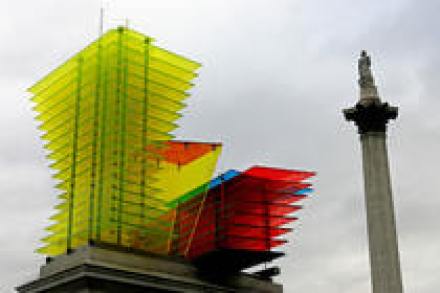
Come on Londoners – it’s judgement day! Now that the new designs for the Fourth Plinth are on display, I think it’s time for us all to have our shout about Thomas Schutte’s Model for a Hotel – that stack of neon plexiglass, to the north-west of Nelson’s column.  Well – here’s my shout anyway: I think it’s a disgrace. Ken told us it would ‘sparkle through the months of winter and lift Londoners' spirits’. Cobblers. It sends my spirits creeping right down into my boots. Against anything but a bright blue sky, the acid yellow looks grubby and the poor thing is far, far too small for such a grand position.

‘We are at war with all Islam’

Last Tuesday at nightfall, as the servants of democracy fled SW1, a young Somali woman stood spotlit on a stage in Westminster. Behind her was the illuminated logo for the Centre for Social Cohesion: a white hand reaching down across England to help a brown one up; in front, an audience of some of Britain’s biggest brains — politicians, editors, academics. She drew her shawl a little closer round her shoulders, looked up and said: ‘We are not at war with “terror”, that would make no sense.’ ‘Hear, hear,’ said a voice at the back. ‘Terror is just a tactic used by Islam,’ she continued. ‘We are actually at war, not just with Islamism, but with Islam itself.’ Out in the dark began a great wobbling of heads.

Glutton for punishment

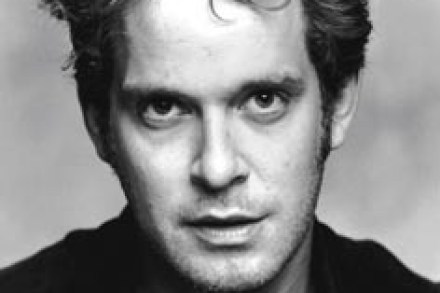
Act one, scene one The curtain opens on the offices of The Spectator magazine, London SW1, where a woman stands, stage left, staring at a telephone. A clock on the wall says 7.15. Something about the woman’s demeanour suggests it to be p.m. How long can she look at a phone? Just as the audience is beginning to wonder, the woman sighs, picks up a sheaf of papers from the desk and starts to read out loud: Me: Tom Hollander, actor, born 1967. Read English at Cambridge. TV and film credits include: Absolutely Fabulous, Martha, Meet Daniel and Laurence, Gosford Park, The Lost Prince and Pride and Prejudice...Pirates of the Caribbean parts I and II. The Libertine with Johnny Depp, Elizabeth: The Golden Age with Cate Blanchett...In 2006, took part in the 24-hour plays at the Old Vic.

Close encounter

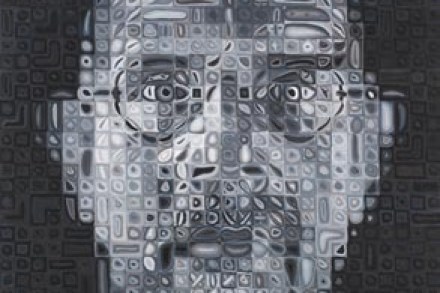
Bill Clinton looks down at me with that famous, lazy grin. His perfect American teeth show bright white and his blue eyes lock on to mine. I take a few steps forward (who wouldn’t?) but as I draw closer something odd happens to Bill: his face blurs, its outline distorts, wobbling as if underwater. A few steps more and his features have begun to pixelate into small squares and the smooth pink of his cheeks has unmixed itself — separating out into a hundred different colours. Bill is going to pieces. Closer still, now eyeball to nostril with President Clinton, I lose all sense that I’m looking at a portrait: in front of me is an abstract painting — a vast grid-full of sherbert swirls: mauves, oranges, lemon yellow, fuchsia.

Blair said to me: ‘Let’s not talk about the war’

A light rain drifts down over Kintbury village, blurring the surface of the Kennet and Avon canal. It gleams on the railway tracks, pools into fat drops under the roof of the station shelter on the London-bound platform and drips on to Robert Harris’s new suede shoes. Look, I say again, please don’t wait. I’ll be fine. You’ve been more than kind enough already. ‘No, no.’ Harris says firmly. ‘I’ll see you on to the train. I hope you’re not too cold, though.’ This is advanced niceness of a sort you don’t find very often.

Mary suggests…

Have you Herd? If you haven't already done so, buy a copy of Mark Earl's Herd: How to Change Mass Behaviour By Harnessing Our True Nature  It sounds sinister, but there's not much harnessing in it and lots of exciting ideas about what it is to be human. Mark's thesis is that we're basically group animals, like chimps, and that ideas and fashions spread not as a direct result of some ad campaign, but because of our instinctive desire to mimic each other. This is tremendously cheering. It means all those threatening, cajoling ads -- inside mags, blocking the letterbox, thrust at you in the street -- will come to nothing. However urgent the blurb, it's not going to sway anyone at all. Hooray!

Man with a mission | 29 September 2007

Mary Wakefield talks to Jonathan Kent about his plans to jump-start the West End Something is rotten in the West End. It’s not just the sour smell of lager, or the Saturday night binge drinkers. It’s more that as I walk up St Martin’s Lane, through what should be the beating heart of theatreland, there’s an unmistakable whiff of artistic decay. It’s been said before and often, with varying degrees of gloom, but it’s difficult to deny: nearly all the shows on offer here are musicals, and most of them adapted from movies or TV: The Lion King (‘Pure delight floods the Lyceum!’) Bad Girls: The Musical (‘If you’re in for a good time, bad girls do it best!

Heaven and hell | 22 September 2007

6.57 a.m. I wake up three minutes before the alarm is due to go off, aware that I have slept badly: dipping in and out of consciousness. All night I’ve been fretting, imagining the various ways in which I might kill myself on the mountain today. I am not a good skier. I often fall over and sometimes, in deep snow, become cast like a sheep, wedged, unable to rise. If frightened I freeze, like a rabbit. Cousin Peter, my septuagenarian ski-guru, says that I’m finally ready to come ski-touring off-piste with him and his guide, Fred. I feel sick. I want to stay in the chalet and sketch, or make raclette. 7.30 a.m. Outside, the French Alps are still in shadow but the sky is brightening. Plasters, long socks, salopettes.

Clarissa Dixon Wright: ‘I was healed by a holy relic’

I’m tempted, just for a second, to feel sorry for Clarissa Dickson Wright. There she is, with her back to me, 15 feet away, at a table in Valvona & Crolla — a refined little deli/café full of focaccia and Parmigiano Reggiano tucked in beside the lager shops on Edinburgh’s Leith Walk. There she sits, waiting for me: the last of the Two Fat Ladies, all alone: no fat husband to cook cakes for, no fat children to lick the icing from the bowl. I’ve read her memoirs, so I know that she’s been through the mill: alcoholism, homelessness, the death by drink of the love of her life. But I also know, as I begin my approach, that to pity Clarissa would be idiotic.

The suffering sub-primes

Now that the Fed has introduced a temporary reduction in interest rates, and my selfish fear has subsided, I’ve become obsessed with the debt-ridden or bankrupt souls that we now know to call sub-primes, because loans they take out are risky or sub-prime. And the more I read about sub-primes, the sorrier I feel for them and the more it seems that our financial system relies on treating them like livestock – to be fattened up, encouraged to consume, then sacrificed when the time is right. Poor sub-primes, sitting in their sub-prime trailers, watching sub-prime, prime time TV.

When giving makes you feel good

Dr Salvatore LaSpada (what a lovely name) had a plaintive piece in yesterday's Daily Telegraph about how little we Brits give to charity. America gives away 1.7 per cent of it's GDP to good causes, he says, so what's with our pitiful 0.7? Giving is great! says LaSpada encouragingly, "It's the best fun you'll ever have!"  Whoa there Dr S! But he's right of course, giving does generally feel good, so there's probably a decent reason why we don't. And the reason I think is actually quite simple. It's not that we've contracted our consciences out to the State, or that we're intrinsically mean, but rather that Big Charity has taken over in the UK, and donating to Big Charity is no fun.

What are the police for? Or rather, who are the police for?

The road was cordoned off by Horse Guards parade on Friday afternoon, because of some ‘function’ on the pavement beside the Treasury building: squat little marquee, squat little men drinking warm champagne and 30 odd police officers standing around in the street with truncheons. As I herded with the crowd along the pedestrian detour I saw a blind man in a smart suit with a guide dog, fumbling in a panicky way at the police barrier. He worked in the Treasury opposite, he said, and though there'd been a gap in the fence 5 mins ago, which he’d popped through to walk his dog, it now seemed to have vanished. I couldn't see the gap either, so I called out to a nearby policewoman, and this is how the conversation went: Policewoman: “Oh, I just closed that gap.

The charm of Ed Miliband

Sitting opposite Ed Miliband MP in a large and airy office, the sort of office that befits the Minister for the Third Sector, I suddenly have the surreal impression that I’m at the doctor’s. It’s the medicinal green of the carpet but, more than that, it’s Ed’s demeanour. There he is on the sofa, all clean and healthy-looking, like a man who jogs and who knows how important it is to stay hydrated, and concerned too — leaning forward, his eyes bright with eagerness to fix things.