Martin Vander Weyer

Martin Vander Weyer

Martin Vander Weyer is The Spectator’s business editor

Seized Russian assets should be used against Putin

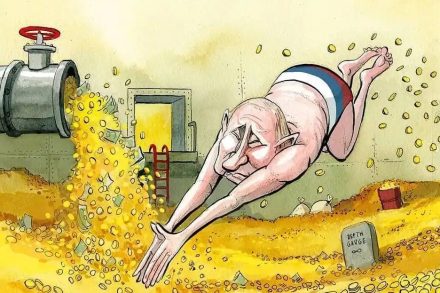
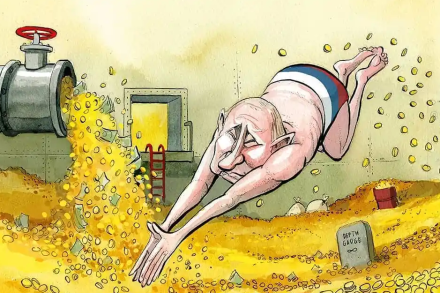
The seizure of enemy treasure, formerly known as plunder and pillage, is an ancient tool of war. Though still practiced in the world’s nastiest conflict zones, it’s a tricky business within a rules-based international order. The G7’s agreement to lend $50 billion to Ukraine — using income from $300 billion of frozen Russian assets to cover interest and repayments on the loan — is a vivid case in point. And some would say, a lily-livered half-measure. The key feature of the deal is that it does not actually claim ownership of Russian loot — which however ill-gotten is mostly held in EU banks in the form of western government bonds. It merely diverts interest payments due on the bonds from the issuing governments.

Russian

Why should Putin be allowed to keep seized Russian assets?

From our UK edition

The seizure of enemy treasure, formerly known as plunder and pillage, is an ancient tool of war. Though still practised in the world’s nastiest conflict zones, it’s a tricky business within a rules-based international order. The G7’s agreement to lend $50 billion to Ukraine – using income from $300 billion of frozen Russian assets to cover interest and repayments on the loan – is a vivid case in point. And some would say, a lily-livered half-measure. The key feature of the deal is that it does not actually claim ownership of Russian loot – which however ill-gotten is mostly held in EU banks in the form of western government bonds. It merely diverts interest payments due on the bonds from the issuing governments.

Nigel Farage is right: the City should not kowtow to Shein

From our UK edition

Nigel Farage and I agree on one thing: a red-carpet welcome at the London Stock Exchange for Shein, the Chinese online fashion retailer, would be ‘a very bad idea’. Valued at £50 billion, Shein could become London’s biggest-ever initial public offering. Both the departing Chancellor Jeremy Hunt and the shadow business secretary Jonathan Reynolds have met Shein’s chairman, Donald Tang, to encourage that prospect. Both clearly recognise that the City’s global status is weakened by a dearth of LSE debutants and a fad for listing in New York instead – with yet another FTSE 100 company, the £24 billion plant-hire giant Ashtead, reported to be thinking of shifting its listing across the Atlantic. But could Shein turn the tide?

A thriving City will test Labour’s tolerance

From our UK edition

The City is having a busier year than pessimistic observers – including me – might have expected. The biggest deal on the block, the £39 billion bid by Australian giant BHP Billiton for its London-listed South African mining rival Anglo American, has fallen away. But plenty of bankers’ and advisers’ fees have already been clocked up on both sides and BHP may now pursue global domination of the copper market by stalking other London-listed miners such as Antofagasta of Chile. Meanwhile, the £3.

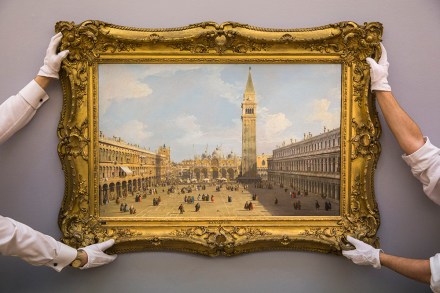
Bury the Canaletto, now

From our UK edition

I’m not on the guest list for the Duke of Westminster’s wedding, but I wish him luck anyway. Mind you, the young seventh duke – Hughie to his friends – hardly needs more luck than has already come his way in the form of the £10 billion Grosvenor property empire in London and elsewhere. When the playboy second duke known as ‘Bend’Or’ died in 1953, Pimlico had to be sold to pay record death duties. But the Grosvenor family has taken a firmer grip on tax planning since then, their fortune multiplying despite the dukedom passing through three cousins to reach the father of today’s incumbent, who inherited via reportedly tax-proof trusts in 2016 and should have little to fear from a Labour regime. In other stately drawing rooms, however, teacups are rattling.

Perfect pitch: tips for Innovator success

From our UK edition

Entries for The Spectator Economic Innovator Awards, in partnership with Investec Wealth & Investment (UK), come in all sizes and sectors. How do our judging panels choose between them? We’ve asked three of our most experienced judges to offer their top tips for regional finalists to make the very best of a 10-15 minute pitch. But before that, entrants must answer the first question in the online entry form: ‘Please describe your business very clearly in 50 words or fewer.’ In short, make it punchy, passionate and special. That’s the path to Innovator success.

The need for greed

From our UK edition

I suspect I’ve had a lot more fun writing about the annual Sunday Times Rich List over the years than many of its denizens have had clambering into it and staying there behind their high-tech security gates and their phalanx of tax advisers. The 2024 roll call includes some great British wealth-creation stories – led by the industrialist Sir Jim Ratcliffe, the inventor Sir James Dyson and the Far Eastern trading Swire dynasty. But if the completed jigsaw of 300 names makes any sort of picture, it is of a vast treasure hoard from elsewhere, and in some cases from nowhere, that has found a relatively safe vault in the UK. That’s not a bad thing in itself as an advert for our quality of life and rule of law.

Can Starmer and Reeves add some fizz to the economy?

From our UK edition

If the 0.6 per cent first-quarter GDP uplift reported by the Office for National Statistics is sustained for the rest of this year, Rishi Sunak will be able to claim – as he waves goodbye – that he and Jeremy Hunt have succeeded against their naysayers in dragging the UK economy from pandemic depths back to the level of ‘trend growth’, around 2.5 per cent per annum, that used to be thought of as normal. That’s spookily in line (as is the path of inflation) with Ken Clarke’s achievement as Tory chancellor in 1996 ahead of the election that swept Blair and Brown to power the following May.

We’re looking for an outstanding Innovator to Watch

From our UK edition

All the chosen finalists in The Spectator’s Economic Innovator of the Year Awards, in partnership with Investec Wealth & Investment (UK), have unique stories to tell. And in 2024, alongside regional and overall winners and an extra award for excellence in Sustainability, we’re looking for a very special entrant which we’re calling the One to Watch. It’s the range of sizes, sectors and stages of development that makes our awards such a fascinating challenge Our Innovator finalists always have positive traits in common.

Russia

Who actually gets hurt by sanctioning Russia?

The US crackdown on trade finance for Russia from international banks — designed to impede imports needed for the continuing assault on Ukraine — is biting hard, reports the FT, quoting an investor who thinks “the logical endpoint of this is turning Russia into Iran.” Quite right too: sanctions like these are a vital non-military way to hobble Vladimir Putin’s campaign. But war and finance intersect in many different ways. Consider also the fate of 400 western-owned commercial aircraft that were leased to Russian airlines before the invasion in February 2022. Now stuck in Russia or its satellites, unmaintained to western standards and unfit to fly back into our airspace, they’re a potential multibillion loss for their owners and insurers.

How to bottle Britishness

From our UK edition

The US crackdown on trade finance for Russia from international banks – designed to impede imports needed for the continuing assault on Ukraine – is biting hard, reports the FT, quoting an investor who thinks ‘the logical endpoint of this is turning Russia into Iran’. Quite right too: sanctions like these are a vital non-military way to hobble Vladimir Putin’s campaign. But war and finance intersect in many different ways. Consider also the fate of 400 western-owned commercial aircraft that were leased to Russian airlines before the invasion in February 2022. Now stuck in Russia or its satellites, unmaintained to western standards and unfit to fly back into our airspace, they’re a potential multibillion loss for their owners and insurers.

Live the high life… in a mid rise

From our UK edition

How radically left-wing is Labour’s proposed ‘renationalisation’ of the railways? Though militant Mick Lynch of the RMT union ‘strongly welcomed these bold steps’, the real answer is: hardly at all. The revolutionary socialist group Counterfire agonised thus: ‘While it would be extremely obtuse to say that Labour’s policy is bad, it would be naive to say it was adequate, let alone particularly socialist.’ I’m struggling to disagree with that summary. The central idea of taking train operating franchises into public hands as they expire comes as no shock: LNER, Northern, Southeastern and the dreadful TransPennine Express have already met that fate, along with Scottish and Welsh trains, and those that remain private are largely despised by passengers.

Saluting the best of UK entrepreneurship

From our UK edition

Hot news for UK entrepreneurs: The Spectator Economic Innovator of the Year Awards 2024, in partnership with Investec Wealth & Investment (UK), is open for entries. As ever, we’re excited to hear from high-growth businesses in every sector and every corner of the UK. We’re also delighted to welcome back our sponsor, Investec Wealth & Investment (UK), who have recently combined with Rathbones Group Plc to become the UK’s leading discretionary wealth manager. The combined business has an extensive footprint among UK wealth managers and a deep commitment to entrepreneurship. This is the seventh year of our quest to salute the UK’s most innovative companies.

How Pret ate itself

From our UK edition

How bad would it be if Royal Mail’s parent company, International Distributions Services (IDS), were to be taken over by the Czech billionaire Daniel Kretinsky? Our historic postal service is heavily lossmaking, struggling to maintain its universal delivery obligation and at war with its unions: a foreign owner would surely take an axe to it. Kretinsky, who owns almost 28 per cent of stockmarket-listed IDS, has gone back on an assurance that he would not try to take the company private and has tabled a £3.1 billion offer – above the group’s current market value but well below what other shareholders think it is worth. He won’t win with this first gambit but he’s likely to be back with a higher one.

Sack Andrew Bailey? Let’s look at the case against him

From our UK edition

The Governor of the Bank of England, Andrew Bailey, is a loyal and well-intentioned public servant in a role that, by its nature, attracts constant blame and hindsight judgment. Liz Truss is a spectacularly failed 44-day prime minister with a book to sell. So when Truss says Bailey should have been sacked for his part in her downfall –when the Bank intervened to prevent a pension fund crisis after her chancellor Kwasi Kwarteng’s radical mini-Budget of September 2022 – and that he should be sacked anyway for being part of a Keynesian economic Establishment, with the Treasury and the Office for Budget Responsibility, that has delivered nothing but stagnation, my instinct is to stand up for Bailey.

The arrogance of Apple

From our UK edition

Can flexible working get the best out of what a ministerial press release calls ‘hardworking Brits’ – or is it a couch potato’s charter? As of 6 April, employees have had the right to ask for flexibility – including remote working and hours to suit – from their first day in a job; employers can reject unworkable requests, but are obliged to consider and consult. If you’re an optimist, you’ll think workers whose family lives are accommodated by enlightened employers will be happier, more loyal and more productive: ‘5 a.m. will be the new 9 a.m.,’ declares the HR Director, for parents who choose to ‘tackle work before attending to childcare commitments’ then ‘wrap up earlier… prioritising family time’.

Comparing the sentences of Sam Bankman-Fried and Tom Hayes

Compare these two sentences, as tests used to say. First, Sam Bankman-Fried, the thirty-two-year-old American founder of the collapsed FTX crypto exchange, who has been sentenced to twenty-five years in prison for a fraud that cost customers and investors $11 billion and for which, according to the New York judge, he uttered “never a word of remorse.” The jail term may look long but experts say he could be out in eighteen and at least Bankman-Fried has a prospect of sunshine before he’s old — unlike other US fraudsters such as Bernie Madoff and the Ponzi-scheme operator Allan Stanford, whose century-plus sentences ensured they would never be out at all.

bankman-fried

Why Thames Water is the pariah of post-privatisation capitalism

From our UK edition

‘It would have been ideal not to have so  much poo in the water,’ said Oxford captain Leonard Jenkins after losing the university boat race to Cambridge last Saturday. Thames Water blamed high groundwater levels after weeks of rain for sewage discharges that are a less unpleasant alternative than ‘letting it back up into people’s homes’. But no one’s listening to the excuses – for the failing utility, that is, not the dark-blue crew. Thames Water is the pariah of post-privatisation capitalism, facing a charge sheet of poor service and financial opportunism of which rising tides of river filth are merely pungent symbols.

In praise of Andy Street

From our UK edition

Commentators like me often lament the lack of business experience among leading politicians – but also observe how few business leaders ever make successful transitions into the political arena. Archie Norman tried his hand as an opposition front-bencher, didn’t like it, and returned to the boardroom, latterly to lead the revival of Marks & Spencer; Digby Jones moved on from the CBI to serve uncomfortably as a trade minister under Gordon Brown. But there’s one obvious exception to the rule that politics and corporate life require totally different skill sets: Andy Street, who is campaigning for a third term as Tory mayor of the West Midlands, the UK’s second-most populous city-region after London.

Can Mike Lynch make it out of jail?

As I’ve said before, I hold no brief for Dr. Mike Lynch, the founder of the Cambridge-based software firm Autonomy, who faces fraud charges over the $11 billion takeover of his company by Hewlett-Packard (HP) in 2011. But I watched with foreboding as US marshals bagged Lynch under the lopsided 2003 US-UK extradition treaty and flew him to California — after the then home secretary Priti Patel declined to halt the process — and a judge there changed his pre-agreed bail conditions to place him under armed house arrest. Now, having comprehensively lost the argument that as a UK citizen running a UK company he should have been tried in British courts, Lynch is pleading “not guilty” to a San Francisco jury.

Lynch