Martin Vander Weyer

Martin Vander Weyer

Martin Vander Weyer is The Spectator’s business editor

Mike Lynch has little chance of escaping US jail

From our UK edition

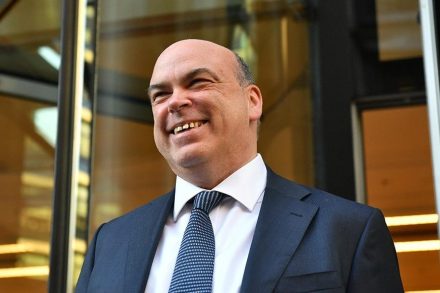
As I’ve said before, I hold no brief for Dr Mike Lynch, the founder of the Cambridge-based software firm Autonomy, who faces US fraud charges over the $11 billion takeover of his company by Hewlett-Packard (HP) in 2011. But I watched with foreboding as US marshals bagged Lynch under the lopsided 2003 US-UK extradition treaty and flew him to California – after the then home secretary Priti Patel declined to halt the process – and a judge there changed his pre-agreed bail conditions to place him under armed house arrest. Now, having comprehensively lost the argument that as a UK citizen running a UK company he should have been tried in British courts, Lynch is pleading ‘not guilty’ to a San Francisco jury.

The British Isa is doomed to fail

From our UK edition

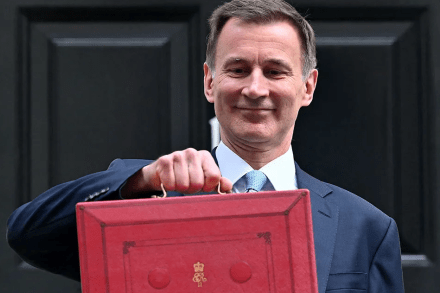
Is Jeremy Hunt’s ‘British Isa’ worth having? The new £5,000 tax-free allowance for UK equity investment comes on top of the existing annual £20,000 Isa limit, so on the general principle that it makes sense to maximise tax-efficient savings, the answer might be yes. But will it achieve the Chancellor’s aim of allowing patriotic savers to buy into the growth of ‘the most promising UK businesses’ while supporting them with capital to expand? To that, I’m afraid, the answer from the professionals has been a resounding no. UK stock-market performance has been so limp in recent years that UK-only share-buyers would have reaped barely a third of the returns earned by those who opted for global equity funds – and done worse still by comparison with US investors.

A toast to the Wine Society

From our UK edition

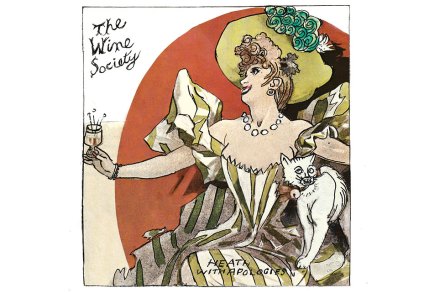
Ask any group of consumers to name the UK’s most enduringly successful mutual enterprise and they will probably point to the Co-op or the Nationwide building society. But there’s a cognoscenti who will come up with a different answer: a business that operates from giant sheds beside a railway track at Stevenage. It is the Wine Society, now celebrating its 150th year. Back in 1874, a quantity of Portuguese wine lay in the cellars of the Royal Albert Hall in Kensington, shipped there for an International Exhibition but overlooked and unsold.

Here comes the next mis-selling scandal

From our UK edition

St James’s Place is a posh London cul-de-sac that will forever be associated with the late Jacob Rothschild, who based his financial empire there and restored the stately Spencer House across the road. One of his enterprises, J. Rothschild Assurance, was renamed St James’s Place Capital in 1997 and ended up majority owned by Lloyds Banking Group – until Lloyds sold it to stockmarket investors in 2013. Combining fund management, financial advice and life insurance, SJP (as it’s known) joined the FTSE 100 a year later. Though its headquarters are now in Cirencester, the poshness of its name and origin helped polish SJP’s upmarket cachet.

Sending seized Russian loot to Ukraine is no simple matter

From our UK edition

We must be bolder in seizing frozen Russian assets, writes the Prime Minister in a Sunday newspaper. ‘That starts with taking the billions in interest these assets are collecting and sending it to Ukraine.’ Can that really be done? Having consulted international legal opinion, here’s my summary. The principle of ‘sovereign state immunity’ doesn’t prevent the freezing of state assets, but confiscating them would create a very dangerous precedent, namely that no state’s reserves would be secure in anyone else’s banking system.

Bombed-out bank shares are a failure of modern capitalism

From our UK edition

When I read news of a fresh strategic plan for Barclays, I seem to hear a ghostly rustling from the corner cupboard in the living room. Could it be a forlorn protest from the dusty bundle of share certificates that are the last vestiges of my late father’s lifelong service to Barclays from junior clerk to deputy chairman? They were a modest farewell reward – 40 years ago, in the era before mega-bonuses for senior executives – that might once have been swapped for a country cottage but today would barely yield enough to pay for his upcoming centenary dinner. Even the Qatari sheikhs have sold down their Barclays holdings in despair.

China is set for a serious economic fall

From our UK edition

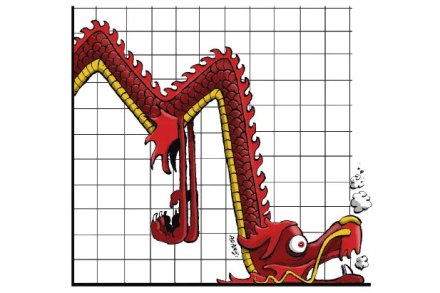
 The future trajectory of the Chinese economy is a subject for doctoral theses rather than casual column items. But the advent of the Year of the Dragon, at last weekend’s Lunar New Year, was greeted with such pessimistic commentaries that the natural contrarian should ask whether the consensualists are getting it wrong: maybe the dragon is merely marking a pause before martialling its mighty resources for the next transglobal burst of fire? The negative narrative goes like this. In spite of deflation in consumer prices, Chinese shoppers are frightened of spending. Despite central bank interventions aimed at boosting asset prices, the property market is crashing after the collapse of the developer Evergrande and the Shanghai stock market has been falling since last April.

Will Rachel Reeves scrap the private equity tax break?

From our UK edition

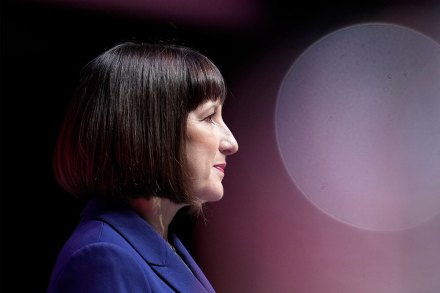
I’ve been reading – so you don’t have to – speeches recently addressed to a hot-ticket gathering of business leaders at the Oval cricket ground by Sir Keir Starmer and shadow chancellor Rachel Reeves. The nub is a promise to hold corporation tax at the current rate of 25 per cent for the duration of the next parliament, combined with a warning that ‘levelling up of workers’ rights’ will cause companies’ labour costs to rise. Then there’s all the usual guff you’d expect from a government-in-waiting about infrastructure and skills; plus an unusually warm tone towards the financial services sector, including a pledge not to reinstate the EU-inspired cap on bankers’ bonuses that was abolished by Kwasi Kwarteng.

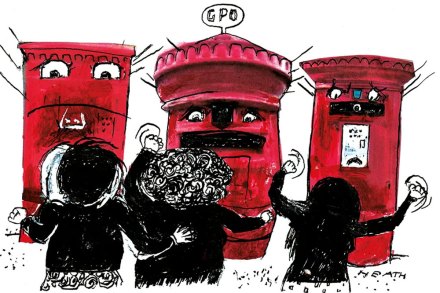
Can anyone save the Post Office? 

From our UK edition

Angry farmers offer a theme for the week – starting with the French at close quarters. Leaving the Eurotunnel at Calais en route to a wedding in the Alps, my car party encounters agricultural rage in the form of convoys of stationary trucks at all the port’s major exit points, as tractors blockade the autoroutes and police do nothing to shift them. Echoing recent protests in Germany, Poland and Romania, French farmers want better price protection, cheaper diesel, more import barriers, more aid from Brussels and less green regulation. We’re lucky not to be sprayed with manure, as was happening elsewhere. The protests have support from the powerful CGT union on the left and Marine Le Pen on the right, the latter calling the Emmanuel Macron regime ‘the farmers’ worst enemies’.

Where are the smart investments under a Starmer government?

From our UK edition

I worry that my Burlington Bertie life in London’s West End offers a misleading picture of the real economy. Yes, boutiques and brasseries are busy, but what’s it like in outer boroughs and distant provinces? To take a single morning’s headlines, on the plus side there’s upbeat trading news from ABF, the grocery and Primark discount clothing retailer, which reaches consumers everywhere; and a prediction that energy prices will fall 16 per cent by April. On the negative, warnings that ‘more than 47,000 companies are on the brink of collapse’ (from insolvency specialists Begbies Traynor); and that world trade faces a second wave of Red Sea disruption even if Houthi attacks stop (from the shipping giant Hapag-Lloyd).

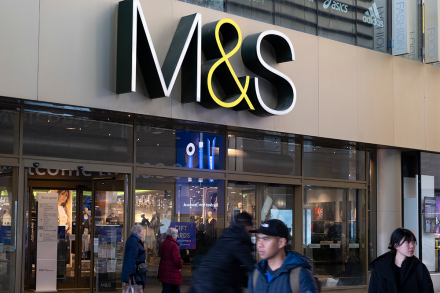
Why can’t the UK be more like Marks & Spencer?

From our UK edition

Marks & Spencer was a 20th-century paradigm of better business: a trusted brand and a benign employer that built strong relationships with suppliers and generated handsome returns for shareholders. Then its performance began to fade, as one management team after another failed to keep pace with retail trends in-store and online. By August 2020, when it announced 7,000 job cuts and ‘multi-level consultation [on] further streamlining’, I was moved to predict M&S would end up as no more than ‘a chain of upmarket convenience food stores and a website that’s handy for sending flowers and chocolates’. But I misjudged the residual loyalty of middle-class shoppers.

Fujitsu should pay for the Post Office scandal

From our UK edition

Let’s talk about Fujitsu. In particular, let’s ask why the Japanese multinational IT supplier has not been taken to court, or heavily fined, or barred from bidding for new public-sector contracts, for the faults of its Horizon sub-post-office system and the mishandling of pleas for help from hundreds of innocent sub-postmasters who were wrongfully convicted. Public reaction to the ITV drama Mr Bates vs the Post Office has provoked the former Post Office chief Paula Vennells to hand back her CBE, but whatever she did wrong, she wasn’t the root cause of the scandal. So let’s take a closer look at the maker of the kit that failed. Fujitsu built Japan’s first computers in the mid-1950s.

My election advice for Starmer? Offer a new Citizen’s Charter

From our UK edition

A giveaway Budget in March preceding a general election in May against an improving economic backdrop: that, we’re told, is Downing Street’s favoured scenario. But still the election is Keir Starmer’s to lose, so here’s my start-the-year advice to him. Don’t bang on about Rishi Sunak being too rich; don’t make immigration the issue, because you have no solutions; don’t pretend to admire Margaret Thatcher; but do channel John Major – to whom you bear much closer comparison – and offer a new Citizen’s Charter. What? Isn’t that 1991 exercise in footling managerialism, forever associated with the ‘cones hotline’, remembered as a laughable failure?

Thank goodness for the Christmas elf of York station

From our UK edition

It’s 10 o’clock on a Friday evening in early December. My crowded northbound train departed King’s Cross two hours late and has lost two more between Newark and Retford. Overhead line trouble, we’re told; engineers on the line. I’ve read this week’s Spectator from cover to cover. I’ve exchanged emails with friends in Los Angeles, whom I picture in sunshine with pre-lunch glasses of crisp white wine. And in boredom I’ve re-read all my own Christmas columns for the past decade in search of inspiration for this one. Some years, I see, I did short stories from the boardroom; sometimes tongue-in-cheek awards for City headline-makers or real accolades for best restaurants and books; or tributes to the recent dead. And this year?

COP28 is nothing but hot air

What position should the distant observer take on the COP28 conference in Dubai? That the sight of 70,000 delegates flying into a desert oil state from around the world to discuss human impacts on climate change is beyond satire and that its proceedings are never likely to rise above Greta Thunberg’s encapsulation of all such jamborees as “blah blah blah?” Or that the climate problem is now so obvious and urgent that all efforts towards global action, however small, should be uncynically applauded? I leave that choice on the table.

COP28

Was COP28 any more than hot air?

From our UK edition

What position should the distant observer take on the COP28 conference in Dubai? That the sight of 70,000 delegates flying into a desert oil state from around the world to discuss human impacts on climate change is beyond satire and that its proceedings are never likely to rise above Greta Thunberg’s encapsulation of all such jamborees as ‘blah blah blah’? Or that the climate problem is now so obvious and urgent that all efforts towards global action, however small, should be uncynically applauded? I leave that choice on the table.

Should Boris Johnson really be telling Canada how to build houses?

From our UK edition

My eye was caught by a passage of the Chancellor’s Autumn Statement last week that other pundits, intent on analysing tax impacts, largely skipped past. As part of ‘progressing further capital market reforms to boost the attractiveness of our markets and the UK as one of the most attractive places to start, grow and list a company’, said Jeremy Hunt, ‘I will explore options for a Natwest retail share offer… It’s time to get Sid investing again.’ Leaving aside the non sequitur that battered NatWest, formerly RBS, still 39 per cent owned by the taxpayer 15 years after its bailout, hardly counts as a start-up with growth prospects, how many of Hunt’s wider audience got the reference to Sid, who he was and why he stopped investing?

A booster shot of optimism

From our UK edition

Stormy weather, stormy politics, a flatlining economy — but in a gala gathering of entrepreneurs and venture capitalists there’s always optimism. Our Spectator Economic Innovator of the Year Awards dinner sponsored by Investec at the St Pancras Renaissance Hotel on 9 November really was a booster shot against autumn blues: a glittering crowd, a buzz that could have charged a fleet of Teslas, and a spectacular venue in the great 19th-century railway terminus that was itself an icon of British innovation in its day. These awards, now in their sixth year, salute high-growth, entrepreneur-led businesses from across the UK.

Rishi Sunak can’t take the credit for falling inflation

From our UK edition

Even the best-run companies have occasional leadership crises. But if you asked ChatGPT to come up with a blockbuster boardroom-bloodbath movie scenario, I doubt it would propose anything as extreme as this week’s events in its own San Francisco-based parent company, OpenAI. Chief executive and co-founder Sam Altman was fired last week for failing to be ‘consistently candid’ with OpenAI’s board, though no one was prepared to say what he had not been candid about. By Monday he had a new job leading AI research at Microsoft, OpenAI’s 49 per cent shareholder. One inside source claimed 743 of OpenAI’s 770 staff had signed a letter supporting him and many of them would follow him to Microsoft.

What’s the point of a degree?

From our UK edition

‘Place nose on dot.’ That’s what my screen is telling me to do as the first step in a ‘liveness’ test I must complete to be accepted as a signatory on a club bank account. But if I align the image of my face with the dot, nothing happens. If I press my nose to the screen, I go cross-eyed. And if the test’s purpose is to make sure I’m not dead, it would be simpler to ask me to shout at it.