Martin Vander Weyer

Martin Vander Weyer

Martin Vander Weyer is business editor of The Spectator. He writes the weekly Any Other Business column.

Don’t bet on Trump putting a stop to the hounding of British banks

From our UK edition

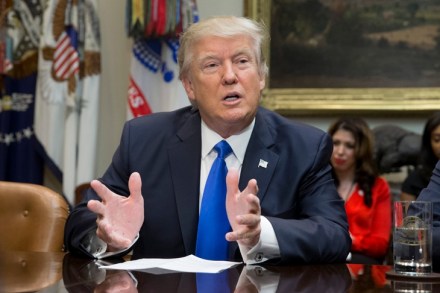
President Donald Trump is demolishing his predecessor’s legacy as fast as he can sign executive orders, but one thing for which the Obama administration will be remembered is its zest for imposing fines on UK and European banks. In a flurry of Department of Justice activity ahead of the transfer of power, Deutsche Bank agreed to pay $7.2 billion and Credit Suisse $5.3 billion for misleading investors in mortgage-backed securities before 2008, while Deutsche also copped a $630 million penalty (from UK as well as US regulators) for alleged money-laundering on behalf of Russian clients. Meanwhile, Royal Bank of Scotland set aside another $3.8 billion, making a total provision of $8.

Will Trump halt the hounding of UK and European banks? Don’t bet on it

From our UK edition

President Donald Trump is demolishing his predecessor’s legacy as fast as he can sign executive orders, but one thing for which the Obama administration will be remembered is its zest for imposing fines on UK and European banks. In a flurry of Department of Justice activity ahead of the transfer of power, Deutsche Bank agreed to pay $7.2 billion and Credit Suisse $5.3 billion for misleading investors in mortgage-backed securities before 2008, while Deutsche also copped a $630 million penalty (from UK as well as US regulators) for alleged money-laundering on behalf of Russian clients. Meanwhile, Royal Bank of Scotland set aside another $3.8 billion, making a total provision of $8.

If Trump fails to revive the American dream, then what?

From our UK edition

President Trump’s inaugural rant prompted me to reread Let America Be America Again by the black poet Langston Hughes, who is said to have been an inspiration to Martin Luther King. Writing in 1936, Hughes spoke for the immigrant and ‘the poor white, fooled and pushed apart’ as well as his own people, ‘the Negro bearing slavery’s scars’: together, the millions of Americans ‘who never got ahead’ and have nothing for their efforts ‘except the dream that’s almost dead’. The poem is the authentic cry of the economically disappointed who feel themselves exploited by ‘that ancient chain of profit, power, gain’.

Is Mrs May’s industrial strategy just another misguided missile?

From our UK edition

The Prime Minister’s heralded ‘industrial strategy’ was robbed of headlines by the story of the misguided Trident missile. But it was perhaps as well that the 132-page green paper — with its ‘ten pillars’ of platitude about ‘delivering affordable energy and clean growth’, ‘improving procurement’ and all the rest — garnered so little attention, because even the business voices who were waiting to welcome it were quick to spot it as no more than a wordy discussion draft, bereft of substantive ideas.

As the rich get richer and Trump takes power, Davos Man should be very afraid

From our UK edition

I’ve objected before to the fact that supporters of Oxfam shops are unknowingly funding not only an aid charity but also a left-wing thinktank that promotes its beliefs with considerably more zest and clout than Jeremy Corbyn does. Its latest paper, An Economy for the 99%, issued to coincide with the gathering of the global elite at Davos, offers a killer factoid: that whereas three years ago the richest 85 people on the planet ‘had the same amount of wealth as the poorest half of humanity’, today that equivalence applies to just eight mega-billionaires, led by Bill Gates, Warren Buffett and Amancio Ortega, founder of the Spanish fashion chain Zara.

Inflation creeps back like the forgotten whiff of cigarette smoke

From our UK edition

From supermarkets to superyacht builders, sales figures are remarkably buoyant: consumer debt may be rising too, but no one can say the New Year economic mood is markedly downbeat. This column feels obliged to find something on the horizon to worry about, however, and my telescope is focused on inflation. If deflation was a real threat to developed economies in recent years, the pendulum is now swinging the other way. UK inflation is expected to hit 3 per cent by late 2017, what with higher import costs generally thanks to the weak pound, fuel-price rises as a result of Opec’s effort to restrict oil production, the pass-through to consumers of higher business rates in London and the south-east, and higher rail fares for no good reason at all.

Bitcoin is booming – is drug-taking the reason why?

From our UK edition

The FTSE 100 ended the year strong, at 7142, and reopened even stronger. For 2016 overall the index gained 14 per cent, with multinational mining giants as top performers, while the pound lost 16.5 per cent against the dollar — those facts being closely related, since they mean London blue-chips are still cheaper in dollars than they were 12 months ago. Current optimism rests on the idea of a Trump spending spree on US infrastructure, but such is the perversity of markets that if common City wisdom decides that Brexit will actually boost the UK economy, stocks may fall as the pound resurges and foreign investors take profits.

Markets start the year strong while Italy totters towards the next crisis

From our UK edition

The headline business story of the holiday season was the latest bailout of Banca Monte dei Paschi di Siena. This is Italy’s third largest bank and, according to recent ECB ‘stress tests’, Europe’s weakest — regarded by pessimists both as a potential catalyst for systemic collapse and a symptom of deeper Italian problems that could kick off another euro crisis this year. Monte dei Paschi is also of special interest to me as the world’s oldest bank, having been founded by the magistrates of Siena in 1472 to provide loans at non--usurious rates to ‘poor or miserable or needy persons’, underpinned by wealth from local agriculture.

Will disgruntlement prevail again in 2017? Who knows, but at least 2016 was quite fun

From our UK edition

Most of my predictions for 2016 were wrong; so let’s not revisit them. But I was right, in January, to identify as a theme of the coming year an evident gulf between ‘the reinvigorated and the demoralised’. In small business sectors and provincial towns, as well as in the attitudes of millions of citizen voters here and abroad, the divergence between optimism and disgruntlement grew as the year went on. And when it came to elections and referendums, it was the downbeat that prevailed. So here we are, fearful of the craziness of Trump, the disintegration of Italy, the triumph of Marine Le Pen and the non-resolution of the Brexit muddle. My top prediction for 2017? We won’t feel any more prosperous at the end of the year than we do at the beginning.

The story of Sir George and his santa girls

From our UK edition

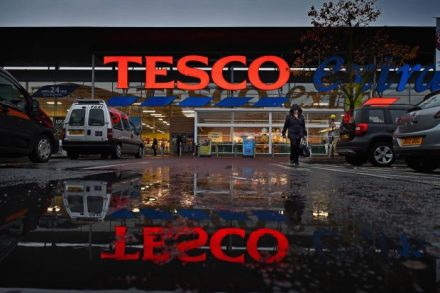
Many (well, several) of you asked me what happened to George, the supermarket chairman who was the anti-hero of my Christmas fable last year. So I tracked him down, somewhere in the provinces, to bring you another episode… ‘Five minutes, Sir George,’ said a young man in black. ‘New boobs OK?’ George nodded, adjusted his embonpoint, and looked at himself in the full-length mirror. How the hell had it come to this? Actually 2016 had begun well. Readers may recall last December’s ‘Free Turkey’ incident, in which a boardroom invasion by carol-singing Santas, led by George’s student son Simon, coerced the supermarket group into giving Christmas fare to the poor in the spirit of King Wenceslas.

Whatever happened to Sir George? A festive finale for an eventful year

From our UK edition

Many (well, several) of you asked me what happened to George, the supermarket chairman who was the anti-hero of my Christmas fable last year. So I tracked him down, somewhere in the provinces, to bring you another episode… ‘Five minutes, Sir George,’ said a young man in black. ‘New boobs OK?’ George nodded, adjusted his embonpoint, and looked at himself in the full-length mirror. How the hell had it come to this? Actually 2016 had begun well. Readers may recall last December’s ‘Free Turkey’ incident, in which a boardroom invasion by carol-singing Santas, led by George’s student son Simon, coerced the supermarket group into giving Christmas fare to the poor in the spirit of King Wenceslas.

Why workers on boards is a stale red herring

From our UK edition

‘We’re going to have not just consumers represented on company boards, but workers as well,’ Theresa May declared in July. ‘I can categorically tell you that this is not about… the direct appointment of workers or trade union representatives on boards,’ she corrected herself in her CBI speech last month. ‘It will be a question of finding the model that works.’ But is there such a thing? The case was set out in a recent TUC paper, All Aboard, which argues that worker participation would encourage ‘a long-term approach to decision-making’ and ‘help challenge groupthink’.

Workers on boards: red herring from the 1970s or useful negotiating card?

From our UK edition

‘We’re going to have not just consumers represented on company boards, but workers as well,’ Theresa May declared in July. ‘I can categorically tell you that this is not about… the direct appointment of workers or trade union representatives on boards,’ she corrected herself in her CBI speech last month. ‘It will be a question of finding the model that works.’ But is there such a thing? The case was set out in a recent TUC paper, All Aboard, which argues that worker participation would encourage ‘a long-term approach to decision-making’ and ‘help challenge groupthink’.

The Brexit party game that’s fun for all the family

From our UK edition

Here’s a pre-Christmas party game. Each player comes up with a word to fill the blank in ‘If Brexit was a …, which one would it be?’, and everyone else has to come up with witty answers. If the word is ‘film’, for example, obvious answers are Independence Day or Death Wish, according to taste, though a much funnier one was offered to me by former Tory MP Jerry Hayes: The Italian Job — in which Michael Caine, in the David Cameron role, famously complains ‘You’re only supposed to blow the bloody doors off’ after a bullion van is accidentally obliterated, and the whole caper ends up hanging over a cliff edge.

It’s obvious who should pay for the Buckingham Palace revamp

From our UK edition

We’ve all had those moments when the electrician prods a wobbly plug-socket, sucks his teeth and says, ‘Lucky this old wiring hasn’t burned your house down, mate.’ But still, £369 million sounds a big estimate for sorting out Buckingham Palace over the next ten years — unless you recognise that the mansion at the end of the Mall is also the nerve centre of a monarchical conglomerate that was last valued (by brand consultants in 2012) at £44 billion. It includes two huge property businesses, the Crown Estate and the Duchy of Lancaster, which recorded net income between them of £322 million in 2015/16 and can easily foot the bill for the palace makeover.

May and Hammond’s promises to business are just window-dressing

From our UK edition

Theresa May likes to give a kitten-heeled kicking to conference audiences, even when they are police officers or her own party delegates. But at the CBI gathering at Grosvenor House in London on Monday, she was out to make friends with soothing (if essentially hollow) remarks about Brexit, and promises of the lowest corporate tax rates in the G20 and an extra £2 billion a year for research and development to help the UK stay close to the forefront of technology and bioscience. Assembled fat cats may still have been irritated by her commitment to binding annual shareholder votes on executive pay, but at least she backed away from putting workers’ representatives on boards, a threat that contributed to the anti-business tone of her Tory leadership campaign in July.

Soothing mood music from Hammond and May disguises challenges ahead

From our UK edition

Theresa May likes to give a kitten-heeled kicking to conference audiences, even when they are police officers or her own party delegates. But at the CBI gathering at Grosvenor House in London on Monday, she was out to make friends with soothing (if essentially hollow) remarks about Brexit, and promises of the lowest corporate tax rates in the G20 and an extra £2 billion a year for research and development to help the UK stay close to the forefront of technology and bioscience. Assembled fat cats may still have been irritated by her commitment to binding annual shareholder votes on executive pay, but at least she backed away from putting workers’ representatives on boards, a threat that contributed to the anti-business tone of her Tory leadership campaign in July.

Leonard Cohen – not Bob Dylan – should have won the Nobel prize

From our UK edition

It’s rare for me to celebrate anyone’s financial misfortune, but if Leonard Cohen had not lost $5 million of his retirement savings due to alleged fiddling by his former manager, he might not have re-embarked on recording and touring in his seventies, and we would have heard much less of that uniquely stirring voice in his last years. The Canadian-born ‘poet-laureate of pessimism’ — who I contend would have been a more deserving and gracious Nobel winner than Bob Dylan — died in Los Angeles on the eve of the US election, so we’ll never hear the ballad of despair he might have composed on Trump’s victory.

The Trump revolution is doomed to fail

From our UK edition

Sunday brunch at Hugo’s, a bustling Mexican restaurant with a mariachi band and a multi-ethnic clientele: at the next table, a big Latino family with a happy baby in a high chair. This is a true picture of Houston: only a third of its citizens are white, and only 22 per cent of under-20s; the Latino population has risen from 6 to 41 per cent in two generations, its birth rate boosted by a culture of family support that tends to produce healthier babies. What’s significant about this, according to sociologists at the city’s Rice University, is that by 2050 all of the US will look like Houston today, with a majority of minorities in all age groups below 60.

In Trump’s Texas, the oil men awaken to hope of new prosperity

From our UK edition

 Houston, Texas It’s hard to find anyone in polite society here who admits to having voted for Trump, even among the oil men. But 4.7 million Texans did so, giving him 53 per cent of the popular vote. In redneck rural counties the Donald carried four fifths of the ballot, but Hillary Clinton was ahead in urban Houston, whose citizens pride themselves on good relations between white, black and Latino communities and on the welcome they offer to newcomers — including, a decade ago, a quarter of a million refugees from hurricane-hit New Orleans.