Martin Vander Weyer

Martin Vander Weyer

Martin Vander Weyer is The Spectator’s business editor

Who is the richest of them all?

From our UK edition

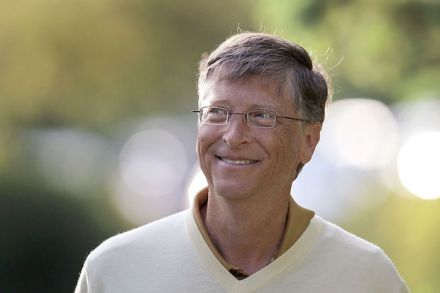
There has just been a rather meaningless debate about whether Jeff Bezos of Amazon or Bill Gates of Microsoft should be labelled ‘the richest man in the world’. Both are notionally worth more than $90 billion, although Bezos was briefly ahead by a nose after a surge in the value of his Amazon shares. It was meaningless because such unimaginable wealth ‘can’t change how many people love you or how healthy you are’ — as the world’s fourth richest man, Warren Buffett, once remarked — and can’t even buy you more fun than, say, the $5 billion fortune of our own Sir Richard Branson.

Why fudging Ireland’s Brexit border issue can only mean Troubles ahead

From our UK edition

The question of what kind of border after Brexit will exist between Northern Ireland and the Republic will, I predict, become a very thorny one indeed as negotiations crawl into the autumn. Talk of ‘putting the border in the Irish Sea’ — somehow leaving the north inside the EU for customs and immigration purposes, but cut off from European funding — was a red herring that provoked DUP tantrums, but more significant was the weekend outburst from Taoiseach Leo Varadkar. As far as his government is concerned ‘there shouldn’t be an economic border… and we’re not going to help [the British] design some sort of border that we don’t believe should exist in the first place.

Fudging Ireland’s border issue can only mean Troubles ahead

From our UK edition

The question of what kind of border after Brexit will exist between Northern Ireland and the Republic will, I predict, become a very thorny one indeed as negotiations crawl into the autumn. Talk of ‘putting the border in the Irish Sea’ — somehow leaving the north inside the EU for customs and immigration purposes, but cut off from European funding — was a red herring that provoked DUP tantrums, but more significant was the weekend outburst from Taoiseach Leo Varadkar. As far as his government is concerned ‘there shouldn’t be an economic border… and we’re not going to help [the British] design some sort of border that we don’t believe should exist in the first place.

The Jimmy Choo buyout shows that there are still plenty of big-money optimists out there

From our UK edition

What with yet another warning from the Bank of England this week about rising consumer debt, and my own prediction that we’re heading for an economic trough within 18 months, this doesn’t feel like a good time to be paying top dollar for luxury brands. When Jimmy Choo, the maker of super-expensive strappy stilettos, was put up for sale by its German majority shareholder in April at a valuation of £700 million, I revealed that I definitely wouldn’t be a bidder. But it’s being so cautious that makes me a humble columnist rather than a wheeler-dealer billionaire: US fashion brand Michael Kors is buying the shoe company for £896 million ‘after an auction that attracted a host of international bidders’.

Cheating German car-makers are good news for Brexiteers

From our UK edition

It came as no great surprise to learn that the EU competition authorities are crawling all over the three major -German car-makers, Volkswagen, BMW and Daimler, to investigate collusion via ‘secret technology working groups’ dating back to the 1990s. The most damaging allegation — reported by Der Speigel — is that the three groups colluded over the use of AdBlue, an additive that neutralises -diesel emissions, by agreeing to use small but inadequate AdBlue tanks in their cars when larger, more expensive ones might have done the job properly. (BMW denied that story, but the other two groups declined to comment.

How Game of Thrones gave Northern Ireland a £146 million boost

From our UK edition

I’m a huge fan of Game of Thrones, the epic television drama that has returned for a seventh season. This is a show that offers wisdom as well as bloody excitement — and parables for the Conservative leadership struggle, though I hope we’ll never have to watch Theresa May emulate Cersei Lannister’s naked walk of shame. It’s also a rich source of aphorisms for management gurus, emphasising as it does the importance of succession planning, the dangers of debt (especially to the merciless Iron Bank of Braavos), and the need to be prepared for a long economic winter ahead. But most of all, Game of Thrones shows how the UK’s strengths in the ‘creative industries’ can be deployed to regenerate depressed areas.

Bending London’s listing rules to win Saudi favour smacks of desperation

From our UK edition

Now here’s a tricky question. The world’s largest oil company, potentially worth six times as much as ExxonMobil and ten times as much as Royal Dutch Shell, wants to list its shares on a major stock exchange next year, and has indicated that the choice is between London and New York. The company’s initial public offering of just 5 per cent of its shares promises a $100 billion deal that will generate a fee bonanza for bankers, lawyers and PR men in the chosen marketplace, with several more tranches to come. Clearly London should go all-out to win this lucrative and prestigious piece of business, which would reconfirm the City’s pre-eminent place in the financial world.

Would a cashless world be a better place? Not necessarily

From our UK edition

Would a cashless world be a better place, morally or fiscally? Matthew Taylor, in his relatively uncontroversial review of work practices and the ‘gig economy’ published on Tuesday, proposed that the £6 billion ‘cash in hand’ economy of payment for window cleaning, gardening, leaflet distributing and similar simple tasks should be regularised and brought into the tax net through the use of apps and other digital payment platforms. Would that really be a good thing? The first point to be made is that it’s probably going to happen anyway over the next decade — at least if we go the way of Sweden. There, cards and phones are almost universally used, even for the smallest transactions.

The Taylor report is wrong to suggest cash in hand is fundamentally dishonest

From our UK edition

Would a cashless world be a better place, morally or fiscally? Matthew Taylor, in his relatively uncontroversial review of work practices and the ‘gig economy’ published on Tuesday, proposed that the £6 billion ‘cash in hand’ economy of payment for window cleaning, gardening, leaflet distributing and similar simple tasks should be regularised and brought into the tax net through the use of apps and other digital payment platforms. Would that really be a good thing? The first point to be made is that it’s probably going to happen anyway over the next decade — at least if we go the way of Sweden. There, cards and phones are almost universally used, even for the smallest transactions.

Fishing could be the scales on which Brexit success is measured

From our UK edition

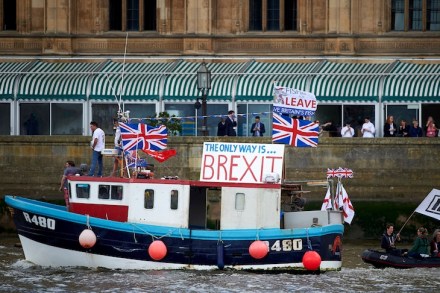
I voted Remain last year for two reasons. First, however irritating I found some aspects of the EU, I could not vote for the chaos I believed would follow a Leave victory. From the accession of Theresa May to the night of the general election, that looked like an excess of pessimism; now it looks like wise foresight. The second prong was an analysis of my own and my neighbours’ economic circumstances: in what sense was EU membership actually making us worse off? In my own case, not at all; local shops, hospitality outlets and tourist attractions, likewise. Subsidised hill farmers and fatter farming cats on the flatlands? Not really, even though broader frustration with Brussels made many of them vocal Brexiteers.

Let’s make sure our fishermen are protected against Brexit tit-for-tat

From our UK edition

I voted Remain last year for two reasons. First, however irritating I found some aspects of the EU, I could not vote for the chaos I believed would follow a Leave victory. From the accession of Theresa May to the night of the general election, that looked like an excess of pessimism; now it looks like wise foresight. The second prong was an analysis of my own and my neighbours’ economic circumstances: in what sense was EU membership actually making us worse off? In my own case, not at all; local shops, hospitality outlets and tourist attractions, likewise. Subsidised hill farmers and fatter farming cats on the flatlands? Not really, even though broader frustration with Brussels made many of them vocal Brexiteers.

The next financial crisis is coming ‘with a vengeance’, says the expert. But when?

From our UK edition

There’s a passage in Philip Larkin’s All What Jazz, the collection of his writings as the Daily Telegraph’s jazz critic, that imagines his typical readers. Husbands of ‘ageing and bitter wives they first seduced to Artie Shaw’s “Begin the Beguine”’ who take comfort from collections of ‘scratched coverless 78s in the attic’, they are ‘men whose first coronary is coming like Christmas’. The same sense of gloomy inevitability often pervades the so-called ‘dismal science’ of economic commentary, amplified by political uncertainty and traumatic events: the one thing we know for certain is that economic life is cyclical and that any run of benign signals can only ever be temporary.

Why I’m sad to see Barclays in the dock – and astonished to see John Varley there

From our UK edition

Regular readers know I have an umbilical connection to Barclays, because my father spent his working life there, I was on the payroll myself for a decade, and I wrote a book about the bank’s modern history, called Falling Eagle. So I cannot react objectively to news that the Serious Fraud Office has brought charges against Barclays’ holding company and four former executives in relation to the £7 billion fundraising from Middle Eastern investors, including Qatar Holdings, that saved it from a taxpayer bailout in 2008. On behalf of the extended family of Barclays folk, I cannot feel anything but sadness to see a once-respected institution brought into the dock.

Let’s have a dose of business sense in Downing Street before it’s too late

From our UK edition

Take no notice of the resilience of the FTSE100 index, which, having reached record pre-election highs, shed barely 100 points at its opening last Friday and recovered most of them by Monday. Dominated by multinational companies, it is being sustained by global market sentiment and the relative weakness of the pound, which makes our blue chips look good value; it is not offering a signal that investors think all is well. But do take notice of the Institute of Directors, speaking largely for mid-sized businesses, when it says that confidence among its members has crashed since polling day: from 34 per cent optimistic vs 37 per cent gloomy last month, to 20 per cent upbeat against 57 per cent ‘quite or very pessimistic’ now.

The Board of Trade won’t boost exports if business conditions aren’t right at home

From our UK edition

The last limp gambit of the Tory campaign was a promise to revive the Board of Trade. As a way of grabbing attention and diverting the ‘Corbyn’s not such a bad bloke’ tendency, you’d have to say it lacked oomph. But was it a good idea? First formally constituted in 1696, the Board itself ceased meeting long ago but the title of ‘President of the Board of Trade’ persists: Michael Heseltine relished using it when he was trade and industry secretary, and it was held before the election by the invisible Liam Fox in his role as would-be negotiator of the trade deals Britain isn’t allowed to negotiate until Brexit is complete. Now Theresa May proposes a network of nine UK trade commissioners dotted around the world.

BA’s disaster plan failed as soon as the smoke started coming out of its servers

From our UK edition

The science of ‘disaster recovery planning’, together with the related art of ‘crisis PR’, is a core discipline of 21st-century management, both in the corporate world and for agencies of the state. Business schools teach it; consultants sell it; hospitals role play it; the Cabinet Office runs a college in Yorkshire devoted to it; every company board worth its salt has a risk committee demanding bulletproof evidence of it. So a disaster on the scale of the computer breakdown that caused much distress to British Airways passengers last weekend is not just unusual: it is completely bizarre, and nothing said by BA chief executive Alex Cruz has come close to explaining it.

We’d all like to see Fred on the hook but RBS investors will be wiser to settle

From our UK edition

‘Fred Goodwin off the hook again,’ declared the Scottish Daily Record. That neatly summed up one strand of sentiment behind the RBS Shareholder Action Group’s battle for compensation for losses incurred in the bank’s £12 billion rights issue in 2008 — preceding its £45 billion taxpayer bailout, in which any remaining shareholder value was largely wiped out. Investors who believe they were misled by RBS’s directors and the rights-issue prospectus have been campaigning for their money back ever since.

Here’s who should be Mrs May’s cabinet supremo to tackle the housing shortage

From our UK edition

Who should be housing supremo in what we all assume will be Mrs May’s new administration? Brandon Lewis and Gavin Barwell, recent junior ministers with that brief, achieved nothing — if we also assume the brief was to procure an adequate supply of new homes, in the private sector or ‘social’ one, which the ‘just about managing’ could afford. The number of affordable homes built in 2015-16 was just 32,000, half that built in the previous year and the lowest since 1992. But action is coming — apparently. ‘We will fix the broken housing market,’ declares Mrs May, mustard-keen on fixing broken markets, ‘to build a new generation of council homes right across the country.

The economy isn’t all roses, but that’s no reason not to vote for Mrs May

From our UK edition

As the election campaign goes into full swing, we hear surprisingly little about the state of the UK economy — because the Tories can’t (and probably don’t need to) promise that they can make it any better in the medium term than it is now, while almost no one takes seriously what Labour has to say about it. The truth is, against the odds and for the time being, that it’s ticking along nicely enough not to be a top concern for most voters. Are we right to be so complacent? After a slowdown in growth to just 0.3 per cent in January to March, most analysts expect a pick-up in the current quarter, and the IMF now agrees with the Budget forecast of 2 per cent for 2017. The construction, services and manufacturing sectors all reported rising activity in April.

Today’s bankers don’t know how good they’ve got it

From our UK edition

‘Do you still hate bankers?’ asked an old friend whom I hadn’t seen for years, having himself made a good career in overseas banking. Not at all, I said, and I never did. It’s been my mission to shame bad ones, but there are many I have liked and admired. Among those was Julian Wathen, a Barclays overseas veteran who has died aged 93, and whose story illuminates one key fact: at least today’s bankers don’t get shot at. As manager of the Limassol branch in Cyprus in 1956, Wathen survived being shot through the neck by an Eoka gunman who, the Times reported, ‘walked into his office, fired, and then decamped without interference from anyone’. Wathen’s successor Joseph Brander was shot dead on the steps of the same branch two years later.