Martin Vander Weyer

Martin Vander Weyer

Martin Vander Weyer is The Spectator’s business editor

Who speaks for pie factories if the CBI goes down?

Three months ago I praised Tony Danker, director general of the Confederation of British Industry, for berating the government over corporate tax rises and skill shortages: at last, I said, a CBI chief con brio. But now he’s been fired following an investigation into his ‘workplace conduct’ and three other CBI staffers have been suspended over other claims, including a rape allegation. The taint is life-threatening: if members flee, the CBI won’t survive. And if it doesn’t, say critics, not much is lost – because as a lobby group for the interests of its dominant large corporate subscribers, the UK’s leading employers’ organisation was already past its sell-by date. Fair comment?


Should we really sell chocolate to Mexico?

BBC News reported Britain’s imminent accession to the Comprehensive and Progressive Agreement for Trans-Pacific Partnership behind two stories about racism in cricket, giving no suggestion that it might represent a major economic breakthrough. Rather the opposite, with emphasison the cautious official prediction that CPTPP membership will add just 0.08 per cent to UK GDP over the next 15 years. But as a former Asia-Pacific wanderer myself, I’m almost as excited as Lord Frost about the prospect of tariff-free trade with Australia, Brunei, Canada, Chile, Japan, Malaysia, Mexico, New Zealand, Peru, Singapore and Vietnam.

The next banking calamity: office blocks

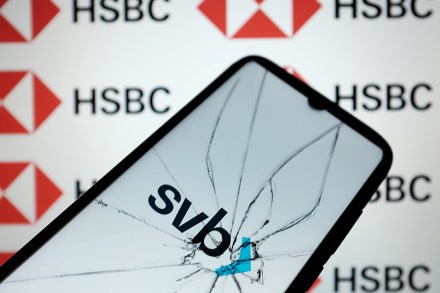
When markets are in ‘seek and destroy’ mode, like the last dragon in Game of Thrones, it’s fruitless to guess where they might attack next. Silicon Valley Bank’s excess of deposits was not in itself a signal of distress. Credit Suisse’s balance sheet was stronger than those of many other leading European banks. Deutsche Bank is a lot better-managed than Credit Suisse. But still investors swarm in search of weaklings. And their next focus – alongside the impact on bond portfolios of fast-rising interest rates, as in SVB’s case – will be the most traditional of all causes of banking crises: commercial property. America has $20 trillion worth of it.

Credit Suisse lingers still. Why?

From our US edition

If G-SIBs were a gentlemen’s club rather than a category invented by the Basel-based Financial Stability Board, Credit Suisse would have been kicked down the front steps months ago. G-SIBs are the thirty "global systemically important banks" and even within that list, Credit Suisse counted among those with the lowest "required levels of addition capital buffers": in short, regulators considered it rock-solid. But that was a judgment on its end-2021 balance sheet, not its management. Credit Suisse has been so badly run for so long — so riven by tension between the dull Swiss wealth business it ought to have been and the global player it imagined itself to be — that some of us wondered how it survived.

credit suisse

Why was Credit Suisse allowed to linger for so long?

If G-SIBs were a gentlemen’s club rather than a category invented by the Basel-based Financial Stability Board, Credit Suisse would have been kicked down the front steps months ago. G-SIBs are the 30 ‘global systemically important banks’ and even within that list, Credit Suisse counted among those with the lowest ‘required levels of addition capital buffers’: in short, regulators considered it rock-solid. But that was a judgment on its end-2021 balance sheet, not its management. Credit Suisse has been so badly run for so long – so riven by tension between the dull Swiss wealth business it ought to have been and the global player it imagined itself to be – that some of us wondered how it survived.

In defence of old-fashioned British banks

How is it possible for a bank to collapse because it holds too many customer deposits – rather than too few, or too many bad loans? That was the mystery of the sudden failure of Silicon Valley Bank, America’s 16th largest, which had seen its cash holdings double to almost $200 billion during the pandemic period because its customers, mostly high-growth tech companies, were awash with venture capital funding that they could not immediately spend. So they deposited it with SVB, which in turn invested a large portion in illiquid long-term fixed-rate mortgage bonds offering the highest yield available from a meagre range of choices.

Innovators driving economic renewal

The Spectator’s Economic Innovator of the Year Awards 2023 in partnership with Investec are open for business. We’re looking forward to hearing from entrepreneur-led high-growth businesses across the UK and we’re especially pleased to welcome back our partner Investec – an international banking, wealth and investment group with an extensive UK regional network and a deep commitment to supporting entrepreneurship. These prestigious awards, now in their sixth year, are well recognised in entrepreneur and investment communities in every region of the UK and it has been a joy to see the number and breadth of entries grow year by year.

Why not block TikTok and show Beijing we mean business?

Talk of a ‘stampede’ for the exit from the London Stock Exchange (LSE) may be overdone, but there’s clearly a problem. It was highlighted this week by the decisions of the Cambridge-based chip designer Arm to list in New York rather than London and of the Irish-based building supplies group CRH to shift its existing listing likewise. Other multinationals with US interests and tech ventures with hot prospects are rumoured to be thinking the same way. In short – the argument goes – the LSE tends to generate lower valuations than New York’s exchanges because it is populated by too many old-economy stocks and risk-averse investors, including pension funds and insurers that prefer stodgy bond portfolios to high-growth equities.

Will the Northern Ireland deal reboot inward investment?

The pound rose a cent or two against the dollar in response to the new trade deal for Northern Ireland. The FTSE 100 index rose on Monday but slid back on Tuesday, deterred by the prospect of a stronger pound, while the more domestic FTSE 250 showed a clearer uptrend. Overall, markets were cautiously positive about the Windsor Framework, not so much for its effect on movement of goods through Northern Irish ports as for its signal of calmer UK-EU trade relations ahead on a wider front. And what really matters is whether this change of tone catalyses a new wave of inward investment. The recent claim by economist Jonathan Haskel that Brexit had cost us £29 billion in lost investment and productivity provoked outrage in some quarters.

Sir Jim or the Sheikh for Man Utd? Either will be better than the Glazers

‘Greenwashing vs Sportswashing’, as Sky Sports put it, is a curious way to characterise the emerging £6 billion takeover tussle for Manchester United between industrialist Sir Jim Ratcliffe and Sheikh Jassim bin Hamad Al Thani from Qatar. The latter might feel that his emirate – contrary to expectations, shall we say – has been not just sportswashed but drycleaned, pressed and showcased on the red carpet as host of last year’s World Cup, which ended without significant disruption by human rights or anti-corruption activists. Following that with membership of the rogues’ gallery of Premier League owners – recently joined by the Public Investment Fund of Saudi Arabia as majority owner of Newcastle United – is hardly likely to win higher moral standing.

Why AstraZeneca’s new factory has gone to Dublin

‘Great news, Prime Minister, Astra-Zeneca has decided to site a new £320 million factory on Mersey-side. Your vision of the UK as a science superpower is becoming a reality.’ What a moment that would be for a Downing Street intern in search of the positive for an otherwise grim morning briefing; almost up there with ‘Great news, Prime Minister, Boris Johnson has joined a Trappist monastery’. But no, AstraZeneca decided some time ago to put its next factory in Dublin. This is the pharma multinational that was a corporate hero of the Covid vaccine rollout and is a descendant of ICI, Britain’s greatest 20th-century science company; the very model of the kind of investor Rishi Sunak hopes to attract.

Time for cautious optimism, not FTSE jubilation

What comfort can we draw from the FTSE 100 Index’s all-time high of 7905 last Friday? Yes, in a limited sense, it’s a reason to be cheerful: first, because it’s a boost to the value of pension and tracker funds; second, because it fits the current narrative of gloom receding, in which inflation has probably peaked, interest rates look set to follow soon and the Bank of England says the coming recession will be shallower than first thought. But the new top is less than a thousand points above the ‘dotcom bubble’ record of 6930 at the turn of the millennium, so no spectacular reward for long-term equity holders.

Is corporate ‘purpose’ falling out of fashion?

Does a change of chief executive at Unilever, the British-based shampoo-to-Marmite multinational, signal the demise of the fashion for corporate ‘purpose’? Alan Jope, who steps down in July, drew scorn when he declared that every brand in his portfolio should ‘stand for something more important than just making your hair shiny… or your food tastier’. His reputation was also dented by the failure of a £50 billion bid for the consumer arm of the pharma giant GSK – but it was his preaching about sustainability and purpose while Unilever’s performance continued to flag that ultimately cheesed off his shareholders.

Where Britishvolt went wrong

As a scattering of snow settles on the desolate site at Blyth in Northumberland that might have become the £3.8 billion Britishvolt battery factory, differences of opinion over the failure of this would-be flagship of the UK’s electric vehicle revolution become clearer. For Andrew Orlowski in the Daily Telegraph, it’s ‘a surprising success’, ministers having rightly declined to inject public funds into a venture with no market-ready technology, no customers and an executive team with a taste for private jets: at least ‘we know we won’t have another DeLorean to rue’.

What Boris Johnson should do next

If you were rich, foreign and globally mobile, would you choose to move to the UK? The trend, it turns out, is the other way: according to migration consultants Henley & Partners, we’ve seen a net outflow of 12,000 millionaires since 2017, with 1,500 departures last year. And it’s pretty obvious why. If tax is your top concern, a tightening of non-dom rules and the near-certain prospect of a Keir Starmer government abolishing non-dom status altogether would loom large. If you’re Asian, you may think Australia looks more welcoming. If you’re European and offended by Brexit, you might prefer Ireland or fashionable Portugal. But actually we’d be mad not to make an effort to attract well-heeled incomers, unless they’re Russian.

Early retirees: your country needs you

Bank of England chief economist Huw Pill had an unusually hard act to follow when he was appointed – after stints at Goldman Sachs, the European Central Bank and Harvard – to succeed the free-thinking Andy Haldane in 2021. Pill’s face is still not one most of us recognise, but he’s an interesting speechmaker and his latest, delivered in New York, is worth reading for its analysis of the UK’s labour market problem and its potential to prolong the current inflation. In essence, he observed, the US has a tight labour market because its economy has surpassed pre-pandemic levels and may even be ‘overheating’.

My property market predictions for 2023

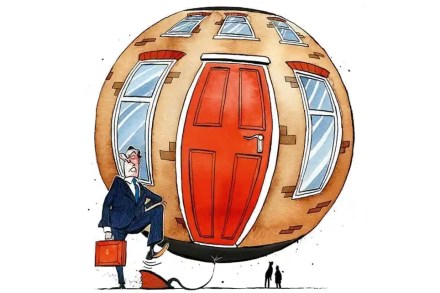
How bad can it be? Predictions for 2023 have been universally miserable. Even if inflation and interest rates stop rising, there’s no pundit out there who believes consumers, homebuyers, investors or business owners will be cracking open the Mayerling brut rosé recommended below in 12 months’ time and saying: ‘Phew, that was tough but I feel great about 2024, so pull my cracker and I’ll put my paper hat on.’ And I’m not here to buck the trend. We’re in for a long haul of budgets squeezed and projects deferred. Let me nevertheless rebut one doom strand with a plea for common sense, provoked by a Telegraph piece headed: ‘Why house prices will nosedive in 2023… Property experts predict a plunge as buyers are priced out and sellers panic.

How the Romans set an example of good business practice

‘The purpose of corporations,’ writes William Magnuson, ‘is, and always has been, to promote the common good.’ That’s a very bold claim in an era when the left is convinced that shareholder-owned limited liability companies (which is what Magnuson means by corporations) largely exist to exploit the customer, the worker and the planet for the enrichment of owners and executives; while plenty of entrenched boardroom opinion believes with Milton Friedman that the sole social responsibility of business is ‘to use its resources and engage in activities designed to increase its profits, so long as it... engages in open and free competition without deception or fraud’.

Christmas Special

65 min listen

Welcome to the special Christmas episode of The Edition! Up first: What a year in politics it has been. 2022 has seen five education secretaries, four chancellors, three prime ministers and two monarchs. But there is only one political team that can make sense of it all. The Spectator's editor Fraser Nelson, deputy political editor Katy Balls and assistant editor Isabel Hardman discuss what has surely been one of the most dramatic years in British political history (01:13). Then: Christmas is a time to spare a thought for our neighbours. While in the UK we have our own hardships, families in Ukraine are facing a Christmas under siege.

The joy of fulfilling my youthful ambition

Half a century ago this week, I left school in Scotland and travelled to Worcester College, Oxford for an interview to read politics, philosophy and economics. I can still picture the trio of scary dons who quizzed me: the grumpy political historian ‘Copper’ LeMay; the deeply obscure philosopher Michael Hinton; and Dick Smethurst, a jovial left-leaning economist, in and out of Downing Street in Harold Wilson’s years, later a popular provost of the college. It was Smethurst who kicked off with ‘What makes you mad?’, to which I gave the 1972 equivalent of a full-woke answer about human injustice – though the truth, then and now, is that I’m rarely moved to anger; more often to quizzical regret, whether at financial folly, executive greed or state incompetence.