Martin Gayford

The rare gifts of Peter Doig

From our UK edition

‘My basic intention,’ the late Patrick Caulfield once told me, ‘is to create some attractive place to be, maybe even on the edge of fantasy — warm, glowing, but often, by use, rather seedy.’ He frequently succeeded, as you can see from a beautifully mounted little exhibition at the Waddington Custot Gallery. It is a reminder of what a witty and inventive artist Caulfield (1936–2005) could be. Four screen prints from 1971, ‘Interior: Morning, Noon, Evening and Night’, give a virtuoso display of the visual legerdemain he could work using the simplest of props. These all have the same basic design: a window frame, consisting of thick, black lines, with a lampshade dangling in front of it.

Why was Sigmund Freud so obsessed with Egypt?

From our UK edition

Twenty years ago, I visited the ancient Egyptian city of Amarna with a party of American journalists. Even in those days this place, near Asyut on the Middle Nile, was regarded as a dodgy destination for western tourists. As a tribute to the value of an entire CBS television crew as a terrorist target, we were accompanied by a squad of heavily armed, black-clad Egyptian special forces. But the sense of daring adventure was dented when, shortly after arriving at the ruins, we were joined by a couple of intrepid Germans who had come in a taxi. The Germanic world has long been fascinated by Amarna and its ruler, the pharaoh Akhenaten — which is why many of the best finds from the place are in Berlin — and none more so than the founder of psychoanalysis.

What’s in a name? | 8 August 2019

From our UK edition

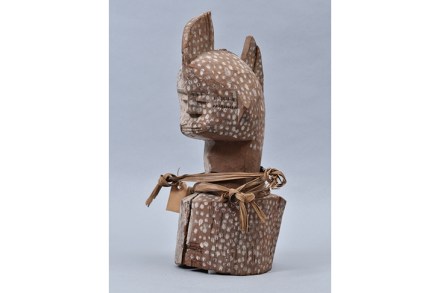
Perhaps we should blame Vasari. Ever since the publication of his Lives of the Artists, and to an ever-increasing extent, the world of art has been governed by the star system. In other words, the first question likely to be asked about a painting or sculpture is whodunit? And if the answer turns out to be, not Leonardo da Vinci — as has been suggested in the case of the controversial ‘Salvator Mundi’ — then the price tag becomes enormously smaller. Does this matter? Artist Unknown, a little exhibition at Kettle’s Yard, Cambridge, investigates the case of the anonymous work.

Original Finn

From our UK edition

Last year I found myself giving a lecture in Helsinki. When I came to the end, I asked the audience if there were any questions. There followed a period of complete silence, after which a man cleared his throat and explained that, being Finnish, it was extremely difficult for them to speak in public; they preferred to come to the podium afterwards, one by one. The Finns are a quiet people, and Helene Schjerfbeck — who has claims to be the greatest Finnish painter — is a quiet artist. But her pictures, which are on show at the Royal Academy, have qualities that mild-mannered and taciturn individuals sometimes possess: seriousness and intensity. When she does raise her voice, it’s all the more telling. A good example comes early in the exhibition.

Modern sublime

From our UK edition

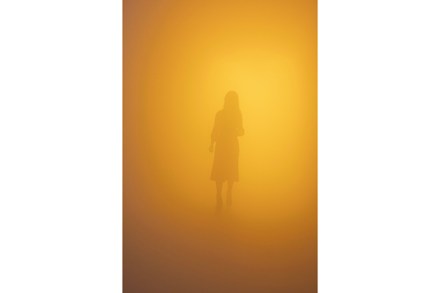
Superficially, the Olafur Eliasson exhibition at Tate Modern can seem like a theme park. To enter many of the exhibits, you have to queue. The average age of the crowds in the galleries is much lower than it might be at, say, the RA. And most visitors keep their phones permanently ready to snap a selfie — which isn’t really what the artist has in mind. He wants you to concentrate on a reaction that is internal and unphotographable. Eliasson — as the title of the show, In real life, might suggest — offers sensory experiences.

Selfie queen

From our UK edition

The selfie is, of course, a major, and to me mysterious, phenomenon of our age. The sheer indefatigability of selfie-takers, not to mention their number, is amazing. Recently, I stayed in an apartment not far from the Trevi Fountain in Rome — a selfie-magnet so powerful that not only was it surrounded by a dense crowd during daylight hours, but a small, determined knot could still be spotted late at night, doggedly snapping away in the dark under a steady drizzle. This global fixation adds an extra interest to the retrospective of work by Cindy Sherman at the National Portrait Gallery. She has been making pictures of herself, and little else, for more than four decades.

Strokes of genius

From our UK edition

In 1965 a journalist asked Paula Rego why she painted. ‘To give a face to fear,’ she replied (those were the days of the Salazar dictatorship in Portugal). But when asked the same question shortly afterwards, Rego added a qualification: ‘There’s more to it than that: I paint because I can’t stop painting.’ Rego has carried on making pictures ever since and the results can be seen in a remarkable exhibition, Obedience and Defiance, curated by Catherine Lampert at the MK Gallery, Milton Keynes. This is not quite a career retrospective — Rego will get one of those at Tate Britain in 2021. But it is the first time that I have seen so much of her life’s work laid out consecutively in one place. The effect is truly powerful.

Double diamond | 13 June 2019

From our UK edition

‘It is no easier to make a good painting,’ wrote Vincent van Gogh to his brother Theo, than it is ‘to find a diamond or a pearl.’ He was quite correct. Truly marvellous pictures are extremely rare. To make one, Vincent went on, you have to ‘stake your life’ (as he, indeed, was doing). Well, there is just such a jewel of a painting — only one by my count — in Francis Bacon: Couplings, an exhibition at Gagosian, 20 Grosvenor Hill. In some cases, the title of the show is literal. Several pictures depict two naked men in a ferocious sexual tangle. As a subject, this is perhaps still slightly daring today; it would have been astonishingly outré in 1953 when Bacon produced this dark masterpiece, ‘Two Figures’.

The possibilities of paint

From our UK edition

‘The possibilities of paint,’ Frank Bowling has observed, ‘are endless.’ The superb career retrospective of his work at Tate Britain demonstrates as no words could that he is correct, and that the obituaries of this perennial medium — so often declared moribund or defunct — are completely wrong. This presents more than half a century’s virtuoso exploration of what pigment on canvas can achieve. After his first decade of work, Bowling (born 1934) became what is called an abstract artist. But that is a vague and unsatisfactory category. His early, figurative pictures such as ‘Cover Girl’ (1966) could be labelled ‘pop’.

Double vision | 16 May 2019

From our UK edition

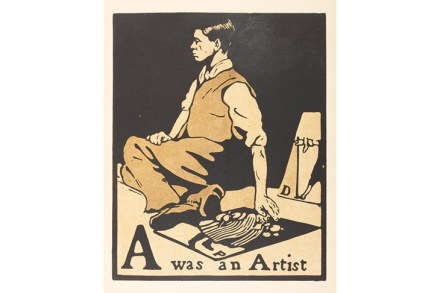
The best double acts — Laurel and Hardy, Gilbert & George, Rodgers and Hart — are often made up of two quite different personalities. So it was with the painters William Nicholson and James Pryde, who worked together under the names of J. & W. Beggarstaff. Their similarities and dissimilarities are the subject of a highly entertaining exhibition at the Fitzwilliam Museum, Cambridge. Nicholson (1872–1949) and Pryde (1866–1941) are sometimes dubbed the ‘Beggarstaff brothers’. They weren’t really siblings, but they were brothers-in-law. At the age of 21, in 1893, Nicholson eloped to Ruislip with Pryde’s sister Mabel.

Let there be light | 2 May 2019

From our UK edition

Henry Moore was, it seems, one of the most notable fresh-air fiends in art history. Not only did he prefer to carve stone outside — working in his studio felt like being in ‘prison’ — but he felt the sculpture came out better that way too, in natural light. What’s more, he believed that the finished works looked at their best in the open air. This last idea is tested in a new exhibition, Henry Moore at Houghton Hall: Nature and Inspiration — and it turns out that the artist was absolutely right. This — the latest in an enterprising series of shows at this north Norfolk mansion — is a focused selection, not a massive retrospective. Nonetheless, it prompts several unexpected conclusions.

Line dance

From our UK edition

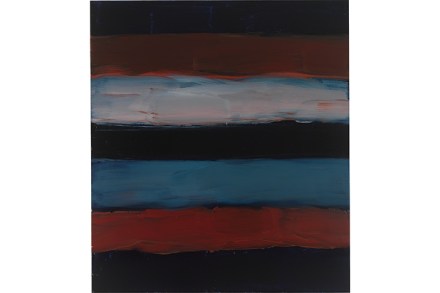
Sean Scully once told me about his early days as a plasterer’s mate. At the age of 17 he was helping a craftsman who would often accidentally drop a good deal of plaster on his youthful assistant’s head, especially after a midday break in the pub. Scully spent his own lunchtimes differently. He would roar on his scooter to the Tate Gallery, and spend the time staring at a single picture: ‘The Chair’ by Vincent van Gogh. That picture is one of two reference points in Sea Star, his beautiful exhibition at the National Gallery. Scully pays homage to it in two groups of three paintings, entitled ‘Arles Abend Vincent’ and ‘Arles Abend Deep’.

The art of repetition

From our UK edition

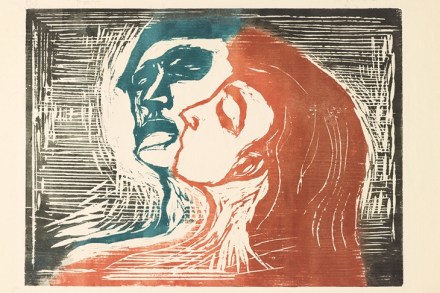
An eyewitness described Edvard Munch supervising the print of a colour lithograph in 1896. He stood in front of the stones on which the head of a masterpiece was drawn. He then closed his eyes tightly, stabbed the air with his finger, and gave his instructions. ‘Print... grey, green, blue, brown.’ Then he opened his eyes and remarked, ‘Now it’s time for a glass of schnapps.’ The whole performance, including the air of melodrama and that shot of spirits, was highly characteristic. The resulting colour lithograph, ‘The Sick Child’, is one of the artist’s masterpieces. It is on show in Edvard Munch: Love and Angst at the British Museum — an exhibition that attempts to do two jobs, and succeeds in doing one better than the other.

Sublime salvage

From our UK edition

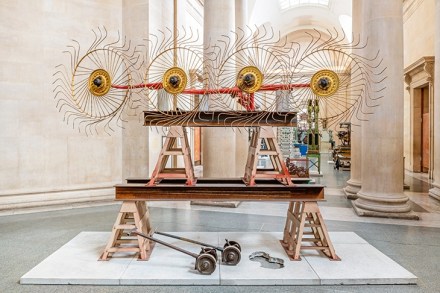
There was a moment more than 20 years ago when Bankside Power Station was derelict but its transformation into Tate Modern had not yet begun. I remember thinking, on a visit to the site, how beautiful and impressive the huge rusting generators looked — like enormous real-life sculptures by Anthony Caro. Nothing that has since been exhibited in what came to be called the Turbine Hall has looked quite so strong. A quarter of a century later, the artist Mike Nelson has reversed the process — not at Tate Modern, but at Tate Britain where he has filled the Duveen Galleries with massive pieces of redundant machinery: cement mixers, engine blocks, metal filing cabinets, drill bits, racks, scaffolding and pallets of rough, functional wood.

The shock of the nude

From our UK edition

Early in the 16th century, Fra Bartolomeo painted an altarpiece of St Sebastian for the church of San Marco in Florence. Though stuck full of arrows, the martyr was, according to Vasari, distinctly good-looking in this picture: ‘sweet in countenance, and likewise executed with corresponding beauty of person’. By and by the friars of San Marco discovered through the confessional that this image was giving rise to ‘light and evil thoughts’ among women in the congregation. It was removed and eventually sold to the King of France (who was presumably less bothered by that sort of thing). So even during the heyday of Michelangelo and Raphael depictions of human bodies without any clothes were not necessarily all about art.

Art and life

From our UK edition

Diane Arbus saw mid-20th century New York as if she was in a waking dream. Or at least that is the impression you get from the exhibition of her early photographs at the Hayward Gallery. She was attracted to people on the margins of society — or, as she roundly called them, ‘freaks’: fairground performers, assorted human oddities and individuals with non-standard bodies such as ‘Miss Makrina, a Russian Midget, in her Kitchen NYC’ (1959). Arbus famously observed of such individuals: ‘They’ve already passed their test in life. They’re aristocrats.’ However, Arbus could make just about anybody — or thing — appear unaccountably strange.

The odd couple | 31 January 2019

From our UK edition

The joint exhibition of Michelangelo Buonarroti and Bill Viola at the Royal Academy is, at first glance, an extremely improbable double act. Viola is one of the contemporary-art stars of the later 20th and early 21st centuries. He was one of the first to achieve fame in the new medium of video art, and is still its best-known exponent. While Michelangelo, as they say in showbusiness, needs no introduction. But there’s more to this bromance, across eras and continents, between a 16th-century Florentine and a contemporary Californian than might immediately be apparent. The more you think about the pairing, and follow the argument of the curator Martin Clayton, the more analogies between the two appear.

Remembrance of things past | 24 January 2019

From our UK edition

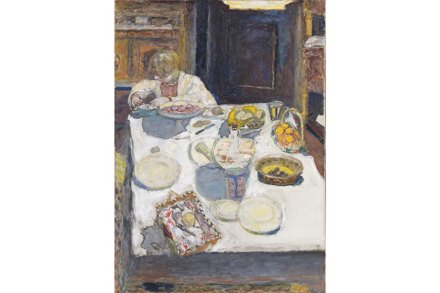
An attendant at an art gallery in France once apprehended a little old vandal, or so the story goes. He had smuggled in a palette, paints and brushes under his coat and was trying to alter one of the exhibits — a picture by Pierre Bonnard. On further questioning, it turned out that the elderly vandal was none other than Bonnard himself. Though the work in question had been ‘finished’ years before, he just couldn’t leave it alone. Bonnard (1867–1947) was a master of indecision, as a glance at just about any picture in Tate Modern’s new exhibition The Colour of Memory reveals. There are no straight lines or clear divisions in his work. Even items you might expect to be sharp —such as window frames — turn out, on closer inspection, to waver.

Fine prints

From our UK edition

Artists’ prints have been around for almost as long as the printed book. Indeed, they have similar origins in Gutenberg’s invention of the printing press and the boom in book and paper production that followed. Consequently, although the art dealer Bernard Jacobson has been around for quite a while — his gallery celebrated its 50th anniversary this year — and began as a print publisher, he arrived on the scene rather too late to have acted for Albrecht Dürer in person. Nonetheless, and for good reasons, it is with Dürer that he begins his current exhibition, Prints I wish I had published. Dürer was the first great artist to achieve fame by selling multiple editions of engravings and woodcuts rather than unique pictures.

Relative values | 10 January 2019

From our UK edition

When he knew that he was dying, Thomas Gainsborough selected an unfinished painting from some years before and set it on the easel in his studio. It was a portrait of his nephew, pupil and assistant Gainsborough Dupont, begun more than a decade earlier and set aside. This little work, which he seems to have intended as a sort of artistic last testament, also hangs at the end of the exhibition Gainsborough’s Family Album. What did he mean to tell us by making a small, intimate picture of a relative the conclusion to a career of more than 40 years? This marvellous and brilliantly conceived exhibition at the National Portrait Gallery supplies plenty of clues. Firstly, it was doubtless significant that the picture on display after his death was of someone close.