Martin Gayford

Worshipping a golden calf

From our UK edition

Martin Gayford considers whether we are in the final, pre-popping stages of an art bubble Journalists arriving for the press view of Renaissance Faces at the National Gallery last week were greeted by placards. Why, the slogans asked — you might think reasonably enough — could that institution not pay its staff a little more, given that it was contemplating paying £50 million each for a couple of Titians? They raised a point that troubles many people, including quite a few in the art world. In the early 21st century, the sums paid for works of art have climbed from the amazing, to the preposterous and finally reached the surreal. $104 million for a medium-quality Picasso was exceeded by a reported $140 million for a reasonably good-quality Jackson Pollock drip painting.

Wanted! Lost portraits

From our UK edition

Criminals can turn into detectives: consider the career of Eugène-François Vidocq, thief, convict and subsequently head of the Paris Sûreté. And, as we have seen recently in London, political journalists can metamorphose into successful politicians. So it is not all that surprising that, once in a while, an art critic should cross the line and turn curator. After many years of writing about exhibitions, for the first time I am organising one myself (or, more precisely, co-arranging it with Anne Lyles of Tate Britain). Even less amazing, I suppose, is that the job turns out to be rather different from what I had imagined.

Exhibition suspicion

From our UK edition

Martin Gayford questions the point of art shows. Should they educate or give pleasure — or both? Towards the end of June, 1814, Maria Bicknell, the wife-to-be of the painter John Constable, went to an exhibition at the British Institute on Pall Mall. It was the second retrospective exhibition ever held in London. The first, the previous year, was devoted to the work of Joshua Reynolds and had been so popular that special evening viewings by candlelight were announced. The same was done in 1814 for the follow-up, a joint show of work by Hogarth, Gainsborough and Richard Wilson. Maria managed to get a ticket for one of the candlelit evening sessions, only to be disappointed.

Bones of contention

From our UK edition

All over the world, scholarly folk look to Neil MacGregor — who writes opposite — to hold the line. All over the world, scholarly folk look to Neil MacGregor — who writes opposite — to hold the line. If the British Museum gave in and sent the Elgin Marbles air freight to Athens, a massive wave of demands for restitution would descend on the museums of the Western world. The sad fact is that very large numbers of antiquities reached our cultural institutions by means that were highly dubious. In recent decades, many have been illegally excavated and smuggled on to the art market. An ex-antiquities curator at the Getty is currently on trial in Italy on charges arising from that trade.

Flemish tour de force

From our UK edition

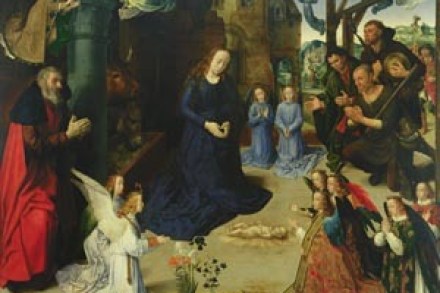
Some years ago I was walking through the closed galleries of the Uffizi with a group of journalists, when we passed the Portinari Altarpiece. In those spaces, free for once of jostling crowds, it was suddenly obvious what a wonderful work of art this mighty triptych was. With paintings, as with people, you often get an instantaneous impression — in this case of force, density, presence. In comparison, the big Botticelli pin-ups looked flimsy. Despite the surrounding competition (which is hot, to say the least), here clearly was one of the greatest pictures in Florence. And it is not a masterpiece by a Florentine, or even an Italian, but a Fleming: Hugo van der Goes.

There is a great deal to be said for living in a tip

From our UK edition

In 1864 a Talmudist named Jacob Saphir arrived at Cairo. He made his way to the district confusingly named ‘Babylon’ after a Roman fort. There he visited the ancient Synagogue of Ben Ezra, and after complex negotiations he gained access to the Geniza, or treasury. The keepers provided him with a ladder and he climbed up to the roof of a room, two and a half storeys high. Wriggling through a hole, he landed on an enormous mound of parchment, papyrus and leather bindings. He was sitting, as it later turned out, on the greatest archive surviving from any mediaeval society — letters, petitions, contracts, accounts. The Jews of Old Cairo had thrown nothing away because by tradition any document written in Hebrew letters or which might contain the name of God should be saved.

Scraps of Van Goghiana

From our UK edition

Having spent a chunk of my life living, mentally, in 1888 with Vincent van Gogh in Arles I find that I still have not completely left that place. The book is published, the paperback is out, my surrogate literary life is in another country and a different time — with John Constable and his wife-to-be in early 19th-century England. But still I find my attention sometimes wandering back to his little Yellow House in that dusty Provençal town. Here, then, are two little addenda to the story, scraps of Van Goghiana that have occurred to me since the text was finally proofread and published. One concerns the only meal that, according to the historical record, Vincent ever cooked.

Hug a hoodie and Gilbert & George

From our UK edition

I know that just now people are queuing up to propose new policies to the leader of the opposition — wind turbines, green taxes and what not — but even so I have a modest proposal for the David Cameron reform agenda. Now that he has encouraged the hugging of hoodies and smiled on single-sex partnerships, I suggest that he embrace another group traditionally loathed and reviled by some of those who count themselves natural conservatives, with both upper and lower case ‘c’. I mean, of course, contemporary artists. This is an ideal Cameron issue. If he were to seize the high ground of the art world, he would at once left-foot the Labour party, and infuriate those of his own party he wishes to annoy. He would also, not a negligible consideration, be right.

Diary – 5 August 2005

From our UK edition

I have recently returned from a fortnight spent floating around the Baltic. Because of global warming — which seems to be making the Mediterranean very hot — and cheap air travel (which seems to be making it very crowded) I have long suspected that the correct thing to do in high summer is to go north. So this year our whole family departed from Dover on a cruise to St Petersburg and back. This was not a universally popular decision. There was opposition from my daughter who wanted to know why we couldn’t go to Barbados like normal families. But off we went. One of the greatest pleasures of a holiday afloat is also the most obvious: it is wonderful just looking at the sea passing by.

Mad genius

From our UK edition

Martin Gayford examines the extraordinary lives — and deaths — of great artists and suggests that there is a link between manic depression and creativity In the summer of 1667 the architect Francesco Borromini — one of the most brilliant figures of the Italian baroque — fell into what was later described as a ‘hypochondria’, complicated by fever. ‘He twisted his mouth in a thousand horrid ways, rolled his eyes from time to time in a fearful manner, and sometimes would roar and tremble like an irate lion.’ Doctors and priests were consulted, all of whom agreed that he should never be left alone, should be prevented from working, and all efforts made to encourage him to sleep so that ‘his spirit might calm down’.

A certain something

From our UK edition

Could Caravaggio draw? That might seem a startling, even a ridiculous, question, but it expresses a doubt with which I was left by the admittedly magnificent exhibition that is about to close at the National Gallery. It is a concern that has led on to another, even more perplexing. That is, what is good drawing anyway? Of course, Caravaggio is now just about everybody’s favourite old master. One of his pictures was casually parodied on last week’s Spectator cover, in the confident expectation that most readers would get the point. For the past few months the crush in front of his paintings in the basement galleries of the Sainsbury Wing has approached the levels of crowding on commuter trains. I loved it, and praised it, too.

Fine Arts Special: The rights and wrongs of conquest

From our UK edition

France gave back artefacts looted by Napoleon. So what’s different today? asks Martin Gayford ‘Give us back our marbles’ is the cry. Passionate demands are made for the return of famous works of ancient sculpture. In response, there is equally heated resistance. Sending them back would be an offence against civilisation, it would break up a great collection. Only in a mighty museum in a sophisticated metropolis can such works truly make sense. Their surrender would be an aesthetic tragedy and — worse — national humiliation. Of course, it all sounds extremely, indeed wearyingly, familiar.

Luxury Goods: Absolutely priceless

From our UK edition

A couple of weeks ago I attended a reception in the Banqueting House on Whitehall to mark the opening of an exhibition by the American painter Cy Twombly at the Serpentine Gallery. A vast and lavish buffet was laid on tables down the length of Inigo Jones’s grandest room. Wealthy collectors drank champagne with Turner Prize-winning artists beneath Rubens’s only surviving ceiling. Lord Palumbo gave an exquisitely embarrassing speech in which — as has been widely reported — he repeatedly muddled the name of the principal guest, Cy Twombly, with that of the owner of Condé Nast, Si Newhouse (who was not there). Altogether, it was a highly satisfactory evening, and a neat demonstration of the power and prestige of art.

The Good News of Isenheim

From our UK edition

In the Christkindlesmarkt — the Christmas market — in Nuremberg at about this time of year you will see an astonishingly large array of Christmas decorations. The market stalls are full of them — carved ones, tinselly ones, glittery ones, some woven out of straw — those stalls, that is, which are not selling sausages, spiced biscuits and specially rich varieties of seasonal cake. English Christmas, as everyone knows, was imported by Prince Albert. When you visit, say, Nuremberg or Bamberg at this time of year, you feel you’ve traced it to its source. It’s a festival with roots deep in the art of the North. The spirit of Christmas, even the spirit of the Christmas decoration, seems to fill much of the art and architecture of central Europe.

Swimming pool or work of art?

From our UK edition

One of the most amusing broadcast moments of the early 1990s was a radio debate between the painter Patrick Heron and various citizens of St Ives. The subject was the proposal to build a new art gallery in the town. Several angry Cornish voices were to be heard going on about a swimming pool – the alternative project. On the other side, plaintively upholding the cause of Modernist art, were the reedy, patrician tones of the artist (a public-school voice that Heron, a staunch socialist, was very sorry he had).

In love with economic disaster

From our UK edition

We spent part of the last two weeks – as has become a family custom – mooching round Siena. And although, like Venice, the place can absorb a huge number of visitors before becoming unpleasantly crowded, we were by no means the only ones. That's because, of course, Siena is just about perfect – an intact mediaeval town, with hardly a building later than the 16th century, but a living community, not a mummified museum. It is also a prime example of what most of us love to look at when we go travelling. Namely, economic failure. Siena looks the way it does because of a series of disasters. At the beginning of the 14th century it was one of the most go-ahead places on earth, a prototype of the way we all live today.

Sensitive to the drama of light

From our UK edition

If a portrait 'happened to be on the easel', wrote Henry Angelo of Thomas Gainsborough, 'he was in the humour for a growl at the dispensation of all sublunary things. If, on the other hand, he was engaged in a landscape composition, then he was all gaiety - his imagination was in the skies.' What Angelo doubtless meant was that the painter's creativity rose like a balloon into the air. But, looking at Gainsborough's work assembled at Tate Britain in a huge retrospective (until 19 January), one might be excused for taking his words literally. Take a step back from the early paintings in the first room, and you become overwhelmingly aware of their skies.

Inspired madness of the artist

From our UK edition

The average man sitting on the Tube, according to Gilbert of Gilbert & George, sees nothing but breasts. Now, that may underestimate the range of interests of the average man (though it is entirely consistent with the stratagems used by mass-circulation newspapers to attract his attention). As for G&G, on the contrary, they find 'ideas blow up' in their brains - not very nice ones, some people say. But then, as they are proud to acknowledge, they are 'mad, crazy artists'. Artists are not, perhaps, the same as you and I. They make unexpected connections. William Blake remarked that where you might see the sun as a disc, something like a guinea, he saw a host of angels crying holy, holy, holy (so obviously ideas blew up in his mind too).