Martin Gayford

Why everyone loves Rembrandt

From our UK edition

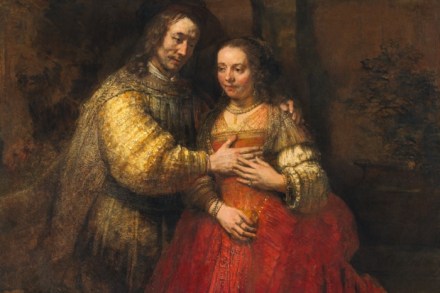
Talking of Rembrandt’s ‘The Jewish Bride’ to a friend, Vincent van Gogh went — characteristically — over the top. ‘I should be happy to give ten years of my life,’ he exclaimed, ‘if I could go on sitting here in front of this picture for a fortnight, with only a crust of dry bread for

The brilliant neurotics of the late Renaissance

From our UK edition

In many respects the average art-lover remains a Victorian, and the Florentine Renaissance is one area in which that is decidedly so. Most of us, like Ruskin, love the works of 15th-century artists of that city — Botticelli, Fra Angelico, Ghiberti — and are much less enthusiastic about those of the 16th. But a superb

Why the BBC will never match Kenneth Clark’s Civilisation

From our UK edition

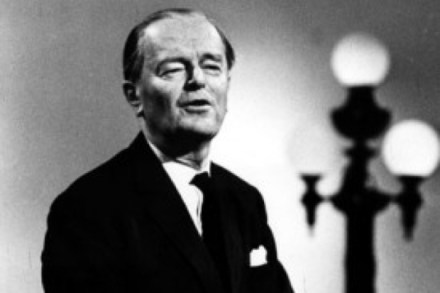
One afternoon in 1942, Kenneth Clark and his wife Jane called on two young painters for tea. The artists were John Craxton and Lucian Freud, then both around 20 and sharing a house in St John’s Wood. The visit was a success, as Craxton told me many years later, but not without its awkward moments.

Francisco de Zurbarán had a Hollywood sense of drama

From our UK edition

It seems suitable that just round the corner from the Zurbarán exhibition at the Palais des Beaux Arts is the Musée Magritte. Surrealism was in the air of 20th-century Belgium, just as much as it was in the atmosphere of Spain. And of course in many cases its leading figures — Buñuel, Dalí, René Magritte

The Sunflowers Are Mine, by Martin Bailey – review

From our UK edition

‘How could a man who has loved light and flowers so much and has rendered them so well, how could he have managed to be so unhappy?’ This was Claude Monet’s comment on seeing Van Gogh’s ‘Three Sunflowers’ (1888). There he put his finger on one of the enigmas of the Dutch painter’s tragic life.

Caspar David Friedrich, by Johannes Grave

From our UK edition

In October 1810, the poet and dramatist Heinrich von Kleist substantially rewrote a review submitted to a publication he edited, the Berliner Abendblätter. Indeed, as few editors would dare — even in those days — he transformed its tone from critical to positive. The subject was a landscape by Caspar David Friedrich, ‘The Monk by

Jerusalem Notebook

From our UK edition

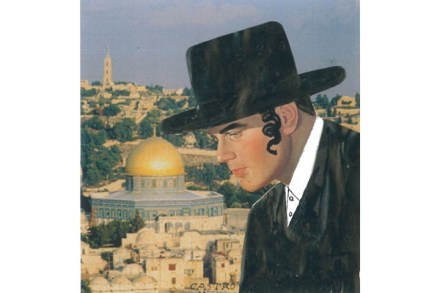
Jerusalem is a wonderful city for hat-spotting. There are the black fedoras and other varieties worn  by Hassidic and ultra-orthodox Haredi Jews, sometimes magnificent in height and breadth, and there is also an almost infinite gradation of birettas, hoods and bonnets and headgear defying easy definition worn by Christian clergy of various denominations. We had

Currents of imagery

From our UK edition

In the first book of his scientific-cum-philosophical poem ‘De rerum Natura’ — or ‘On the Nature of Things’ — Lucretius draws the reader’s attention to the power of invisible forces. The wild wind, he wrote, whips the waves of the sea, capsizes huge ships, and sends the clouds scudding; sometimes it swoops and sweeps across

21st-century pilgrims

From our UK edition

The tourists who flock to galleries in Paris, Florence and Rome are like medieval shrine-visitors, says Martin Gayford. Most don’t care about art, and are only there out of duty Last month in Rome I was standing in St Peter’s, in front of Michelangelo’s famous early masterpiece the ‘Pietá’. This, I might add, is by

Letter from Syria

From our UK edition

No question about it, the world is becoming increasingly homogenised — not only, indeed not so much, in big things such as democracy and free trade as in small. No question about it, the world is becoming increasingly homogenised — not only, indeed not so much, in big things such as democracy and free trade

A Yorkshire genius in love with his iPhone

From our UK edition

‘Who would ever have thought,’ asked David Hockney, ‘that drawing would return via the telephone?’ It is a typical Hockney point, wry, unexpected, connecting high-tech with low — and in this case undeniably true. Lately he has taken to drawing on his iPhone, with results that are luminous, and wonderfully free in draughtsmanship. ‘I must

Worshipping a golden calf

From our UK edition

Martin Gayford considers whether we are in the final, pre-popping stages of an art bubble Journalists arriving for the press view of Renaissance Faces at the National Gallery last week were greeted by placards. Why, the slogans asked — you might think reasonably enough — could that institution not pay its staff a little more,