Mark Mason

Mark Mason talks about trivia via books, articles, guided walks and the pub.

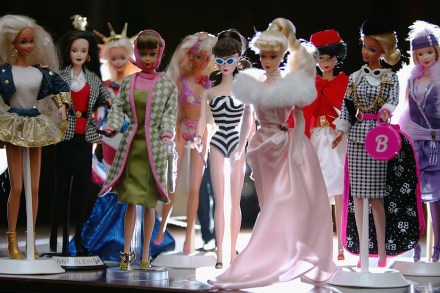
On this day: which of barbie’s body parts did parents want removed?

From our UK edition

Every weekend Spectator Life brings you doses of topical trivia – facts, figures and anecdotes inspired by the current week’s dates in history … 6 March In 1957 Ghana achieved independence from Britain. The country’s subsequent heroes have included Ferdie Ato Adoboe, who holds the world record for the fastest time to run 100 metres backwards (13.6 seconds). He has also held the world record for speed juggling a football, recording 141 touches in 30 seconds. 7 March Robert Harris (born 1957). The author prides himself on being able to put the cork back into an opened bottle of champagne. ‘The trick is to pinch the cork quickly before it’s had a chance to swell too much.

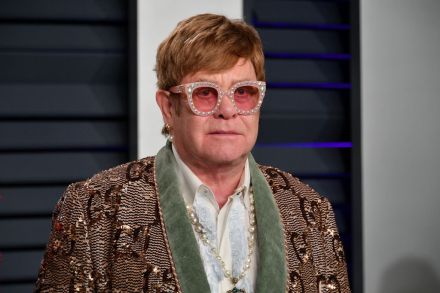
On this day: what motto is written on Elton John’s coat of arms?

From our UK edition

Every weekend the Spectator brings you doses of topical trivia – facts, figures and anecdotes inspired by the current week’s dates in history … February 27 Elizabeth Taylor (born 1932). The actress’s 2011 funeral started 15 minutes behind schedule, on her own instructions. Her spokesman confirmed that she ‘even wanted to be late for her own funeral’. February 28 In 1939 the non-existent word ‘dord’ was discovered in Webster’s New International Dictionary. It was a misprint, which had arisen several years earlier when an editor suggested including ‘D or d, cont.

On this day: what do Gordon Brown and Jack Straw have in common?

From our UK edition

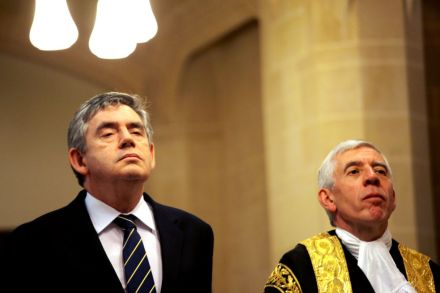
Every weekend Spectator Life brings you doses of topical trivia – facts, figures and anecdotes inspired by the current week’s dates in history. 20 February Gordon Brown (born 1951). Brown is blind in his left eye. Jack Straw is deaf in his right ear. When Brown was Prime Minister, Straw (the Lord Chancellor) sat to his left in Cabinet, meaning their awareness of each other was severely limited. Many said this was appropriate, given their strained relationship. Image: Getty 21 February Drew Barrymore (born 1975). When the actress (then six) was filming E.T., she found it impossible to look the puppet in both eyes at once, as they were so far apart. So director Steven Spielberg told her to concentrate on just one eye.

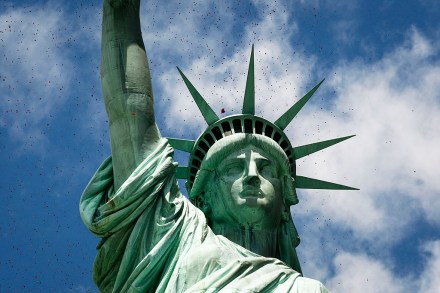
On this day: what was the Statue of Liberty’s original purpose?

From our UK edition

Every weekend Spectator Life brings you doses of topical trivia – facts, figures and anecdotes inspired by the current week’s dates in history … 13 February Peter Gabriel (born 1950). The ex-Genesis singer called each of his first four solo albums ‘Peter Gabriel’. 14 February James Bond (died 1989). The ornithologist wrote the book Birds of the West Indies, a copy of which was owned by Ian Fleming, who stole the name for his most famous character: ‘I wanted the simplest, dullest, plainest-sounding name I could find, and “James Bond” was much better than something more interesting, like “Peregrine Carruthers”.’ Daniel Craig in Skyfall (Shutterstock) 15 February Clare Short (born 1946).

On this day: how did the plimsoll get its name?

From our UK edition

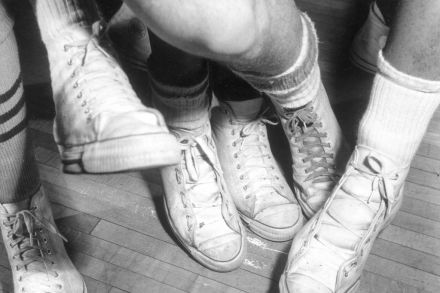
Every weekend Spectator Life brings you doses of topical trivia – facts, figures and anecdotes inspired by the current week’s dates in history … 6 February In 1918 British women over the age of 30 received the vote. The comedian Frank Skinner had a mother who always voted Labour and a father who always voted Conservative. So they agreed not to bother voting, as they’d only cancel each other out. But one election night, as it was announced on TV that the polls had just closed, Skinner’s mother said: ‘I voted.’ Skinner recalls that ‘my dad went absolutely crazy’. Suffragette Estelle Sylvia Pankhurst (Getty) 7 February In 1991 the IRA fired three mortars at 10 Downing Street.

Before Rashford: sports stars who got political

From our UK edition

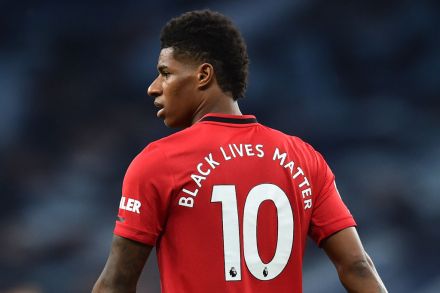
It can’t be easy, holding down a place in the Manchester United and England teams while also serving as de facto Deputy Prime Minister. But Marcus Rashford seems to be managing it. After the footballer’s high profile campaigns on free school meals and homelessness, we look at some of the other sports stars who swapped the pitch for politics. George WeahImage: Getty Rashford’s predecessors in the world of soccer haven’t always focused on Lamborghinis and nightclubs. The Brazilian Socrates founded the Corinthians Democracy movement to oppose his country’s military government, while in 2014 his compatriot Romario went one stage further and got himself elected to the Brazilian senate.

On this day: why is there a grasshopper on top of the Royal Exchange?

From our UK edition

Every weekend Spectator Life brings you doses of topical trivia – facts, figures and anecdotes inspired by the current week’s dates in history. 23 January In 1571, the Royal Exchange opened in London. The building (or rather its Victorian replacement) still bears a golden grasshopper, the emblem of the Exchange’s founder Thomas Gresham. He chose this to commemorate one of his ancestors, who as an illegitimate baby was abandoned in a Norfolk field. A local family, the Greshams, were out walking, and only found the baby because their young son chased a grasshopper into the field. They adopted the infant, calling him Roger. Thomas Gresham knew that without that grasshopper he would never have existed.

On this day: how did Monica Lewinsky escape the press?

From our UK edition

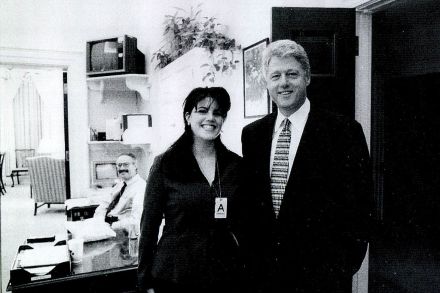
Every weekend Spectator Life brings you doses of topical trivia – facts, figures and anecdotes inspired by the current week’s dates in history. January 16  In 2006, Ellen Johnson Sirleaf became President of Liberia, and Africa’s first female elected head of state. The country got its name because it was founded in the 19th century as somewhere that freed American slaves could start their new lives. This is why Liberia’s flag so closely resembles that of the US.  Ellen Johnson Sirleaf became president of Liberia in 2006 (Getty) January 17  In 1998, news broke of Monica Lewinsky’s affair with Bill Clinton.

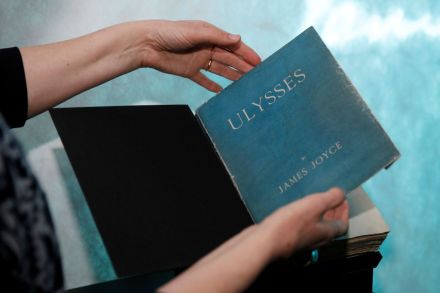
On this day: why is Ulysses set on June 16th?

From our UK edition

Every week Spectator Life brings you doses of topical trivia – facts, figures and anecdotes inspired by the current week’s dates in history … January 9 In 1806, Nelson’s funeral was held at St Paul’s. He is buried in the crypt, directly underneath the top of the cathedral’s dome. His coffin was made of wood taken from a French ship captured by his forces at the Battle of the Nile. January 10 Rod Stewart (born 1945). When the singer made his first serious money, he told his mother he wanted to buy her a huge gift. She said she didn’t want anything. He begged her. She said she’d think about it. Eventually she rang back, and told him she’d like a new bread bin. January 11 Edmund Hillary (died 2008).

Hate in a damp climate

When Ross Clark was writing this excellent novel about climate change, he couldn’t have known that by the time we read it the world would be paralyzed by a pandemic. Now that’s happened, it adds a whole new layer to The Denial’s themes of hysteria, self-righteousness and dodgy statistics. Bryan Geavis is a retired meteorologist living in the south of England in ‘the near future’. He used to work for a large oil company, though has to keep this quiet as there are prison terms for anyone who worked in the industry. A storm blows up in the North Sea which causes flooding in London.

denial

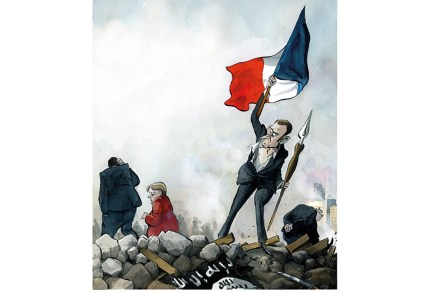
Macron alone: where are France’s allies in the fight against Islamism?

From our UK edition

36 min listen

First, France has been shaken by a series of gruesome terror attack – yet western leaders seem remarkably reluctant to support President Emannuel Macron. (01:04) Lara speaks to The Spectator's associate editor Douglas Murray and writer Ed Husain. Next, this year's US election was truly remarkable – but what was it like to report on it? Lara is joined by the editor of The Spectator's US edition Freddy Gray and Washington editor Amber Athey. (17:31) And finally, the British pub has historically been remarkably adept at circumventing restrictions on drinking – but how has it dealt with lockdown? Lara talks to journalist John Sturgis and Spectator writer Mark Mason. (27:21) Presented by Lara Prendergast. Produced by Gus Carter and Matthew Taylor.

Why crowds are so pleasing

From our UK edition

London, writes Dr Watson in the first Sherlock Holmes story, is ‘that great cesspool into which all the loungers and idlers of the Empire are irresistibly drained’. The quote sums up the thrill of a crowd, the excitement of being with lots of other people, of not knowing who or what you’ll see or hear. It’s a thrill that feels a very long way away at the moment.

Answers to The Spectator Diary 2021 Quiz

From our UK edition

In June 2020, which 85 year-old woman became British Vogue magazine’s oldest-ever cover star? – Dame Judi DenchThe first world leader Donald Trump spoke to after being elected US President was the President of Egypt. Trump informed Abdel-Fattah el-Sisi of his love of which pop group? – The Bangles. Trump said: 'I love the Bangles - you know that song, "Walk Like An Egyptian"?'Which name was given to 118 female babies in England and Wales in 2019, down from 301 the year before? The fall may have been due to technological reasons. – AlexaIn January 2020, which footballer became the highest overseas (as opposed to British) goalscorer in the history of the English Premier League?

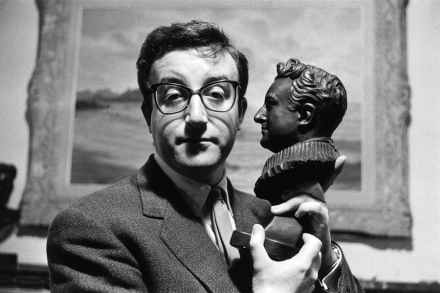
July 24th: why did Peter Sellers once turn up naked at Spike Milligan’s door?

From our UK edition

Every weekend Spectator Life brings you doses of topical trivia – facts, figures and anecdotes inspired by the current week’s dates in history … July 18 (Getty) In 1872 the Ballot Act introduced the secret ballot to UK elections. The word ‘poll’ comes from the days when votes were cast in public – it means ‘head’, as voters stood together and their heads were counted. Nick Faldo (born 1957). On a trip to Florida, the golfer asked his Swedish caddy Fanny Sunesson if she would mind buying him a toothbrush, as he’d forgotten to bring one. She returned with two, saying: ‘I did not know if you wanted the hard bristols or the soft bristols.’ July 19 In 1900 the Paris Metro opened.

Where’s the fun in football without the fans?

From our UK edition

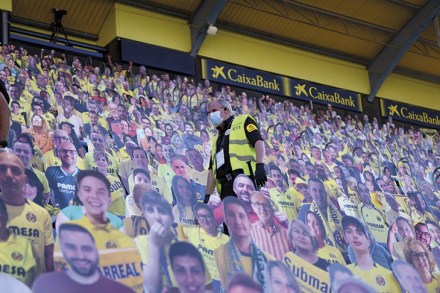
Football is back — but the fans aren’t. Covid means that clubs have to play their games behind closed doors. Which is a pity, as at dull games (far more common than pundits admit), the fans are the best thing. Their chants are works of genius. When Rio Ferdinand was banned for eight months, opposition supporters adapted Duran Duran: ‘His name is Rio, and he watches from the stand…’ After Andy Goram was diagnosed with mild schizophrenia, Kilmarnock fans sang: ‘Two Andy Gorams, there’s only two Andy Gorams…’ And when successful teams inspired renditions of ‘It’s just like watching Brazil’, fans of lesser clubs serenaded match-day police with ‘It’s just like watching The Bill’.

Canned fish, nickels and Swindon pools – the unlikely origins of band names

From our UK edition

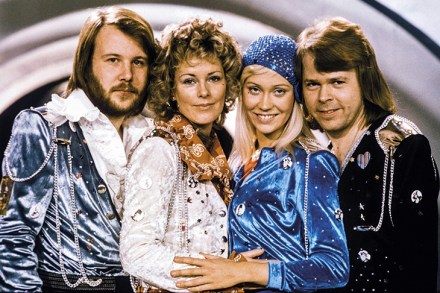
You wouldn’t have thought that Starbucks’s pricing policy could influence rock history, but that’s what happened. In the early 1990s, when Mike Kroeger was working in one of its Canadian stores, a cup of coffee cost $1.95. So Kroeger spent all day handing customers their five cents change, saying: ‘Here’s your nickel back.’ When he later joined a band, and it needed a name, he simply combined the last two words into one. Neil Tennant and Chris Lowe, on the other hand, had some friends who, because of their place of employment, were known as the ‘pet shop boys’. The band themselves don’t use the ‘the’, though of course everyone else does.

Perfectly serviceable – at points even charming: Four Kids and It reviewed

From our UK edition

This film contains flying children, time travel and a sand monster that lives under a beach — yet the most incredible thing of all is that a family get to go on holiday. They actually leave their house, drive down an actual motorway, rent an actual seaside cottage and go for actual walks, passing well within two metres of actual other people! And not once do Derbyshire police film them with a drone, then post intimidating footage of it on the internet. The movie’s producers couldn’t have known they’d be releasing their creation into a locked-down world, but now that they have, who’s to say more people won’t watch it at home than would have watched it at the cinema? We are literally a captive audience.

Audio Reads: Douglas Murray, Tanya Gold, and Mark Mason

From our UK edition

17 min listen

The Spectator is meant for sharing. But in the age of coronavirus, that might not be possible. This new podcast will feature a few of our columnists reading out their articles from the issue each week, so that you don't miss out. It's a new format, so tell us what you think at podcast@spectator.co.uk.Douglas Murray asks, where do we find purpose? Tanya Gold writes on the Cornish revolt against second-home owners, and Mark Mason's gives tips from history on working from home.

How to work from home (according to Churchill, Einstein and Napoleon)

From our UK edition

Working from home has been on the rise for years. No one expected the latest surge to happen in the way it has, but now that we’re here, what can we learn about home-working from those who have already done it? The first rule — even when times are normal — is: make sure you stay at home. Victor Hugo resisted the temptation to go out by ordering his valet to hide all his clothes. The Greek statesman Demosthenes achieved the same result by shaving half of his head. Whenever he felt the need for exercise, Cardinal Richelieu jumped over his furniture. But even at home, the scope for procrastination is endless. Any writer will tell you that the first result of a deadline is your ironing gets done. So you need a routine.

I regret my bust-up with the Bee Gees: Clive Anderson interviewed

From our UK edition

‘The really tricky thing,’ says Clive Anderson as we discuss the topic of being recognised in public, ‘is when they say, “I love your programmes —that thing you did with Margarita Pracatan…” Do I say now that that wasn’t me? Because if you let them carry on about how they loved your Postcards From…, and the Japanese game show, and then you tell them, they get very indignant and say, “Well, why did you let me give you all that praise?”’ It’s easy to understand the mistake in the abstract — indeed The Spectator’s arts editor made it himself in his email to me: ‘Could you interview Clive James for us?’ (If I could manage that, Igor, I wouldn’t be writing for a living.