Mark Mason

Mark Mason talks about trivia via books, articles, guided walks and the pub.

Abominably elusive

From our UK edition

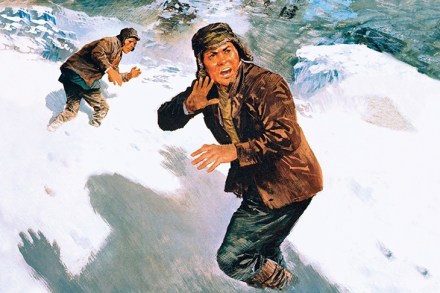
In 1969 the body of an ape-like creature, preserved in ice inside an insulated box, came to light in Minnesota. Its provenance was unclear, but the rumour went round that it was a Bigfoot, the North American equivalent of the Himalayan yeti. After two days peering through the box’s glass cover, the Belgian zoologist Bernard Heuvelmans convinced himself that the rumour was correct. His description of the Minnesota Iceman was published in the Bulletin of the Royal Belgian Institute of Natural Sciences. It included the detail that ‘when erect, the penis would certainly not have been particularly striking in its dimensions’. As if this wasn’t bad enough for the poor animal, it later transpired that its penis, along with the rest of its body, was made of latex.

Long-distance walking

From our UK edition

Long-distance walking is all the rage these days. There are all-nighters staged by charities, for instance the annual MoonWalk in London, which raises funds to fight breast cancer: participants of both sexes walk marathon and half-marathon routes wearing bras. The outfits might have changed, but when it comes to foot-slogging, long-distance has a long history. Charles Dickens liked a nocturnal ramble. He did it to combat sleeplessness, and on one particular night in October 1857 walked the 30 miles from his house in Tavistock Square to his country home in Kent.

Beagles

From our UK edition

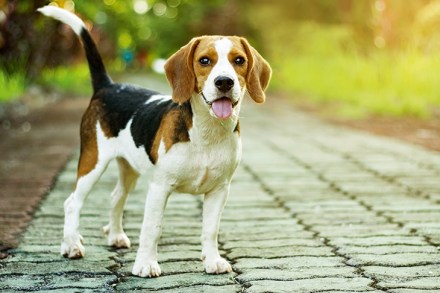
Harvey’s finest moment, he would tell you, was the chicken kiev. I’d just made the garlic butter and inserted it into the chicken breast when the phone rang. The call went on for a while, after which I returned. No chicken breast. ‘Must have put it in the fridge,’ I thought, and began to look. Only then did I glance across at the dog. His expression said: ‘You’re going to work it out in a moment, aren’t you?’ It’s the beagle’s defining characteristic: a yearning to become the widest animal known to man. ‘Taking candy from a child’ isn’t just a phrase for a beagle, it’s a way of life. Which can be a pity, as kids love them.

Read ’em and weep

From our UK edition

Subtitles are taking over the world. It’s increasingly rare these days for a video clip to be free of those irritating little bars along the bottom, rendering before your eyes what your ears are coping with quite easily, thank you very much. That interview you clicked on from Twitter? There are the speaker’s words subtitled below. That report on a news website? There are the subtitles again, spelling out everything from the presenter’s narration to the sound effects in the background. Even pop songs have their lyrics displayed. It’s driving me mad. ‘Don’t look at the subtitles,’ comes the reply. But that’s the really annoying thing: you have to look at them.

Much Wenlock

From our UK edition

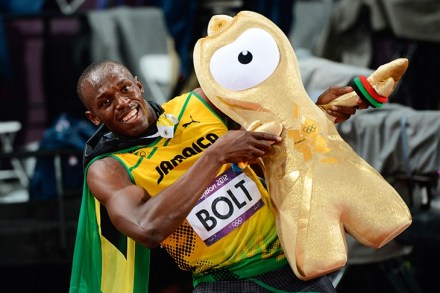
There were two mascots for the 2012 Olympic and Paralympic Games. One was called Mandeville, obviously because Stoke Mandeville’s games are seen as the precursor to the Paralympics. But why Wenlock? Ever been to Much Wenlock? You should go: not only is the Shropshire town a delightful place in itself, it was also the birthplace of the modern Olympics. Surely not, you say. Surely the International Olympic Committee was inspired by ancient Greece? Well in a more distant sense, perhaps. But the immediate catalyst was Much Wenlock’s Olympian Games, which had been happening since 1850. William Penny Brookes was the town’s doctor, and seeing the damage local men were doing to themselves by spending all their spare time in the pub, he founded the games.

The great unknowns

From our UK edition

Have you heard about the invention that cures your smartphone addiction? Whereas normally you can’t go more than a minute or two without checking your phone, this invention allows you to sit with the thing safely tucked away in your pocket or bag, not giving it a second thought. The invention is known as the ‘quiz’. You’d have thought that smartphones would have killed off this British institution. A pub quiz, with the answer to every question in the world just a fumbled, sneaky glance away? Surely cheating would become rife, rendering the whole exercise pointless? But that hasn’t happened. There’s something about a quiz that returns us to our pre-smartphone mindset, where if we didn’t know something, we didn’t know it.

Tales out of school | 5 October 2017

From our UK edition

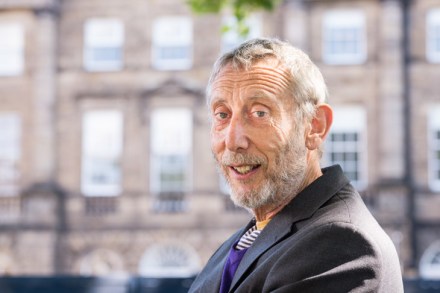
In 1952, the five-year-old Michael Rosen and his brother were taken on holiday along the Thames by their communist parents. The coronation was approaching, and the trip was an effort to ‘ignore it away’. All went well until they reached Wallingford, where Rosen’s father and a friend visited a pub, not knowing it had a TV set. They entered ‘at the very moment the Archbishop was putting the crown on the Queen’s head. The whole purpose of the punting holiday was ruined.’ His family’s political convictions are a recurring theme in Rosen’s account of his childhood and university years.

Gresham College

From our UK edition

How many people need to gather together before it becomes more likely than not that at least two of them will share a birthday? The answer might surprise you. It’s just one of the many intriguing facts that I’ve learned at Gresham College. Gresham was founded in 1597, the brainchild of Thomas Gresham, king of what’s now called the Square Mile. He had also established the Royal Exchange, and decreed that rents paid by merchants there should fund free lectures open to anyone. The arrangement continues to this day. No need to enrol or book: anyone can turn up at any lecture that takes their fancy. So next time you buy a Paul Smith T-shirt or Tiffany ring at the Exchange, congratulate yourself on your contribution to public learning.

Diary – 10 August 2017

From our UK edition

No sympathy from me for the Brits stuck in the European heatwave. I’ve never understood people who go abroad for their holidays at this time of year. OK, as this week shows, you’re not absolutely nailed on for sunshine back home. But it’s probably going to be at least pleasant, and certainly won’t tip over into the furnace-like conditions of Italy and Greece. Even France gets too hot. Why not stay and explore all those places in Britain you keep meaning to visit, and take your foreign sun in January, when you really need it? If funds or holiday allowance permit only one trip per year, copy the family I heard of whose summer break entailed getting out their passports, leaving them by the back door and walking into the garden where their sun-loungers awaited.

Southwold Sailors’ Reading Room

From our UK edition

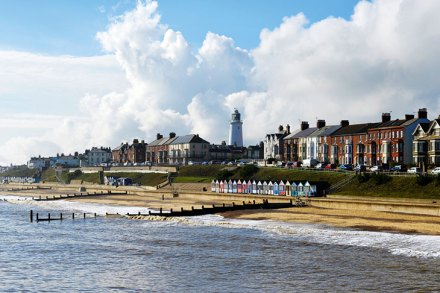
The Southwold Sailors’ Reading Room is a gorgeous bit of Inside. Like any coastal town, Southwold has an awful lot of Outside, which it can throw at you very hard and very fast. So the small redbrick building tucked away near the seafront is both charming and useful. It was built in 1864, in memory of Captain Charles Rayley. He’d been in the Royal Navy since Trafalgar, fighting pirates in Borneo and privateers in the West Indies, one of whom gave him a sabre cut across the cheek. When Rayley died his widow commissioned the Reading Room as an alternative to Southwold’s pubs, a place where sailors and fishermen could shelter from the elements without jeopardising their liver or their morals.

Kaspar the Savoy cat

From our UK edition

How to solve the problem of an unlucky 13 people at dinner? Developing a rational mind is the obvious answer, but let’s pretend to be superstitious for a moment, because there’s fun to be had. And indeed money: in 19th-century Paris men known as quatorzièmes sat around in full evening dress, waiting for last-minute gigs as the 14th guest at a meal. Some people say a pregnant woman counts as two guests, while a press story from several years ago claimed that when David Cameron and friends realised their party comprised 13, the restaurant owner fetched his Paddington Bear and sat it down with them.

Fighting talk, but little action

From our UK edition

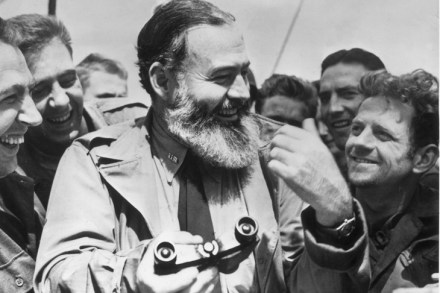
On 11 May 1937, at the Gare St-Lazare in Paris, Ernest Hemingway said goodbye to a friend who was leaving Europe. Like Hemingway, John Dos Passos had been in Spain to support the Republic in its civil war against the fascist Franco. But he became disillusioned when the Soviets (also fighting against Franco) murdered someone he knew. As the train was about to leave, Hemingway asked Dos Passos not to report the event. Dos Passos refused: what was the point of fighting a war for civil liberties if you destroyed those liberties in the process? ‘Civil liberties, shit,’ replied Hemingway. ‘Are you with us or are you against us?

My towering problem

From our UK edition

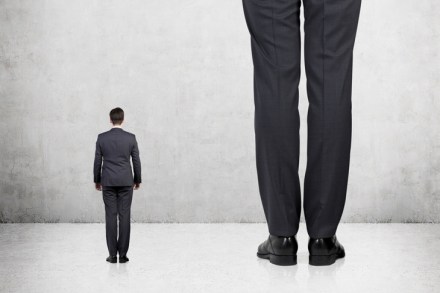
Why don’t tall people get the same sympathy as short people? Everyone feels sorry for minnows, cutting them slack when they talk loudly in meetings or get themselves elected Speaker of the House of Commons. But tall people are seen as life’s victors; the ones you want to be, the ones who get everything their own way. It just isn’t the case. I’m not actually that tall — 6ft 1in — but even I encounter problems. Cashpoints are too low, hotel beds are too short, train seats don’t have enough leg room. In the days of phone boxes, I spent every call hunched over (not enough lead). I regularly have to bend at the knees to use mirrors, and am sometimes forced to take showers kneeling down, because the head hasn’t been fixed high enough up the wall.

I pity the fools who queue to get on planes

From our UK edition

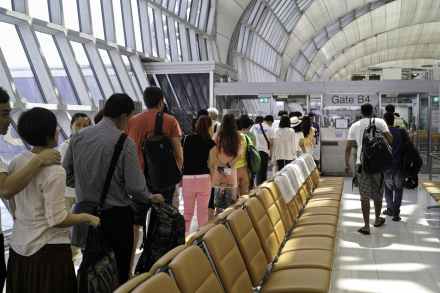
There aren’t many pleasures left in flying these days, but one of them occurs even before you’re on the plane. What’s more it’s free. It’s the smug sense of satisfaction you get from watching everyone else at the departure gate stand up and form a queue as soon as the flight is called. Bags are grabbed, elbows are readied and the entire heaving mass arranges itself into a line. People rush to be first, manoeuvring themselves past each other, desperately holding places for the rest of the family while hissing ‘come on, Brian, hurry up!’ Flights are normally so full, and seating areas so small, that the queue has to wind back on itself several times, snaking round and round and finally ending up somewhere about three gates down.

The Suffolk-Essex border

From our UK edition

You’ve already seen a picture of the Essex-Suffolk border. Assuming you’ve seen Constable’s ‘The Haywain’, that is: the Stour (the river into which the farmer has cleverly driven his cart) forms the county boundary, meaning the land on the left is Suffolk, that on the right, Essex. Years of David Beckham and jokes about girls in white stilettos had rather inclined me against Essex, so when I moved to Suffolk it was galling to discover I had a Colchester postcode. Only gradually did I realise how well the two counties work together. This part of the world is beautifully untrendy — it’s on the way to nowhere other than the North Sea, so, unlike the Cotswolds, we are spared invasion by tourist coaches.

All human life is there

From our UK edition

This book kept reminding me of Robin Williams in One Hour Photo. Just as his character spied on customers’ private lives while developing their pictures, so Chris Paling gets to know the readers at the library where he works. Unlike Williams he doesn’t follow them home at the end of the day (in fact some of the female librarians have the opposite problem), but Paling’s anonymous, functional role lets him observe without being observed. He sees the woman with two small children who takes out Is Daddy Coming Back in a Minute?, explaining sudden death to children in words they can understand. The ‘effete, shaven-headed man in a well-cut suit’ who angrily discusses his new shrink on his mobile phone.

Let’s not dance

From our UK edition

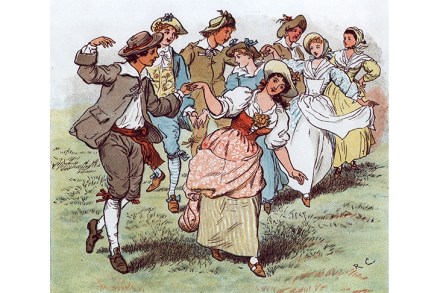
Why will people simply not believe you when you tell them that you don’t want to dance? Their reactions mimic the classic pattern of grief: first confusion, then denial, then anger. They tug at your arm like they’re trying to pull it from the socket. ‘Come on, you have to dance!’ ‘No I don’t.’ ‘Oh come on! You want to really.’ ‘No I don’t.’ ‘Yes you do! Of course you do! Everybody likes dancing!’ It’s at this stage that I sometimes get all dark on them, losing the smile, injecting a note of firmness or perhaps even menace, and pointing out that if I wanted to dance I would be dancing, but as I’m not dancing they can safely infer that I don’t want to dance.

British placenames

From our UK edition

British placenames are so good you can read the map for entertainment rather than navigation. Hardington Mande-ville, Bradford Peverell, Carlton Scroop — they sound like characters in a novel. In fact, P.G. Wodehouse often raided the atlas when writing: Lord Emsworth is named after a town in Hampshire, while a village in the same county gave Reginald Shipton--Bellinger his surname. There’s plenty of silliness out there — Great Snoring in Norfolk, Matching Tye in Essex, Fryup in Yorkshire. Some good old-fashioned smut, too: Lusty Glaze, Pant, Bell End and a couple of Twatts. Kent boasts a Thong — and it’s only a mile or so from Shorne. But enough of your sniggers. Our placenames are educational, telling the history of who was where, when.

The Spectator’s New Year’s Day quiz

From our UK edition

The new year is here, so why not kick off 2017 with the Spectator's New Year's Day pub quiz, set by Mark Mason. It's the perfect way to fix a sore head.  Just add water and paracetamol.  ‘I didn’t hit him, but it came close. For reasons best known to him, he came on unwilling to talk.’ That was said by someone who died in January 2016 about someone else who died in January 2016. Which two people? Ingvar Kamprad grew up on a farm called Elmtaryd near the village of Agunnaryd in Sweden. In 1943 he founded something. What? Where, since December 2015, have you been able to find William Shakespeare, Charles Babbage, Ada Lovelace, Anish Kapoor, the Angel of the North and the Titanic?

A curse on silky teabags

From our UK edition

Inventor of the silky teabag, take a bow. You have achieved something that until now no one would have thought possible. You have taken an item so simple, so perfect, so completely suited to its purpose that the idea of ruining it had occurred to literally no one — and you have ruined it. You have ruined the teabag. I first encountered this abomination a couple of years ago. Shoreditch, inevitably, in one of those places with a blackboard proclaiming their Instagram handle and a witty quote. Ordering a tea, I was presented with a cup, a pot of hot water and a teabag. I put the bag into the water, noticing as I did so the silky texture of its material, more like plastic than paper. It felt nice, a pleasing sensation on the fingertips.