Mark Mason

Mark Mason talks about trivia via books, articles, guided walks and the pub.

Rock solid

From our UK edition

Rod Stewart once tried to convince his mother that he had made a lot of money, and wanted to buy her a really big Christmas present. After much thought, she chose a new bread bin. Feet that stay on the ground are obviously a family trait. Rod: The Autobiography (Century, £20) is excellent, like listening to the guy in the pub who became a rock star but still drinks at the local. You don’t sell 200 million records without knowing how to connect with people, and Stewart does that just as well on the page as in his songs. The young singer sets his hair with sugar dissolved in water. He and Ronnie Wood hide behind a pot plant to escape the amorous intentions of Janis Joplin.

Bad Sex Award

From our UK edition

Loins are girded and members tumescent, for next Tuesday sees the presentation of this year’s Bad Sex Award. The Literary Review’s annual prize for the worst description of sex in a novel never fails to raise the spirits. (Yes, I know there’s a double entendre there, but at first I wrote ‘raise a titter’, so think yourself lucky.) Hoping not to follow in the footsteps of Melvyn Bragg, Norman Mailer and Rachel Johnson are, inter alia, Tom Wolfe and Craig Raine. Wolfe must be a strong contender, his Back to Blood containing the sentence: 'Now his big generative jockey was inside her pelvic saddle, riding, riding, riding, and she was eagerly swallowing it swallowing it swallowing it with the saddle’s own lips and maw.

A lifesaver’s lament

From our UK edition

It was about as English as you can get. I saved a man from drowning, and ended up annoyed that he didn’t say thank you. The setting was a disused railway walk near the meadows of my local market town in Suffolk. I was out with my dog, enjoying one of autumn’s last sunny days. The walk is heavily lined on both sides with trees, and shielded from view of what few houses there are nearby. From the left, where a river runs alongside the track (again, shielded by the trees) came cries of ‘Help! Help me! PLEASE help!’ At first I assumed some kids were messing about. But after a couple more shouts it was clear this was genuine. Pushing my way through the trees and bushes I reached the river, which at that point is about 80 ft wide.

Classic Coe

From our UK edition

You sense that writing Seb Coe: The Autobiography (Hodder, £20) must have been a pleasurable task for the Lord of the Five Rings: it’s about his favourite subject. ‘I am known for many things,’ he says. And ‘I’ve always been able to read people pretty well.’ ‘Good athletes tend not to be good ball players, but I may be the exception that proves the rule.’ A crowd gets ‘classic Coe being Coe’. He even praises his own handwriting. Other people receive plaudits, but only for bringing out the best in Seb. Chief among these is the second-most important person in Coe’s life, his late father Peter, the athlete’s trainer for much of his career. Not that the relationship was saccharine.

Write a novel in a month

From our UK edition

Could you write a novel in a month? Plenty of people around the world are trying to do just that right at the moment. November, you see, is National Novel Writing Month. Organised by a Californian outfit called the Office of Letters and Light (I know – please stick with me), the event has been running since 1999, and now answers to the moniker NaNoWriMo, which sounds like a toddler doing R2D2. The rules are simple: starting on November 1st, you have until November 30th to write a novel of at least 50,000 words. You upload it to the event’s website, which checks your word count, and assuming you’ve passed the 50k mark you’re given a certificate and a web badge. Your novel is never readable on the site: it’s deleted as soon as the wordcount is performed.

Paper talk

From our UK edition

The rainforests must be jumping for joy these days. Which is ironic, as they’ve largely got Amazon to thank for it. As the e-book continues its rise, there’ll be less and less demand from publishers for that horrible, immoral, eco-balance-wrecking stuff called ‘paper’. But before the trees get too complacent, they should remember that there’s one group of people who are still curiously insistent that our leafy friends make the ultimate sacrifice: writers. When it comes to one particular stage of the book-writing process, paper remains the only acceptable tool. It’s perfectly possible these days for a book to be conceived, written, edited, published and promoted without a single word of it ever existing on paper. Laptops and e-readers are all we need.

Just a guy who writes songs

From our UK edition

There is a famous piece of film — well, famous to those of us who know more about the Beatles than is possibly good for our health — where John Lennon encounters a fan who has broken into the star’s Berkshire estate. Clearly a lost soul, the fan is searching for meaning, signficance, some sort of connection with his idol. Lennon replies, very calmly and kindly: ‘I’m just a guy, man, who writes songs.’ Sadly, this book proves him right. The good stuff first. It looks beautiful: the cover is ‘Imagine’-white, the pages carefully designed to weave Hunter Davies’s commentary around both the letters themselves and their transcripts.

To take or not to take a pseudonym

From our UK edition

Literary pseudonyms have been on my mind lately, for a couple of reasons. The first is Salman Rushdie’s revelation that he chose ‘Joseph Anton’ as his cover name when in hiding during his fatwa, in tribute to Messrs Conrad and Chekhov. The second (and brace yourself, because this is going to hurt like pluggery) is that my own literary alter ego, Charlie Croker, has a new book out. Why do writers use pseudonyms, and how does it feel to see a book you’ve written get published with someone else’s name on the cover? Strictly speaking this isn’t what happened to Rushdie. Joseph Anton was his actual pseudonym rather than his literary one; his fictional books continued to appear under his real name, while his real life was lived under a fictional one.

How many words are there in a day?

From our UK edition

‘Write your own name a hundred times,’ T.H. White once commented, ‘and you will be bored; seven hundred times and you will be exasperated; seven thousand times, and your brains will be reeling in your head. Then you realize that you have only written one-tenth of a new novel.’ No surprise that White should display such a familiarity with the mathematics of writing; all authors do. At least the professional ones do – they have to. When your living depends on not missing deadlines, one question looms all the time: how many words are there in a day? Actually, assuming that White meant a name comprising one forename and one surname, he was making things slightly tougher on himself than he had to.

The Good Loo Guide

From our UK edition

Funny the ways you can learn about a book. Brian Jones of the Rolling Stones alerted me to one recently, 43 years after his death. I was at Somerset House for the exhibition of photos marking the band’s half-century, and one shot saw them leaving Heathrow Airport in 1966, bound for America. Brian, in a blazer whose stripes were quite shockingly vibrant (ten years later it would have felt perfectly at home on Ronnie Barker as he read the news), was carrying a book. A small, slim volume, its title was hidden away in a tiny font, but the photo had been blown up so large you could just make out that title: The Good Loo Guide.

Our national obsession

From our UK edition

If Britain is serious about this Olympic legacy thing, we should get ‘talking about the weather’ added to the list of official sports. We’d clean up at Rio. Strange, mind you, that we don’t actually know very much about the subject which consumes so much of our conversation. How rainclouds form, why lightning happens, where Britain’s first windmill was — that sort of thing. One man determined to put this right is Charlie Connelly. Bring Me Sunshine (Little, Brown, £12.99) is his anecdotal, layman-friendly exploration of the elements and what they do to us.

Do we need to know what a character looks like?

From our UK edition

How much attention do you pay to the physical descriptions of characters in novels? Interviewed on Five Live recently about her latest book NW, Zadie Smith said that she never really bothers with them, either as a reader or a writer. ‘Descriptions of how people look – how many of them have you read?’ she asked. ‘They go on and on. They never really add much, though. I usually pass over them.’ My initial reaction was: really? They never add much? I haven’t read NW yet, but my mind went back to The Autograph Man, Smith’s second novel. It only struck me halfway through that I didn’t know much, if anything, about the characters’ appearances, even whether they were black or white.

Knowing your onions

From our UK edition

Having fried your leeks in butter, form them into a poultice and apply it to your backside. No, not Heston Blumenthal’s latest wheeze: instead the cure for piles advocated by William Buchan, 18th-century author of Domestic Medicine, now republished as Can Onions Cure Ear-ache? (Bodleian Library, £14.99). The new title gives you a clue to Buchan’s general style (poultice again). He also recommended holding burns near a fire and rubbing salt on them, while mere bruising called for the application of cow dung. Gonorrhoea (‘the fruit of unlawful embraces’) could be defeated by rubbing mercury on the inner thigh.

A fan’s notes

From our UK edition

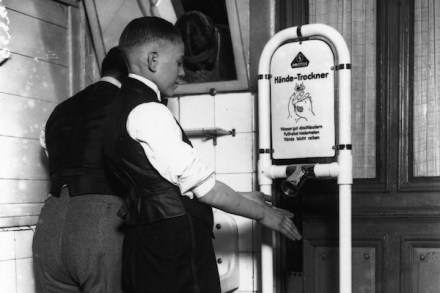
When was the last time a piece of technology made you happy? Truly happy, so satisfied with the experience that you immediately wanted to repeat it? For me it was last weekend, in a pub toilet, using an Excel Xlerator hand dryer. This unbelievably powerful bit of equipment sorted out my mitts in less time than it takes to say ‘force 12 hurricane’. I was tempted to re-wash them, simply for the fun of using it again. And I realised this is the only sort of device that gives real pleasure these days: one that does a basic job very, very well. All the kit that’s supposed to amaze us — computers, iPads, smartphones — just leaves us frustrated.

Brush up your Olympics

From our UK edition

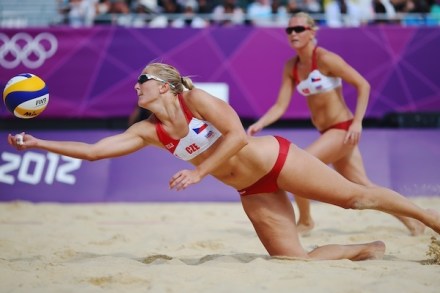
Amazing how many cycling experts came out of the woodwork last week, wasn’t it? Normally most of us couldn’t tell one end of a bike from the other, but give us an Olympic road race six days after Bradley Wiggins wins the Tour de France and all of a sudden we’ve got pelotons coming out of our backsides. With a week of these Games still to go, there’ll be plenty more chances to play the instant aficionado, so here’s your crib sheet for all the events the whole country will be talking about. For five minutes. Badminton Invented in India by the British Army, and brought back to Blighty in 1873 at a party given by the Duke of Beaufort at his country estate, hence the name.

Bricks and nectar

From our UK edition

Not many beekeepers ferry so many black bin liners in and out of their tower block that the local council suspect them of running a crack den (the same council who have missed the real crack den in the basement). Not many beekeepers transport their hives in a decommissioned London taxi, narrowly avoiding disaster when a would-be passenger tries to get in. Not many beekeepers end up having to coax their swarming bees into a cardboard box on Oxford Street, surrounded by people taking pictures and asking if they sting. Not many beekeepers, in other words, keep bees in London. Or rather, they do. The increasing popularity of the hobby in the capital has prompted Steve Benbow to produce The Urban Beekeeper, an informative and often touching book.

The British invented the Olympics

From our UK edition

Is there any chance that you might, at any point in the next three weeks, be talking to anyone? About anything, in any setting, for any length of time? Then you’d better get a copy of The British Olympics by Martin Polley. Because it won’t matter what the primary purpose of your conversation is supposed to be — you will, in addition, be obliged to talk Olympics. Just a given, I’m afraid. Accepting that, you may as well have something interesting to say. And Polley’s book narrates a very interesting story: the one of how Britain invented the modern Games.

Reading while walking

From our UK edition

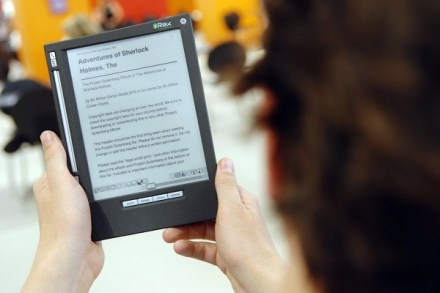
Unpredicted Consequences of the eBook Number 371: more people are reading as they walk along. I say ‘more’. Actually I’ve seen two, in as many weeks. So this is a prediction rather than an observation. But it’s one I’m pretty confident about. It struck me as I watched the people in question — both 20-something women, both reading Kindles — that a single-page e-reader isn’t that much bigger than a large smartphone. It’s perfectly common as you walk along to check your emails and texts, or even surf the net — so why not read a book? In fact you can read books on your iPhone, making the transition from one habit to the other even easier.

Letters to the author

From our UK edition

Have you ever written to an author? It’s the norm these days, or at least emailing or Tweeting them is. But it’s not that long since contacting a writer meant applying pen to paper, then stamp to envelope, then feet to pavement until you reached the postbox. Real effort, and not that many people did it. Publishing in the old days, before writers all had ‘web presences’, could be a lonely business, the only real feeling for how your book had been received coming from newspaper reviews and sales figures. Yet when contact is made there can be moments of beauty. There can also be moments of terror, and indeed of bafflement. I’ve been lucky in that my books seem to attract only positive correspondence.

A conversation across the centuries

From our UK edition

E-books are going to win. Anyone who’s seen a bus or a train carriage or a café lately knows that: Kindles everywhere, as though they’re breeding. And that’s as it should be. Stand in the way of convenient technology which people want, and you’re in the same position as every refusenik from the Luddites to the newspaper unions of the 1980s. But before the printed book takes its final bow, and retreats to its status as endearing novelty, let’s take a look at the sort of experience we’re going to miss. A friend recently came across a single volume from an 18th century Spectator series, and knowing of my scribblings for said organ and its website, gave me the book as a present.