Mark Mason

Mark Mason talks about trivia via books, articles, guided walks and the pub.

First look at the BBC’s BBC mockumentary W1A

From our UK edition

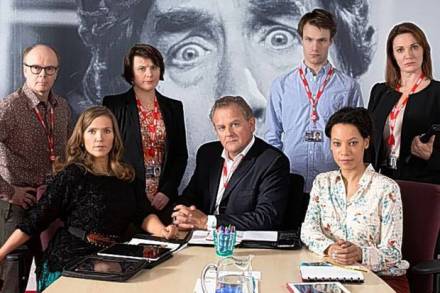
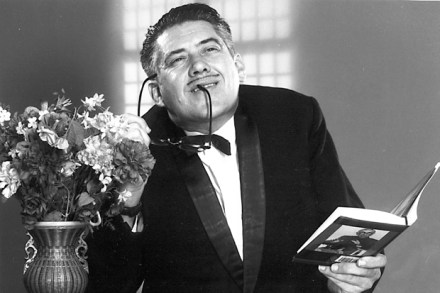
So, OK, here's the thing with W1A: it's just as brilliant as 2012. So that's all good. By which I mean the two most memorable characters from the BBC's Olympics mockumentary - Siobhan Sharpe and Ian Fletcher, whose catchphrases bookended the paragraph above - are back in the BBC's BBC mockumentary. Last night's first episode saw Fletcher (Hugh Bonneville) appointed as the corporation's new Head of Values, reunited (against his will) with brand expert Sharpe (Jessica Hynes). Their first crisis was who should present Britain's Tastiest Village, after Clare Balding had to pull out due to filming commitments on ITV's How Big Is Your Dog?

What other job lets you swear in front of your parents?

From our UK edition

There aren’t many jobs that allow a nice middle-class Jewish boy to say ‘fuck’ in front of his parents. But Jonathon Green found one: compiling slang dictionaries. This memoir of a life spent exploring the grubby margins of the English language reveals plenty about both that language and Green himself. When a man loves reading so much that he does it even while brushing his teeth, material won’t be lacking. The ‘parents’ line is Green’s stock reply to the ‘why did you choose your job’ question. But the analysis goes deeper. ‘That Jew thing’, as he calls it, features heavily.

An announcement for Tony Hall: BBC3 was already dead

From our UK edition

Two words tell you everything you need to know about today's announcement that BBC3 is to become an online-only channel: ‘spoiler alert’. The phrase is now part of the cultural language, an everyday reality for consumers of all types of media. And that's because broadcasting - the notion that we all watch the same thing at the same time – is, for huge numbers of people, dead. Not dying – dead. That's why it doesn't matter that you'll now only be able to watch BBC3 on the iPlayer. Of all Auntie's channels it's surely the best one to be pushed off the terrestrial cliff first — it's aimed at the yoot, who are tableted and broadband-ed and 4G-ed up to the gonads. The idea that they'll be bothered by not being able to watch Pramface and Snog Marry Avoid?

The comedy club theory of dictatorship

From our UK edition

Have you ever wanted to know how dictators stay in power? Try visiting a comedy club. I went to one the other night. The acts varied in quality. No one died on their backside, no one stormed it, the audience went away happy. But at a couple of points the thing happened, the thing that gives you a clue about dictators: the comedian picked on a member of the audience. In fairness they were both minor examples. One was the compère assessing how a line had gone down. Two guys in their fifties sitting at the side had laughed. ‘Wow, even you two liked that,’ said the compère. ‘Look at you, Waldorf and Statler there.’ Everyone laughed, including Waldorf and Statler, and the evening moved on.

Through It All I’ve Always Laughed, by Count Arthur Strong – review

From our UK edition

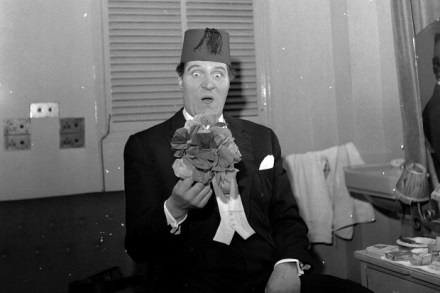
Fans of Count Arthur Strong (and yes I know he’s so Marmite you could spread him on a cheese sandwich) love the failed performer because he does what we all dream of: ranting at others to cover our own mistakes. At the same time he reminds us what a fool this makes one look, so as well as being an entertainer he’s a cautionary tale. The warning is now available in book form, Through It All I’ve Always Laughed. If you’re unfamiliar with the Count’s work you should probably sample him on radio or television first. Converts, however, will relish the revelations about what made Strong the man, the legend, the sole proprietor of the Doncaster Academy of Performance he is.

When ‘drop-dead gorgeous’ women actually dropped dead

From our UK edition

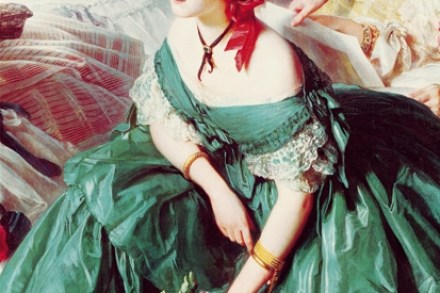
No one watches Antiques Roadshow for the antiques. Instead we’re hanging on the punter’s reaction to his three-grand valuation. ‘It was very precious to Aunt Mabel; we’d never dream of selling it,’ says the mouth. ‘Fortnight in Barbados,’ say the eyes. The Antiques Magpie by the Roadshow’s Marc Allum exhibits the same preference for stories over objects. Allum tells us that ‘drop-dead gorgeous’ comes from Victorian dresses (as in Winterhalter’s painting above) whose green dye contained arsenic, and that French forks have their crests on the back because they were laid face down on the table.

Chaps, if we want grandchildren, we need to stop the skinny jeans fad

From our UK edition

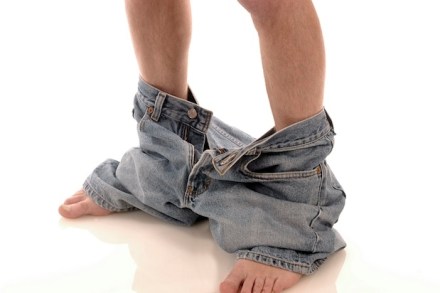
Are you a man? Do you have legs wider than the average pipe cleaner? Then this article is for you. You’ll need something to read as you sit at home, unable to go out because you’ve got no trousers. British clothes shops, you see, no longer sell ones that fit you. At first I thought the problem was me. Every pair of jeans I tried on in Gap hugged me like clingfilm. Had I put on that much weight? I tried the only other place I ever buy jeans: Fat Face. Same story. As indeed it was with their trousers, even the combats. God help the soldier sent into action wearing those things: he wouldn’t be able to bend at the knee.

Walking in Ruins, by Geoff Nicholson – review

From our UK edition

Geoff Nicholson is the Maharajah of Melancholy. The quality was there in his novels, it was there in his non-fiction book The Lost Art of Walking, and it’s there in the latter’s successor, Walking in Ruins (Harbour Books, £12.50). He savours the comfort to be gained from accepting decay as an inevitable part of life. Ruins are his muse. So he spends the book doing exactly what its title suggests. Locations include an abandoned Los Angeles zoo, now inhabited by two homeless men, a Sheffield housing estate whose road layout survives even though its houses don’t, and a desert town that’s been, er, deserted. Nicholson keeps finding shoes there, though never a matching pair. If you share his mindset, you’ll love the philosophical ruminations that result.

A modern take on Victoriana

From our UK edition

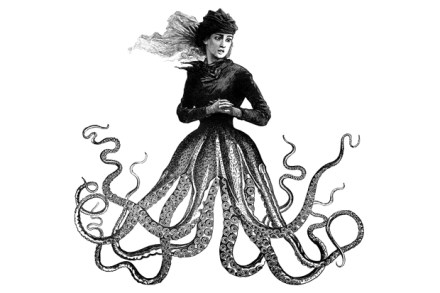
Britain is still an essentially Victorian country (see Daily Mail for details). So it’s no surprise that we keep returning to the period for inspiration. Victoriana: The Art of Revival at the Guildhall Art Gallery (until 8 December) is a collection of modern pieces channelling the age when corsets were tighter than George Osborne’s purse strings. Many of them pick up on the era’s sinister undertones. The blurb for Dan Hillier’s engraving ‘Mother’ (a woman with octopus tentacles instead of legs, above) talks of ‘prim order barely concealing a dark underbelly of animalistic impulse’. There’s also a wedding cake made from human hair and a wing-back chair adorned with stuffed ferrets.

Has anything in the recent past had a bigger effect on writers and writing than Twitter?

From our UK edition

I’ve been trying to think of something – anything – in recent years that has had a bigger effect on the working day of the average writer than Twitter. And I can’t. Writing, for just about everyone who does it professionally, is the act of minimising your number of excuses for not writing. Nigel Farndale’s recent piece in the magazine addressed the problem of views; Julian Barnes, for instance, can only work if he’s facing the blank wall of his study. It reminded me of David Niven, who saw a plane flying over as ‘a bonanza – I’ll watch that for hours’. Eventually he had to retreat to a chair facing into the right-angle of a hedge in his garden: ‘I can’t even see the sky.

In defence of binge drinking

From our UK edition

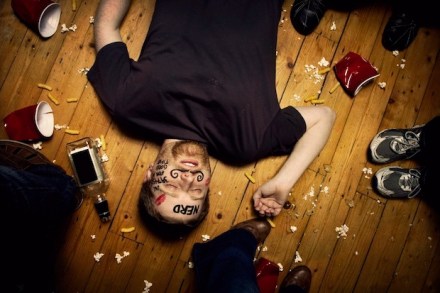
Such an ugly word, ‘binge’. Why can’t we talk about ‘spree drinking’ or ‘frolic drinking’ or ‘extravaganza drinking’? But no, it has to be ‘binge drinking’, a term loaded (pre-loaded?) with connotations. Well you can stick your connotations: it’s binge drinking for me every time. Or rather not every time. That’s the whole point: you don’t binge as a matter of habit, otherwise it’s not a binge. But the other thing you don’t do as a habit — and this is really what I’m getting at — is sit at home with a nicely acceptable Chilean merlot every night, tooting most of the bottle and patting yourself on the Boden-clad back for being totally in control.

The best book related magic trick in the world

From our UK edition

Normally you come to the Speccie Books blog, brainy bunch that you are, for high-minded literary comment. But this is August. Holiday month. A time when you simply can’t be fagged with the latest trends in Proustian scholarship. The only French words you want to hear at the moment are ‘Ambre Solaire’. What you really want from the blog right now is an utterly mind-blowing book-based trick which will amaze the friends you’re sharing that Dorset holiday cottage with. A genuinely astonishing piece of mentalism that’ll have them scratching their heads like Horrid Henry in front of the nit nurse. Well, here it comes. Get your friend to choose any two of the books in the cottage (or house, or flat, or wherever you happen to be at the time.

Would you hide the cover of your book from prying eyes on the Tube?

From our UK edition

‘Would you mind if I asked what your book is?’ She was in her late-thirties, with dark hair and a serious demeanour. Her reply to my question took a few seconds to appear, the short period in which a woman assesses whether the man sitting opposite her in a not-very-busy Tube carriage in the middle of the afternoon is or is not a weirdo. ‘Er … why?’ The words revealed a Spanish accent. They were delivered perfectly politely. ‘It’s just that I haven’t seen a book covered like that in ages.’ Since I was at school, in fact. The brown paper, which Ms Jubilee Line had folded into exquisite hospital corners and sellotaped neatly, was thick enough to completely obscure title, author’s name, cover illustration, the lot.

Land of Second Chances, by Tim Lewis – review

From our UK edition

This is a book about Rwanda. It’s a book about cycling. But it’s not, in the end, a book about Rwandan cycling. Well, it is. Tim Lewis gives us the story of Adrien Niyonshuti’s attempts to qualify for the 2012 Olympics under the tutelage of American cycling legend Jock Boyer. Adrien and his teammates are desperate to put Rwanda on the world map for something other than the 1994 genocide. But while the tale has its dramatic moments, it never really bursts into life. It’s too messy for that; as Lewis himself says, ‘situations in Africa are rarely, if ever, neat’. For instance, one of the cyclists refuses to train, being too busy pirating videos for the profitable film showings he organises.

The slow slide into senility

From our UK edition

Senility is a cunning mistress. She’s always finding new ways to twist your melon, man. The latest trick she’s playing on me is Western House Syndrome. I should point out before we go any further that I’m not talking about real senility. Still only in my early forties, I have just as strong a grip on reality as any man of that age with a young child stealing more of his sleep than he feels comfortable with. But even a relative whippersnapper like me knows the gentle failings of memory which get that little bit more noticeable every year. They’re only at the ‘have I put sugar in that tea?’ level, but still, they can make life tricky.

Last orders at the Death Café

From our UK edition

The coffee and walnut cake was excellent. As was the chocolate cake, and the tea and biscuits. The conversation was wonderful too. We talked about death. We were here, we dozen or so people in a meeting room in a small Suffolk market town on a sunny June evening, to do something British people never do: hold a conversation about the fact that we will all, in the end, die. Weather, football, the state of Kerry Katona’s finances — all these are acceptable topics for discourse. Death, on the other hand: not likely. There must be a subconscious fascination with the subject: otherwise why would Midsomer Murders get so many viewers? Yet no one discusses it openly. A new movement called Death Café has been established to challenge this.

The Authors XI, by The Authors Cricket Club – review

From our UK edition

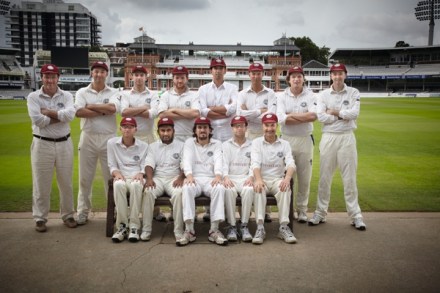
We were never going to get ‘come to the party’ or ‘a hundred and ten per cent’ from The Authors XI by The Authors Cricket Club, with a foreword by Sebastian Faulks (Bloomsbury, £16.99). Instead there’s ‘Passchendaeleian’ and ‘Ballardian’ (of pitches), ‘burst-sofa torsos’ (of themselves) and the observation that the French revolutionaries’ cry of ‘Aux armes!’ sounds uncannily like ‘howzat?!’ The team of cricketing writers tackle a chapter each, combining match reports from their 2012 season with reflections on different aspects of the game (class, broadcasting, kit, youth and so on).

Why do words and cricket go together?

From our UK edition

‘Words and cricket,’ wrote Beryl Bainbridge, ‘seem to go together.’ Why should this be? The Ashes series starting next week might not be the most eagerly anticipated of recent times, due mainly to the Aussies having developed a taste for self-destruction rivalling that of Frank Spencer. But still the words come. Broadsheets and blogs alike are bubbling with pieces about the urn. There are new books too, such as Simon Hughes’s Cricket’s Greatest Rivalry: A History of the Ashes in 10 Matches. It’s just as entertaining and informative as the ex-Middlesex bowler’s previous books, displaying his customary eye for the memorable detail.

The Astronaut Wives Club

From our UK edition

There I was, slowly and not ungrumpily coming to terms with the fact that there weren’t going to be any more decent books about the Apollo missions. Only 12 men ever walked on the Moon, and the ones that were interested in writing autobiographies had already done so. There’d been the brilliant one-volume history of the whole project (Andrew Chaikin’s A Man on the Moon), and the personal memoir of what it meant to an ordinary kid growing up at the time (Andrew Smith’s Moondust). There were the big glossy coffee-table jobs showing every crater, and Norman Mailer’s over-written but still revealing account of being at Houston and Cape Kennedy, A Fire on the Moon. What was there possibly left to write?

The Outsider, by Jimmy Connors – review

From our UK edition

As a teenager in the 1980s I liked Jimmy Connors. This meant parking my not inconsiderable jealousy that he’d once had Chris Evert as his girlfriend. Magnanimously, I agreed to do so. Not only did the star respond to a shout of ‘come on Connors’ with ‘I’m trying for Chrissakes!’, he was also, you sensed, the real thing: a genuine rebel. John McEnroe played at it, but — like Ian Botham in cricket — always had a faint air of the knob about him. Connors’s anger, he reveals in his autobiography The Outsider (Transworld, £18.99), stems from the day he was eight and saw his mother beaten up on a tennis court by two yobs who wouldn’t turn their radio down. She lost her teeth, needing hundreds of stitches in her mouth.