Mark Hollingsworth

Mark Hollingsworth is the author of ‘Londongrad – From Russia with Cash’. His new book, ‘Agents of Influence – How the KGB Subverted Western Democracies’, will be published by Oneworld this April.

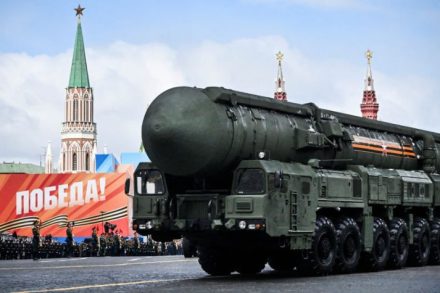
The Russian nuclear threat is looming once more

From our UK edition

It is 00.40 pm, 26 September 1983. Lieutenant-Colonel Stanislav Petrov, the duty commander in charge of monitoring the Soviet Union’s early warning satellites designed to identify American missile attacks, is carefully checking his panels. Suddenly, the alarms roar into loud action. The word 'Launch' flashes onto his screen in large red letters. For the next 15 seconds, one of the satellites reports that five American Minuteman missiles have been launched and are heading towards the Soviet Union. Based in a secret bunker hidden deep beneath the woods just outside Moscow, Petrov is transfixed and stares at the screen in disbelief and shock. The automatic order to launch in retaliation is also sent to Soviet military commanders.
Putin’s frightening fascination with the occult

From our UK edition

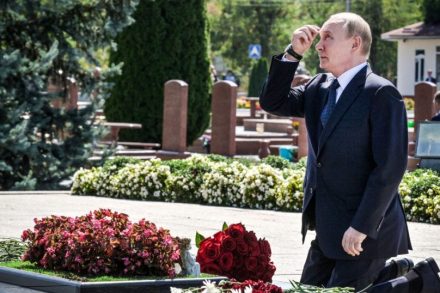
Wearing a long white scarf, military khaki pants and holding a drum and stick, Vladimir Putin smiles as he watches a shaman – a combination of a psychic and spiritual healer – play an acoustic guitar for a traditional ritual. It is 2007 and the Russian president, his close friend Sergei Shoigu, now head of Russia’s national security council, and the shaman are sitting by a fire in Tuva, a remote area of Siberia on the border with Mongolia. Known as 'a place of power' where shamanic traditions are strong, this region is home to Shoigu, a native Siberian Asiatic, who in his former role as defence minister played a crucial role in the brutal invasion of Ukraine.

The vast corruption of Ukraine’s sanctions regime

From our UK edition

Soon after Russia invaded Ukraine, a former US government official visited Kiev to inquire how he could help to supply humanitarian aid to the people on the front line. He had formed a non-profit agency, raised $2 million and provided over 70 ambulances to help Ukrainian soldiers and citizens. But during his visit he was shocked to learn about the high level of corruption.    ‘Sanctioning successful companies should not be done to clear out competitors or punish someone you don’t like’ While driving to Nikolaev, George Tuka, a former deputy minister, briefed him on how corruption was endemic and intractable in Ukraine. ‘I don’t believe you’, replied the former official, who had received high honours for his humanitarian work during the war.

Russia is still very much a security threat inside the UK

From our UK edition

At 1.30 p.m. on 7 September 1978, Georgi Markov, a Bulgarian dissident and BBC journalist, approached a bus stop at the south end of Waterloo bridge. As he gazed absent-mindedly across the Thames, office workers jostled him as they streamed past. Suddenly he felt a sharp pain on the back of his right thigh. Turning quickly, he saw a man stoop to pick up an umbrella. ‘I am sorry’, the man mumbled in a gruff foreign accent. Seconds later, a taxi pulled up, the man jumped inside and disappeared.  The pain was excruciating, and Markov was taken to St James’ hospital, Balham. As he lay in bed, the Soviet bloc defector mentioned the incident, but the doctors did not suspect foul play and thought he had a high fever. Four days later Markov died.

The Caribbean island that wants to claim a Russian super yacht

From our UK edition

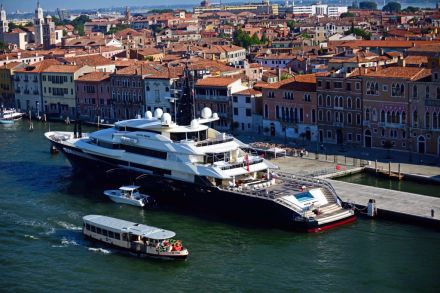
Earlier this year I asked Gretta Fenner, head of a Swiss Foundation that investigates oligarchs and financial crime, about confiscating the assets of wealthy sanctioned Russians and using the proceeds to support the Ukrainian military and rebuild the country. I was surprised by her response. ‘Confiscating assets without proof they are the proceeds of crime is akin to expropriation,’ she told me. ‘This is done by dictators not by democracies that adhere to the rule of law and international human rights. Financial support for Ukraine is vital and urgent. But if western governments undermine their own commitment to the rule of law to obtain that money, then they are violating the very principles that Ukraine is fighting to preserve.

The real origins of Putin’s war

From our UK edition

In 1992, Richard Nixon assessed the future of Russia in a remarkably prophetic interview. ‘Russia is at a crossroads’, said the former US President: It is often said the cold war is over and the West has won. But that is only half of the truth. Communism has been defeated but the ideas of freedom are now on trial. If they don’t work, there will be a reversion not to communism but to a new despotism which would pose a mortal danger to the rest of the world. It will be affected by a virus of Russian imperialism which has been a characteristic of Russian foreign policy for centuries.   Therefore, the West and the US has a great stake in freedom succeeding in Russia. If it succeeds, then China and other communist states will follow.

Putin and the power of the Orthodox church

From our UK edition

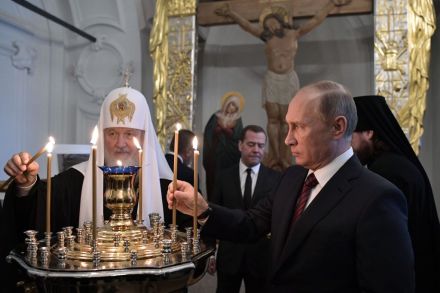
In April this year, a sombre looking Vladimir Putin attended a midnight Orthodox Easter Service in Moscow’s Christ the Saviour Cathedral. Holding a lit red candle, the Russian President crossed himself several times during the ceremony, known as the Divine Liturgy. When Father Kirill declared ‘Christ has risen’, Putin duly responded with the congregation: ‘Truly he is risen’. It was a year after the brutal invasion of Ukraine, but the Russian leader and Father Kirill showed no remorse or compassion for the suffering caused by the war. In fact, Putin and the Kremlin has exploited the support of the Orthodox Church in an attempt to give his actions a spurious philosophical and cultural ‘justification’.

Russian sanctions are hurting Putin’s enemies

From our UK edition

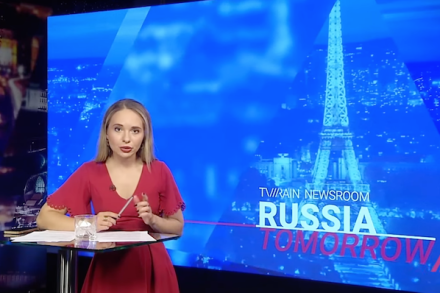
‘Ukrainians fight for their homeland, Russians fight for Putin’s ambitions’, declared the TV presenter on his YouTube channel earlier this year. This was not a Ukrainian propagandist. In fact, the commentator was Russian and talking on ‘TV Rain’, the most popular and effective opposition channel broadcasting into Russia.  In TV Rain’s final programme from Moscow before the station was forced to shut down and move abroad, the founder declared: ‘No to war. Putin cannot win the war’. In exile, the channel remained robust. ‘The war has no justification and has to be stopped’, says the editor Tikhon Dzyadko. ‘Russia must withdraw its troops from Ukraine’.

Like Putin’s Russia, Bulgaria has become a mafia state

From our UK edition

In a historic speech to the US Congress on 12 March 1947, President Truman addressed the menacing spread of Communism and the Soviet take-over of Eastern Europe. Known as the ‘Truman Doctrine’, he portrayed the battle lines for the Cold War as a struggle between autocracy and democracy – something which resonates uncannily today in Ukraine. The Soviet ‘way of life is based upon the will of a minority forcibly imposed upon the majority’, declared President Truman. ‘It relies upon terror and oppression, a controlled press and radio, fixed elections and the suppression of personal freedoms…The free peoples of the world look to us for support in maintaining their freedoms’.

What Putin could learn from Stalin

From our UK edition

On 29 August 1942, as German tanks reached the Volga river near Stalingrad, Josef Stalin consulted his most senior General, Georgy Zhukov about his strategy. Despite his impoverished background, Zhukov was intelligent, demanding and strong-willed. The general persuaded Stalin to delay counter-attacking the Nazis for a week to allow time for supplies and artillery to reach the Red Army. Five days later Stalin discovered the Nazis had almost reached the Stalingrad suburbs. Incensed, the Soviet dictator ordered General Zhukov to attack immediately. The Soviets did counter attack but Zhukov later objected and argued this tactic was not feasible. Despite his despotic instincts, Stalin accepted the general’s advice and ordered him to produce a new plan.

Is this the man who will one day take over from Putin?

From our UK edition

Boris Ratnikov, a former KGB officer and retired chief advisor to Russia's security service, gave a remarkable interview back in 2016. Ratnikov, who died in 2020, claimed his boss had penetrated and read the mind of Madeleine Albright while she was US Secretary of State in the mid-1990s. Ratnikov said his superior officer used a photograph to penetrate Albright's subconscious where he discovered her secret thoughts about the priority of removing Siberia and the Far East from Russian territory. The senior intelligence official in question was Georgy Rogozin, a top KGB officer between 1969 and 1992, who became deputy chief of president Yeltsin's security service.

Our Russian sanctions are only helping Vladimir Putin

From our UK edition

‘I don't see a single beneficiary of this crazy war’, wrote the self-made Russian billionaire Oleg Tinkov on his Instagram page on 19 April 2022, less than two months after Russia invaded Ukraine. ‘Innocent people and soldiers are dying every day. This is unacceptable’. His 634,000 followers were stunned to read his anti-war declaration: ‘The generals are waking up with a hangover and realise they have a shit army. Of course, there are morons who draw “Z” but 10 per cent of any country are morons. 90 per cent of Russians are against this war... Stop this massacre.’  The next day Putin's officials contacted the outspoken tycoon’s executives and threatened to nationalise his bank unless he sold his shares for 3 per cent of their real value.

How oligarchs use Brussels to launder their reputations

From our UK edition

When the police raided the home of the former socialist MEP and lawyer Pier Antonio Panzeri and found €500,000 in cash as part of the most serious corruption case in the European Parliament in decades, nobody noticed one of his clients was an oligarch who is the subject of the biggest civil fraud case in British legal history.   In exile the oligarch has assiduously courted European politicians to promote his defence This tawdry scandal has focused on claims that Qatar funded an influence operation in the European parliament which resulted in the arrest and imprisonment of MEPs and a former vice-president. Over €1.5 million in cash has since been discovered stashed away in flats, offices, and hotel rooms across Brussels, France and Italy.

How Prince Charles’s €1m bagman infiltrated the British establishment

From our UK edition

The Queen rarely – if ever – accepts invitations to dinner at private houses, no matter how grand. But in the summer of 2014 the oil and gas rich Gulf state of Qatar became the first ‘official partner’ of Royal Ascot and secured branding rights for the King George VI and Queen Elizabeth II stakes. The Qataris also agreed to pay for the upkeep of the Castle of Mey which is owned by the royal family. And so breaking with tradition the Queen accepted a dinner invitation and joined the ruling family of Qatar and assorted guests. The Qataris had just spent an estimated £75 million on their London mansion at Dudley House, Park Lane, and so were delighted.

How Russia’s oligarchs are evading sanctions

From our UK edition

On 25 February 2022, the day after Russia invaded Ukraine, a select group of oligarchs attended a private meeting with President Putin in the Kremlin’s St. Catherine’s Hall. It was ostensibly to discuss how the government would assist state-owned Russian banks who were about to be sanctioned by the USA, notably Sberbank and VTB Group. The deputy prime minister Andrey Belousov asked the oligarchs and corporate titans to keep working with sanctioned banks. He said that confidence in the banks was crucial for a country where historically financial chaos has destroyed savings and people’s livelihoods.

Why did it take so long to sanction Roman Abramovich?

From our UK edition

On 28 October 2016, I received an email from a well-connected former senior MI6 officer who asked me if I had any material about properties in London owned by wealthy Russians. I was a natural person to ask because I had written a book about the Russian oligarchs and had become an expert on the ownership of expensive houses and luxury apartments in central London. I then discovered that the discreet inquiry was on behalf of the National Security Council who were reviewing the activities and assets of the oligarchs in the UK, including Roman Abramovich. And so I was expecting legislative action soon.

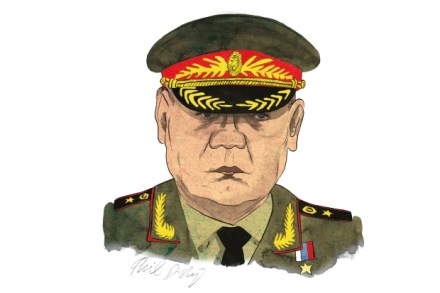
Silent strongman Sergey Shoigu is the real force behind Russia’s military aggression

From our UK edition

‘Crimea is ours,’ President Putin boasted last May. He was speaking on a documentary viewed by millions of Russians, and it was the culminating moment in the militarisation of Russia. Moscow had attracted criticism for spending unprecedented sums on its armed forces under Putin, despite a weak economy over-dependent on oil. The successful annexation of Crimea seemed a perfect vindication. Yet the huge expansion of Russia’s armed forces budget was instigated not by Putin but by the defence minister, the mysterious Sergey Shoigu. The ascendancy of the military has propelled Shoigu up the ranks of the power elite to the extent that he is now regarded as the favourite to succeed Putin.