Margareta Pagano

Leadership lessons from Beowulf

From our UK edition

Margareta Pagano on why businessmen should watch Robert Zemeckis' latest film Chief executives under pressure in these gruelling times should sneak out, or stay in, to watch Beowulf, the 2007 film starring Ray Winstone and Angelina Jolie that has just been released on DVD. They could learn what it is to be a really great hero — going to battle only if you are prepared to die. That’s the lesson which businessmen should take from watching the movie, says Mike Cook, an organisational psychologist who has coached scores of executives at Whitehead Mann, the leadership consultancy. So many businessmen or women fail because they lack the humility to admit they got things wrong, Cook says.
Riches from oily rags

From our UK edition

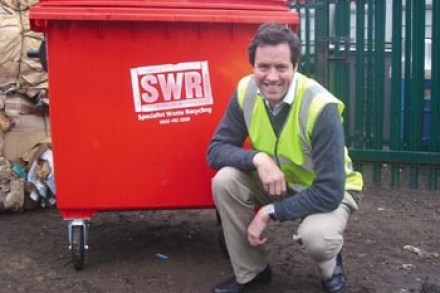
If recycling your domestic rubbish is a pain, imagine what it’s like running a car-repair workshop: batteries, bolts, bulbs, bumpers, plastics, oily rags, scrap metal and toxic liquids are just a few of the nasties. Understandably, most of Britain’s 25,000 garage owners either don’t bother — nearby rivers are handy — or they take the rubbish to landfill sites or incinerators where they pay a packet to get rid of it. Either way they are likely to be breaking the law, or to be about to break it: a new EU directive comes into force at the end of this month stipulating that all waste must be pre-treated before it even goes to the landfill.

‘Greedy? Short-termist? No, quite the opposite’

From our UK edition

In the 1880s two young American salesmen-cum-pharmacists, Silas Mainville Burroughs and Henry Wellcome, invented the ‘tabloid’. It was not a cut-down newspaper but a form of compressed pill — the name was an elision of ‘tablet’ and ‘alkaloid’ — which they imported to Britain. Helped by its sales, their company Burroughs Wellcome achieved huge success: insulin was another of their inventions, while Henry Wellcome created the first proper medical bags, giving them to Stanley for his trips to Africa and Scott for his walk to the Pole. When Sir Henry Wellcome (as he became) died in 1936, he left a fortune which he asked five trustees to distribute for the improvement of human and animal health.

Global championship heads for a ladies’ final

From our UK edition

On 20 July, one of America’s most influential businesswomen, Cathy Kinney, will swap Wall Street for the boulevards of Paris. Kinney is one of the New York Stock Exchange’s big chiefs — president and co-chief operating officer of the newly merged $20 billion NYSE–Euronext group — and she’s moving to the French bourse’s headquarters at 39 rue Cambon, where she has been charged with setting up the nerve-centre of the NYSE’s global offensive. Her boss, the ambitious NYSE chief executive John Thain, has already tucked Euronext (the pan-European bourse which encompasses Paris, Amsterdam, Lisbon and Brussels) under his formidable belt.

Market-leading eco-warriors

From our UK edition

It’s bleak, cold and nearly dusk at Kingspan’s industrial estate at Holywell in north Wales. Gene Murtagh runs up a ladder to show off a roof garden made with Kingspan’s insulated panels, which are being tested to see how much soil they can take. Roof gardens are a must-have for all self-respecting eco-warriors — like bobble hats. ‘Buildings are like your body — 70 per cent of heat is lost from the roof,’ explains the young Irish entrepreneur. He runs off again, across to the 20-kilowatt turbine to check the wind strength: lousy today, because of the cold. But the turbine, together with the solar panels on the roof of Kingspan’s visitors’ centre, is generating enough electricity to run the offices.

The wonders of modern concrete

From our UK edition

‘Look! Concrete!’ Bruno Lafont crashes his fist on the table. ‘You could put 30 tonnes on top of this table and it wouldn’t break. Tougher than steel!’ The table doesn’t look like concrete at all. The top is only a centimetre thick. The surface is painted a Tuscan tone, giving it the feel and look of polished stone. Lafont turns to his desk and bookshelves: ‘They’re also concrete. Aren’t they wonderful?’ These are a more utilitarian beige, but equally handsome. Scattered around the room are more clues to his passions: lumps of gypsum, vital for making cement; more rocks; and an enormous elephant painting, a present from the Prime Minister of Zambia. Lafont is chief executive of Lafarge, the world’s biggest cement maker.