Maia Roston

Maia Roston is a freelance journalist who has written for the Telegraph and London Standard.

The Golders Green attack is an outrage

From our UK edition

When I read the headline – 'two people stabbed in Golders Green' – my initial reaction was not one of shock. It was the grim recognition that something which should be unthinkable no longer is. Just hours ago, a man armed with a knife was seen running through the high street, targeting Jewish people in the area. Shomrim, the Jewish community security organisation, responded immediately and detained a suspect before police arrived and made an arrest. The victims are being treated by Hatzola, the same organisation whose ambulances were set on fire across the road from today's incident just last month. In parliament, Keir Starmer described the attack as 'deeply concerning'. This is not deeply concerning. This is an outrage.


Why the Golders Green arson attack is so troubling

From our UK edition

Four ambulances were set on fire in Golders Green in the early hours of the morning yesterday. They were not police vehicles or abandoned cars but emergency vehicles belonging to a Jewish volunteer ambulance service, parked near a synagogue and deliberately targeted. What is changing is not just the frequency of these incidents, but the atmosphere around them. There is a growing willingness to excuse, downplay or contextualise hostility towards Jews in a way that would be unthinkable for other groups. The result is a quiet normalisation, where anti-Semitism is not always overtly endorsed but increasingly tolerated, explained away, or allowed to pass without consequence.

How the monarchy survives the scandal of Andrew

From our UK edition

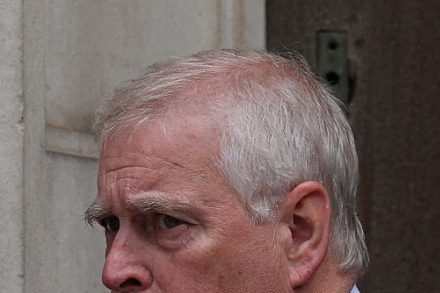
No balloons, no cake, no well-wishes from the palace – Andrew Mountbatten-Windsor’s 66th birthday was instead marked by something Britain has long awaited: the rightful application of the law. For years, public frustration has built around ill-fated interviews, settlements, and the sense that proximity to the crown offered immunity from scrutiny. For Andrew, that immunity has finally ended. This is not merely personal disgrace. It is a constitutional moment: the collapse of centuries of royal exceptionalism. For decades, the monarchy has existed in a grey zone, formally subject to law but practically protected. That illusion has finally crumbled. The story of royal accountability in Britain stretches back more than eight centuries.

Kanye West’s anti-Semitism apology isn’t enough

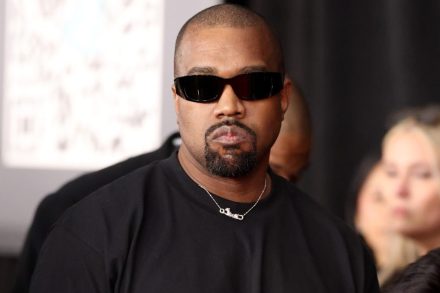
When one of the 21st century's most acclaimed music artists takes out a full-page advertisement in the Wall Street Journal to apologise for his anti-Semitic behaviour, deny that he is a Nazi, and ask for understanding as he works on himself, what do we owe him? Mercy, punishment, or neither? In his letter, titled 'To Those I’ve Hurt', Kanye West, now legally known as 'Ye', writes that he is 'not a Nazi or an anti-Semite' and that he 'loves Jewish people'. He attributes his anti-Semitic remarks, offensive use of Nazi symbolism and erratic conduct to an undiagnosed frontal-lobe injury from a 2002 car accident and to bipolar type-1 disorder that went largely untreated until recently.

Why I still wear my Star of David necklace

From our UK edition

My great-grandmother Netty died in June 2005, aged 99. I was four. That evening, my grandmother called us grandchildren into her living room and opened what looked like a small treasure chest. Out spilled her sparkling jewels. 'Take whatever you want,' she said. 'She’d have wanted you to have them.' I grabbed three things: a pair of glittering earrings, a silver bracelet and a gold Star of David encircled by a delicate band touching each of the star’s points. At four, I only cared for the earrings. The rest I tucked away for ‘less special’ occasions.  At 16, I found the star again, hidden in my jewellery box. Remembering my great-grandmother Netty, it felt significant – almost necessary that this should become my new necklace, my staple piece.