Madeline Grant

Madeline Grant

Madeline Grant is The Spectator’s assistant editor and parliamentary sketch writer.

Keir Starmer has no interest in answering Kemi Badenoch’s questions

From our UK edition

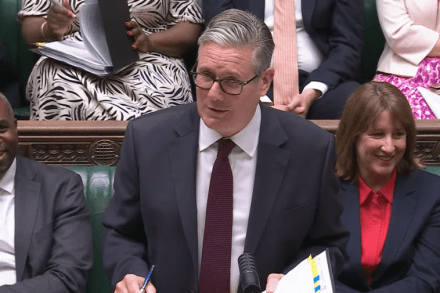
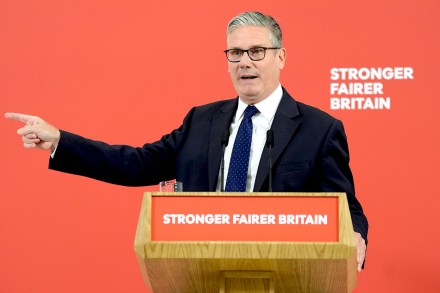
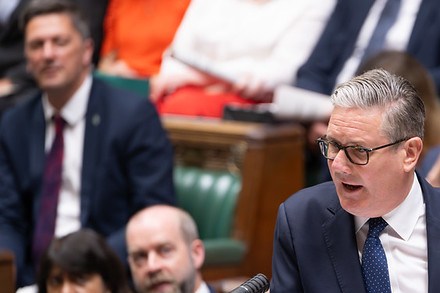
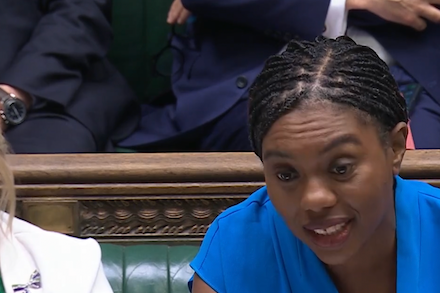
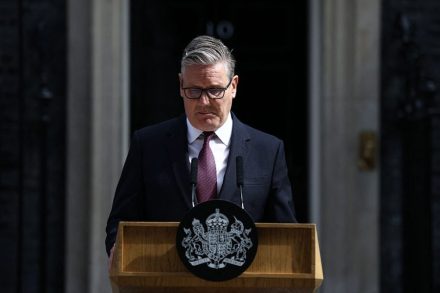
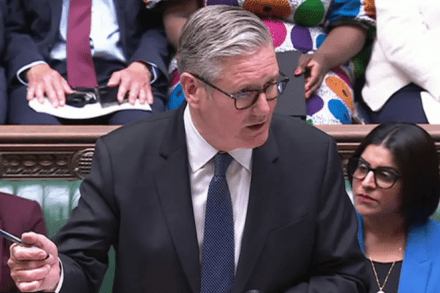
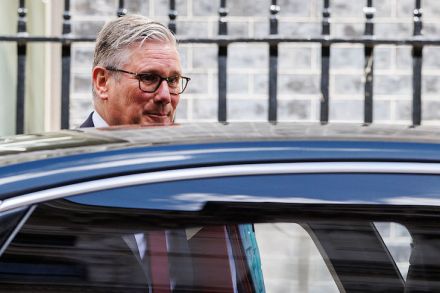
In the last 48 hours the government of Sir Keir Starmer has ended a link between the House of Lords and the Anglo-Saxon Witan by booting out the hereditary peers and beginning the process of removing the right to trial by jury which goes back to Magna Carta. He probably, genuinely, believes this to have been a good couple of days in the office. After this bout of constitutional vandalism, Sir Keir came to one thing he probably also wants to abolish but currently cannot: PMQs. Mrs Badenoch tried to ask him about fuel duty – Sir Keir, however, thought he had detected a change in Tory tone and policy on Iran and so decided to speak about that instead. The bottom line was that they were wrong and he – the great Nostradamus of foreign policy – was right.

David Lammy’s depraved new world

From our UK edition

Beamish, the living history museum in County Durham, invites visitors to ‘step into the past’. It shows how people lived in the early 20th century and attracts plenty who want to see what life was like in a simpler and – in some ways – better time. On Tuesday evening, we had a Beamish moment in the House of Commons. Sir Geoffrey Cox rose to speak on the subject of the government’s abolition of jury trials. The Tory grandee brought real expertise that is rare these days in the Commons. Unlike the numerous MPs who claim the title despite having actually just sat on HR tribunals for the Cats Protection charity or CBeebies, Sir Geoffrey is a real lawyer, a barrister with silken decades to his credit.

Is Britain still a great power? – and why Ed Miliband should go

From our UK edition

42 min listen

This week: Michael and Maddie discuss the escalating crisis in the Middle East and ask a bigger question about Britain’s place in the world – is the UK still a great power, or has the conflict exposed just how limited our influence has become? They debate whether Britain has any real choice but to follow America in foreign policy, what the war reveals about the country’s diminished military capabilities, and whether Westminster is finally confronting the reality of Britain’s global position. Also on the podcast, they examine the growing backlash against Ed Miliband’s energy agenda.

Q&A: Has the Equality Act created a ‘hierarchy of victimhood’?

From our UK edition

35 min listen

To submit your urgent questions to Michael and Maddie, visit spectator.com/quiteright. In this week’s Q&A, Michael and Maddie ask whether Britain is driving its young and ambitious abroad. As more professionals head to places like Dubai in search of opportunity, they debate whether the real problem lies not with those who leave, but with the conditions pushing them out. Why do so many talented Britons feel they cannot build a future at home – and what does that say about the state of the country? Also this week: should the Equality Act be scrapped altogether? In light of Suella Braverman’s pledge to repeal it, they consider whether the law has drifted far beyond its original purpose. And finally, they discuss which right-wing leaders around the world they admire.

China is next – Trump’s Iran strategy explained with Maurice Glasman

Iran: Why Trump’s ultimate target in this war is China – with Maurice Glasman

From our UK edition

50 min listen

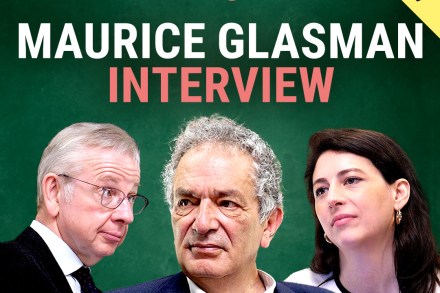
As the conflict in the Middle East escalates, what is Trump’s game plan? The Spectator’s cover piece this week, by Geoffrey Cain, argues that Trump’s ultimate target in this war is China; every dictator gone, weakens the Chinese regime. As Freddy Gray explains further on the podcast, Trump’s worldview is shaped by the events he grew up with – including then President Nixon’s visit to China in the 1970s. As well as making sense of Trump’s plan, the Spectator team take us through the dramatic events of the past week, including how Starmer appears to have alienated Britain’s allies over Iran. Plus – Lord Glasman makes the case for Reza Pahlavi, the Crown Prince of Iran, declaring he is 'devoted to the restoration of the Shah’.

Why is Keir Starmer pretending he’s a serious statesman?

From our UK edition

‘I’d like to remind members of the need for good temper and moderation in the language they use in this chamber.’ Sir Lindsay Hoyle began PMQs with this rather pathetic appeal to respectful debate. Given the current relationship between the Prime Minister and the leader of the opposition, it was a bit like a sincere request made to rain that it stop being wet.  The situation in the Middle East inevitably preoccupied questions. Why, asked Mrs Badenoch, were the US allowed to defend British interests and personnel, but the RAF were not. The Prime Minister loves these moments.

The homoeroticism of looksmaxxing

‘Did you ever think that maybe there’s more to life than being really, really, really, ridiculously good-looking?’ So asks Derek Zoolander, before pulling his trademark pout, exhibiting cheekbones that look like they were engineered by Brunel. Zoolander came out a quarter-century ago, but now looks prophetic. Ben Stiller’s gullible, self-obsessed moron would fit right in to today’s world of extreme male vanity. You must take methamphetamines, inject testosterone aged 14 and spend $35,000 on a double-jaw surgery Of course, humans, and, dare I say it, especially a certain type of man, have always been vain. However, for all the time Louis XIV or Rudolf Nureyev spent on their appearance, they did have other strings to their bows.

Iran: Trump has a plan — does Starmer? Plus the Spring Statement fallout

From our UK edition

40 min listen

This week: Michael and Maddie debate the escalating crisis in Iran and ask whether Donald Trump truly has a strategy – and whether Keir Starmer has one at all. They examine what Trump’s strikes are meant to achieve, whether regime change in Tehran is the real objective and why parts of the American right are uneasy about Israel’s influence over US foreign policy. Turning to Westminster, they assess Britain’s response. Has Starmer struck the right balance between caution and credibility – or has the crisis exposed the limits of Britain’s military strength and global influence? Finally, they review Rachel Reeves’s Spring Statement.

Misplaced confidence is Rachel Reeves’s calling card

From our UK edition

‘Mr Speaker, this government has the right economic plan for this country.’ It’s never a good sign for a sombre economic statement when your opening line gets a hearty laugh.  Rachel Reeves stood up to give a Spring Statement on the economy which might just as well have been a hostage video. The Chancellor’s delivery is redolent of the stop-start of traffic near a recent road accident. If you play certain Black Sabbath records backwards you get a more convincing and comforting delivery than Rachel Reeves talking about the economy. Reeves kept on talking about how the world was ‘increasingly dangerous’ and ‘uncertain’.

Hannah Spencer has mastered tweeslop

From our UK edition

Politics students of the future – if there are any who can see the full length of study without recourse to industrial amounts of anti-depressants – will study the Gorton and Denton by election, which saw the Greens’ Hannah Spencer beat not only Labour but also Matt Goodwin of Reform. So they all appeared in the early hours of the morning for one of the last vestigial rites of functioning British democracy: the leisure centre humiliation. A visibly graceless Mr Goodwin stood there, looking like a waxwork of the acid bath murderer. The Monster Raving Loony man looked positively normal. The main thrust of Ms Spencer’s speech was that she offered ‘hope and a chance to do things differently’.

Keir Starmer needs a reality check

From our UK edition

In the film Goodbye Lenin, a German family has to convince a fussy, old woman who is also a committed socialist that everything going on outside her window is fine and dandy when, in fact, the Iron Curtain has fallen, the entire lie on which her life was built has crumbled and that this is clear to anyone who looks outside for even five minutes. I often think that this must be the closest we can get to knowing what working for Keir Starmer is like. Sir Keir didn’t want to return to the subject, so inevitably we got yet another mention of Liz Truss Again at Prime Minister’s Questions today, Sir Keir was determined to present a narrative of perpetual economic sunshine warming a grateful and socially coherent nation, with tractor production reaching new heights.

What would Kenneth Williams make of our age?

From our UK edition

Sunday marks what would have been the 100th birthday of Kenneth Williams. It’s tempting to try to imagine what he would have been like had he lived longer, though the absurdity of our age might have been beyond even his acid observation. That’s perhaps the most interesting aspect of Williams: he can’t be imagined in the present day at all. As recent as his lifetime was, it was one so utterly bound by the 20th century as to feel distant. How so? Well, his critics would point to the Carry On films. A young and serious acting talent, coached in Shakespeare by Olivier no less, was wasted, so the argument goes, on trivial smut, consigning him to perma-residence in the world of Ted Heath and the Wombles novelty record.

Nigel Farage unveils his shadow cabinet

Reform’s succession plan – and should Palestine Action be banned?

From our UK edition

53 min listen

This week, Michael and Maddie consider Reform UK's succession plan. With Nigel Farage unveiling his new shadow cabinet, attention shifts to the bigger question: who comes after him? Is Reform preparing for life beyond its founder – and if so, who stands ready to inherit the crown? Also this week, they examine the fallout from the court’s decision to overturn the government’s attempt to proscribe Palestine Action – and ask what it means for free speech, public order and the limits of the state. They explore whether Britain is drifting toward a de facto blasphemy law, and debate claims of ‘two-tier justice’ in the handling of extremist activism. Has the government lost control of the argument — or is it simply constrained by the courts? Produced by Oscar Edmondson.

Q&A: Should Britain abolish the monarchy?

From our UK edition

27 min listen

To submit your urgent questions to Michael and Maddie, visit spectator.com/quiteright. In this week’s Q&A, Michael and Maddie ask whether Britain should abolish the monarchy. In the wake of fresh controversy surrounding members of the royal family, they debate whether scrapping the institution would be a long-overdue democratic correction – or a profound strategic mistake. Is the Crown an outdated relic, or one of Britain’s greatest diplomatic assets? Also this week: with Labour MP Dan Norris facing charges, could North East Somerset be heading for a by-election – and might Jacob Rees-Mogg stage a dramatic return to parliament? Would Reform stand aside, or is the right now locked in a battle for survival?

Keir Starmer’s PMQs cluckings convinced no one

From our UK edition

Sir Keir got probably the biggest cheer he’s had all year at Prime Minister’s Questions today. Unfortunately for him, it came from the Tory benches. After all the Mandelson revelations, it now transpires that Sir Keir gave a peerage to his former director of communications (a chocolate teapot job if ever there was one), Matthew Doyle, despite knowing that he helped campaign for a convicted sex offender. To put it simply, becoming known as the nation’s premier employer of the associates of paedophiles isn’t a fantastic way to begin your weekly bit of scrutiny at work. Is there some sort of special nonce-adjacent job centre where Sir Keir goes looking for CVs? Who does he get to fix his sink? The late Cyril Smith? Is the ghost of Sir Jimmy Savile his odd-job man?

The stakeholder class needs blowing up

From our UK edition

In February 1974, a frustrated Ted Heath, unable to achieve anything in government against constant opposition by the mighty trade unions, called an election. One basic question was front and centre of the campaign: ‘Who governs Britain?’ Soon the answer came back: ‘Not you, mate.’ In fact, it would take Margaret Thatcher’s victory to clip the power of the unions – but only after enormous political and economic risks were taken. With the collapse of public infrastructure, a lingering sense of decline, and Britain looking embarrassed (and embarrassing) on the world stage, comparisons to the 1970s abound today. Another similarity is the presence of an all-powerful caste.

Labour crisis: ‘Starmer is more like Boris than people admit’

From our UK edition

45 min listen

This week: Michael and Maddie examine the crisis engulfing the Labour party and ask whether Keir Starmer is facing a Boris-style collapse of authority. They explore what could be to come in the continued fallout from the Peter Mandelson affair, the rebellion over the release of government files, and what Starmer’s pattern of scapegoating aides reveals about his grip on power. Is this a corruption scandal – or something more damaging: a failure of judgment? Finally, they look ahead to what comes next. If Starmer’s authority is ebbing, who could replace him? From Angela Rayner to Wes Streeting – and the outsiders hovering on the edge – will internal revolt mark the beginning of a wider realignment in British politics? Produced by Oscar Edmondson.

Starmer’s last stand reeks of desperation

From our UK edition

Ever wondered what Custer’s last stand would have been like if the dashing but judgement-phobic cavalry general had in fact been an adenoidal human rights lawyer? Wonder no more! The long-drawn-out fall of Sir Keir took another twist today as he tried to marshal his troops in a last desperate defence of his position. The cabinet have had to rally round Sir Keir by going to the monumental effort of copy and pasting a supportive tweet onto their official X accounts. While their social media posturing is all protestations of loyalty, I suspect that their WhatsApps read more like the burn book from Mean Girls. Except probably not as well-spelled.

Q&A: Is Rishi Sunak English – or British?

From our UK edition

25 min listen

To submit your urgent questions to Michael and Maddie, visit spectator.com/quiteright. In this week’s Q&A, Michael and Maddie unpack the controversy over whether Rishi Sunak is English or British – and why a debate about national identity has become so politically charged. Is Englishness a civic identity, an ethnic one, or something more elusive? And why has the Labour party increasingly reached for accusations of racism when the question is raised at all? Also this week: are claims that Britain is drifting towards civil unrest alarmist scaremongering – or a warning we should take seriously?

Labour’s invertebrates are deserting Keir Starmer

From our UK edition

It was always going to be a good one wasn’t it? There was almost a sense of guilt watching today’s PMQs. My fellow sketch writers and I felt like the people who slow down to get a good view of a particularly horrific pile-up on a dual carriageway. Confirmation of this came when the Prime Minister dispensed with his usual embarrassing self-congratulatory monologue at the start of PMQs and simply told the House he’d had meetings with ministerial colleagues and others. One hopes that the latter category includes the Metropolitan Police. We started with a little hors d’oeuvre of Labour incompetence. A nondescript Scottish MP had been primed to talk about how the SNP were the enemy of the high street. ‘She’s a superb champion for Paisley’, droned Sir Keir in reply.