Lucy Vickery

Spectator competition winners: ‘Why must it always be tomato soup?’

From our UK edition

In Competition No. 3217, you were invited to supply a poem that begins or ends with the line ‘Why must it always be tomato soup?’. In Katherine Mansfield’s short story ‘Bliss’, Eddie Warren, a poet, quotes this ‘incredibly beautiful line’ of poetry, which, it turns out, inspired an incredibly witty and well-made entry. Well done, all, and £20 to the winners. ‘Why must it always be tomato soup?’ said Andy. ‘It’s high time I made a change, I’ll start to paint a comprehensive group of every flavour in the Campbell’s range.

Spectator competition winners: Bridget Jones’s Bible

From our UK edition

In Competition No. 3216, you were invited to retell a well-known biblical story in a secular style that would enhance its appeal to a contemporary audience. You might have drawn inspiration from ‘A Brief Statement of our Case’, a rendering of the Sermon of the Mount by the writer and critic Dwight Macdonald in the style of the New English Bible using only phrases that appear in that translation. (You can find it in the excellent Oxford Book of Parodies edited by John Gross.) Macdonald took a dim view of attempts to bring the Good Book as close as possible to ‘the life and language of the common man in our day’.

Spectator competition winners: In memoriam Geronimo the alpaca

From our UK edition

In Competition No. 3215, you were -invited to supply a poem about Geronimo the alpaca. The camelid’s fate was finally settled just the day before the closing date for this challenge, and your entries have an added poignancy now that we know which way the dice rolled for poor old Geronimo. I admired Gareth Fitzpatrick’s touching clerihew and Chris O’Carroll’s Ogden Nash-inflected submission. Elsewhere, amid echoes of Manley Hopkins and Milton, was a nice spin on Gray’s ‘Elegy’ courtesy of Max Ross along with impressive contributions from J.C.H. Mounsey, Mike Morrison and Duncan Forbes. The winning entries, printed below, earn their authors £25.

Spectator competition winners: the Mona Lisa has her say

From our UK edition

In Competition No. 3214, you were invited to choose a well-known painted portrait and let the subject speak for itself, in poetry or prose. Among those who seized the opportunity to have their say were pre-Raphaelite poster girl Lizzie Siddal, who fell dangerously ill while spending several months floating in a tin bath for Millais’s 1852 ‘Ophelia’; David Hockney’s Mr and Mrs Clark (and their cat Percy); Franz Hals’s ‘Laughing Cavalier’; and ‘Weeping Woman’ Dora Maar (‘All his portraits of me are lies. They’re Picassos. Not one is Dora Maar,’ she once told the American writer James Lord.

Spectator competition winners: Villanelles after Elizabeth Bishop

From our UK edition

In Competition No. 3213 you were invited to submit a villanelle whose first line is: ‘The art of [insert gerund of choice here] isn’t hard to master…’ Floating in the slipstream of Elizabeth Bishop were some fine entries, including those by Bob Trewin and Philip Roe, who earn honourable mentions. The winners take £30. The art of winning isn’t hard to master; Your errors can escort you to success. There is no better teacher than disaster.  Triumphs will come your way a little faster When Nike offers you that first caress. The art of winning isn’t hard to master.  The skills you gain from failed attempts will last a Lifetime. You’ll be a loser less and less. There is no better teacher than disaster.

Spectator competition winners: Mrs Malaprop turns tour guide

From our UK edition

In Competition No. 3212 you were invited to provide a spiel that a well-known character from the field of fact or fiction might give in their capacity as a tourist guide to a capital city or notable monument. In a hotly contested week, I was sorry not to have space for P.C. Peirse-Duncombe’s Tristram Shandy (‘To begin at the beginning of our tour — for to begin elsewhere might be a beginning though not the beginning and thence to a conclusion which we could not call The End, let us commence with this view of a tower, a mere 324 metres of lattice ironwork created by Gustave Eiffel…’) or David Silverman’s Buck Mulligan (‘Now behold Dublin Bay and its snotgreen, scrotumtightening sea. Thàlatta Thàlata!

Spectator competition winners: Nursery rhymes for the pandemic

From our UK edition

In Competition No. 3211 you were invited to submit a nursery rhyme inspired by the pandemic. When I set this challenge, I had in mind ‘Ring-a-Ring o’ Roses’, the rhyme that is said by some to date from the Great Plague of 1665 (though its origins are a subject of hot scholarly dispute). In a medium-sized entry, Brian Murdoch, Nicholas Lee, Leslie Bresnen, David Shields and Barbara Jones caught my eye and earn honourable mentions. Equally impressive was Tom Singleton’s clever twist on the ‘Hokey-Cokey’: ‘Keep the public in, let the public out,/ In, out, in, out, you mess them all about,/ You make a slow decision, then you turn around, that’s what it’s all about… Oh, the jokey blokey! Oh, the jokey blokey!

Spectator competition winners: poems inspired by the phonetic alphabet

From our UK edition

In Competition No. 3210, you were invited to provide a poem or a piece of prose containing words from the phonetic alphabet. The brief didn’t stipulate that you incorporate all 26 words, but hats off to those who shoehorned them in. In a whopping, wide-ranging entry, with echoes of Keats and MacNeice, and ‘Papa’ Hemingway looming large, Nick Syrett, Nick MacKinnon and Frank Upton shone, but it was a terrific performance all round. The winners earn £30 each. Why on earth in ’56 did someone rearrange The old phonetic alphabet of 1943, While leaving just four letters of its twenty-six unchanged As Charlie X-ray Mike remained and Victor kept his V? Quebec has now replaced the Queen and Love’s gone down the pan.

Spectator competition winners: Shakespeare’s Seven Ages of a Tory MP

From our UK edition

In Competition No. 3209, you were invited to provide Shakespeare’s Seven Ages of a Tory MP. Inspiration for this challenge came from a parody of Jaques’s monologue from As You Like It by the writer and politician — and Shakespearean scholar — Horace Twiss (1787–1849). The closing lines of his ‘The Patriot’s Progress’ …Scene the last, That ends this comfortable history, Is a fat pension and a pompous peerage, With cash, with coronet — with all but conscience. found a strong echo in this week’s entry, whose tone was mostly, if not unanimously, scathing. The winners earn £25 each and an honourable mention goes to Fiona Clark.

Spectator competition winners: W.S. Gilbert’s guide to wedded bliss

From our UK edition

In Competition No. 3208, you were invited to submit a recipe for marital bliss on behalf of an author of your choice. Pausing only to give an honourable mention to Simon Hunter, I pass you over to this week’s terrific winners who each nab £25. I am the very model of a guide to conjugality Advising every blushing bride to face up to reality. If you can follow my advice and act with due humility You’re guaranteed a life that’s spent in unalloyed tranquillity. While testing your endurance when he uses the ‘facilities’, The seat’s still raised, but don’t complain; it might invoke hostilities. Be sure he always has his way and don’t be argumentative, Massage his ego every day, you know he’s hyper sensitive.

Spectator competition winners: Donald Trump writes a political thriller

From our UK edition

In Competition No. 3207, you were invited to supply an extract from a thriller, written by a well-known politician, that contains clues to the identity of its author. This challenge drew a moderate-sized entry in which there was much to admire, including Janine Beacham’s fusion of Daphne du Maurier and Winston Churchill: ‘I might have called in my dream to the lodge-keeper, and had no answer, but I would not fail or falter. Victory, victory at all costs, victory in spite of all terror…’ And David Harris’s channelling of Alan Clark, thriller-writer: ‘He liked powerful women. He liked all women.

Sonnets on the universe

From our UK edition

In Competition No. 3206, you were invited to supply a sonnet on the universe. The late Frank Kermode reckoned that the sonnet form is just too easy — try a double sestina, if you’re after a challenge, he said — and comps such as this one certainly draw the crowds. A bumper crop of deftly wrought entries showed great wit and imagination, though some stumbled at that tricky final couplet. I was very much taken with several excellent twists on Shakespeare’s Sonnet 18: Joe Houlihan, John O’Byrne, Tim Raikes and Tony Harris take a bow. Others who shone brightly were Roy Ballard, Martin Parker, Nick MacKinnon, Frank Upton, Nick Syrett, Dorothy Pope, Matt Quinn and Richard Spencer. The winners, printed below, are rewarded with £20 each.

A literary-critical analysis of Abba’s ‘Waterloo’

From our UK edition

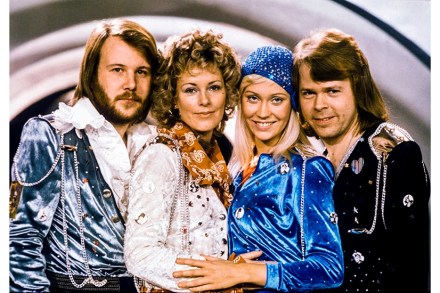
In Competition No. 3205, you were invited to supply a rigorous literary-critical analysis of a well-known pop song. Thanks to Oliver Hawkins, who drew to my attention J. Temperance’s real-life analysis of Boney M’s ‘Daddy Cool’ (The New Inquiry, 2015): ‘We may paraphrase Deleuze and Guattari and state that “it is within capitalist society that the critique of ‘Daddy Cool’ must always resume its point of departure and find again its point of arrival.”’ Which gives a sense of what you were aiming for.

Spectator competition winners: Rondeaus on a summery theme

From our UK edition

In Competition No. 3204, you were invited to supply a rondeau with a summery theme. The best-known English rondeau is the Canadian poet and doctor John McRae’s first world war poem ‘In Flanders Fields’ (which inspired the use of the poppy as a symbol of remembrance). But the form has it roots in medieval and Renaissance French poetry and perhaps it was this that prompted David Silverman to submit his jaunty, mischievous offering, celebrating the prospect of a lack of British tourists in that country this year, in French: Les Anglais ne viennent pas cet été.Ah! Dansons donc et chantons rondelays! Other strong performers, in a pleasingly wide-ranging entry, included Susan McLean, Paul Freeman, David Shields and Frank McDonald.

Extracts from Shakespeare’s newly discovered play, Charles III

From our UK edition

In Competition No. 3203, you were invited to supply an extract from the newly discovered Shakespeare play Charles III. I haven’t seen Mike Bartlett’s 2014 King Charles III but the theatre critic of this magazine wasn’t impressed: ‘A script that breezily defames the royals ought to be great fun, but this cheerless, overblown little play seems to have been created by political numbskulls for those of similar calibre.’ So it was pleasing to receive such a varied and accomplished entry. Martin Parker, Simon Hunter, Nigel Stuart and Alaric Evans earn honourable mentions. The winners take £25. HARRY DUKE OF SUSSEX Well, well, a king at last. All hail for now. But this succession crowns no true success.

P.G. Wodehouse’s Aunts Among the Chickens

From our UK edition

In Competition No. 3202, you were invited to replace the word ‘love’ in a well-known book title of your choice with a word of your choosing, and submit a short story of that title. This challenge was prompted by Christopher Hitchens’s description, in his memoir Hitch-22, of an after-dinner game he used to play with Salman Rushdie and other friends that involved replacing the word ‘love’ in famous book titles with the phrase ‘hysterical sex’. In a medium-sized entry of a patchy standard, Nick Syrett, Rosemary Sayer, Anthony Whitehead, Catherine Edmunds and Madeleine McDonald stood out. The winners, printed below, are rewarded with £30 each.

Henry James sells Heinz baked beans

From our UK edition

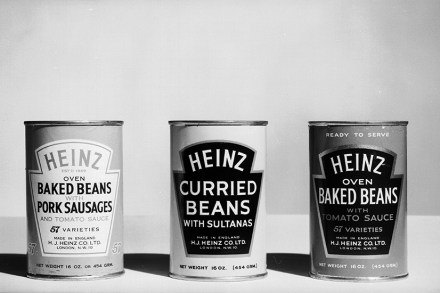
In Competition No. 3201, a contest inspired by Salman ‘naughty but nice’ Rushdie, you were invited to submit advertising copy for the product of your choice in the style of a well-known author. In a huge and hotly contested entry, unlucky losers Bill Greenwell, Brian Murdoch, Ann Drysdale, Tom Adam and Nick MacKinnon were only narrowly outflanked by those below who take £25 each. Congratulations, all round. Once upon the throne I squatted, almost bursting a carotid Till my bowels were unclotted and my mind was free once more. Then I found the toilet paper smelled of germicidal vapour And, like a potato scraper, left my bottom rough and sore. Be it Izal, be it Bronco, shall I ever know for sure? But, I swear it, nevermore!

Chaucer’s Canterbury Tales retold

From our UK edition

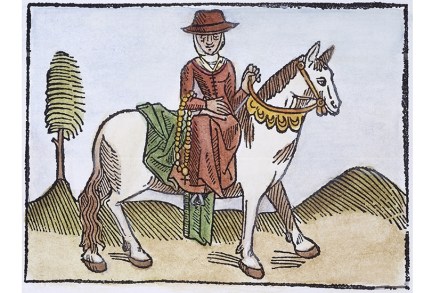
In Competition No. 3200, you were invited to retell one of Chaucer’s tales in the style of another author. The voices that dominated, in a medium--sized entry, were those of the Wife of Bath, the Pardoner, the Miller and the Nun’s Priest. Chaucer’s pilgrims were offered a free dinner for the best yarn, but this week’s winners will have to make do with a prize of £25 each. Nick MacKinnon, Frank McDonald, David Shields, Janine Beacham, Rosemary Sayer and Victoria Owens earn honourable mentions. Wilt thou forgive those sins whereby, misled, A wonton wife, betroth’d four times before, Did, at the fourth one’s funeral, choose to wed A clerk possessed of vigour and allure?

What Boris Johnson’s vacuum cleaner saw

From our UK edition

In Competition No. 3199, you were invited to supply a poem in which an inanimate object comments on its owner’s behaviour. Shoshana Zuboff’s recent book about the growth of surveillance capitalism gave me the idea for this competition. In it she warns of a future in which, to satisfy big tech’s insatiable appetite for data, the internet of things — our heating thermostat, vacuum cleaner, mattress — takes over our homes, robbing us of our ability to be invisible in those places where, Zuboff writes, we ‘first learn to be human… where our spirits spread and take root…’.

Spectator competition winners: Enid Blyton explains economics to children

From our UK edition

In Competition No. 3198, you were invited to supply an extract from a children’s book that is designed to explain economics to youngsters. The seed for this challenge was former Greek finance minister Yanis Varoufakis’s Talking to My Daughter: A Brief History of Capitalism in which he uses the device of answering questions put by his young daughter to explain economics in a clear and engaging way. While his references ranged from The Matrix and Blade Runner to Sophocles and Frankenstein, you harnessed, among others, Dr Seuss, Lewis Carroll, Hilaire Belloc (who also wrote a primer on economics, Economics for Helen) and Eric Carle.