Lucy Vickery

Poetry in motion — and bridges and graves

From our UK edition

The most recent challenge, to incorporate a list of poets’ surnames — motion, bridges, wilde, gray, cope, hood, burns and browning — into a poem or piece of prose, presented ample opportunity for showing off. My invitation to cram in extra names of your choosing was taken up with gusto and the award for Class Swot goes to Albert Black, who pulled off the phenomenal feat of shoehorning 52 names into his prose piece. But while Mr Black gained points for quantity, it was the poets who performed best, and this is reflected in the winning line-up. A nod to Frank McDonald, whose entry to a previous competition gave me the idea for this one. Commiserations to unlucky losers Alanna Blake, Graham King and John O’Byrne.

Poet’s choice

From our UK edition

In Competition No. 2843 you were given a list of poets’ surnames — motion, bridges, wilde, gray, cope, hood, burns and browning — and asked to incorporate them into a poem or piece of prose. I gave you scope for showing off by inviting you to cram in extra names should you choose to. The award for class swot has to go to Albert Black, who pulled off the phenomenal feat of shoehorning 52 names into his entry. A nod to Frank McDonald, whose entry to another competition gave me the idea for this. Basil Ransome-Davies takes the bonus fiver; his fellow winners pocket £25 each. The bridge that burns can be the best of bridges. A pound of hope won’t buy an ounce of luck. Try Scotland, though you’ll have to cope with midges.

Six books to leave unread when you die

From our UK edition

The recent challenge to compose the most off-putting book blurb imaginable elicited an avalanche of entries. This was one of those competitions that is both a pleasure and a pain to judge: a delight to read through but devilishly difficult to whittle down to just half a dozen winners. Virginia Price Evans’s entry was a masterclass in impenetrable jargon: ‘Policy Initiatives is an essential tool for civil servants responsible for driving effective public policy. Disdaining Ernest Gowers’ simplistic bourgeois maxims, the authors show how the use of prolix and abstruse circumlocution will facilitate meaningful dialogue and incentivize empowerment mechanisms, eventuating in sustainable outcomes for holistic governance.

Putdownable

From our UK edition

In Competition 2842 you were invited to compose the most off-putting book blurb that you could muster. There’s just space to say that I don’t think I’ll be rushing out to buy Jonathan Friday’s ‘groundbreaking exploration of the neglected beauty of bodily fluids and excreta’, which features ‘a striking array of scratch’n’sniff imagery’. G.M. Davis, nabs £30. The rest take £25. Like Ernest Vincent Wright and Georges Perec, Guillermo Pozoverde has written a lipogrammatic novel, an extreme one.

Verse about vice

From our UK edition

William Congreve wrote, in the Epistle Dedicatory to his 1693 comedy The Double-Dealer, that it is the business of a comic poet to paint the vice and follies of humankind — so I thought I would give you the opportunity to do just that. The task I set in the most recent competition was to paint an amusing portrait, in verse of up to 16 lines, of humankind’s sins and stupidity. Gail White’s entry expressed doubt that ‘the vices of our flesh and minds’ can ‘be contained in sixteen lines’. But John O’Byrne, keeping things short if not sweet, boiled it all down into a haiku: ‘My new credit card/ Means I can buy happiness./ Where did I go wrong?’.

Michael Craig-Martin pokes a giant yellow pitchfork at the ordinary

From our UK edition

Visitors to Chatsworth House this spring might wonder if they have stumbled through the looking-glass. The estate’s rolling parkland has been invaded by an army of vibrantly coloured, outsized garden tools, whose outlines seem to hover, mirage-like, over the landscape. These painted-steel 2D ‘sculptures of drawings’ are the brainchildren of the conceptual artist Michael Craig-Martin. Craig-Martin finds poetry in the everyday and here he has taken 12 commonplace objects — a wheelbarrow; a spade; a lightbulb — and transformed them into something extraordinary. He also believes that context is everything when it comes to art and the works have been carefully positioned.

Vice verse

From our UK edition

In Competition 2841 you were invited to paint an amusing portrait in verse of the vice and folly of humankind. It was William Congreve who wrote that it is the business of a comic poet to paint the vice and follies of humankind, and I thought I would give you the opportunity to do just that. Gail White expresses doubt that ‘the vices of our flesh and minds’ can ‘be contained in sixteen lines’. But John O’Byrne boils it all down into a haiku: ‘My new credit card/ Means I can buy happiness./ Where did I go wrong?’ The extra fiver is Sylvia Fairley’s. Her fellow winners take £30.

De haut en bas | 27 March 2014

From our UK edition

In Competition 2840 you were invited to provide an extract from the autobiography of a modern-day celebrity, ghostwritten by a literary great. Where would Jordan’s literary ambitions have been without the creative input of Rebecca Farnworth? And how many chapters would Wayne Rooney have managed without the guiding genius of Hunter Davies? Behind many a bestselling biography is an invisible man or woman, the unsung hero who has done most of the work but gets virtually none of the credit. There were some inspired pairings: Charles Dickens and Jamie Oliver; Charlotte Brontë and Susan Boyle; Stephen Fry and Samuel Johnson. Commendations to C.J. Gleed, Noel Petty and Josh Ekroy. The bonus fiver goes to D.A. Prince for her account of the life of Stephen Fry by way of Bleak House.

Competition: Write a book blurb to repel readers

From our UK edition

You were on stellar form this week on the darker side of spring: the entry was full of wit and invention. There were references to Larkin, who could always be relied on to see the bleaker side of things (‘their greenness is a kind of grief’), as well as to Eliot and Thomas Edward Brown. There were also nice echoes of Ogden Nash and Wordsworth. Nicholas Holbrook and Josephine Boyle were unlucky losers and I especially liked Ray Kelley’s heartfelt closing couplet: ‘It’s not by mere coincidence that vernal/ Rhymes so immaculately with infernal.’ The winners, printed below, earn £25 each. Bill Greenwell takes the extra fiver.

Art of darkness

From our UK edition

In Competition 2839 you were invited to submit a poem about the darker side of spring. There were references in the entry to Larkin, who could always be relied on to see the bleaker side of things (‘their greenness is a kind of grief’), as well as to Eliot and Thomas Edward Brown. There were also nice echoes of Ogden Nash and Wordsworth. Nicholas Holbrook and Josephine Boyle were unlucky losers and I liked Ray Kelley’s closing couplet: ‘It’s not by mere coincidence that vernal/ Rhymes so immaculately with infernal.’ The winners, printed below, earn £25 each. Bill Greenwell takes the extra fiver.

Spectator competition winners: 50 shades of…

From our UK edition

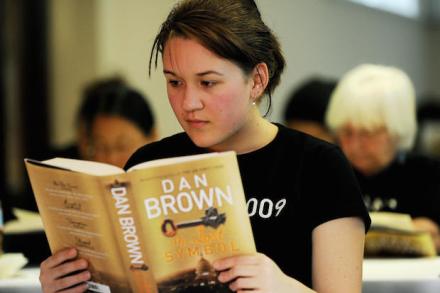
Last week, you were asked to dream up a short story entitled "Fifty Shades of". The entries were a bit of a mixed bag, but I enjoyed Gerard Benson’s twist on Empson’s Seven Types of Ambiguity, Josh Ekroy’s 50 Shades of Ukip and Carolyn Thomas-Coxhead’s clever, grisly tale of a woman reduced to a piece of meat. Though not all of you went the E.L. James route, Chris O’Carroll’s winning entry clearly took its lead from the queen of erotica, as well as from another publishing sensation whose appeal I find equally mystifying. He is rewarded with 50 lashes and £30, and his fellow winners pocket £25 each. Fifty Shades of Dan Brown by Chris O’Carroll ‘The Pope!’ he hissed in her ear. The Illuminati! Atlantis! Stonehenge!

Fifty-something

From our UK edition

In Competition 2838 you were invited to submit a short story entitled Fifty Shades of whatever you chose. It was a bit of a mixed bag this week but I liked Gerard Benson’s twist on Empson’s Seven Types of Ambiguity, Josh Ekroy’s 50 Shades of Ukip and Carolyn Thomas-Coxhead’s clever, grisly tale of a woman reduced to a piece of meat. Not all of you went the E.L. James route, but Chris O’Carroll’s winning entry clearly took its lead from the queen of erotica. He is rewarded with 50 lashes and £30. His fellow winners pocket £25 each.   Fifty Shades of Dan Brown ‘The Pope!’ he hissed in her ear. The Illuminati! Atlantis! Stonehenge! Inscriptions! Codes! Occult wisdom!

Competition: Ghost a sleb autobiography in the style of a literary great (plus: the horrors of reunion dinners)

From our UK edition

Spectator literary competition No. 2840 You were excellent this week on the horrors of the reunion dinner. But these gatherings no longer have the allure they once enjoyed. While in days gone by, they offered the opportunity to see, and, more enjoyably, to assess, former classmates in their adult incarnations, in an age of social media no one really loses touch and that element of mystery is all but gone. We’ve seen the pictures and read the status updates. Albert Black, Rob Stuart and Peter Goulding are all highly commended. The winners take £25 each and the extra fiver belongs to Alan Millard. Alan Millard ‘Good evening, sir, wind down the window      please, Perhaps you’d like to tell me where you’ve been.

Reunion blues

From our UK edition

In Competition 2837 you were invited to submit a poem on the horrors of a reunion dinner. In days gone by, the allure of school reunions lay in the opportunity they offered to see — and assess — former classmates in their adult incarnations. But in an age of social media no one really loses touch and that element of mystery is all but gone. We’ve seen the pictures and read the status updates. Albert Black, Rob Stuart and Peter Goulding are highly commended. The winners take £25 each. The extra fiver belongs to Alan Millard. ‘Good evening, sir, wind down the window please, Perhaps you’d like to tell me where you’ve been.

Competition: Show us the darker side of spring (plus: what do you call a group of WAGs?)

From our UK edition

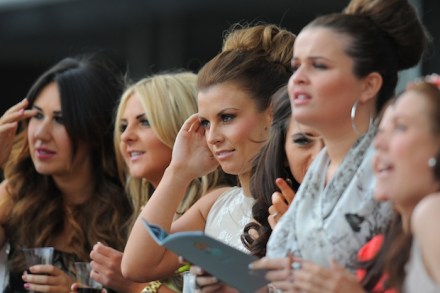
Spectator literary competition No. 2839 The recent call to coin collective nouns for tweeters, hackers, hoodies, WAGs, environmentalists, bankers, MPs and contrarians pulled in a record-breaking entry and there were lots of unfamiliar names in the postbag. Inevitably, there was also a fair amount of repetition: nest/cacophony/outrage/triviality of tweeters came up more than once, as did skulk/huggle/scowl of hoodies; bonus/wad/wunch/trough of bankers; knot/perversity/Hitch of contrarians; vacuum/bling/surgery of WAGs; flood of environmentalists; expense of MPs; to list just a few.

All together now | 27 February 2014

From our UK edition

In Competition 2836 you were invited to coin collective nouns for the following: tweeters, hackers, hoodies, WAGS, environmentalists, bankers, MPs and contrarians. This was by far the most popular competition we’ve run for a long time and it was cheering to see so many new names in the postbag. Inevitably, there was a fair amount of repetition: nest/cacophony/outrage/triviality of tweeters came up more than once, as did skulk/huggle/scowl of hoodies; bonus/wad/wunch/trough of bankers; knot/-perversity/Hitch of contrarians; vacuum/bling/surgery of WAGs; flood of environmentalists; expense of MPs; to list just a few.

Competition: Write 50 Shades of something

From our UK edition

Spectator literary competition No. 2838 The latest competition asked for profiles for an online dating website for well-known politicians, living or dead. Gallic ladykiller François Hollande loomed large in the entry, as did Gorgeous George Galloway, Ann Widdecombe and Adolf Hitler. And while John Samson’s somewhat unlikely lothario Oliver Cromwell might appeal to those who like the masterful type — ‘That ye should seek matrimonial harmony by reading such vainglorious publications doth render thee unworthy of espousing this Puritan. Speak thus of me to thy more God-fearing sisters...

Lonely hearts

From our UK edition

In Competition 2835 you were invited to submit a profile for an online dating website for a well-known politician, living or dead. Unlucky loser John Samson’s Oliver Cromwell might, I suppose, appeal to those who like the masterful type: ‘That ye should seek matrimonial harmony by reading such vainglorious publications doth render thee unworthy of espousing this Puritan. Speak thus of me to thy more God-fearing sisters...’ Commiserations, too, to Carolyn Thomas-Coxhead and Hugh King. The winners take £25 each. W.J. Webster pockets the bonus fiver. Hi, my name is John. I’m from Yorkshire. We all know Yorkshiremen can be bluff and let me tell you straight out I’m 100 per cent bluff. I speak as I find and find as I speak. WICWIG as the young folk say.

Competition: Reunion blues

From our UK edition

Spectator literary competition No. 2837  This week let’s have a poem about the horrors of a reunion dinner. Please email entries of up to 16 lines to lucy@spectator.co.uk by midday on 26 February. The recent invitation to give a classic of children’s literature the hard-boiled treatment produced a flood of entries that were a joy to judge. Much-loved children’s classics, filtered through the prism of gritty 1930s urban America (what Raymond Chandler called ‘a world gone wrong’), were given a bracing new lease of life. All the hallmarks of the genre were there: sharp repartee, staccato delivery, economy of expression, psychological drama, black humour and the liberal use of simile.

Hard-boiled Blyton

From our UK edition

In Competition 2834 you were invited to submit an extract from a classic of children’s literature rewritten in the style of hard-boiled crime fiction. My word, you were good this week. The entries came flooding in and were a joy to judge. Much-loved children’s classics, filtered through the prism of gritty 1930s urban America, were given a new, hard-boiled lease of life. All the hallmarks of the genre were there: sharp repartee, staccato delivery, economy of expression, psychological drama, black humour and the liberal use of simile. Honourable mentions go to Barbara Lightfoot and Poppy McLean. The winners earn £25 each, except Adrian Fry who gets £30. I’m looking for this broad named Alice. An innocent abroad?