Lucy Vickery

Spectator competition: compose an elegy for an endangered profession (plus Jack Kerouac gets the golfing bug)

From our UK edition

Competitors rose admirably to the recent challenge to step into the shoes of a well-known writer and submit a poem or piece of prose in praise or defence of something unexpected. It was nice to glimpse a lighter side of Leonard Cohen courtesy of Martin Parker’s twist on ‘Bird on a Wire’, and Alanna Blake submitted a well-made Wordsworthian tribute to wind farms. Ernest Hemingway came out for the League Against Cruel Sports and against sobriety, and in J. Seery’s entry Barbara Cartland showed her true Marxist colours: ‘There is no phrase in English more sensuous than “dialectical materialism”’. Other stellar performers were John Samson, Josephine Boyle, C.J. Gleed and Jamie Burnham, who restyled Arthur Ransome as a health-and-safety nut.

Unlikely champion

From our UK edition

In Competition No. 2852 you were invited to step into the shoes of a well-known writer of your choice and submit a poem or piece of prose in praise or defence of something you would not expect them to champion. You were on top form this week. Martin Parker reveals a lighter side of Leonard Cohen with a nice twist on ‘Bird on a Wire’, while Alanna Blake’s Wordsworth has a soft spot for wind farms. Ernest Hemingway comes out for the League Against Cruel Sports and against sobriety. And J. Seery’s Barbara Cartland shows her true Marxist colours (‘There is no phrase in English more sensuous than “dialectical materialism”’). Other stellar performers were John Samson, Josephine Boyle, C.J.

Spectator competition: provide a publisher’s blurb for a cookbook with a twist (plus your elegies for Jeremy Paxman)

From our UK edition

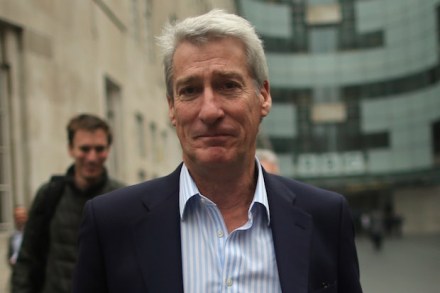
In Competition No. 2851 you were invited to mark Jeremy Paxman’s departure from Newsnight by supplying an extract from an interview with a politician or statesman in which the interviewer doggedly but unsuccessfully attempts to get a straight answer to a straight question. Even if you didn’t specify Paxo as your questioner, I was looking for something of the spirit of the man in your inquisitorial style. You didn’t hit his contemptuous, eyebrow-arching heights—who does?—but you provided an entertaining feast of mealy-mouthed obfuscation. The winners take £30 and W.J. Webster nabs the extra fiver for an entry that features a slippery Boris Johnson. W.J. Webster I. Would you like to replace David Cameron as Prime Minister? B.J. With whom?

Paxmanic

From our UK edition

In Competition No. 2851 you were invited to mark Jeremy Paxman’s departure from Newsnight by supplying an extract from an interview with a politician or statesman in which the interviewer doggedly but unsuccessfully attempts to get a straight answer to a straight question. There’s space only to announce that the winners take £30 and W.J. Webster nabs £35 for his entry, which features a slippery Boris Johnson. I. Would you like to replace David Cameron as Prime Minister? B.J. With whom? Good grief, man, there’s no vacancy and I’m no kingmaker. I. Nor a potential rival? B.J. He is my leader and I think of myself as his fidus Achates. I stroll pleasantly in the cool of his shadow. I. But if he were for some reason... B.J.

Spectator competition: redefine ‘oolite’ and ‘ampthill’ (plus: your meaningless proverbs)

From our UK edition

The latest call, for proverbs that sound profound but have no meaning, attracted an enormous entry. It was a pleasure to judge, and cheering, too, to see lots of unfamiliar names in among the regulars. The best entries contain just the promise of a profound meaning — but frustrate the reader’s attempt to work out exactly what it is. I tried to weed out those submissions (some of them very amusing) that did express a clearly discernible deeper truth, but some may have slipped through the net. The following competitors deserve an honourable mention: ‘The shallow puddle floods no meadows’ (D.A.

Proverbial

From our UK edition

In Competition No. 2850 you were invited to invent proverbs that sound profound but have no meaning. This was an extremely popular competition, which attracted an enormous entry. It was a pleasure to judge, and cheering, too, to see lots of unfamiliar names in among the regulars. The best entries contain just the promise of a profound meaning — but frustrate the reader’s attempt to work out exactly what it is. I tried to weed out those submissions (some of them very amusing) that did express a clearly discernible deeper truth, but some may have slipped through the net. The following competitors deserve an honourable mention: ‘The shallow puddle floods no meadows’ (D.A.

Spectator competition: defend the unexpected (plus: your tepid opinions about the BBC)

From our UK edition

The latest challenge, to supply a poem in praise or dispraise of the BBC, fell on somewhat stony ground. The entry felt a bit flat and you seemed to be lacking any real conviction either way. Roger Theobald’s opening lines pretty much reflected the general mood: ‘To praise or dispraise: well, if that’s the question,/ The record is too mixed to be quite sure…’ An honourable mention goes to Jerome Betts for his pithy four-liner — ‘Beeb, overstaffed and overspent,/ At which the licence-payers cavil,/ How sad to witness your descent/ From Reithian heights to Jimmy Savile.’ — and to Frank McDonald and Ray Kelley. Basil Ransome-Davies romps home with the extra fiver and the rest pocket £30 each.

When Van Gogh lived in London

From our UK edition

Eighty-seven Hackford Road, SW9, is unremarkable but for a blue plaque telling the world that Vincent van Gogh once lived there. The building has been empty since 2012 but now the Dutch artist Saskia Olde Wolbers has filled it with voices. ‘Yes, these Eyes are the Windows’ (until 22 June) is an Artangel-commissioned installation that explores the line between fact and fiction by telling the story of this terraced house from when a 19-year-old van Gogh was a tenant there in the 1870s to the present day. As a visitor, you enter a dimly lit hallway. You are held there for what can be only a few minutes but feels much longer. Already the tension is palpable. A door opens, seemingly of its own accord, and you step into an eerie parallel universe.

Lines on the Beeb

From our UK edition

In Competition No. 2849 you were invited to submit a poem in praise or dispraise of the BBC. The entry felt a bit flat this week and you seemed to be lacking in any real conviction either way. Roger Theobald’s opening lines pretty much reflected the general mood: ‘To praise or dispraise: well, if that’s the question,/ The record is too mixed to be quite sure.’ An honourable mention goes to Jerome Betts for his pithy four-liner. Basil Ransome-Davies romps home with the extra fiver and the rest pocket £30 each. I always treasured Auntie. She was such    a damn good sport. Thanks to BBC steam wireless I was    entertained and taught.

Spectator competition: write an elegy for Jeremy Paxman

From our UK edition

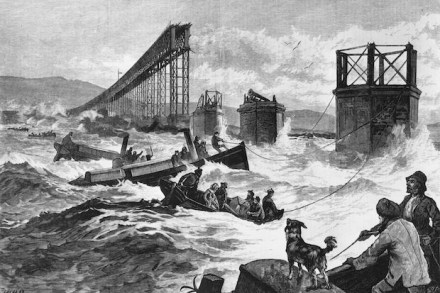
The latest challenge to competitors was to submit a poem commenting on Scottish independence in the style of William Topaz McGonagall, the poet hailed by the TLS as ‘the only truly memorable bad poet in our language’. The deluded handloom weaver from Dundee built his reputation on appalling yet beguiling works of inadvertent comic genius. Unhampered by self-awareness, and buoyed up by uncrushable self-belief, he forged ahead with his art in the face of universal mockery and derision. Here is a particularly awful line from his most famous poem, ‘The Tay Bridge Disaster’ of 1880: ‘And the cry rang out all o'er the town, Good Heavens! the Tay Bridge is blown down.

Scottish question

From our UK edition

In Competition No. 2848 you were invited to submit a poem commenting on Scottish independence in the style of William Topaz McGonagall. McGonagallesque long lines leave me space only to congratulate you on a vast and skilful entry before handing over to the man himself, hailed by the TLS as ‘the only truly memorable bad poet in our language’. Ralph Rochester takes the extra fiver; the rest nab £35. Bounteous Heavens, let us all rejoice! For the People of Scotland have been given a     Choice And there is to be a National Referendum For which we must thank the Scottish     Nationalists and London.

Spectator competition: invent a meaningless proverb

From our UK edition

The latest competition, in which you were invited to compose a poem celebrating a famous duo, produced a colourful cast of pairings. Ray Kelley sang the praises of Flanders and Swann: ‘Never was there a sweeter fit/ of wit to melody, melody to wit’. Brian Allgar proposed a toast to that gruesome twosome Burke and Hare. And Martin Parker saluted south London kings of retail Arding and Hobbs: ‘Posh Knightsbridge had Harrods for nabobs and nobs./ The folks down at Clapham had Arding and Hobbs.’ Hugh King was impressive, as were Michael Swan and Alanna Blake, but they were edged out by this week’s overall champ, Chris O’Carroll, who takes £35, and his fellow winners, who pocket £30 apiece.

Double celebration

From our UK edition

In Competition No. 2847 you were invited to submit a poem celebrating a famous duo. You wheeled out a colourful cast of pairings. Ray Kelley sang the praises of Flanders and Swann: ‘Never was there a sweeter fit/ of wit to melody, melody to wit’. Brian Allgar proposed a toast to that gruesome twosome Burke and Hare. And Martin Parker saluted south London kings of retail Arding and Hobbs: ‘Posh Knightsbridge had Harrods for nabobs and nobs./ The folks down at Clapham had Arding and Hobbs.’ Hugh King was impressive, as were Michael Swan and Alanna Blake, but they were edged out by this week’s overall champ, Chris O’Carroll, who takes £35, and his fellow winners, who pocket £30 apiece.

Jeffrey Archer’s six rules for writing

From our UK edition

A tweet linking to George Orwell’s famous rules for writing (‘Never use a long word where a short one will do’, etc.) prompted me to invite competitors to come up with the six rules of a well-known author of their choice. Honourable mentions go to Hugh King, whose Revd W.A. Spooner urges writers to ‘be sure to merge all pisstakes’, and to J. Seery, who reckons Hemingway’s sixth rule would be: ‘It is you or the reader. Only one of you is going to walk away from this alive. Make sure it is you.’ I also liked this one from Rob Stuart, who was channelling Dan Brown: ‘Chase sequences are a swell opportunity for characters to reflect appreciatively on local art and architecture as they dodge bullets.

The write stuff

From our UK edition

In Competition No. 2846 you were invited to invent the six rules for writing of a well-known author of your choice. Honourable mentions go to Hugh King, whose Revd W.A. Spooner urges writers to ‘be sure to merge all pisstakes’, and to J. Seery, who reckons Hemingway’s sixth rule would be: ‘It is you or the reader. Only one of you is going to walk away from this alive. Make sure it is you.’ I was prompted to set this task by a tweet that reminded me of George Orwell’s famous six rules, and W.J. Webster earns the bonus fiver for crafting an eloquent riposte to Orwell on the part of Henry James. The rest take £25 each. 1. Do not think that using three words where one will do is a cardinal sin.

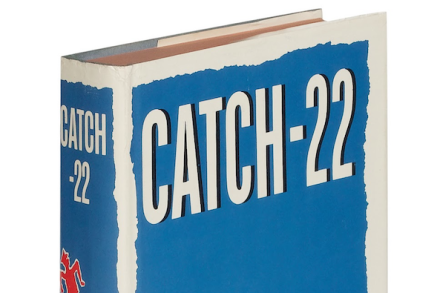
‘Great’ books best left unread: Anna Karenina, Moby Dick, Catch-22…

From our UK edition

Martin Amis compared Cervantes’ Don Quixote to ‘an indefinite visit from your most impossible senior relative, with all his pranks, dirty habits, unstoppable reminiscences, and terrible cronies’, while Kathryn Schulz, book critic for New York magazine, poured scorn on The Great Gatsby, describing it as ‘aesthetically overrated, psychologically vacant, and morally complacent’. Cult contemporary bestsellers have also drawn contempt. In last year’s Spectator Books of the Year Thomas W. Hodgkinson recommended giving a wide berth to Paulo Coelho’s chart topper: ‘The Alchemist is surely the worst book I’ve read recently. The tale of a simple shepherd boy (ah, aren’t they all?

O come all ye unfaithful

From our UK edition

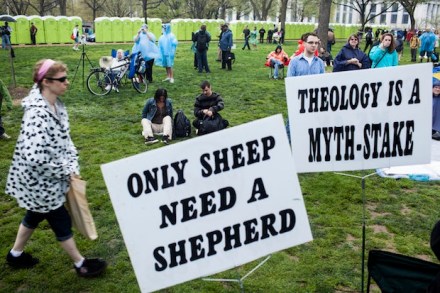
Organised atheism is on the rise and this prompted John Whitworth to make the excellent suggestion that I challenge competitors to come up with a hymn for atheists. Hymns do not feature at all at The Sunday Assembly, an atheist Church founded last year in London. Instead the congregation sings along, in evangelical style, to pop songs by the likes of the Pointer Sisters, Stevie Wonder and Daft Punk. Perhaps they might feel inspired, by one of the entries below, to change their tune. There were neat twists on ‘Amazing Grace’, ‘All Things Bright and Beautiful’, ‘Onward Christian Soldiers’, and Milton’s ‘Let us, with a gladsome mind’.

I’m a non-believer

From our UK edition

In Competition No. 2845 you were invited to provide a hymn for atheists. This excellent, and topical, competition was suggested by John Whitworth, in response to the growth of organised atheism. Hymns do not feature at all at the Sunday Assembly, an atheist church founded last year in London. Instead the congregation sings along, in evangelical style, to pop songs by the likes of the Pointer Sisters, Stevie Wonder and Daft Punk. Perhaps they might feel inspired, by one of the entries below, to change their tune. Honourable mentions go to Sid Field, George Simmers, Barbara Smoker, Nick Grace, Richard Kelly and Samuel Johnson. The bonus fiver is Rob Stuart’s and the rest take £25 each.

Tales of the inconsequential

From our UK edition

My cache of conversational titbits has been considerably boosted by the most recent challenge that I threw down to Spectator readers. I asked for an extract from either a gripping thriller or a bodice-ripping romance containing half a dozen pieces of inconsequential information, and I now know that Zanzibar is the world’s largest clove producer, and that 99 per cent of Estonians have blue eyes. Thanks, for those morsels of trivia, to J. Seery and Nicholas Hodgson, both of whom submitted fine entries. Patrick Tyson-Cain, Sergio Michael Petro, Albert Black, Walter Ancarrow and Charles Curran also narrowly missed the cut. Basil Ransome-Davies, who is on stellar form at the moment, takes £30; the rest nab £25.

Inconsequential

From our UK edition

In Competition No. 2844 you were invited to provide an extract from either a gripping thriller or a bodice-ripping romance containing half a dozen pieces of inconsequential information. I can now add the fact that Zanzibar is the world’s largest clove producer, and that 99 per cent of Estonians have blue eyes, to my cache of conversational titbits. Thanks, for those morsels of trivia, to J. Seery and Nicholas Hodgson. Basil Ransome-Davies takes £30; the rest nab £25. I was wearing out shoe-leather tracking Torpedo McCann across the city, learning why most American males prefer rubber soles. LA had expanded since it was bought by the US from Mexico in 1848 and I was building a thirst myself when he entered a saloon next to a tattoo parlour.