Lloyd Evans

Lloyd Evans

Lloyd Evans is The Spectator's sketch-writer and theatre critic

Keir Starmer is full of bilge

From our UK edition

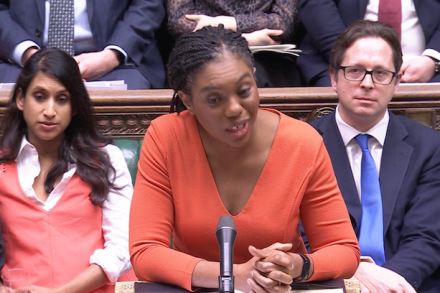
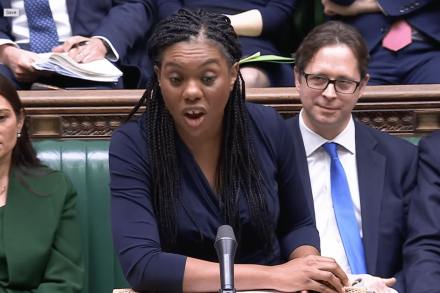
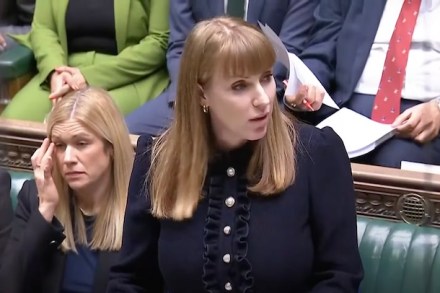
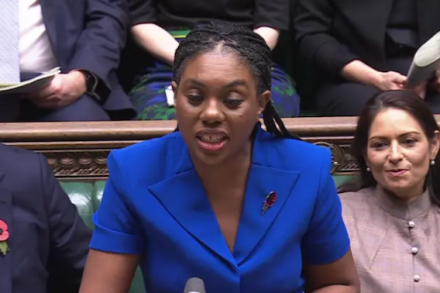
Who runs Britain’s foreign policy? Not the government, that’s clear. At PMQs, Sir Keir Starmer got a monumental roasting from Rishi Sunak whose patience seems to be wearing thin.  Technically, Rishi was asking questions but in fact he was correcting Labour’s latest raft of blunders. He began by urging the PM to have a discreet word with his foreign secretary, David Lammy, who appears to be learning on the job. Rishi suggested that Lammy should give China a rap over the knuckles for its ‘dangerous escalatory acts in the Taiwan Strait.’  Sir Keir nodded along. He agreed to ‘co-operate as a permanent member of the Security Council’ and he promised to ‘challenge on the point he makes where it’s needed.

Almeida’s Look Back in Anger is flawless

From our UK edition

Strange title, Juno and the Paycock. Sean O’Casey’s family drama is about a hard-pressed Dublin matriarch, Juno, whose husband Jack ‘the paycock’ Boyle refuses to support his family and spends all day drinking with his penniless cronies. The producers have labelled the show an ‘Irish masterpiece’, which raises the bar. Mark Rylance plays Jack as a stammering, dissembling, wisecracking malingerer and he’s terrific value on stage, of course, but he seems detached from the material. He performs like a star comedian stranded in a boring classic against his will and he pokes fun at the script rather than immersing himself in the story.

Confessions of a political gambler 

From our UK edition

What could be more exquisite than the life of the professional gambler? I began my career in 2016 with a modest punt of £1,000 on the London mayoral election. Bingo. Sadiq Khan won and I banked a profit of £100. Then Brexit. My guess was that the pollsters had overestimated support for Remain and that the country was keen to evict the conjoined twerps, David Cameron and George Osborne, from Downing Street. The referendum was our chance to vaporise both their careers simultaneously. One cross, two graves. That’s what happened. And I cleared another tidy sum. I cursed the day that I’d ever started gambling. I was a fool. A dunce. A clueless moron But I was haunted by a wager I’d laid in the winter of the same year while watching Fox News over a relaxing pint of Tesco claret.

Rishi Sunak is the most effective opposition leader since Tony Blair

From our UK edition

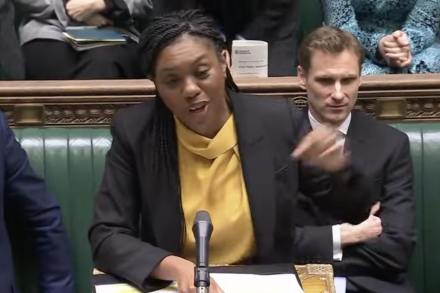
Rishi Sunak’s fleet-footed performance at Prime Minister's Questions exposed many of Keir Starmer’s shortcomings as Prime Minister. Sunak is the most effective opposition leader since Tony Blair and he mauled Sir Keir today with a blend of decent gags and wily tactics. The Tory leader has the advantage of resembling a human being, while Sir Keir seems as cold and lifeless as an oil drum. Starmer has only three debating tactics. Blame the Tories, blame the Tories, blame the Tories.  The Tory leader has the advantage of resembling a human being Sunak opened with a joke about Sue Gray in relation to Labour’s new deal for workers. When, he asked, did Sir Keir become a fan of fire-and-rehire?

How is Arnold Wesker’s Roots, which resembles an Archers episode, considered a classic?

From our UK edition

The Almeida wants to examine the ‘Angry Young Man’ phenomenon of the 1950s but the term ‘man’ seems to create difficulties so the phrase ‘Angry and Young’ is being used instead. It’s strange to encounter a theatre that’s scared of words. The opening play, Roots, by Arnold Wesker, looks at the conflict between town and country in 1950s Norfolk. Beatie, in her early twenties, returns from London and announces to her warm-hearted but unsophisticated family that her boyfriend, Comrade Ronnie, wants to meet them. He’s a pastry chef who supports a Marxist revolution and Beatie is eager to fight for everything he believes in.

Reform’s new AI ad is dispiriting and strange

From our UK edition

Digital modernity has reached the world of political campaigning. Reform’s new video is the first party political broadcast to use AI imagery and it opens as a movie trailer for a film entitled ‘Labour’s Britain.’ Swelling orchestral music and a growling voiceover introduce us to an X-rated horror show. The opening image depicts Gordon Brown flogging ingots to international traders at knockdown prices.  ‘From the people that sold the gold,’ intones the voiceover, ‘we bring you Labour’s Britain.’ https://www.youtube.com/watch?v=9luyHqdwBFs The trailer leads us through the three worst blunders of the new government. Robbing the elderly, surrendering to the unions and failing to stop the boats.

Inside the Welsh village where English speakers aren’t welcome

From our UK edition

On a Saturday morning, no life stirs. The village café is closed and the ancient church of St Beuno’s is locked and deserted. Beside the stone porch stands a dusty glass case that advertises church services and parish gatherings. Not a single event is scheduled. This is the peaceful village of Botwnnog (pronounced Bot-oon-awg) in the Llyn peninsula, north Wales, whose council recently rejected a plan to build 18 houses for rent. Few Welsh words have found their way into English, even though we inhabit the same island The language chosen by the council made headline news.

Faultless visuals – shame about the play: the National’s Coriolanus reviewed

From our UK edition

Weird play, Coriolanus. It’s like a playground fight that spills out into the street and has to be resolved by someone’s mum. The hero is a Roman general whose enemies conspire to banish him so he takes revenge by joining forces with a foreign power and laying siege to Rome. Coriolanus’s mother shows up on the battlefield and begs him to drop his vendetta and come back home. Later he dies but without delivering a big speech. The Roman soldiers have plastic swords that go ‘clack’ rather than metal ones that go ‘ching’ The key difficulty is that Coriolanus’s tragic flaw, a lack of ambition, is really a virtue. He’s far too noble for his own good and his disdain for power makes him annoying rather than admirable.

The show belongs to Jonathan Slinger and Ben Whishaw: Waiting for Godot reviewed

From our UK edition

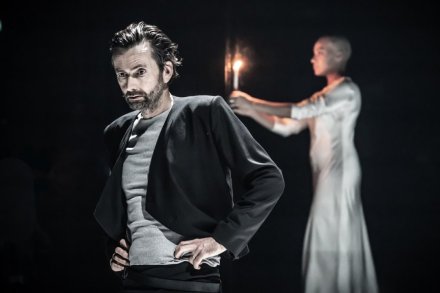
Waiting for Godot is a church service for suicidal unbelievers. Those who attend the rite on a regular basis find themselves wondering how boring it will be this time. A bit boring, of course, but there are laughs to be had in James Macdonald’s production. The set resembles a Gazan bombsite with a tree-stump stranded in a pit of ashen rubble. Didi is played as a goofy English toff by Ben Whishaw who supplied the voice of Paddington in the movies. The bear is back.

A massive, joyous, sensational hit: Why Am I So Single? reviewed

From our UK edition

Why Am I So Single? opens with two actors on stage impersonating the play’s writers Toby Marlow and Lucy Moss. You may not recognise the names but you’ve probably heard of their smash-hit, Six, which re-imagined the tragic wives of Henry VIII as glamorous pop divas. This follow-up show is a spoof of vintage musicals and it’s deliberately knowing and self-referential. That’s why the authors are played by members of the cast, and they start with a few disparaging quips about Mamma Mia! and other West End fare. They even call the audience at the Garrick ‘riff-raff’, which seems a little charmless.

The rise of soapy, dead-safe drama: The Band Back Together reviewed

From our UK edition

The Band Back Together is a newish play, written and directed by Barney Norris, which succeeds wildly on its own terms. It delivers a low-energy slice of feelgood nostalgia involving three musicians who reunite in their hometown of Salisbury. The action consists of talk and songs, more talk, more songs, some cider-drinking and a surprise ending to convince the audience that it was worth the wait. The play was commissioned by Farnham Maltings, an arts centre in Surrey, whose aim is to ‘bring artists, makers and communities together’ and it feels a bit am-dram. The script has no conflict, suspense or uncertainty. No harrowing emotions or life-changing experiences. It’s just a pipe-and-slippers get-together involving three has-beens who once shared a stage as musicians.

Has Keir Starmer forgotten that he’s prime minister?

From our UK edition

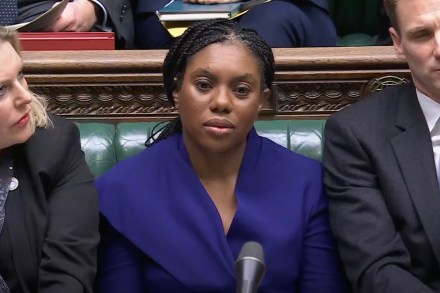
Shortly before noon, Sir Keir Starmer and his closest chums peeped out from behind the Speaker’s chair to see if it was safe to enter the chamber. Led by their boss, the furtive cabal of Granny-chillers sidled forward and tiptoed to their seats like naughty teenagers late for a geography class. What had they been doing backstage? Knitting cardigans for hypothermia victims perhaps. A few perfunctory chirrups greeted their arrival but most Labour MPs kept quiet. They were too scared to cheer the man who wants to raise cash by mugging pensioners this winter. Rishi Sunak went straight for Sir Keir’s weak spot and asked about an ‘impact assessment’ into his plan to fleece the elderly.  ‘The fact of the matter is,’ said Sir Keir, ‘they left a £22 billion black-hole.

Nothing gives Keir Starmer joy like banning things

From our UK edition

Power hasn’t altered Sir Keir Starmer. His frosty and unamused demeanour remains. No hint of warmth or joy has penetrated his defensive outer rind. He still looks like a mourner-for-hire at an oligarch’s funeral.  Today at PMQs he was faced by a quick-witted and forceful Rishi Sunak who clearly relishes the role of battering ram. The Tories may start to question the wisdom of replacing him. Which of their leadership candidates could match this masterclass in how to grill an incumbent PM? Rishi selected a single issue and hammered away at it until he got a useless reply. Then, having described how useless it was, he moved onto a new question. Today he managed to prohibit just one activity.

Dazzling: Stoppard’s The Real Thing, at the Old Vic, reviewed

From our UK edition

The Real Thing at the Old Vic is a puzzling beast. And well worth seeing. Director Max Webster sets the action in a vast sitting room painted electric blue with a white sofa in the centre. A lovely use of empty space. But the preview trailer on the theatre’s website shows the actors seated in a scruffy bomb site where they discuss similarities between Tom Stoppard’s 1982 play and the lyrics of Taylor Swift. Perhaps the Old Vic hopes to attract a younger audience, but this show will appeal most to Stoppard’s lifelong fans. The play marks a major shift in his development. The exuberant and frothy cleverness of his earlier work has acquired emotional weight and a tougher outer shell. There’s a lot of jealousy and anger smouldering beneath the surface.

Artistically embarrassing but a hit: Shifters, at Duke of York’s Theatre, reviewed

From our UK edition

Shifters has transferred to the West End from the Bush Theatre. It opens at a granny’s funeral attended by the grief-stricken Dre, aged 32. Dre was raised by his ‘Nana’ as he calls her – rhyming it with ‘spanner’ – and he weeps when he realises that his mother has failed to show up. A beautiful young woman arrives unexpectedly. This is Dre’s teenage sweetheart and they exchange gossip over a glass of whisky while rummaging through Nana’s belongings. The press night crowd adored these flawless yuppies. An artistic embarrassment but a sure-fire hit The lovebirds met at school where they studied philosophy and outshone all their rivals in the class.

How I lost my faith

From our UK edition

God used to exist. He doesn’t any more, but back in the early 1970s he was a major presence in my life. The world at that time was run by President Nixon and his adviser Ted Heath, but their power was limited, and even they had to defer to God’s authority. That’s how it seemed to me. A howling spirit or a weeping martyr might burst forth, dripping blood or swathed in tongues of fire I was encouraged by the adults to converse with God and to ask for his guidance and I spoke to him often, in class when we prayed, at night in my bedroom, and at Mass on Sunday. God listened to everyone, regardless of their wealth or status, and even great leaders had no better claim to his attention than I did. This made me feel special and powerful.

The cast mistake screaming for comedy: Cockfosters, at Turbine Theatre, reviewed

From our UK edition

The Turbine Theatre is a newish venue beneath the railway arches of Grosvenor Bridge in Battersea. The comfy auditorium is furnished with 94 cinema seats and the only snag is the scent of mildew clinging to the plasterwork. Overhead, the rumbling commuter trains create the perfect soundscape for Cockfosters, a zany rom-com set on the Tube. Two travellers meet by accident on a Piccadilly line service departing from Heathrow Terminal 3. James is a nerdy public-school reject who spots a fellow traveller, Victoria, struggling to shift three monster suitcases onto the train. Obeying Tube etiquette, he makes no attempt to help her and they sit in adjoining seats without acknowledging each other. Beside them are two passengers engrossed in royal biographies.

This Edinburgh Fringe comedian is headed for stardom

From our UK edition

Dr Phil Hammond is a hilarious and wildly successful comedian whose career is built on the ruins of the NHS. His act has spawned a host of imitators on the stand up-circuit and they share Dr Phil’s confused adoration for the NHS. All of them love the idea of universal healthcare but they dislike the messy practical details. And they’re convinced that extra cash will save the system. The evidence suggests otherwise; handing more money to the NHS is like giving a gambling addict the keys to a bullion van. The gallows humour is delightful if you’re not stuck in an NHS queue Dr Phil claims that he would gladly pay higher taxes because the NHS has to scrape by on ‘third-world funding’. This is part of the difficulty.

What Liz Truss must learn from Humza Yousaf

From our UK edition

Hats off to Humza Yousaf. He knows how give a straight answer. At the Edinburgh fringe, he was quizzed by Matthew Stadlen who asked if he took responsibility for the chaos that led to his resignation as Scotland’s first minister.  ‘I frankly f***ed up,’ admits Yousaf. Warm applause greeted this confession, and Stadlen compared his honesty with the more equivocal approach of Liz Truss. ‘It upsets a lot of people,’ said Yousaf, ‘that she’s unable to utter a syllable of contrition. She blames the markets, the Bank of England, and the deep state. We need fewer Liz Truss’s.

Being mugged changes you forever

From our UK edition

Being mugged changes you forever. My encounter with highwaymen occurred three decades ago in a south London street, in the early evening as I emerged from a corner-shop. I was transferring some coins from one hand to the other when four men pounced on me from behind, tipped me over and dragged me down a lane between a derelict pub and a car park. I lay there surrounded, waiting for the inevitable violence, but my attackers grabbed the cash that had fallen from my hands and melted away into the night. I always avoid high-risk areas: towpaths, churchyards, parks at dusk – anywhere without cameras I was left feeling shocked, humiliated and grateful I’d escaped with my life. Sadism was part of their motive, I expect.