Lloyd Evans

Lloyd Evans

Lloyd Evans is The Spectator's sketch-writer and theatre critic

Spectator debate: Is it time to leave the EU?

From our UK edition

 Christopher Booker, of the Sunday Telegraph, proposed the motion by taking a blast at his own side. Christopher Booker, of the Sunday Telegraph, proposed the motion by taking a blast at his own side. The present Euro crisis had inspired Tory Eurosceptics to talk of "a re-negotiation" and a "repatriation of powers". This, he said, utterly misconstrued the EU project and its "sacred aim" to strip nations of their rights and "never to give back a power once ceded." He called the EU "a 40-year-long slow-motion coup d’etat" and "a crazy make-believe project" whose hubristic ambitions were now facing nemesis. He heaped scorn on Herman van Rompuy for claiming that the best remedy for the Euro was "more Europe".

The triumph of humility

From our UK edition

‘John Smith is dead.’ These four blunt syllables, as elemental and atmospheric as the first line of a classic novel, form the opening of Chris Mullin’s new collection of diaries. This is a fascinating read, crammed with gossip, jokes, insights and anecdotes, not all of them political. Mullin’s first disclosure is that the ‘decent interval’ between a leader’s death and the tussle to succeed him lasts about three seconds. The ‘Stop Blair Camp’ formed as soon as Smith was buried. They try to court Mullin and he brushes them off. ‘I’m in the Win the Next Election Camp.’ He considers backing John Prescott, but ‘I can’t bear the thought of another phoney-left leader. Give me an honest right-winger any day.

Essay in off-beat grief

From our UK edition

Well done, the Royal Court. It’s got the art of audience abuse down to a tee. The queue for the tiny studio theatre snakes up an airless flight of stairs and bottlenecks into a doorway where each play-goer receives a personalised earbashing from an usherette. ‘Hello, did you hear all that? It’s one hour straight through. No readmission. No recording. No photography. No mobile phones. No sitting on the reserved chairs. No treading on the floor on the way to your seat. Enjoy the show. Hello, did you hear all that...?’ and so on. The floor we mustn’t tread on is strewn with a layer of sacred grit which the director insists will remain untouched by human sole before the show begins.

A good man in a crisis

From our UK edition

It’s debatable whether politicians of the Left or the Right are better at handling the public finances. But we do seem to learn more about economics under a Labour government. Alistair Darling’s memoir chronicles his turbulent years at the Treasury as he watched the world slithering into a financial volcano. Though the material is extremely dramatic, Darling’s sober, measured prose doesn’t quite suit the story’s explosive theatricality. He was haunted by the Northern Rock crisis of 2007 and the global impact of TV images showing panicking investors queuing up to withdraw all their cash. That, he determined, must never happen again.

Out of this world | 10 September 2011

From our UK edition

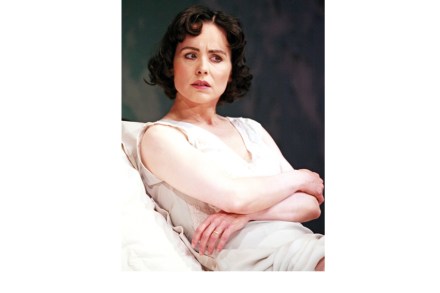
Lloyd Evans meets Tara FitzGerald and is struck by her uncanny beauty and her desire to hear what he thinks Tara FitzGerald’s beauty is fabulous. Literally, there’s something unworldly about the surfaces and contours of her face. It’s as if the codes of her biology had been transmitted to earth from a higher realm, from alien beings. The wide cheekbones are angular yet softly curvaceous. Her eyes have a luminous purity, a revelatory greenness. Her dark hair glows, and her immaculate skin is invitation-card white. She speaks in a low, smokily textured voice that occasionally surges into a throaty giggle. I meet her at the Tricycle theatre in Kilburn where she’s currently starring alongside Antony Sher in Arthur Miller’s Broken Glass.

Divine punishment

From our UK edition

Once or twice a season Shakespeare gets booted out of the Globe. In his place a modern author is given a chance to shine. The Scottish writer Chris Hannan’s new play, The God of Soho, opens with a frolicsome nod to classicism. We are in heaven where two demotic deities, Mr and Mrs God, engage in caustic marital banter. Mrs God wears a colostomy bag and her affliction triggers many a harrumphing sound of flatulence from an on-stage tuba. This is hilarious, of course, and even more hilarious if you happen to be six years old. Hannan’s carping immortals turn out to be very hard to engage with. Perhaps he assumed that divinities would be fun to write. But they’re devilishly hard, bordering on the impossible. Nothing is at stake in heaven.

The horror movie experience

From our UK edition

Mark Kermode is not happy. And his discontent is a joy to witness. The centrepiece of his new book about Hollywood blockbusters is a brutally hilarious account of his attempt to see The Life and Death of Charlie St Cloud with his teenage daughter. First he books two tickets online. At the multiplex, the machine denies all knowledge of his purchase. He joins the queue and attempts to buy the seats he’s already reserved. ‘They’re taken,’ says the ‘zombie’ attendant. (‘He was conclusive proof that Darwin had been full of shit, and we were all heading back to the swamp’). Kermode buys two new tickets (for the price of four) and is then asked for a tub of popcorn by his hungry daughter. Costing a few pence to produce, and on sale for £4.

Speech impediment

From our UK edition

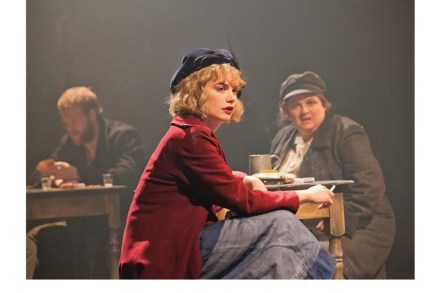
Anna Christie, an early Eugene O’Neill play, has brought Jude Law to the tiny Donmar Warehouse. Set in New York among migrant longshoremen, the script takes ages to get to the point. Mat Burke, a randy Oirish loon, wants to marry Anna, a winsome worldly blonde, but faces opposition from her narky, knife-wielding dad, Chris. But never mind the drama, listen to the accents. Jarring phonetics dominate the stage. David Hayman’s Chris spits out gnarled Scandinavian curses. ‘I svair to Gott, Anna, I don’t font hear it.’ Ruth Wilson’s Anna has a hard-to-place American accent which harbours many a stowaway syllable. And Law, playing de Oirishman, speaks a dialect that’s packed with extra fruity flavours.

Down and out in Edinburgh

From our UK edition

Lloyd Evans mingles with sozzled Scots, benumbed punters and performers with nothing to lose at this year’s Fringe It’s for losers, Edinburgh. The world’s down-and-outs come here in droves every August. This year I was one of them. Having failed to secure my usual lodging, a spartan cell on the university campus, I had to book a backpackers’ refuge on the Royal Mile. It was better than a park bench. Just about. The website promised ‘fitted sheets’ and ‘lounge with real fire (gas/coal effect)’ as tokens of its commitment to luxury. I rented a towel (20p, no deposit), which turned out to be fairly clean on one side. The accommodation was rammed. Six rooms, eight bunks each. Nearly 50 of us sharing four showers. No soap.

Fringe round-up – Mixed blessings

From our UK edition

Hit and miss at Edinburgh. It always is. Random impulses drive you to select one show from the thousands on offer. Coffin Up (10 Dome) contained the hint of a macabre pun (‘coughing up’?), so along I went. It begins in a mortician’s office. There’s a coffin centre stage. The lid springs open and a masked clown sits bolt upright. He waves. Surprise! On comes the undertaker, also masked, and we learn through wordless gestures that he’s bankrupt and has embarked on a killing spree to save his business. It’s charming enough in a cheesy kind of way. The best thing is the soundtrack, a sequence of pub tunes and orchestral favourites that lends subtle emphasis to the dramatic mood.

The real deal

From our UK edition

The Cambridge Footlights (King Dome) have a lot going for them. Poise, brains, clean-cut looks, nice accents and privileged status at the Edinburgh Fringe as keepers of a sacred flame. But in reality these advantages count against them. Audiences know that comedy comes from a paranormal neverland, from damaged grotesques, from halting, slobbering outsiders. Comedy is unpleasant. And these boys are anything but. So it takes them a while to convince us that they’re the real deal and not some artful muck-about from the college quad. Their comedic sources are obvious. Movie spoofs, workplace mix-ups. And much of their material defies current political orthodoxies. A joke about the Jamaicans not being able to muster an army feels distinctly weird.

Pushy mothers

From our UK edition

Weird experiments in stone and glass clutter the South Bank opposite the Tower of London. The near-spherical City Hall looks like a speeding squash ball photographed at the moment of impact with a racquet. Around it stretches an acre of sloping flagstones, ideal for freestyle biking and skateboarding. (Sure enough, both activities are vigorously suppressed by patrols of scowling guards.) Nearby, the Scoop is a roofless amphitheatre fashioned from a crater of layered granite. It’s an eerie and compelling sight, as if a divine whirlwind had ripped deep spirals out of a barren moonscape to produce a huge grooved funnel. As I took my place on a freezing seat, I sensed that the artificiality of the space seems to work against the warmth and intimacy it’s supposed to generate.

Musical mockery

From our UK edition

They’re back. In August the capital fills with bored, dim-witted, half-naked semi-vagrants who have nothing to do here but get in the way of Londoners who do have things to do here. Tourism is an invitation to robbery. If you aren’t going to a place to work, you’re going there to get worked over. The rites of mob travel invert all the natural obligations of xenophilia. Natives become swindlers and their victims happily connive in the evacuation of their own purses. No one objects because it’s understood that a tourist isn’t a visitor in the proper sense. He’s in London but not engaged with it. He’s half here and half at home.

Double sensation

From our UK edition

Loyalty at Hampstead is two sensations in one. First, it’s a sensational drama written by the partner of a key Blair aide, Jonathan Powell, about the build-up to the invasion of Iraq in 2003. Second, it’s a sensational finale to Mr Powell’s career. The author, Sarah Helm, records events unfolding in London and Washington from her unique perspective at the epicentre of world politics, in her bedroom. Overheard phone conversations and a single visit to Downing Street form the entire corpus of her research. To make the thing larky and good fun she splices the tense international negotiations with domestic jinks, flooded pipes, broken burglar alarms, toddlers with bashed bonces, and so on.

Tudor sensibilities

From our UK edition

Kafka, I was informed at school, was a genius. Now that I’ve grown up a bit I can see that my teachers were being typically overgenerous in their estimate of moderate abilities. Kafka was a cartoonist. He’s the Magritte of literature. His outlandish surrealism is so potent that it has succeeded in occupying the imaginations of people who’ve never encountered the work in person. Much of his mystique rests on his name. If he were called King, not Kafka, and Stephen, not Franz, he’d attract far less pious adulation. But he’s all right, Kafka, if you fancy an hour or two of Tremulous Significance. His short story, In the Penal Colony, has been regularly adapted for the stage and at the Young Vic a Palestinian troupe, ShiberHur, is having a crack at it.

Macabre knockabout

From our UK edition

The Royal Court’s at it again. The Royal Court’s at it again. The boss, Dominic Cooke, likes to place his theatre at the disposal of Sloaney young princesses with an itch to write. It’s a great policy — mad, innovative, unpredictable and at times revelatory. Some of these women are seriously talented. Trouble is, Mr Cooke has now glutted the market with a particular brand of upper-class angst. Every month or two we’re invited to witness yet another dark sexual melodrama featuring posh birds in distress. The latest, by Penelope Skinner, takes us to East Anglia where we meet frustrated Becky, two months pregnant, and her elaborately tedious husband John, an eco-prig and all-round worry guts, who’s gone off sex. ‘I don’t want to kill the baby!

A day like no other

From our UK edition

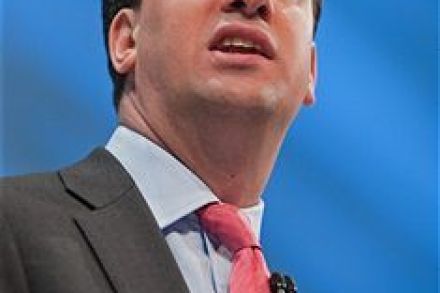
Was there ever a PMQs like this? The mood was like a revolutionary court. On the central issue – the judge-led inquiry into the hacking affair – there was general agreement. But the doors of justice have been flung open at last and hosts of other crimes are rushing in to receive an airing. Ed Miliband arrived convinced that he had a killer question for Cameron. Assuming his favourite expression of indignant piety he asked about a specific warning given to Cameron’s chief of staff last February that Andy Coulson, when News of the World editor, had hired an ex-convict to bribe the cops. The effect was feeble rather than fatal. ‘It wasn’t some secret stash of information,’ said Cameron.

Electrifying Spacey

From our UK edition

Was it curvature of the spine? Was it a club foot? Was it just an epic dose of facial acne? We don’t know exactly where, how or in what degree Richard III’s deformities manifested themselves. Was it curvature of the spine? Was it a club foot? Was it just an epic dose of facial acne? We don’t know exactly where, how or in what degree Richard III’s deformities manifested themselves. Nor did Shakespeare. So he just went with a hunch. In Sam Mendes’s modern-dress production, Kevin Spacey offers us Richard as a double paralympian. He has a mini-excrescence, like a junior dinosaur egg, obtruding meekly from the back of his crisply laundered white shirt.

Miliband takes the battle honours

From our UK edition

Wow. That was a hell of a session. It shouldn’t have been but it was. A few days ago Mr Miliband seemed to be in the dog-house again. Fresh from his Ed Nauseam interview to a TV reporter – when he repeated the same soundbite on public sector strikes about 36 times in a row – he’d been stung by Lord Goldsmith’s complaint that he was failing to connect with the public. But salvation arrived in the shape of News International. The worse things smell at Wapping the rosier it all is for the opposition leader. PMQs today was easy. All he had to do was to appear suitably revolted by the hackers, to demand an inquiry in his sternest whine, and to resume his seat with a self-righteous quiver fading along his lips. But he did far more.

Web exclusive: Review of Spectator debate on secularism, Islam and Christianity

From our UK edition

Secularism is a greater threat to Christianity than Islam Royal Geographic Society June 29th 2011 Chair Rod Liddle   Proposing Fr Timothy Radcliffe OP Damian Thompson Prof Tariq Ramadan   Opposing The Very Rev’d Patrick Sookhdeo Nick Cohen Douglas Murray   Fr Timothy Radcliffe, a Dominican friar based in Blackfriars Oxford, proposed the motion arguing that secularism appeared in ‘strong and weak’ varieties. Weak secularism meant the exclusion of religion from the public sphere. Strong secularism entailed a belief that the only valid truths are the verifiable and falsifiable propositions approved by science. ‘Strong secularism is dangerous.