Lloyd Evans

Lloyd Evans

Lloyd Evans is The Spectator's sketch-writer and theatre critic

What I learned at the People’s Vote march

From our UK edition

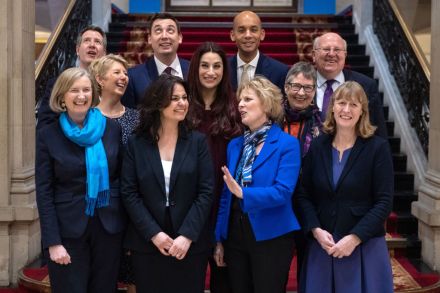
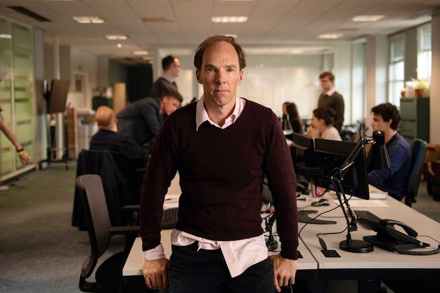
Two beliefs obsess the Remain cause. First, that voters were lied to during the referendum campaign. (Questionable). Second, that the negotiations are being botched. (Indisputable). But while Remainers believe that their opponents are fibbers, they can’t see that they too are being misled. At the People’s Vote rally last Saturday, I found general acceptance of these four myths. 1. Brexit is a ‘far-right’ policy. 2. Europe will be closed to Britons after we leave. 3. The EU is run by saints who negotiate in good faith. 4. A second vote will heal the divisions caused by Brexit. The rally was vast and good-tempered. Many demonstrators had come to be photographed rather than to protest.

Baby love | 25 October 2018

From our UK edition

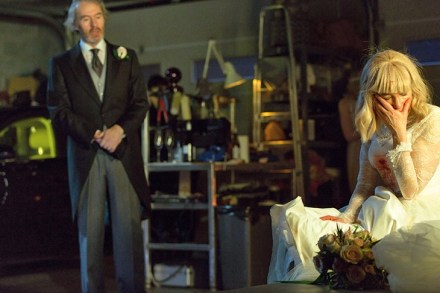
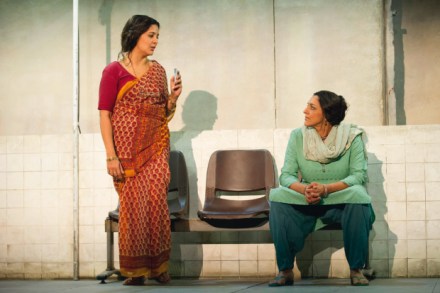
Stories by Nina Raine is a bun-in-the-oven comedy with a complex back narrative. Anna, in her mid-thirties, had a boyfriend 12 years younger than her but the relationship died just as Anna was ready to sprog. Aged 38, and desperately broody, she needs to get preggers pronto. We join her on a Sperm Quest. Though Anna could easily arrange a casual bareback fling, she insists on divulging her goal to her prospective lovers before they drop their Y-fronts and deliver the oats. The action opens as a family drama with Anna’s Dad (Stephen Boxer) pottering around the kitchen, drink in hand, making sarky comments about Anna’s sex life while she sits at a laptop scrolling through mugshots of potential dads. Her brother (Brian Vernal) tosses in comic asides of his own.

Theresa May survives another day at PMQs

From our UK edition

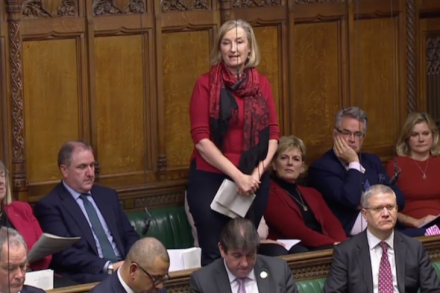
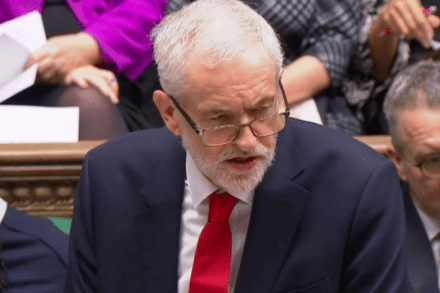
Mrs May survives. That’s the sensational news from today’s PMQs which was conducted in a remarkably sedate and leisurely atmosphere. The Tory leader came under little pressure from Jeremy Corbyn. And she got no grief at all from her own back-stabbers, sorry, back-benchers who seem to have decided to delay her dethronement until Hallowe’en, or possibly Bonfire Night. Jeremy Corbyn challenged the government’s promise that austerity is over. The Labour party love austerity. They need austerity. Without austerity they can’t promise to ‘end austerity’ at the next election. Announcing the loosening of Whitehall’s financial corsets, Mrs May said this. ‘People need to know that their hard work has paid off, and there are better days ahead.

What I learned at the People’s Vote march | 22 October 2018

From our UK edition

Two beliefs obsess the Remain cause. First, that voters were lied to during the referendum campaign. (Questionable). Second, that the negotiations are being botched. (Indisputable). But while Remainers believe that their opponents are fibbers, they can’t see that they too are being misled. At the People’s Vote rally last Saturday, I found general acceptance of these four myths. 1. Brexit is a ‘far-right’ policy. 2. Europe will be closed to Britons after we leave. 3. The EU is run by saints who negotiate in good faith. 4. A second vote will heal the divisions caused by Brexit. The rally was vast and good-tempered. Many demonstrators had come to be photographed rather than to protest.

This is a man’s world

From our UK edition

Sir David Hare’s weird new play sets out to chronicle the history of the Labour movement from 1996 to the present day. But it makes no mention of Corbyn, Momentum, the anti-Semitism row or rumours of a breakaway party. The drama is located in the dead-safe Miliband era and it opens with talk of a leadership election. The two best candidates, Pauline and Jack, are old lovers from university. Pauline is a doctor who entered politics when budget cuts threatened the hospital where her mother was being treated for cancer. Jack is a colourless Blairite greaser, a sort of Andy Burnham without the mascara, who is still besotted with Pauline despite being newly married to Jessica.

John Bercow finally delivered a Speaker’s masterclass at PMQs

From our UK edition

A strange PMQs. Usually the session is dominated by honking throats and empurpled faces. Today there were interesting facts and useful opinions. Amazing! An expertly briefed Jeremy Corbyn put Theresa May on the spot by noting that she’d omitted to say ‘Chequers’ in her conference speech or during recent performances in parliament. So is it dead? No, she said. And the question forced her to mention her orphaned love-child by its baptismal name – ‘the Chequers plan’ – for the first time in weeks. Next, a financial shock. Corbyn asked her to confirm Philip Hammond's warning that quitting without a deal will still land us with a divorce bill of 36 billion smackers. May hedged, but didn’t deny it. Two strikes against her.

Second thoughts | 11 October 2018

From our UK edition

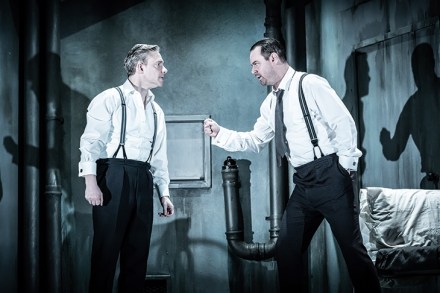
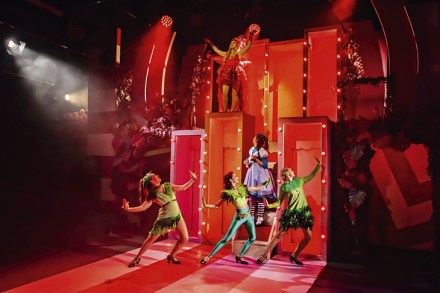
Pinter Two, the second leg of the Pinter season, offers us a pair of one-act comedies. The Lover is a surreal pastiche of married life. A suburban housewife has a paramour who visits her daily while her husband is at work. The husband knows of his rival and discusses his wife’s infidelity as if it were a normal aspect of marriage. He toddles off to the office and a little later the lover arrives: it’s the husband. They begin a game of role play. The wife is a whore and the husband is her trick. This neat device dramatises the theory that marriage is prostitution in disguise. Director Jamie Lloyd presents the show as a paranormal absurdity. Garish pink dominates the couple’s weird, rectilinear home. Pink walls, pink doors, pink shelves, pink everything.

Theresa May reveals her plan to bring Chequers back from the dead

From our UK edition

Golden sunshine streamed across Westminster at noon. And Jeremy Corbyn wiped away the cheer as soon as he stood up at PMQs. Performing his sad-sack routine, he grouched his way through six questions about ‘painful austerity’. Theresa May wants Scrooge replaced by Lady Bountiful in the corridors of Whitehall. But it hasn’t happened, grumbled the Labour leader. Crime, poverty and mental illness are soaring. May hit back with a barrage of statistics. Britain’s lucky citizenry is awash with cash, she said. Billions here, billions there. More for cops, teachers, hospitals, mental health. The figures gushed like an exploded water-main.

God and monsters

From our UK edition

The drop-curtain resembles a granite slab on which the genius’s name has been carved for all time. The festival of Pinter at the Harold Pinter Theatre feels like the inauguration of a godhead. And it’s not easy to separate the work from the reverence that surrounds it. Pinter One consists of sketches and playlets written in the period after 1980 when the author abandoned his anarchic underclass comedies and set about analysing power and its abuses. But his originality deserted him and he began to write like a student troll with a sadistic streak. In Press Conference a newly appointed minister discusses murdering dissidents’ children by snapping their necks. In Precisely, two boozy establishment figures chat about bumping off 20 million citizens.

It gets my vote

From our UK edition

Sylvia, the Old Vic’s musical about the Pankhurst clan, has had a troubled nativity. Illness struck the cast during rehearsals. Press night was postponed by a week. On the evening of the delayed performance, the show was cancelled just before curtain-up. We were told that a ‘concert version’ would be presented with understudies filling certain roles and with scripts on stage to prompt imperfect memories. I saw no scripts. And the absence of key performers made no discernible difference. This looked to me like the A-team. The director, Kate Prince, has a terrific show on her hands and although the introductory run has ended, the material can only get stronger as she continues to refine and improve it.

Public enemy

From our UK edition

Arinzé Kene’s play Misty is a collection of rap numbers and skits about a fare dodger, Lucas, from Hackney. Lucas (played by Kene) gets into a scuffle on a bus and is later arrested for entering London Zoo without a ticket. That’s the entire narrative. Obviously, Kene can’t create an evening’s entertainment from such meagre pickings, so he turns his tribulations as a dramatist into the show’s second storyline. Playwrights moaning about writing plays is a theme of scant interest to audiences, but Kene enlists our sympathy by examining his quest to write a drama that satisfies both black people and the playgoing bourgeoisie.

Always look on the dark side of life

From our UK edition

Hampstead’s boss Ed Hall was so impressed by Stephen Karam’s play The Humans that he wanted to direct it himself. Instead, thanks to a stunning series of accidents, he was able to bring the original Tony award-winning production from Broadway to London. And here it is, directed by Joe Mantello. It’s a family drama, which opens with Dad and Mom, in their sixties, arriving for Thanksgiving at a dingy New York apartment occupied by their daughter Brigid and her fiancé Richard. All the characters are heavily scarred by life. Richard, aged 38, hasn’t yet completed his sociology degree because he suffers from severe depression (possibly triggered by his subject choice, although the writer isn’t cynical enough to make such a cheap crack).

Armed with partisan missives, May outgunned Corbyn at PMQs

From our UK edition

Poor Jezza. The Labour leader had a decent showing today but he was outgunned by Mrs May who performed with astonishing prickliness and aggression. Mr Corbyn claimed that Universal Credit has forced millions onto the bread-line. The PM countered that reform was vital. She cited a young mum in Maidenhead who'd been advised to skive, not work because benefits paid more. The advice came from the Job Centre. The PM received an unexpected stroke of fortune. One of Mr Corbyn’s ploys is to recite weepy letters from constituents whom he identifies, rather like lost puppies in need of a good home, by their first names only. For once, Mrs May was armed with her own collection partisan missives. And the Labour leader unwittingly gave her the perfect cue.

Less is Moor

From our UK edition

It’s intelligent, enjoyable, beautiful to look at and funny in unexpected places, yet Othello at the Globe didn’t quite meet my sky-high expectations. The star should be the Moor but André Holland, from Alabama, can’t rival the magnetism of Mark Rylance (Iago). Holland’s diction is a strain for British ears. We’re used to hearing consonants bashed out — rata-tat-tat — like a rifle range, but his looser southern accent made some of his lines indistinct. Stately Jessica Warbeck lacks Desdemona’s impulsive streak and she plays her as a mature and self-possessed recipient of several Businesswoman of the Year awards.

Jeremy Corbyn’s PMQs speechwriters deserve better

From our UK edition

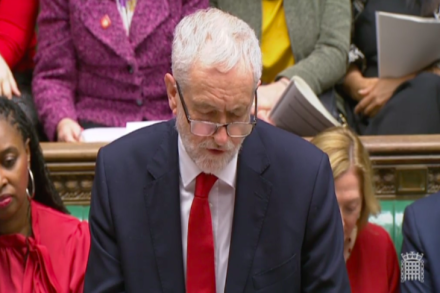
‘He should apologise!’ PMQs opened with a backbench question about anti-Semitism and Theresa May lobbed it straight at the Labour leader. She demanded that Jeremy Corbyn show contrition for joking that Jews in Britain ‘don’t understand English irony.’ Corbyn diffused the attack, a little clumsily, and said he deplored racism everywhere, ‘including the Conservative party.’ May didn’t press him on it. Corbyn had a decent script today. He prised open Tory divisions and he restated the latest hissy-fits between bickering cabinet members. He added a few croaks to the chorus of denunciation for the Chequers deal, and he finished with this.

Posh people move house

From our UK edition

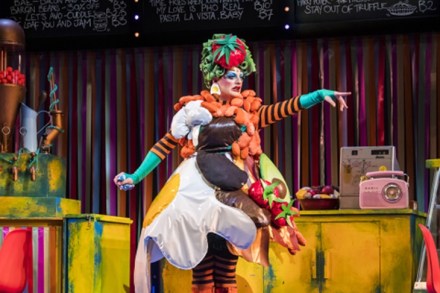
Non-stop chatterbox and mystifyingly revered fabricator of sub-Chekovian paddywhackery, Brian Friel has received another production at the Donmar. His play Aristocrats cadges shamelessly from Three Sisters and The Cherry Orchard. The setting is a crumbling mansion in Donegal occupied by four adult members of the O’Donnell clan (three girls, one boy), who idle around the place waiting for Dad to clock out so they can get their mitts on the bricks. Lindsey Turner’s production is curiously stripped of ornament. The characters are assembled on a lime-green patio, suggestive of mown grass, which is surmounted by a white frame with the dimensions of the goalposts at Wembley.

Simpson, Skinner and socialists

From our UK edition

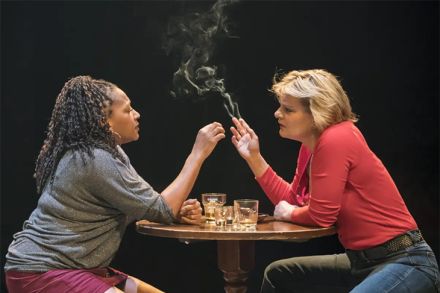
For recovering teetotallers, like me, Thinking Drinkers is the perfect Edinburgh show. On stage, two sprucely dressed actors perform sketches about booze while a team of well-trained ushers race around plying the audience with strong liquor from plastic beakers. In under an hour, I swallowed a can of ale chased by vodka, gin, rum and Irish whiskey. It’s a decent show but, for obvious reasons, forgettable. Nina’s Got News is the first fringe play written by Frank Skinner. Nina has split up with her besotted boyfriend, Chris. When he answers a summons to her flat he’s hoping for a valedictory romp. But Nina has asked her best pal Vanessa over and the three chums engage in amusing wordplay as they try to place their friendship on a new footing. Then a shock announcement.

Mind your language | 16 August 2018

From our UK edition

David Greig has written the international festival’s flagship drama, Midsummer. This farcical romance is performed as a party piece by four actors supported by a plinky-plonky band playing satirical ballads. We meet two boozy drifters, Bob and Helena, who enjoy a night of rampant sex aftera chance encounter in an Edinburgh pub. Will their affair live or die? Well, since the show starts with two older actors reminiscing about the characters’ past we knowin advance how it all ends. An odd way to kill suspense. The lovers have little in common apart from alcoholism and the madcap plot sends them hurtling through a set of mishaps and scrapes as their romance develops. They get tied up in a bondage club.

Edinburgh round-up | 9 August 2018

From our UK edition

Trump Lear is a chaotically enjoyable one-man show with a complicated premise. David Carl, an American satirist, has arrived on stage to perform King Lear when Donald Trump’s voice interrupts him from the wings. The President threatens to kill him unless he delivers an accessible version of the Shakespeare classic ‘that isn’t boring’. With improvised puppets, Carl rattles through the play while Trump interrupts and offers directorial notes. Something weird happens. A curious mutual admiration springs up between the artist and his patron. Despite its messy presentation, the show works because Carl is a superb impressionist and his wide-ranging gags hit the mark more often than not.

God save us from the King

From our UK edition

Gandalf, also known as Ian McKellen, has awarded himself another lap of honour by bringing King Lear back to London. Jonathan Munby directs. His eccentric decision to hire actors who don’t resemble their characters will baffle anyone who hasn’t studied the play in advance. The casting may be ‘colour-blind’, but the audience isn’t. Anita-Joy Uwajeh (Cordelia) evidently has no white ancestry and therefore cannot be Lear’s natural daughter. A newcomer might deduce that the king’s cruelty towards her stems from her second-class status as an adoptive child. And anyone trying to unravel that mystery will be equally baffled by Sinead Cusack’s Kent.