Lloyd Evans

Lloyd Evans

Lloyd Evans is The Spectator's sketch-writer and theatre critic

Is Shakespeare racist?

From our UK edition

Shakespeare’s Globe has a new wheeze to popularise its shows. The latest production, Henry VIII, is supported by a seminar about racism in this late play which the Bard co-wrote with John Fletcher. The online event, hosted by the Globe’s Dr Will Tosh, features dramatist-in-residence, Hannah Khalil, and Mira Kafantaris, a critical race theorist from the US. Both these experts proclaim their status as migrants and they examine Shakespeare through the lens of racist exploitation. At first glance it seems tricky to link racism with Henry VIII who was born four years before Columbus sailed for the Caribbean. But racism is everywhere, it seems.

Newcomers will need to read the play in advance: Julius Caesar, at the Globe, reviewed

From our UK edition

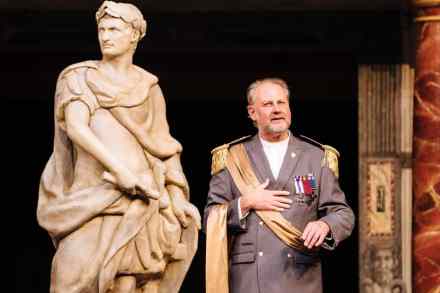
Some things are done well in the Globe’s new Julius Caesar. The assassination is a thrilling spectacle. Ketchup pouches concealed inside Caesar’s costume explode bloodily with each dagger blow and the conspirators are doused in dripping scarlet gore. During the assault, Caesar fights back and very nearly survives. Highly realistic. Afterwards, his statue is toppled and rolled off the stage in a subtle echo of Colston’s ducking in Bristol docks. The crowd relished every minute of this pacy, high-energy show even though the visuals are wildly confusing. Brutus (Anna Crichlow) is a lesbian who sports a beige pashmina, a white T-shirt and a fetching gold turban. She looks like the deputy chairperson at a seminar about dolphins.

Hard to believe this rambling apprentice-piece ever made it to the stage: Almeida’s The House of Shades reviewed

From our UK edition

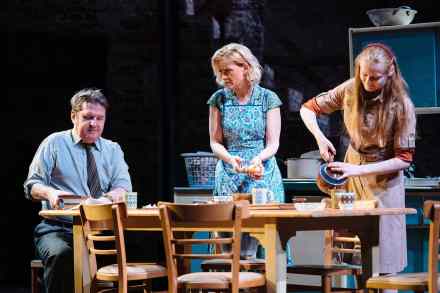
The House of Shades is a state-of-the nation play that covers the past six decades of grinding poverty in Nottingham. The action opens in 1965 with a corpse being sponged down by an amusingly saucy mortician. The dead man, Alistair, sits up and walks into the kitchen where he natters with his prickly, loud-mouthed wife, Constance (Anne-Marie Duff). They seem to live in the city’s most dangerous dwelling. People keep dying. Then they come back to life to make a speech or two. Constance’s pregnant daughter doesn’t survive a back-room abortion and she shows up half a dozen times in a skirt dripping with blood. Alistair expires again and returns to life to tell us what it’s like to die. How the writer, Beth Steel, researched this experience isn’t clear.

Starmer fluffed his lines at partygate PMQs

From our UK edition

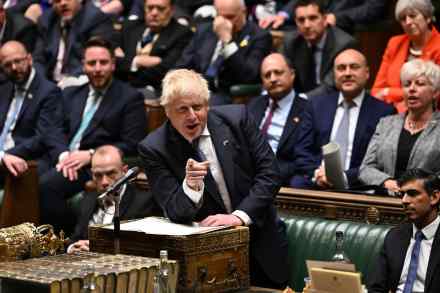
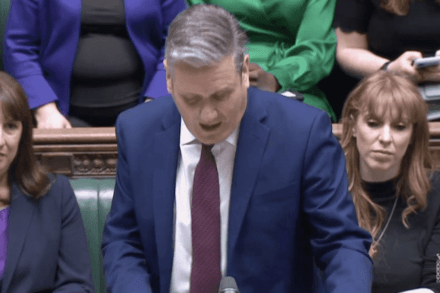
PMQs was a warm-up today. The main event was Boris’s response to Sue Gray’s partygate report. Boris’s body language was sheepish as he sat through PMQs. He hunched in his place, head down, legs crossed, his meaty arms enclosing his ribs in what psychologists call a ‘self-comforting’ gesture. He was giving himself a bear-hug. Sir Keir predicted that the Tories would shortly perform a U-turn on windfall taxes. Probably true. But Boris wanted it both ways. He derided Labour’s passion for confiscating the assets of big business. ‘You can feel the lust for tax rising off the benches opposite,’ he said luridly. Ian Blackford delivered a long, tetchy speech which liberated enough warm air to fill a weather balloon.

The bizarre theatre of the BBC’s partygate exposé

From our UK edition

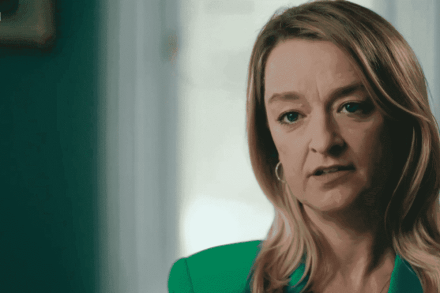
Last night’s must-see TV show was Bury Boris – the Movie. In anticipation, the BBC released a trailer for a Panorama edition about parties in Downing Street. It’s a thrilling two-minute watch. It opens with a shot of a dodgy skinhead in a sleazy overcoat being released from Wormwood Scrubs. Or is it an international money-launderer being secretly filmed at Davos? Or perhaps a premiership star on his way to court for kicking his dog. But hang on. There’s a caption. ‘Lee Cain’s leaving do’. The date is November 2020 and a farewell bash is being held in Downing Street. Over this, we hear a tense, familiar voice. ‘Can you tell us what happened?’ The interrogator is Laura Kuenssberg, the BBC’s in-house Inspector Rebus.

The playwright seems curiously detached about rape: The Breach, at Hampstead Theatre, reviewed

From our UK edition

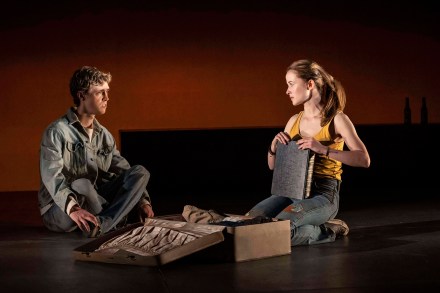
Hampstead’s latest play is a knotty rape drama by Naomi Wallace set in Kentucky. Four teenagers with weird names meet in a hired basement. Hoke and Frayne are boys. Jude is a girl whose younger brother, Acton, gets bullied at school. Their chat is aggressive, cynical and funny. Jude boasts that she’s already lost her virginity but she’s proud to have slept with just two men: ‘You’ve got to do six or seven to qualify for slut.’ Hoke claims to have groped his 34-year-old aunt when she was drunk, ‘but she never knew it happened so in a way it didn’t’. Great opening dialogue. Wallace’s attitude to sexual assault is curiously detached. She seems to think rape is ‘just one of those things’ Then it all goes haywire.

Keir Starmer needs to learn when to keep quiet at PMQs

From our UK edition

It’s half-time in the Beergate versus Partygate contest. The current score, nil-nil, would suit both leaders perfectly. The economy dominated PMQs. Unemployment, boasted Boris, has reached its lowest level since 1974. Great news. But inflation is at a peak last seen in 1982. Slow-footed Sir Keir didn’t mention that. He pushed Labour’s pet-project, a windfall tax on the oil majors, which has been mishandled by ministers. Some flatly oppose it, others dither. Rishi Sunak won’t rule it out and Boris said today he was looking at ‘all measures.’ Why the wobble? Sir Keir predicted a U-turn and urged Boris to hurry up about it. The Tories have own-goaled this. If they bring it in, they’ll look weak. If they don’t, they’ll look mean.

Two hours of bickering from a couple of doughnut-shaped crybabies: Middle, at the Dorfman Theatre, reviewed

From our UK edition

‘I fink I doan luv yew any maw.’ A marital bust-up drama at the National Theatre opens with a whining Cockney, Maggie, telling her City whizzkid husband Gary that their relationship is over. Gary and Maggie are aspriring underclass types who’ve achieved bourgeois prosperity: John Lewis kitchen, vintage wine rack and a ceramics collection. They have an eight-year-old daughter at a private school where she learns ballet steps and the piano instead of watching road-rage videos on YouTube like a council-house kid. She’s called Annabelle, by the way, and one wonders if Gary and Maggie style themselves ‘Garfield and Margaret’ at the school gate.

Angry diatribes and amusing pranks: Donmar Warehouse’s Marys Seacole reviewed

From our UK edition

The title of the Donmar’s new effort, Marys Seacole, appears to be a misprint and that makes the reader look twice. Good marketing. The show is a blend of Spike Milligan-esque sketches and indignant speeches about race but it starts as a straightforward historical narrative. Mary Seacole enters in Victorian garb and introduces herself as a woman of half-Scots and half-Caribbean heritage who believes that ethnic differences create hierarchies of competence. Her veins, she says, flow with ‘Scotch blood’ and this gives her an entrepreneurial advantage over her ‘indolent’ Caribbean neighbours. Inflammatory stuff. If a white author embraced that supremacist creed, there’d be outrage.

Piers Morgan’s Uncensored has a huge mountain to climb

From our UK edition

He sits alone at a huge glossy desk like a James Bond baddie in his lair. The viewer expects Daniel Craig to burst in and demand the nuclear codes at gunpoint. This is Piers Morgan in Uncensored, his new flagship show for Talk TV which launched last Monday. The week began with a storm of bad publicity about ‘the most explosive interview of the year.’ Morgan was accused of doctoring a trailer to make it appear that Donald Trump had flounced out in the middle of their tete-a-tete. But the unedited footage showed the prickly ex-president muttering, ‘turn the camera off’, as he left the studio. A spot of sneaky editing turned this minor tremor into a massive earthquake. An excellent result for Morgan as it guaranteed a big audience for his debut show.

Muddled, tricksy and cheap: The Corn is Green at the Lyttelton Theatre reviewed

From our UK edition

The Corn is Green by Emlyn Williams is a sociology essay written in 1938 about a prickly tyrant, Miss Moffat, who tries to civilise Wales by setting up a village school where sooty-faced miners are taught to read and write. Miss Moffat is an unmarried English layabout who has money to burn and time on her hands and so, of course, she wants to ‘help’. You know the type? Director Dominic Cooke treats the script as a period joke and the actors are encouraged to mock their characters mercilessly. Hoots of cheap laughter echo around the theatre. The show is presented very weirdly as a sort of botched technical rehearsal with lots of clunky sound effects and a Writer/Narrator on stage who paces about and shouts directions at the actors.

Tory MPs have a strange way of showing their disdain for Boris

From our UK edition

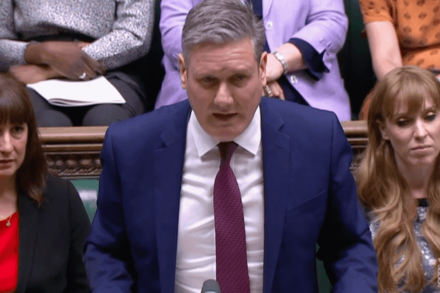
That was a barmy idea. Sir Keir Starmer led on macroeconomics at PMQs and attacked the government over its economic failures. But next week’s elections are for local authorities which have no influence over the national coffers. It’s as if Sir Keir wanted to change the subject and talk about anything other than Labour’s ability to deliver local services. He seemed ill-at-ease and disengaged. In need of a battery recharge. Very little stomach for the fight. And he relied on pre-scripted insults rather than improvising his comebacks.

Lindsay Hoyle should be quiet on Angela Rayner

From our UK edition

What’s up with Lindsay Hoyle? On Monday, the Speaker opened the afternoon session of parliament with a statement about the puerile gossip surrounding Angela Rayner. He called the story in the Mail on Sunday, ‘misogynistic’ and ‘offensive to women in parliament.’ Such tasteless yarns, he went on, ‘can only deter women who might be considering standing for election – to the detriment of us all.’ His remedy was to call two meetings. First, a tete-a-tete with Rayner herself. Secondly, a conference with the Mail on Sunday editor and the chair of the press lobby. Several questions arise. The less urgent issue is why he wished to meet Rayner personally?

This Trump satire is too soft on Sleepy Joe and Cackling Kamala: The 47th at the Old Vic reviewed

From our UK edition

Trump is said to be a gift for bad satirists and a problem for good ones. He dominates Mike Bartlett’s new play, The 47th, which predicts that the 2024 presidential election will be a run-off between Trump and Kamala Harris. Bertie Carvel’s Orangeman is a subtle and highly amusing spoof that never descends into exaggeration or grotesquery. The visuals are convincing: the sandy blond wig, the baggy golfing outfits, the spare tyre around the midriff. Excellent design work. And Bartlett captures the repetitive lullaby pulse of Trump’s rhetoric. Like a lot of liberals, he seems to admire Trump and this show reflects a perverse fascination with its target. The script is understandably soft on Sleepy Joe and his faltering brainpower.

Has Boris finally shaken off cake gate?

From our UK edition

This was it. Boris’s career was on the line at PMQs. Would he finally beat cake-gate or would he get hit in the face with a huge cream pie? As soon as Sir Keir mentioned cake, Boris brushed it aside. ‘I think he’s in a Dr Who time-warp,’ he said. ‘We had this conversation yesterday.’ He added a trite expression of regret about his fixed penalty notice. And he shortened it to ‘FPN’ which sounds obscure and harmless. It was a big risk to mention Dr Who and time-warps. Sir Keir had the chance to punish this flippancy by leaping on his high horse and claiming that the PM was treating breaches of Covid rules as a joke. But Sir Keir stuck to his scripted plan and asked the PM to confirm that he’d broken the law.

Could the Arts Council pay Americans to keep this stuff in America? Daddy and The Fever Syndrome reviewed

From our UK edition

The Fever Syndrome is a dramatised lecture set in a New York brownstone occupied by the super-brainy Myers family. The old man, Prof. Richard, is an IVF expert whose daughter, Dot, wants to defrost her embryos and have a second baby. Cue lots of chat about in vitro technology in the 1970s. Dot’s daughter, Lily, has a hereditary ailment that causes epileptic seizures. This, too, is discussed in further Ted Talk passages. And Prof. Richard suffers from incontinence and Parkinson’s disease so these conditions are aired as well. It’s perfectly riveting for medics. Less so for civilians who may not share the view of the Myers family that everyone in the Myers family is a world-class intellectual. Robert Lindsay stars as Prof.

Boris’s crazy defence

From our UK edition

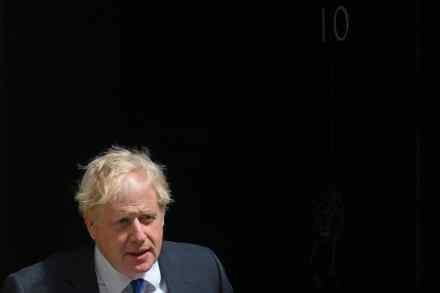
‘I was very busy. The party was crap. I’m sorry you’re angry. Now leave me alone.’ That was the gist of Boris’s statement about being fined for attending an event in Downing Street to celebrate his birthday.  A flustered-looking Prime Minister delivered the Partygate Declaration in a small, wood-panelled room with a nicely-lit painting behind him. Not a bad setting. It looked homely, low-key, reassuringly domestic. If he’d sat at a varnished desk flanked by a Union Jack and a Nato flag he’d have sent the wrong signal. And he delivered his mea culpa in a standing position, as if he were dealing with a minor office problem while hurrying to more important meetings elsewhere. This was not a great performance.

Shakespearean directors could learn from this: the National Theatre’s Hamlet for 8- to 12-year-olds reviewed

From our UK edition

The NT has rejigged Hamlet for 8- to 12-year-old children. It’s a decent attempt to cover the highlights at a sprint lasting just 90 minutes. A few gripes. The medieval setting is unclear because the courtiers wear matching red and yellow suits, like Butlins entertainers. Why not military costumes? British kids are used to seeing the royals in uniforms. And a martial emphasis would tell us that Elsinore is a heavily armed dictatorship where family rivalries may spill over into civil war. More swords and bucklers are needed. Before curtain-up, the cast fanned out across the stage to wave at the children and have a chat. This broke the ice and ensured that the little tinkers kept quiet during the show.

A play for bureaucrats: David Hare’s Straight Line Crazy reviewed

From our UK edition

It’s good of Nicholas Hytner to let Londoners see David Hare’s new play before it travels to Broadway where it belongs. Few Brits will know the subject, Robert Moses, an urban planner of the 1920s who built the roads and bridges that gave New Yorkers access to seaside resorts in Long Island. This is a play for bureaucrats. Nit-picking and box-ticking are the main points of interest. Squiggles on forms. Correct signatures at the bottom of proof-read documents. Hare is copying George Bernard Shaw and his script is a celebration of rhetoric above all other qualities. Dialogue-junkies will enjoy the screeds of quickfire chatter that keep the play motoring along. And like Shaw, Hare omits many of the elements that make a drama feel lifelike.

PMQs: Boris let slip his election attack lines

From our UK edition

Covid is ancient history. And Ukraine has ceased to dominate PMQs. Today, ideological warfare between the parties broke out again. The old politics is back. Sir Keir Starmer accused the Chancellor of fibbing during last week’s bogus budget. Tax hikes had been camouflaged as tax cuts. Boris denied this and praised his Chancellor for delivering a historic bonanza of golden giveaways. ‘The biggest cut in fuel duty ever. And the biggest cut in tax for working people in the last 10 years.’ Sir Keir silenced him. ‘Cut the nonsense and treat the British people with a bit of respect.’ The tax burden is soaring, he said, and for every pound given away, six pounds were being taken back. His solution? A one-off tax grab from Big Oil whose profits are on the rise.