Lionel Shriver

Lionel Shriver

Lionel Shriver is a columnist at The Spectator and author of We Need to Talk About Kevin, among other books.

Is Labour too close to the City – with Lionel Shriver & Robert Hardman

From our UK edition

35 min listen

Britain’s banks have a hold over Rachel Reeves, declares Michael Simmons in the Spectator’s cover piece this week. Almost two decades on from the 2008 financial crash, the UK has failed to reform the system and – as ordinary people face a cost-of-living crisis – Labour is in hock to big business. Is the Chancellor too close to the City? For this week’s Edition, host Lara Prendergast is joined by economics editor Michael Simmons, columnist Lionel Shriver, and columnist from the Daily Mail Robert Hardman.
Is Labour too close to the City – with Lionel Shriver & Robert Hardman

The real reason I left Britain

From our UK edition

This is a two-parter, albeit linked. If you’re interested in the duplicitousness of British journalists, then keep reading. If you’re only interested in self-destructive British tax policy, skip to the middle. Burnt repeatedly by hacks who pretend to be enraptured by my latest novel while snooping through my cupboards, I long ago learned the hard way not to let British journalists into my home. Thus for years I only conducted interviews in the safely impersonal lobby of a West End hotel. But lessons learned are too often lessons lost. That may be an overly kind formulation of: I am an idiot. In my new hang in Portugal, I reverted to gormless naivety last month and let a British journalist into my house.

Who doesn’t want a better life?

Every couple of years a columnist-cum-novelist will inevitably stoop to shameless self-promotion. In my defence, at least the novel released this month is germane to the political moment. Lest its simple title, A Better Life, come across as lame, I asked the designers of my British and American hardback covers to use imagery that conveys the book’s focal subject matter: immigration. See, proponents of unfettered mass migration have eternally assured us that most illegal immigrants – or as the Biden administration instructed federal law enforcement to call them, ‘newcomers’ – are merely seeking ‘a better life’. This explanation is routinely trotted out as an irrefutable justification for a potentially near-infinite imposition of foreigners on western polities.

No one is safe from a wealth tax

No matter how many jurisdictions discover the hard way that wealth taxes backfire, in California an initiative is collecting signatures to put a ‘one-time’ (ha!) 5 per cent tax on the net worth of the state’s roughly 200 billionaires on November’s ballot. Hey, those guys are rich. They won’t even notice. But the funny thing about people and money is that even folks with lots like to keep it. The 2026 Billionaire Tax Act is slyly retroactive, a variety of pre-crime legislation – applying to anyone resident in California on 1 January this year, looping a bungee cord around the ankles of would-be absconders. Thus billionaires such as Peter Thiel scrambled to establish a presence in a lower tax state before midnight on New Year’s Eve.

There should be no ‘sanctuary’ from ICE

After three hours of parsing American case law, for once I share Donald Trump’s exasperation. See, many a naif, including yours truly three hours ago, would have thought the Democrats’ ‘sanctuary cities’ unconstitutional. A sanctuary city instructs its local police force to cease all co-operation with federal immigration agents. The constitution’s supremacy clause dictates that federal law overrules local law, just as rock crushes scissors in the hand game. For sub-jurisdictions to offer refuge from big meanie federal Immigration and Customs Enforcement (the aptly cold-hearted sounding ICE) should not, legally, be possible. It’s possible.

‘Islamist’ is a dishonest confection

From our UK edition

Convicted last month of plotting what could have proved the worst terrorist attack in British history, Walid Saadaoui had hoped to murder at least 50 people in Prestwich, because ‘Prestwich is full of Jews’. He was caught purchasing four AK-47s, two handguns and 1,200 rounds of ammunition. For Saadaoui’s fires of righteousness on social media had earlier drawn the eye of British law enforcement. ‘Avenge your religion Oh Muslims in Europe,’ he posted. ‘I pray to you not to catch me until I break my thirst with Jews, Christians and their proxies’ blood.’ Thus Saadaoui instructed an undercover officer: ‘Grab a Jewish person and slaughter him and remove his head, rub blood on my body, throw it away. That is the least we can do.

Immigration policy should discriminate

Many years ago, a friend described one of my serious literary novels as “clever.” I was offended – but I shouldn’t have been. The friend was from across the pond, where I now understand “clever” means smart. For Americans, cleverness implies a shallow, facile intelligence. Applied to people, it hints at sly, calculating deviousness or cunning. It has no positive moral qualities, as westerners understand them. Tax evasion can be “clever.” Let’s move on to “culture” – a big, fuzzy word we throw about with careless abandon, that often summons images of traditional clothing and cuisine. But parsed in its most profound sense, culture might best be defined as “what a people admire and what they deplore.

Discrimination is good, actually

From our UK edition

Many years ago, a friend described one of my serious literary novels as ‘clever’. I was offended – but I shouldn’t have been. The friend was from across the pond, where I now understand ‘clever’ simply means smart. For Americans, cleverness infers a shallow, facile intelligence. Applied to people, it often hints at sly, calculating deviousness or cunning. It has no positive moral qualities, as westerners understand them. Tax evasion can be ‘clever’. Let’s move on to ‘culture’ – a big, fuzzy word we throw about with careless abandon that often summons images of traditional clothing and cuisine. But, parsed in its most profound sense, culture might best be defined as ‘what a people admire and what they deplore’.

What’s Trump got to do with the price of turkey?

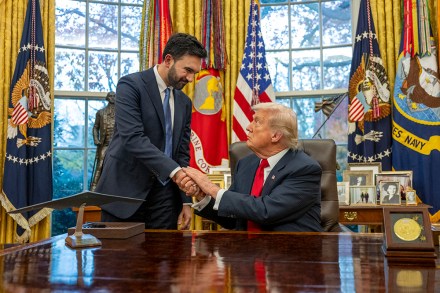
During last week’s excruciating Oval Office make-nice between an insultingly buddy-buddy American President and a fraudulently obsequious New York City mayor-elect, the contest was over which pol was the more patronising. At one point Trump graciously granted his petitioner permission to call him a ‘fascist’ while clearly implying the guy’s OTT campaign rhetoric had been embarrassing. Donald Trump sat regally on his throne, patting Zohran Mamdani’s arm while commending ‘Attaboy!’ as if petting a golden retriever that had fetched a ball. For his part, Mamdani stood mutely by the Resolute desk with cartoonish humility, hands over crotch. This cowed performance of beta-male submission was meant to disguise who’d got a leg over whom.

The UK’s tax take, take, take

From our UK edition

Helping her country ski ever more steeply down the wrong side of the Laffer curve, Rachel Reeves may be preparing to violate Labour’s manifesto and raise income tax – perhaps a suitable juncture at which to examine just how wacko the UK tax code is already. Start with the duplicity of ‘national insurance’. This unhypothecated add-on simply pours into the Treasury’s coffers as plain taxes. Yet much of the populace still believes that NI specifically funds the NHS. This is misunderstanding by design. The sly mislabelling is a resentment blocker. In truth, the employee basic tax rate is a straight-up 28 per cent, not 20 as advertised. The mooted Reeves proposal of raising income tax by 2 per cent and reducing basic-rate NI by 2 per cent is dishonest.

I’ve been enslaved by my Apple watch

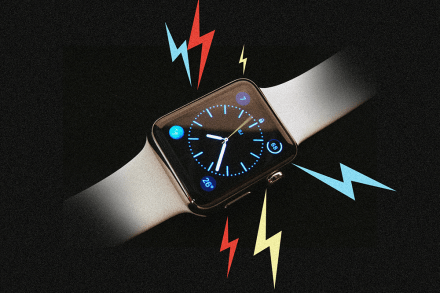
Aside from streaming on an iPad, one of the few entertainments on offer when riding a stationary bike is tracking your heart rate. Breaking 150 beats per minute provides a fleeting (and doubtless misplaced) sense of achievement. Yet the wearable heart monitor that came with my exercise bicycle proved unreliable; one’s BPM never truly drops from 137 to 69 in one second. This is to explain why I bought the fitness freak’s fetish: an Apple watch. Its heart-rate monitors are accurate. I opted for a reconditioned older model, not only half the price of the new ones but inclusive of the blood oximeter function, which a medical technology suit has forced Apple to eliminate in current American models until the litigant’s patent runs out in 2028.

Legal immigration is an absolute nightmare

From our UK edition

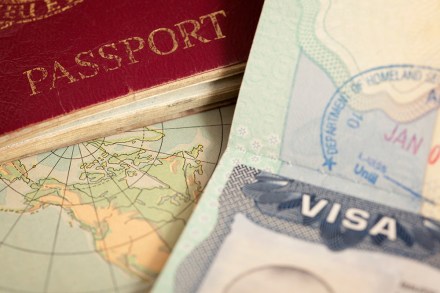
A personal note this week, as 15 October 2025 marked an occasion of sorts: when my husband’s and my Portuguese residency permits expired. Isn’t that a bit sloppy, you might ask, allowing your permission to remain in a country where you live to lapse? On one party’s part, very sloppy, but not ours. At least a dozen people must have exclaimed to me: ‘Oh, I’ve thought about moving to Portugal!’ After emigrating from London in 2023, I’m not issuing a warning exactly. We don’t regret the move. Landscape gorgeous, food great, people nice, wine cheap. But this country is notoriously bureaucratic, and the paperwork side of playing Mother, May I? with Portuguese immigration was and remains a nightmare.

Transgenderism proves people will believe anything

From our UK edition

For years, the World Professional Association for Transgender Health (WPATH) has wrapped itself in a guise of medical expertise, advising doctors, schools and corporations in America about how best to treat the hundreds of thousands of people who have mysteriously become confused about which sex they are (personally, I’d recommend a quick dart to the loo to pull down their pants). In truth, WPATH is an advocacy organisation whose storm troopers comprise manic men in dresses who hate women but also think they are women. Get your head round that. Last year, a trove of intra-organisational emails exposed the recklessness of its indiscriminate promotion of ‘gender-affirming care’ (neither affirmative nor care) for ostensibly transgender minors.

Is Charlie Kirk’s murder really a ‘watershed’?

From our UK edition

The Charlie Kirk assassination has triggered a spate of duelling death counts. The usual media suspects on both sides of America’s epic left-right divide have trotted out set lists of the past decade’s politically motivated violence. For once, the faction that chocks up the most fatalities in this warped real-life video game loses – for the competition is over which end of the political spectrum can blame the other end for the frenzied ideological bloodlust we’ve been told for days now characterises the contemporary United States. For the left, the starring evidence that the right’s crazies pose the greater threat to the orderly conduct of civic life is January 6th.

Reform’s camp following, masculine rage & why do people make up languages?

From our UK edition

51 min listen

First: Reform is naff – and that’s why people like it Gareth Roberts warns this week that ‘the Overton window is shifting’ but in a very unexpected way. Nigel Farage is ahead in the polls – not only because his party is ‘bracingly right-wing’, but ‘because Reform is camp’. Farage offers what Britain wants: ‘a cheeky, up-yours, never-mind-the-knockers revolt against our agonisingly earnest political masters’. ‘From Farage on down,’ Roberts argues, ‘there is a glorious kind of naffness’ to Reform: daytime-TV aesthetics, ‘bargain-basement’ celebrities and big-breasted local councillors. ‘The progressive activists thought they could win the culture war simply by saying they had won it’, but ‘the John Bulls and Greasy Joans are stirring again’.

The truth about the trans school shooter

From our UK edition

True, one of the earliest school shooters, Brenda Spencer, who shot up a playground in San Diego in 1979, was a girl – famously providing the peg for the Boomtown Rats’ hit ‘I Don’t Like Mondays’. But that was a long time ago. Since, American mass shooters have been overwhelmingly male. One would expect, then, that when the culprit in a high-profile attack on young children is a woman, that anomaly would merit journalistic remark. After all, following these baffling bursts of nihilistic animosity, there’s little enough to say. Yet after ‘Robin’ Westman opened fire on kids at mass in a Catholic school in Minneapolis last week, segments of the media were conspicuously incurious about how ‘she’ came to be consumed by such commonly masculine rage.

Putin’s trap, the decline of shame & holiday rental hell

From our UK edition

50 min listen

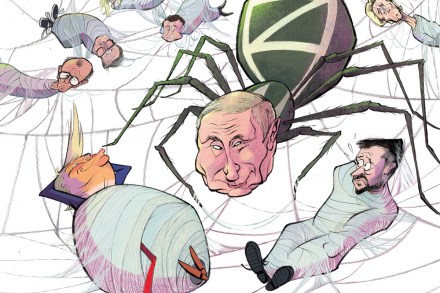
First: Putin has set a trap for Europe and Ukraine ‘Though you wouldn’t know from the smiles in the White House this week… a trap has been set by Vladimir Putin to split the United States from its European allies,’ warns Owen Matthews. The Russian President wants to make a deal with Donald Trump, but he ‘wants to make it on his own terms’. ‘Putin would like nothing more than for Europe to encourage Ukraine to fight on… and lose even more of their land’. But, as Owen writes, those who count themselves among the country’s friends must ask ‘whether it’s time to choose an unjust peace over a just but never-ending war’. Have European leaders walked into Putin’s trap? Owen joins the podcast alongside Gideon Rachman of the Financial Times.

My shoplifting shame

From our UK edition

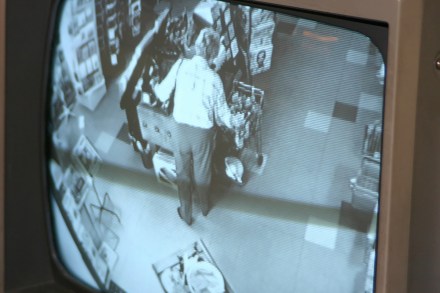
On reflection, a tradition of shelving many desirable goods within ready reach is extraordinary – especially because the premises in which these wares are invitingly presented provide unfettered access to every passerby. By and large, it’s dead easy to pick up one of these desirable objects – or dozens, should forethought ensure the possession of a bag – and walk out. What would possess anyone to organise such elaborate, unprotected arrays of stuff – altruism? Idiocy? A nationwide honour system, that’s what. Urbanites are astonished by unmanned farm stands that leave cartons of eggs for the taking beside a little sign and a jar. Yet offline retail is also dependent on a little sign (the price on the shelf) and a jar (the checkout counter).

Haircuts are a human right!

From our UK edition

During the immigration deluge in the wake of Russia’s invasion of Ukraine, it seems one Afghan and one Indian national who threw themselves on the mercy of much-besieged Ireland got lost in the shuffle. Fobbed off with €25 vouchers, they were obliged to sometimes sleep rough for two months, without access to food and hygiene and exposed to hardship and fear. They’ve sued the Irish state. Knowing Irish NGOs, I bet they got help. The government has argued that the pressures on Ireland’s hospitality at the time were severe enough to qualify as a force majeure. Their reception centres were full to bursting and there was no room at the inn (and haven’t we heard that before). The Irish High Court sought a ruling from the European Court of Justice.