Limor Simhony Philpott

Dr. Limor Simhony is a freelance writer. She was previously a research fellow at the Institute for National Security Studies (INSS) in Tel Aviv.

Hezbollah’s drone strike won’t deter Israel’s campaign

Last night, a single Hezbollah drone managed to inflict more damage on Israel than 200 Iranian ballistic missiles so far. A 'swarm' of drones launched by the Iran-backed terror organisation based in Lebanon exploded south of the northern city of Haifa, with one hitting the Binyamina military base, home to a training camp for the Israeli Defence Force's (IDF) Golani Brigade. Early reports indicate the drone was spotted by the Israeli airforce, but attempts to shoot it down failed. Sirens to warn those targeted also did not go off. As a result, it exploded, causing a reported 67 casualties according to Israeli media, four of whom have been killed and at least 12 badly wounded. Israel is resisting calls for ceasefire This was the single deadliest attack on Israel since 7 October.
Why Israel is expanding its operation against Hezbollah

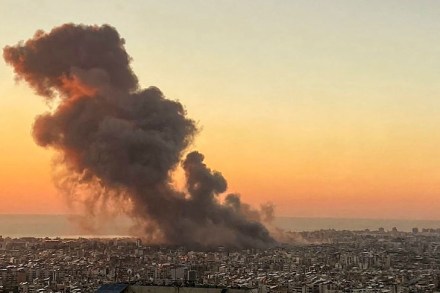
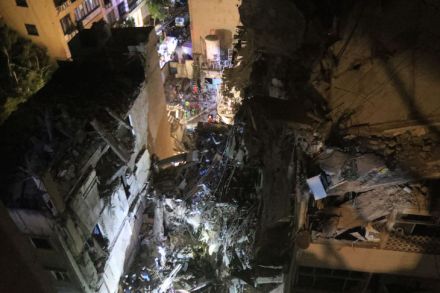
As Israelis marked a sombre day commemorating the 7 October massacre, the Israel Defence Forces (IDF) expanded their operation in Lebanon. Their aim is to weaken the Iranian-backed terror organisation Hezbollah, which has been attacking Israel from Lebanon for the past year. While the Israeli air force bombs specific targets deep inside Lebanon, including the Hezbollah-controlled neighbourhood Dahieh in Beirut, ground forces have been engaging terrorists close to the border. Yesterday, additional forces joined the fighting, concentrating on the south-western region, where there is still a considerable number of terrorists. It is estimated that there are now over 15,000 Israeli troops in Lebanon.

Why did some people refuse to mourn with the Jews after 7 October?

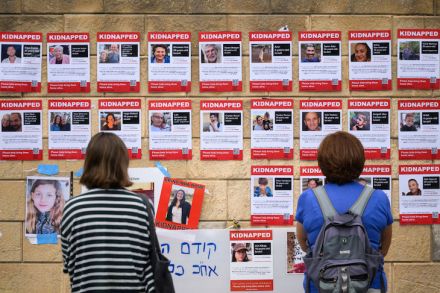
A year has passed since the terrible events of 7 October 2023, but for Jews the pain of that day – when 1,200 were killed and 250 hostages snatched across Israel's border into Gaza – remains vivid. Every call and every text on that dreadful Saturday morning brought awful news. Many of those murdered were friends and relatives. My cousin, who was at the Nova music festival, survived the massacre, but she was injured and remains traumatised by what she saw; she will never forget the rapes and shootings for as long as she lives. Another cousin’s son was murdered by Hamas. Sons, daughters and grandchildren were lost.

Israel’s revenge, farewell Fraser & the demise of invitations

37 min listen

This week: Israel’s revenge and Iran’s humiliation. As the anniversary of the October 7th attacks by Hamas approaches, the crisis in the Middle East has only widened. Israel has sent troops into southern Lebanon and there have been attempted missile strikes from the Houthi rebels in Yemen and from Iran. Is there any way the situation can de-escalate? And how could Israel respond to Iran? Former BBC foreign correspondent Paul Wood and defence and security research Dr Limor Simhony join the podcast (1:03). Next: it’s the end of an era for The Spectator. This issue is Fraser Nelson’s last as he hands over the reins to Michael Gove. Having spent 15 years as editor, with 784  issues to his name, what are his reflections on his time here at 22 Old Queen Street?

Will Israel fire back on Iran?

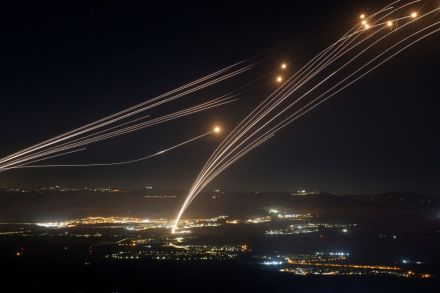
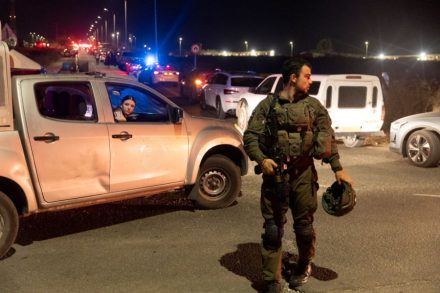
Israel has come under widespread missile attack from Iran. Some 200 ground-to-ground missiles were launched from Iran, according to Israeli media. Israelis have been ordered to stay in bomb shelters while the Israeli Defense Forces (IDF) intercept missiles overhead. The sound of interceptions over Tel Aviv, Israel’s largest city, are constant and deafening. So far, there don’t appear to be any casualties or direct hits. Among Iran’s targets were military bases, including airforce and intelligence facilities. It’s not known whether the attack has now finished, or if another wave of missiles is making its way to Israel. Elsewhere, a terror attack this evening in Jaffa has resulted in the death of eight Israelis.

What Israel hopes to achieve with its Lebanon operation

As troops from the Israel Defence Forces (IDF) 98th airborne division enter into Lebanon, they know that fighting Hezbollah will prove dangerous and difficult. Although Hezbollah has deteriorated after Israel’s recent attacks, its terrorists still have significant fighting capabilities. The elite IDF troops are backed by the Israeli airforce and artillery. It’s been nearly 12 months since Hezbollah started firing missiles at Israel, forcing more than 60,000 civilians to evacuate their homes. These 12 long months of relentless bombing have destroyed buildings, caused widespread fires and killed and injured Israelis, including children. Now Israel wants to bring this to an end. Its ground manoeuvre will continue what the Israeli air force started with its bombing campaign.

Israel must press home its advantage against Hezbollah and invade Lebanon

Israel has started to prepare for a ground invasion of Lebanon amid international calls for ceasefire. This is the next stage of Israel’s operation against Hezbollah – which began with exploding pagers and walkie-talkies, and continued with the killing of Hezbollah’s leader Hassan Nasrallah, as well as nearly all of the terror organisation’s top commanders. The Israeli air force continues to bomb Hezbollah’s infrastructure and is preparing the ground for troops to enter southern Lebanon, which might happen later this week. Special units from the Israel Defence Forces (IDF) have already carried out limited operations across the border, in order to gather vital information that will aid forces during a ground manoeuvre and reduce risk.

Nasrallah is dead and Hezbollah is broken

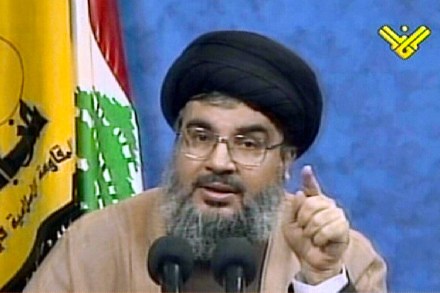
Israel has said that it killed Hezbollah’s leader Hassan Nasrallah in Beirut yesterday. Information that Nasrallah was at Hezbollah’s main headquarters in Beirut arrived while Israel’s Prime Minister was addressing the UN in New York, and a decision was made to target the man who has been terrorising Israelis for more than three decades. He was a gifted politician and leader, under whose leadership Hezbollah turned from a minor terrorist group into a large, heavily armed powerhouse Nasrallah, 64, was born in a village in southern Lebanon and was a deeply devout Shiite Muslim. He was one of the founders of Hezbollah and became leader of the terror organisation when his predecessor was assassinated by Israel in 1992. Nasrallah was more than an arch-terrorist.

Can Israelis stomach another war?

It was late in 1997 when I got to a small military base on the border between Israel and Lebanon. Straight out of training, my welcome to the base involved sitting in the war room wearing a helmet and a bulletproof vest, hoping that the barrage of rockets flying over our heads, courtesy of Hezbollah, wouldn’t hit. It was time of constant clashes with Hezbollah in south Lebanon. Casualties were commonplace. I’ve been to too many funerals and have seen too many parents bury their sons – my friends, peers and brothers in arms – than I’d care to remember. It was also a time when the Israeli public grew tired of Israel’s long presence in Lebanon. The war was attritional and there were many casualties.

Are Israel and Lebanon already at war?

This hasn’t been the easiest week for Hezbollah. It started with the terror organisation’s pagers mysteriously exploding, killing 37 people people (according to official reports) and injuring some 3,000 people, mostly members of the group. This has stunned Hezbollah – and the world. A day later, their walkie-talkies starting blowing up too.  The attacks, which have been attributed to Israel, are a serious security breech and have humiliated Hezbollah. In response, the organisation’s leader, Hassan Nasrallah conceded today that Hezbollah has suffered a considerable blow and accused Israel of ‘crossing the red line,’ adding that they actions could be viewed as a ‘declaration of war.

Hamas has been defeated – but the fight goes on

Has Hamas finally been defeated in Gaza, nearly a year after it launched the most deadly attack in Israel’s history? Israel’s Defence Minister Yoav Gallant has proclaimed that Hamas no longer has a military capacity in Gaza.  Hamas has indeed suffered a considerable blow since October. Many of its tunnels – one of its greatest strategic assists – have been destroyed entirely or partially. Many of its commanders have been killed. Two of its top three leaders, Mohammed Deif and Marwan Issa have been eliminated, as was the organisation’s political leader Ismail Haniyeh, who was assassinated in Tehran.  Although the precise number of killed Hamas terrorists is not known, it is substantial.

Israelis have had enough of Benjamin Netanyahu

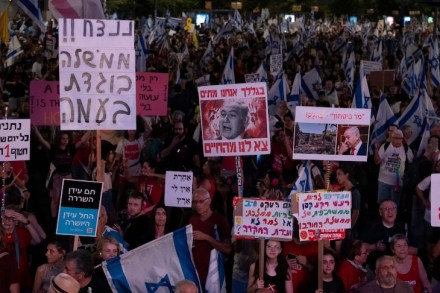
Benjamin Netanyahu is the great survivor of Israeli politics, but his grip on power is slipping. ‘You can fool some of the people all of the time, and all of the people some of the time, but you can not fool all of the people all of the time.’ Abraham Lincoln's saying applies now more than ever to Israel’s prime minister. Netanyahu's time will surely soon be up. Netanyahu cannot escape his inevitable legacy Motivated by self-preservation, Netanyahu has desperately tried to evade responsibility for the many failures that led to Hamas’s brutal attack on October 7. In the months since, Netanyahu has done his best to block a ceasefire deal that will save the lives of hostages and ease the suffering of Israel's war-torn northern towns.

Why Netanyahu is being blamed for the Israeli hostage deaths

The heartbreaking news that the Israel Defence Forces (IDF) have recovered the bodies of six Israeli hostages has caused rage in Israel against Prime Minister Benjamin Netanyahu. All six hostages – Carmel Gat, Eden Yerushalmi, Hersh Goldberg-Polin, Alexander Lobanov, Almog Sarusi, and Master Sergeant Ori Danino – were kidnapped alive on 7 October. They were brutally executed by Hamas terrorists, possibly hours before they were found yesterday in a Hamas tunnel near Rafah, in the southern area of the Gaza Strip. Netanyahu has been accused of sabotaging negotiations for a ceasefire Although Hamas bears the primary responsibility for murdering the hostages, many in Israel see Netanyahu as partly responsible for their deaths.

Israel’s school strike has triggered an information war

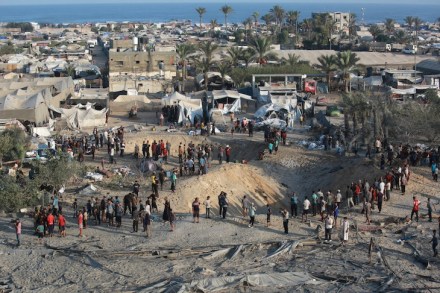
An Israeli airstrike on a school in Gaza in the early hours of this morning has once again triggered an information battle in the narrative of the war. Shortly after the strike, the Hamas-controlled government and media-affiliated service reported that there were 100 dead, including women and children. According to Israeli sources, the Israel Defence Forces (IDF) took measures to minimise civilian casualties, including using precision weapons to strike the building, which had been used as a shelter. The IDF says that according to evidence obtained from the scene, both the number of casualties and the scale of destruction had been exaggerated.

Israel’s coming war against Hezbollah might be necessary

A full-scale war between Israel and Hezbollah now seems closer than at any point since 7 October. Recent escalations, including the killing of twelve Druze children by a Hezbollah rocket and the assassination of the organisation’s armed forces commander, mean that war is now a more likely scenario. A war in Lebanon would look very differently to the war in Gaza. Hezbollah has always been bigger and more powerful than Hamas. Much of Hezbollah’s extensive weapons come from Iran. According to Israel’s Institute for National Security Studies (INSS), these include long, medium and short-range precision missiles, more than 150,000 rockets, anti-aircraft and anti-ship missiles, and drones used for reconnaissance and attacks.

Hamas and Hezbollah leaders killed in strikes on Iran and Lebanon

Israel has been accused of killing Hamas leader Ismail Haniyeh in a strike on Iran overnight. No one has claimed responsibility for the attack but Hamas said Haniyeh was 'killed in a treacherous Zionist raid' and vowed revenge. If indeed Israel did target Haniyeh in his Tehran residence it could mark a major escalation in the conflict. Iran will be humiliated that, even in the heart of its capital, Haniyeh was not safe. Hamas said Haniyeh was 'killed in a treacherous Zionist raid' Israel is yet to respond or issue a statement, but the country did say that it carried out a separate strike on Beirut yesterday in response to a Hezbollah rocket attack in the Golan Heights in which 12 children died.

Trump might be bad news for Israel

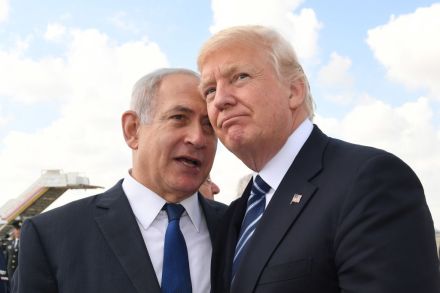
If Donald Trump becomes president again – which seems likely – American policy towards Israel could see a dramatic shift. Since the war between Israel and Hamas started last October, Trump has repeatedly expressed his support for Israel. The head of the Republican Jewish Coalition claimed that Trump would grant Israel ‘a blank cheque’ to finish off Hamas. Trump also warned that if Hamas doesn’t release the hostages, they’ll ‘pay a big price’ if he becomes president. Many Israelis, including those in government, assume that a Trump/Vance win would be beneficial for Israel. A closer look shows that it may not necessarily be so. When the war against Hamas started, president Joe Biden sent considerable American forces to the region.

Has Israel managed to kill the mastermind of October 7?

When an opportunity came today for Israel to take out the leading Hamas member and head of the Al-Qassam Brigades, Mohammed Deif, it could not afford to pass it up. It’s unclear yet whether Deif was in fact killed in the strike, which took place near the city of Khan Yunis in the Gaza Strip. Deif is arguably the most elusive Hamas leader. He joined Hamas as a teenager shortly after the organisation was established in 1987, and was arrested by Israel and held for 16 months in 1989. He has since become one of the most powerful and influential figures in the terror organisation and played a pivotal role in turning it into the mighty force it has become.

Will the IDF ever leave Gaza?

Israel has started another round of strikes in Khan Younis, having left the Gazan city in April. This isn’t the first time that Israeli forces had to return to areas from which they’ve already withdrawn. As Hamas terrorists flee current fighting zones, such as Rafah in southern Gaza, the Israeli Defence Forces (IDF) need to stop them from re-establishing fighting capabilities elsewhere. Having advised Palestinian civilians to leave areas in which terrorist infrastructure and activity exist in Khan Younis, the IDF has carried out several strikes last night and today. This was also in response to a barrage of rockets fired from the area into Israel by the terrorist organisation the Palestinian Islamic Jihad on Monday. The back-and-forth is likely to continue for some time.

Gantz’s resignation from Israel’s war cabinet spells trouble for Netanyahu

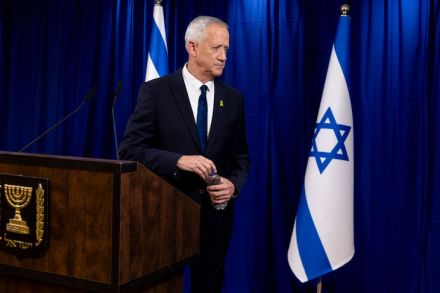
Benny Gantz, leader of the Israeli Resilience party and a member of the war cabinet, has resigned from Benjamin Netanyahu’s government. Gantz, a moderate who joined the cabinet days into the war against Hamas, has repeatedly expressed his frustration with the prime minister over a lack of a plan for Gaza. Gantz positioned himself as a ‘patriot’, in contrast to Netanyahu, whom he accused of operating based on narrow political interests 'Netanyahu is preventing us from progressing towards a true victory,' Gantz said in a TV address on Sunday night. 'For this reason we are leaving the emergency government today, with a heavy heart, yet wholeheartedly.' Gantz also called on Netanyahu to set a date for elections, adding: 'Do not let our nation tear apart.