Limor Simhony Philpott

Dr. Limor Simhony is a freelance writer. She was previously a research fellow at the Institute for National Security Studies (INSS) in Tel Aviv.

Joe Biden’s ceasefire proposal could sink Benjamin Netanyahu

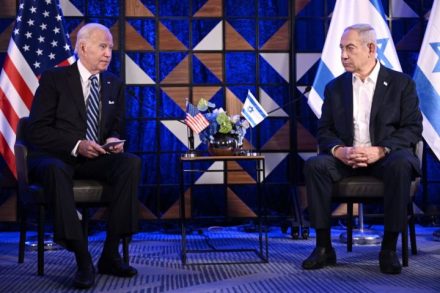
Joe Biden’s introduction of the three-stage deal to end the war in Gaza was a clever rout to bypass Benjamin Netanyahu. Biden has lost confidence in Netanyahu’s readiness to present things to the Israeli public, and to his own cabinet, in an honest and truthful way. By presenting the terms of the deal clearly and independently from Netanyahu’s spins, Biden was in full control of the message, in the hope that the Israeli public will back the deal and make it impossible for Netanyahu to back out of it.
Israel may have to stop its offensive in Rafah

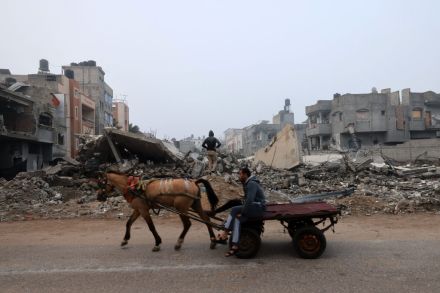
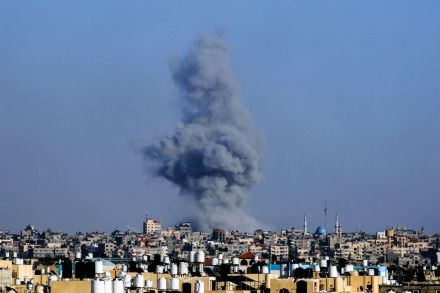
The devastating fire that, according to Hamas, killed dozens of displaced civilians in Rafah and that reportedly started because of an Israeli attack on Hamas terrorists, has come at the worse possible time for Israeli PM Benjamin Netanyahu.  Four days ago, the International Court of Justice (ICJ) ruled that Israel must immediately halt activities in Rafah. Although the language used by the court could imply that Israel may carry out some activities in the city as long as it conforms to its obligations under the Genocide Convention, there were international calls on Israel to cease all activities, and warnings of a disaster have sadly come true. Israel’s ability to carry on in Rafah may now be in doubt. Rafah is the last Hamas stronghold in Gaza.

Why Israeli politicians will ignore the ICJ’s ruling

The International Court of Justice (ICJ) ruling that Israel has to immediately stop the Rafah operation wouldn’t have surprised anyone who knows how deeply biased the ICJ is against Israel. In response to a request by South Africa, the court ruled that Israel must ‘immediately halt its military offensive, and any other action in the Rafah Governorate, which may inflict on the Palestinian group in Gaza conditions of life that could bring about its physical destruction in whole or in part.’ It stopped short of granting South Africa’s request for the war to stop altogether.

The ICC’s desire to arrest Netanyahu is far from impartial

In a dramatic announcement, the chief prosecutor of the International Criminal Court (ICC), Karim Khan, declared today that he has applied for arrest warrants to be issued for Israeli Prime Minster Benjamin Netanyahu and Israeli Defence Minister Yoav Gallant. He has applied for three more for the Hamas leaders Yahya Sinwar, Mohammed Deif and Ismail Haniya. On Hamas, Khan emphasised crimes against humanity, including murder, torture, taking hostages, rape and other sexual violence committed as part of a ‘widespread and systematic attack against the civilian population of Israel by Hamas and other armed groups' as reasons for issuing the warrants.

Benny Gantz’s resignation threat has Netanyahu in a bind

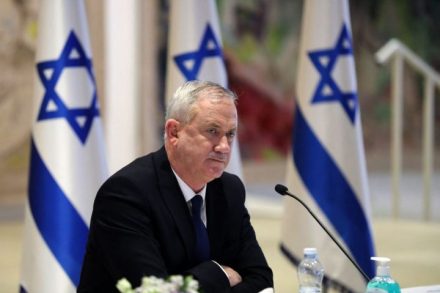
Israeli Prime Minister Benjamin Netanyahu’s war cabinet is at risk of falling apart as the country's defence establishment turns on him. Last night, Benny Gantz, leader of the National Unity party and a member of Netanyahu’s coalition, issued the Prime Minister with an ultimatum. In an extremely critical speech, Gantz blamed Netanyahu for letting personal interests interfere with decisions of national security and allowing a group of extremists to take the helm.

Can Netanyahu afford to reject Hamas’s ceasefire deal?

A day after it seemed that a ceasefire deal between Hamas and Israel was all but dead, the terror group has issued a surprise statement announcing that it has accepted the deal offered by Egypt and Qatar. Optimism, though, would be premature at this point. Israeli prime minister Benjamin Netanyahu, who is under considerable public pressure to reach a deal that will secure the release of Israeli hostages, has said the proposal for a new Gaza ceasefire is 'far from Israel's basic requirements'. Meanwhile, late on Monday, the Israeli Defence Forces (IDF) said it was conducting targeted strikes against Hamas targets in eastern Rafah. Despite this military action and Netanyahu's rejection of the ceasefire, negotiations are continuing.

Israel is committed to fighting on in Rafah

As last week drew to a close, it seemed that the intense efforts of Egyptian and American mediators might result in a ceasefire deal between Hamas and Israel being reached. Then on Saturday, a ‘high ranking source in the Israeli government’ announced that Israel would invade Rafah whether a deal was reached or not, meaning an agreement would only delay an operation into Hamas’s last stronghold. In response, Hamas hardened their position. They demanded further guarantees from mediators that the deal would lead to a permanent ceasefire allowing the terrorist organisation to keep control over Gaza and to continue attacking Israel.

Netanyahu is in a bind over invading Rafah

When Israel responded to Iran’s unprecedented missile and drone attack in a measured military fashion on 19 April, some believed that Israeli prime minister BenjaminNetanyahu had agreed to show restraint in return for Joe Biden’s support for a military operation in Rafah. These rumours were dispelled this weekend when the US president reiterated his objection to a major military operation in the city during a call with Netanyahu. This leaves Netanyahu between a rock and the hard place. Rafah, located in the southern end of the Gaza strip, is near the border with Egypt and close to Israel itself.

How will Israel hit back against Iran?

Iran’s attack on Israel signals a new era. For the first time, Iran targeted Israel directly, not only through proxies – and not in a way that leaves room for deniability in order to limit Israeli reprisal. The attack on Saturday night, in response to the killing of two Iranian generals in Damascus by Israel, included 185 explosive drones, 110 ballistic missiles and 36 cruise missiles launched from Iran, Iraq and Yemen. Israel, alongside allies that include American, British and Jordanian forces, managed to shoot down 99 per cent of the munitions aimed at Israel and avoid the death and destruction that would have ensued. The question is what happens next.

How will Israel respond to Iran’s attack?

Iran’s retaliatory attack, which Israel has been expecting since it killed Iranian commanders in Damascus on 1st April, has started this evening. For the first time, Iran is attacking Israel directly. It has launched over 100 drones carrying explosives towards Israel from Iran, Iraq and Yemen. The drones will take between 8 and 10 hours to arrive to Israeli airspace, and it is expected that those that manage to evade Israeli defences could arrive to Israel at some point between 11pm and 1am. It has also been reported that cruise missiles have been launched towards Israel. These take roughly two hours to reach Israel if they are not shot down. Israel is also preparing for the possibility that ballistic missiles will be launched later tonight, and those can reach Israel within minutes.

Israel is still committed to eliminating Hamas

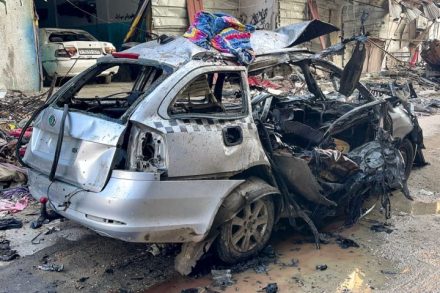
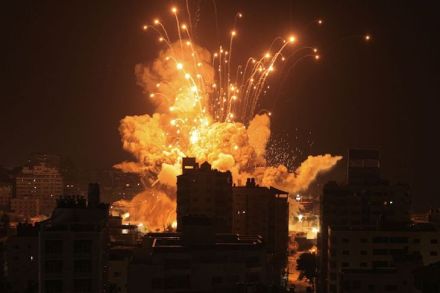
On Wednesday, three sons of the Hamas leader Ismail Haniyeh were killed by an Israeli airstrike. The three were killed when their car was bombed in Gaza's Al-Shati camp. According to reports, at least three of Haniyeh’s grandchildren were also killed in the strike. Upon hearing of their death, Haniyeh, who resides in Qatar, said ‘I thank God for this honour that he bestow upon us the martyrdom of my three sons and some grandchildren.’ The targeted killing of high-level Hamas operatives is an extremely complex operation, and a tactic that Israeli forces specialise in. It requires accurate intelligence and quick action using precision weapons – often fired from drones – that are able to hit a target without killing innocent bystanders.

Will Netanyahu take Biden’s ceasefire ultimatum seriously?

When Israeli prime minister Benjamin Netanyahu claimed that he had a ‘good’ talk with American president Joe Biden on Thursday, he was hiding a bombshell. It soon emerged that Biden’s words to Netanyahu were harsh and uncompromising. Biden demanded that Israel addresse the humanitarian situation in Gaza immediately, that it takes concrete steps to protect civilians and aid workers and that it reaches a ceasefire deal with Hamas. This was an ultimatum. Biden threatened to reassess American policy towards the war in Gaza if Netanyahu does not comply immediately. In other words, he refused to guarantee that the strong support he has given Israel since the war started in October will continue.

How will Iran respond to Israel’s assassination in Damascus?

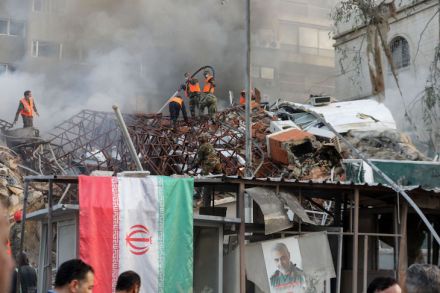
Last night, six missiles fired from an Israeli F-35 combat aircraft hit and destroyed a building belonging to the Iranian embassy in Damascus, Syria. At the time, a meeting between high-ranking members of the Iranian Islamic Revolutionary Guard Corps (IRGC) and members of the Palestinian Islamic Jihad were taking place. The attack resulted in the death of two IRGC generals: Mohammad Reza Zahedi who was leader of the Quds force – the IRGC force in Syria and Lebanon – and his deputy, Sardar Haji Rahimi. It is reported that at least five other IRGC officers were killed in what is one of Israel’s most successful assassinations of senior Iranian commanders.

The UN’s ceasefire call will only strengthen Hamas

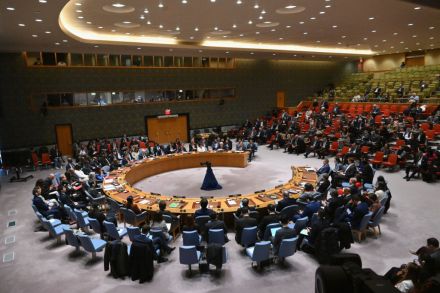
The UN has passed a draft resolution calling for an immediate ceasefire in Gaza to last until the end of Ramadan in two weeks’ time, possibly leading to a permanent ceasefire. The resolution was backed by Russia, China and by the 22-nation Arab Group. This is the first time that the security council managed to pass a ceasefire resolution, after all the others were vetoed. The UN resolution is highly unlikely to result in the release of hostages by Hamas The non-binding resolution calls for the ceasefire ‘to be respected by all parties’ and demands ‘the immediate and unconditional release of all hostages.’ It does not call for Hamas to surrender control over Gaza, which is Israel’s primary goal, in addition to the release of hostages.

Why Israel targeted Gaza’s al-Shifa hospital

Gaza’s largest hospital, al-Shifa, was once again turned into a battlefield yesterday. Five hours of fighting between Israel and Hamas at the hospital, viewed by Israel as a base used by terrorists, led to some 80 Palestinians being detained. Israel claimed to have killed about 20 terrorists in the precision raid, including Faiq Mabhouh, the head of Hamas's internal security operations. The IDF (Israeli Defence Forces) also found a large cache of weapons, including rifles, grenades, rocket launchers and cash hidden inside al-Shifa. Mabhouh's death follows that of Marwan Issa, deputy commander of Hamas’s military wing, last week.

Why a Ramadan ceasefire in Gaza looks unlikely

Hopes for a temporary ceasefire deal between Israel and Hamas during Ramadan were dashed over the weekend, when it became apparent that no such deal would be reached before the beginning of the holy month. Weeks of tough negotiations that raised optimistic speculations about a deal have so far produced no tangible results. Hamas has hardened its position on a temporary ceasefire that would include the release of Israeli hostages in return for Palestinian prisoners. This came as no surprise to Israeli negotiators; Israel has been warning for weeks that Hamas is set to reject a deal while attempting to provoke violent clashes between Palestinians and Arab-Israelis, and Israeli security forces during Ramadan. Tensions run high in Israel during Ramadan every year.

Netanyahu’s plan won’t deradicalise the Palestinians

Four months after the beginning of the Gaza war, Israeli Prime Minister Benjamin Netanyahu has finally presented his security cabinet with a post-war plan for Gaza. Netanyahu had come under intense criticism, especially from American President Biden, for his lack of a plan so far. Israelis were warning as well that their country needed a roadmap beyond what Netanyahu refers to as Israel’s ‘absolute victory’ over Hamas, which 55 per cent of Israelis think isn’t likely. It now seems that Netanyahu has succumbed to domestic and international pressure. The plan is divided into short-term, medium-term and long-term actions and objectives.

Why the US is suddenly calling for a ceasefire in Gaza

In a surprising move, the United States has put forward a draft for a UN Security Council resolution calling for a temporary ceasefire between Israel and Hamas. The draft also opposes Israel’s planned operation in the southern Gaza city of Rafah. US president Joe Biden has stood firmly by his support for Israel’s right to defend itself in the wake of Hamas’s brutal attack on 7 October. America has provided Israel with considerable munitions, as well as sent forces to deter attacks by Iran and the Iranian-backed military organisation Hezbollah. They have also thwarted attacks against Israeli targets and and others by the Houthis in Yemen. The US senate also recently approved $14.3 billion (£11.5 billion) in aid to Israel.

Hamas can’t hide behind hospitals anymore

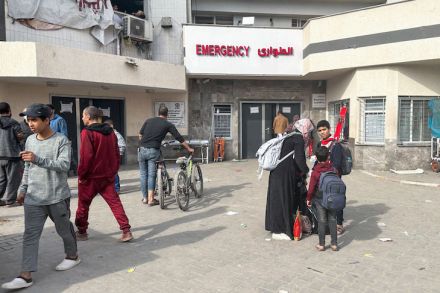
Israeli special forces are operating in Nasser hospital, one of the main hospitals in the city of Khan Yunis, where the Israel Defence Forces have been fighting Hamas for several weeks. IDF spokesman Rear Admiral Daniel Hagari explained that the raid is based on ‘reliable intelligence’ about terrorist activity in the hospital. According to Hagari, there is also information, based on accounts given by released hostages as well as other sources, that several bodies of Israeli hostages abducted into Gaza during the 7th October attack are being kept there. The IDF has been searching for the Israeli hostages in Gaza since the war began. It has managed to extract three hostages alive in complicated and dangerous operations. It has also found several bodies and repatriated them.

Israel has to invade Rafah if it wants to destroy Hamas

When news broke that Israel planned to start an offensive in the city of Rafah, in the southern part of the Gaza Strip, it was faced with a barrage of warnings and condemnations, including from its allies. Foreign Secretary David Cameron urged Israel to ‘think seriously’ before it launched a large-scale operation in the city. US President Biden called on Israel to halt the offensive. The EU representative for foreign affairs and security, Joseph Borrell, urged Israel’s allies to stop arming it, and Egypt threatened to suspend the peace deal over the planned offensive. Rafah sits close to the border with Egypt. Originally home to about 250,000 people, it’s where 1.4 million Palestinian civilians have found refuge since the war between Israel and Hamas started last October.