Liam Halligan

Liam Halligan writes the Sunday Telegraph’s Economic Agenda column.

The wrong track | 7 February 2019

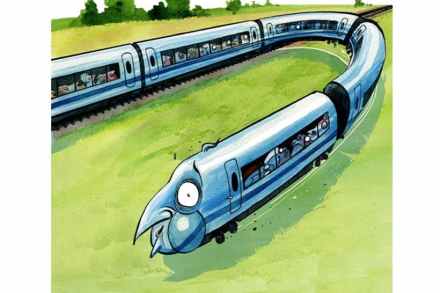
No one is in any doubt about the problem facing Britain’s railways. Over the past decade, rail fares have risen twice as fast as salaries. Yet across the national network, overcrowding is at record levels, cancellations are spiralling and passenger dissatisfaction is at a ten-year high. Yet ministers are about to start pouring £4.5 billion a year, every year for a decade, into building a single new railway route: HS2. To put this into perspective, the amount annually maintaining and upgrading the rest of the rail network is £6 billion. It’s a trap that we can, even now, avoid. Much has changed since the scheme was launched in 2010. Official cost estimates have almost doubled — from £33 billion to £56 billion.

Irish troubles

How did we get into this Brexit mess? Why is it proving so difficult to leave the EU? Was it Theresa May’s botched 2017 election, which vaporised her Commons majority? Or perhaps her general incompetence and lack of vision? How about the fierce determination of Europhile civil servants to save stupid Leave voters from themselves, cooking up a half-in-half-out withdrawal guaranteed to split the Tories? Maybe it was the cynical ambivalence of HM’s Opposition, with Labour simultaneously backing both Brexit and a second referendum, having always intended to cause chaos and spark a general election by voting down the UK’s exit, contradicting its own manifesto?

Review: The book that reveals John McDonnell’s economic world view

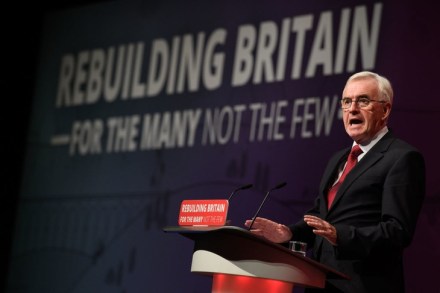
In 1995, the Labour party voted to amend Clause IV of its constitution, ditching its historic commitment to mass public ownership. A significant victory for Tony Blair, it sparked a modernisation process that saw New Labour win three successive elections. On Monday John McDonnell drew wild cheers from Labour delegates in Liverpool when he directly rebuked Blair, insisting Clause IV is 'as relevant today' as a century ago. The Shadow Chancellor certainly rolled back the years during his conference speech, unveiling the most radical Labour prospectus of modern times – an unashamedly socialist pitch, calling for aggressive re-nationalisation and sweeping trade union powers.

Why do banks and governments seem to have learned nothing from the financial crash?

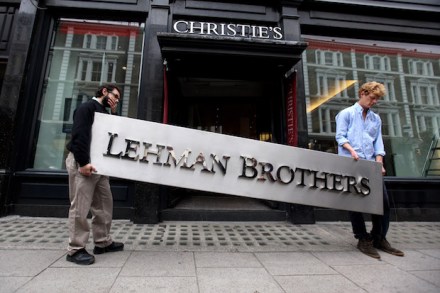
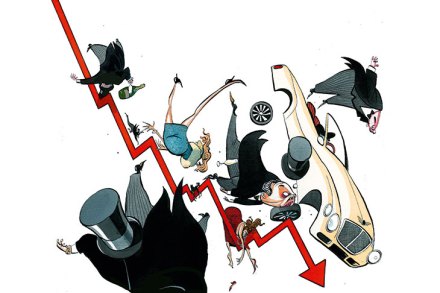
With September marking a decade since the Lehman Brothers implosion, stand by for a slew of economic retrospectives. Any meaningful analysis, though, needs to get beyond historic balance sheets and plunging share price graphs — however dramatic the data. For the most significant impact of the biggest financial and economic upheaval since the Great Depression has been the growing loss of faith in western liberal capitalism. Politics has been upended by the 2008 crisis — doing much to explain Trump, Corbyn and the broader shift away from centrist parties towards extremes. The demise of Lehmans, a once-impregnable investment bank, exposed a US financial sector riddled with chronic debts and fraud.

The world the crash made

With September marking a decade since the Lehman Brothers implosion, stand by for a slew of economic retrospectives. Any meaningful analysis, though, needs to get beyond historic balance sheets and plunging share price graphs — however dramatic the data. For the most significant impact of the biggest financial and economic upheaval since the Great Depression has been the growing loss of faith in western liberal capitalism. Politics has been upended by the 2008 crisis — doing much to explain Trump, Corbyn and the broader shift away from centrist parties towards extremes. The demise of Lehmans, a once-impregnable investment bank, exposed a US financial sector riddled with chronic debts and fraud.

The true cost of the Carillion wreckage

“We’re not doing a very good job of selling the private sector, are we?” So said an old friend of mine, among the Conservative party’s most senior advisors, as we discussed my upcoming Channel 4 Dispatches documentary on Carillion. Back in January, Jeremy Corbyn declared the implosion of the UK’s second-largest construction firm “a watershed moment” – and, in some ways, he was right. I don’t accept Carillion’s demise seven months ago means private companies should be kept away from providing public services, as the Labour leader has argued, or that Britain now needs wide-ranging nationalisation. The state already employs a fifth of the workforce, accounting for over two-fifths of GDP – which is quite enough.

‘We need to get creative’

‘It was Plato who said storytellers rule the world,’ observes Mariana Mazzucato, her powerful voice tempered with a beaming smile, ‘But the stories we’re constantly told about how value is created are largely myths. We must rethink where wealth really comes from.’ An economics professor at University College London, Mazzucato is fast emerging as one of the world’s leading public intellectuals. From her high-ceilinged office in Bloomsbury, a host of grant-making bodies on speed dial, this 49-year-old Italian-American is determined to ‘replace our current parasitic system with a more sustainable, symbiotic type of capitalism’. Mazzucato emerged from the academic shadows five years ago, when she wrote The Entrepreneurial State.

The end of the party

Since the crash ten years ago, stock markets the world over have been steadily recovering. The Dow Jones, a bellwether index, has enjoyed double-digit growth in five of the past ten years and soared by 25 per cent last year — credit for which, inevitably, has been claimed by Donald Trump. ‘The reason our stock market is so successful is because of me,’ he said on board Air Force One a few weeks ago. ‘I’ve always been great with money.’ We should not expect him to repeat this point any time soon. Earlier this week, the Dow suffered its worst fall in six years, losing 4.6 per cent in a single day and triggering a sell-off around the world.

Boris Johnson’s proposal for a bridge across the Channel isn’t crazy – but the backlash is

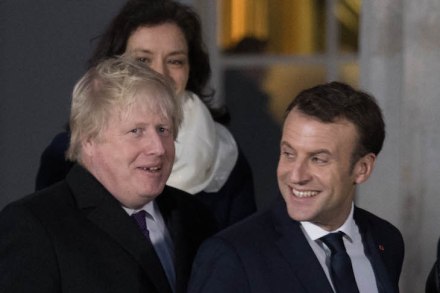
Building a physical bridge between the UK and France is, apparently, ridiculous. I know that because, ever since Boris Johnson raised the prospect at the Anglo-French summit, my Twitter feed has been full of comments from various bien pensants ridiculing the idea. ‘If you like the Boris bridge idea, wait ‘til you hear about Liam’s plans for a zip wire from Washington DC to Washington, Tyne & Wear,’ quipped one commentator, referring not to me (on this occasion) but to Trade Secretary Liam Fox. ‘David Davis wants a pedalo from Boston, Massachusetts to Boston, Lincolnshire!’ parlayed another keyboard wag. As it happens, the construction of a bridge across the English Channel bridge is entirely feasible.

The Brexit divorce bill is ghastly but we can still make it work to our advantage

There is much outrage, among both Leave and Remain voters, at the size of the ‘divorce bill’ ministers have reportedly agreed to pay the EU. Figures of €60-65bn (£53-58bn) – more than one and a half times’ the UK’s annual defence budget – are being presented as fact. I share much of this outrage. The sheer range of numbers floated – not least the notorious €100bn figure reportedly demanded by Brussels – show that the cash-strapped EU is simply chancing its arm. The amount the UK will pay clearly has little to do with our provable liabilities. It is all about how much Brussels thinks it can extract. The strict legal position is that the UK owes zilch.

No deal is a good deal

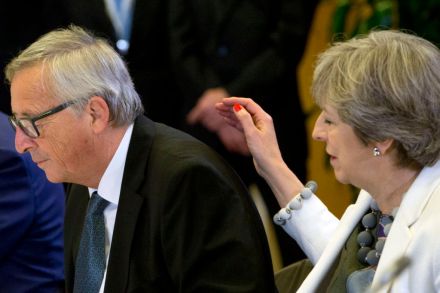
So Theresa May and Jean-Claude Juncker enjoyed a ‘broad and constructive exchange’ during their working dinner in Brussels. Last time the Prime Minister broke bread with the President of the European Commission — at Downing Street six months ago — Juncker dubbed her ‘deluded’ and complained about the food. Despite better mood music, this latest supper summit was hardly positive. European Union negotiators still refuse to discuss trade or end the divisive impasse over citizens’ rights until Britain agrees to pay a stonking ‘divorce bill’ — upwards of £40-£50 billion. All the while, the Article 50 clock is ticking. The prospect of a ‘no deal’ Brexit has lately loomed into view, and not a moment too soon.

This is what Theresa May should say in her Florence speech

Tomorrow in Florence, Theresa May needs to make the speech of her life. Britain has a strong hand to play in these EU talks and it’s time the Prime Minister showed it. May must assert once again that ‘no deal is better than a bad deal’, shoring up the UK’s bargaining position. She should also insist Britain won’t confirm any ‘divorce bill’ until these Article 50 talks end in March 2019, with the final amount dependent on the goodwill the EU has shown. Above all, taking her cue from Foreign Secretary Boris Johnson, the Prime Minister needs to present an inspiring vision of the UK outside the EU. The heyday of Florence was as a free-trading, outward-looking, independent city-state, long before it was absorbed into a unified Italy.

A Parliament veto on Brexit would guarantee a stinker of a deal

Theresa May is warning Tory rebels that if Parliament gets a meaningful vote on Brexit, the European Union will be 'incentivised' to offer the UK a 'bad deal'. She is right. But that doesn’t mean the Prime Minister should dismiss the prospect of the House of Lords inflicting a second defeat on the government, with peers today set to back an amendment requiring Parliament to endorse the UK’s final Brexit deal. May should, in contrast, turn what looks like an inconvenience to her political and diplomatic advantage.

Keynes’s grandchild

‘Did you really deserve the Nobel prize?’ I ask Amartya Sen. ‘Why do you think you won?’ When you’re sitting opposite the world’s most respected living economist, at a time when the dismal science is under intense scrutiny, an opening question should be punchy. Thankfully, Sen, an 83-year-old Harvard professor, has a sense of humour. ‘You can’t ask me that,’ he says with a grin. ‘I have absolutely no idea why I won.’ He then composes himself. ‘Like any researcher, I’m happy if my work interests others,’ he says carefully. ‘But it would be a pretty bad way to conduct one’s life, thinking about how to win prizes, rather than being listened to.’ Sen has achieved both.

Ireland will have the hardest Brexit of all

Irish eyes aren’t smiling - when it comes to Brexit. As one who hails from the Emerald Isle, I’ve taken plenty of 'schtick' from Irish diplomats, relatives and pundits after publicly voting to leave. For the Republic of Ireland, European Union membership carries deep political significance. Joining in 1973, along with the UK but on equal terms, was hugely symbolic. A country then less than 30 years old was finally able to represent itself on the world stage. It is this escape from British dominance, more than Brussels-funded motorways, that makes EU membership central to modern Ireland’s identity.

Britain’s troubled housing market is fuelling social immobility and resentment

‘Prefabs to solve housing crisis,’ screamed the front page of the Sunday Telegraph last weekend. Can the shortage of homes in Britain really be so bad that ministers are floating plans to encourage the first new generation of temporary, pre-packed houses since the great reconstruction drive which followed the second world war? The UK is in the midst of a housing shortage that numerous credible experts now describe as ‘chronic’ and ‘acute’. While it’s widely recognised that we need 250,000 new homes each year to meet population growth and household formation, house-building hasn’t reached that level since the late 1970s. During the Thatcher era, as fewer council houses were built, an average of 190,900 new homes were constructed each year.

Home to roost

‘Prefabs to solve housing crisis,’ screamed the front page of the Sunday Telegraph last weekend. Can the shortage of homes in Britain really be so bad that ministers are floating plans to encourage the first new generation of temporary, pre-packed houses since the great reconstruction drive which followed the second world war? The UK is in the midst of a housing shortage that numerous credible experts now describe as ‘chronic’ and ‘acute’. While it’s widely recognised that we need 250,000 new homes each year to meet population growth and household formation, house-building hasn’t reached that level since the late 1970s. During the Thatcher era, as fewer council houses were built, an average of 190,900 new homes were constructed each year.

Brexit’s philosopher king

‘There was never a consensus among economists that Britain should stay in the European Union,’ insists Professor Patrick Minford. ‘That was always rubbish.’ During the heat of the referendum campaign, Chancellor George Osborne asserted it was ‘economically illiterate’ to back Leave. ‘It’s Osborne himself who is economically illiterate,’ Minford shot back. Three months on from the UK’s EU vote, Minford has reason to feel pleased with himself. Economists for Brexit — the campaign group he hurriedly founded on a shoestring — is credited with helping to swing the result. Yet Minford is anxious, in part about the dismal behaviour of his fellow scientists.

Why negative interest rates are mad, bad – and dangerous

What should we think about negative interest rates? What kind of Alice in Wonderland world are we living in when companies and households are paid to borrow and charged if they save? Seemingly crazy, negative interest rates are spreading nonetheless. Implemented by central banks in Europe, Japan and elsewhere, they now apply in countries accounting for a quarter of the global economy. Should we be worried? Could we see negative rates in Britain? Earlier this month, the Bank of England cut interest rates for the first time in seven years, from 0.5 per cent to a new record low of 0.25 per cent.

The Bank of Wonderland

What should we think about negative interest rates? What kind of Alice in Wonderland world are we living in when companies and households are paid to borrow and charged if they save? Seemingly crazy, negative interest rates are spreading nonetheless. Implemented by central banks in Europe, Japan and elsewhere, they now apply in countries accounting for a quarter of the global economy. Should we be worried? Could we see negative rates in Britain? Earlier this month, the Bank of England cut interest rates for the first time in seven years, from 0.5 per cent to a new record low of 0.25 per cent.