Liam Halligan

Liam Halligan writes the Sunday Telegraph’s Economic Agenda column.

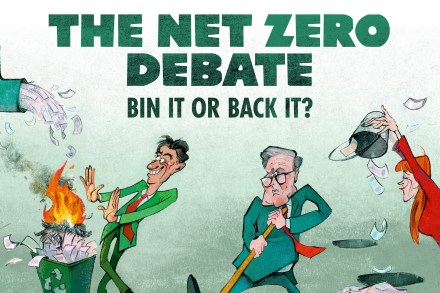
LIVE: The Net Zero Debate | Liam Halligan & Lord Lilley vs Bob Ward & Shahrar Ali

22 min listen

For nearly two decades, net zero has sat at the heart of Britain’s policy agenda. Once framed as a clear moral imperative, it saw political parties promising to slash carbon emissions and ministers racing to position the UK as a leader on the international stage. But as economic pressures and global instability mount, that consensus is beginning to fray. Recent shocks – from the pandemic to war-driven energy crises – have exposed the fragility of supply chains and the risks of overreliance on external energy sources. While renewables like wind and solar can supplement carbon fuels, they also raise questions around cost, subsidy and reliability. At the same time, drilling for oil in the North Sea is penalised. So where does this leave Britain?

‘This is deranged!’: Labour’s civil war is distracting from the real crisis

45 min listen

This week: William Moore is joined by The Spectator’s political correspondent Noa Hoffman, Telegraph columnist and Planet Normal co-host Liam Halligan, and The Spectator’s real life columnist Melissa Kite.They unpack Tim Shipman and Noa Hoffman’s cover piece on the mounting coup against Keir Starmer. As Wes Streeting makes his move, Ed Miliband waits in the wings and Andy Burnham’s allies search for a route back to Westminster, is Labour now openly preparing for life after Starmer?Also this week: Britain’s mounting economic crisis. Liam warns that the government is running out of road with the bond markets. Could a turn to the left push Britain towards a full-blown fiscal reckoning?Plus: the death of the traditional B&B.

‘This is deranged!’: Labour’s leadership tumult is distracting from the real crisis

The truth about Kate Garraway and me

Since Victorian times, sandwich-board men proclaiming doom have been part of our urban street life, particularly in London. I’ve felt like a sandwich-board man lately, having warned endlessly in my weekly Telegraph column that Britain is heading for fiscal meltdown. In June 2024, just before Labour took office, I signalled that a government led by Keir Starmer ‘could soon face borrowing difficulties’. Six months later, I cautioned ‘we face a return to 1976 unless Labour changes course’ – recalling that 50 years ago, Britain was forced to declare itself insolvent and go to the International Monetary Fund for a bailout. It brings me no pleasure that many of the outcomes I warned of, to such derision, now dominate the news.

Grenfell report: why did it take so long?

16 min listen

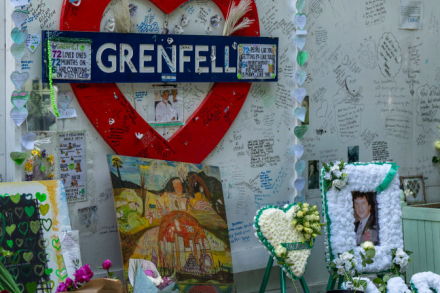
Seven years after the tragedy, the inquiry into the Grenfell fire has published its report. What did we learn from it and who bears responsibility? And, with thousands of buildings still believed to contain flammable cladding, what should happen next? With such important lessons to be learnt, why do British inquiries take so long? Also on the podcast, a look at the first PMQs following summer recess and the Tory leadership election. James Heale speaks to Isabel Hardman and Liam Halligan, Telegraph columnist and author of Home Truths. Produced by Patrick Gibbons.

Labour goes to war with the Nimbys

13 min listen

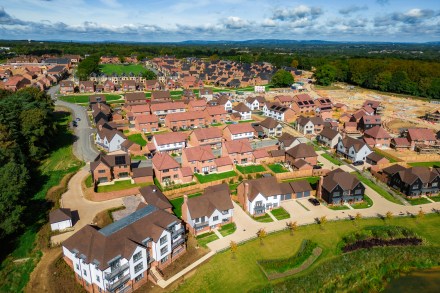
Over the weekend we have had some news on Labour’s housing policy. The Times have splashed on the news that in order to meet their pledge to build 1.5 million houses by 2030, councils will be given the power to buy up green belt land. Will this actually get Britain building?  Elsewhere, the Tory leadership race continues to trundle along with Kemi Badenoch giving her first interview. Is she the candidate that Labour fear most?  James Heale speaks to Fraser Nelson and Liam Halligan.  Produced by Oscar Edmondson.

Why Britain stopped working

50 min listen

Welcome to a slightly new format for the Edition podcast! Each week we will be talking about the magazine – as per usual – but trying to give a little more insight into the process behind putting The Spectator bed each week. On the podcast this week: the cost of Britain’s mass worklessness. According to The Spectator’s calculations, had workforce participation stayed at the same rate as in 2019, the economy would be 1.7 per cent larger now and an end-of-year recession could have been avoided. As things stand, joblessness is coexisting with job vacancies in a way that should be economically impossible, writes Kate Andrews in the cover story.

The house mafia: the scandal of new builds

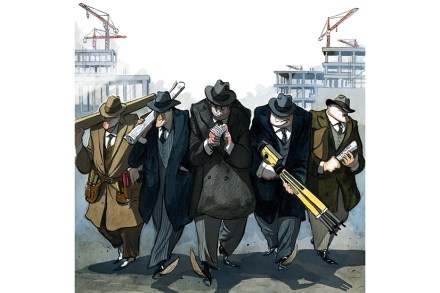
‘We don’t just have snags with this house — “snags” suggests issues that are minor,’ says Kelsey Aldritt of her new-build Persimmon house just outside Pembroke, Wales. ‘This house has had major problems from the moment we moved in.’ Kelsey is six months pregnant and the doctor has told her not to get stressed, but with a house like this, stress is unavoidable. ‘It really angers me that Persimmon gave us such a defective house,’ says Kelsey’s partner, Theo. ‘Nothing is built right — and I don’t want Kelsey upset, worrying about chasing Persimmon to do repairs, not at a time like this.’ The case of Kelsey and Theo is far from exceptional.

British broadcast news has gone badly wrong

I’ve worked for some media thoroughbreds — including the Financial Times, ITN and CNN — so I know the sense of assurance that comes from wearing the badge of a long-established journalistic brand. But nothing — nothing — beats the buzz I now feel as a presenter on GB News. It’s the thrill of being part of a start-up, especially one so many want to fail. We GB News types are disruptive and entrepreneurial. We think that British broadcast news has gone badly wrong. It has become smug, stale and monocultural. We want to do something about that. Amid the advertising boycotts, inevitable technical glitches and even more inevitable catty reviews, we know we are on to something — and that’s what scares the incumbents.

Covid has left Britain printing money like never before

Lockdown is convulsing the British economy on multiple fronts. ‘Going to work’ has been upended, hitting transport and commercial property sectors. The demise of the high street accelerates as online retail surges. Yet the definitive Covid-related economic trend is happening within the national accounts, as the government spends vast sums on furloughing and other business support, while our locked-down economy struggles to generate tax. This has big implications for investors. The UK borrowed an astonishing £215 billion between April and October, almost twice the annual NHS budget. Our national debt now exceeds £2,000 billion — and just outstripped annual GDP, a first in our peacetime history.

Is this the next cladding scandal?

18 min listen

After the Grenfell Tower fire, new fire safety legislation was introduced in an attempt to ensure the tragic incident was never repeated. But the new rules have left some tower block tenants unable to sell their properties, and they could be forced to pay tens of thousands to replace dangerous classing. Why? Fraser Nelson speaks to Emma Byrne, assistant editor of the Spectator, alongside the Telegraph's Liam Halligan.

The Trump Show: he could just win again

35 min listen

With protests in American cities continuing and the Democrat and Republican conventions drawing to a close - are there signs that Donald Trump could win again? (00:45) Plus, could planning reforms be the next Tory battle? (13:05) And finally, can daily commutes really be enjoyable? (25:45)With editor of the Spectator's US edition Freddy Gray; the Spectator's economics correspondent Kate Andrews; the Spectator's political editor James Forsyth; economist and author Liam Halligan; the Spectator's features editor; and author Sara Yirrell.Presented by Cindy Yu. Produced by Cindy Yu and Max Jeffery.

Quantitative easing is a dangerous addiction

The FTSE-100 index of leading stocks is over 20 per cent up since Britain went into lockdown — ‘bull market’ territory. The government borrowed £55 billion in May, nine times more than the same month last year — yet borrowing costs are down, with some investors now paying to lend to an increasingly indebted nation. Who cares if the UK economy will shrink some 10 per cent this year, as our national debt rockets above 100 per cent of GDP? Stocks are up, bond prices are up and the laws of economics have been suspended. It’s different this time — and all because of quantitative easing. Back in 2009, with the global banking system on the brink of collapse, QE was a justifiable emergency measure.

The coronavirus is China’s biggest test since Tiananmen Square

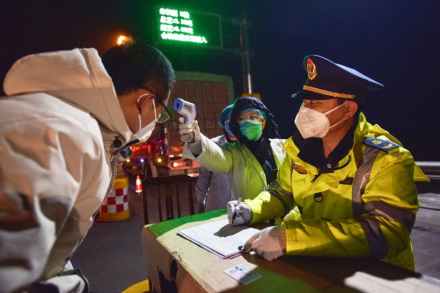
Over 1,500 Chinese have died from the coronavirus, with tens of millions quarantined in their own homes. President Xi is keeping a low profile, mindful of the political dangers should China’s authorities fail to contain this killer bug. In the UK, nine people have been diagnosed with the virus, including two GPs. Several public buildings have been closed – including schools, medical centre and an old-age care home – with Health Secretary Matt Hancock warning of a 'serious and imminent threat'. Amid fears of the human fall out from what the World Health Organisation has classified as Covid-19, concerns are growing, also, about the economic and financial impact of this virus – in China and beyond.

Can Leo Varadkar defy the odds to win another term as Taoiseach?

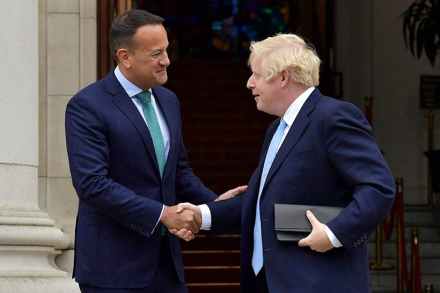
Back in October, Boris Johnson and the Taoiseach Leo Varadkar met for ‘last-ditch’ Brexit talks at a hotel on the Wirral. After nine years in power and having lost control of parliament, the Tories were in disarray. Few thought Johnson could win concessions on the Irish backstop — that perennial stumbling block, the key to securing a new withdrawal agreement with Brussels. ‘It will be very difficult,’ said Varadkar, as the Merseyside ‘wedding venue’ summit began. Yet Johnson wooed the Irish delegation, got his concessions, struck a fresh EU exit deal — and went on to clinch a dramatic general election victory. Three months on, the tables have turned.

Nightmare on Downing Street: what could happen on Friday 13th?

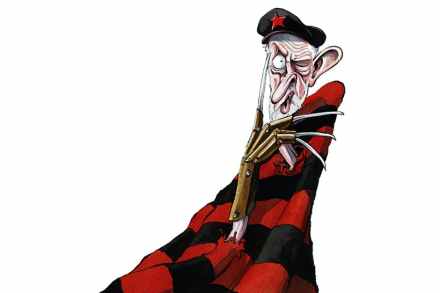
Radicalism does not usually work out well for the Labour party. Michael Foot fought the 1983 general election on a hard-left manifesto famously dubbed ‘the longest suicide note in history’ and saw his party’s worst result since the first world war. But as next week’s general election approaches, despite running on an even more sweepingly statist programme, Labour is rising in the polls. The most left-wing government in British history is now a real possibility. On the face of it, this makes no sense. Why, after the chaos of the last hung parliament, would voters choose another one?

The Brexit deal gives Northern Ireland an extraordinary opportunity

Ulster says No. So went the Unionist slogan against the Anglo-Irish Agreement which paved the way to ending the Troubles in Northern Ireland. Signed by London and Dublin, the 1985 treaty gave the Republic of Ireland a role in Northern Ireland’s governance for the first time, while confirming the six counties’ constitutional position within the UK — a vital step towards the Good Friday Agreement 13 years later. ‘Mrs Thatcher tells us the Republic must have some say in our Province,’ boomed the Revd Ian Paisley outside Belfast City Hall, railing against this original power-sharing breakthrough. ‘We say never, never, never.’ Yet Paisley’s implacable opposition proved futile.

Germany’s ailing economy can’t afford a no-deal Brexit

The UK was the ‘sick man’ when we ‘joined Europe’ in 1973. Now, with Britain on the cusp of leaving, the European Union’s largest economy is decidedly out of sorts. After failing to recover over the summer, Germany is now almost certainly in recession. The state of the fourth biggest economy on earth always matters — but with Germany dragging down the broader eurozone, its declining health could decisively impact Brexit negotiations too. Politically, Brussels and Dublin are bullish. They have dismissed Boris Johnson’s proposals, gambling on an extension and perhaps Brexit being cancelled entirely. But such intransigence could yet cause a disorderly no-deal Brexit — which would have a pretty big impact on all major economies on the continent.

Varadkar’s gamble

‘The government has relished wearing the green jersey on Brexit and standing up to the British with the help of the European Union — and been aware of the political benefits of doing so,’ thundered Pat Leahy in the Irish Times last week. ‘But now the pitfalls begin to emerge from the fog.’ Leo Varadkar gambled on the British government either cancelling Brexit or getting roped in by the backstop to accept Brexit in name only. The Taoiseach lost that gamble — and his strategy now lies in tatters. Since mid-2017, when Varadkar took office, teaming up with Brussels to take a maximalist, ultra-legalistic approach to the Irish border, his domestic commentariat has overwhelmingly backed him.

Good Friday disagreement

The relationship between the UK and the Republic of Ireland has ‘reached a hunger-strike low’, says a new study by an academic from Trinity College, Dublin. ‘Relations have not been as tense since the early 1980s and political rhetoric that had vanished by the 1990s has re-emerged,’ the paper grimly concludes. The fragility of relations between Britain and Ireland is hard-wired into me. Having grown up ‘London-Irish’ in the 1970s and 1980s, all I ever wanted was for the two countries that define my ethnicity to get on.